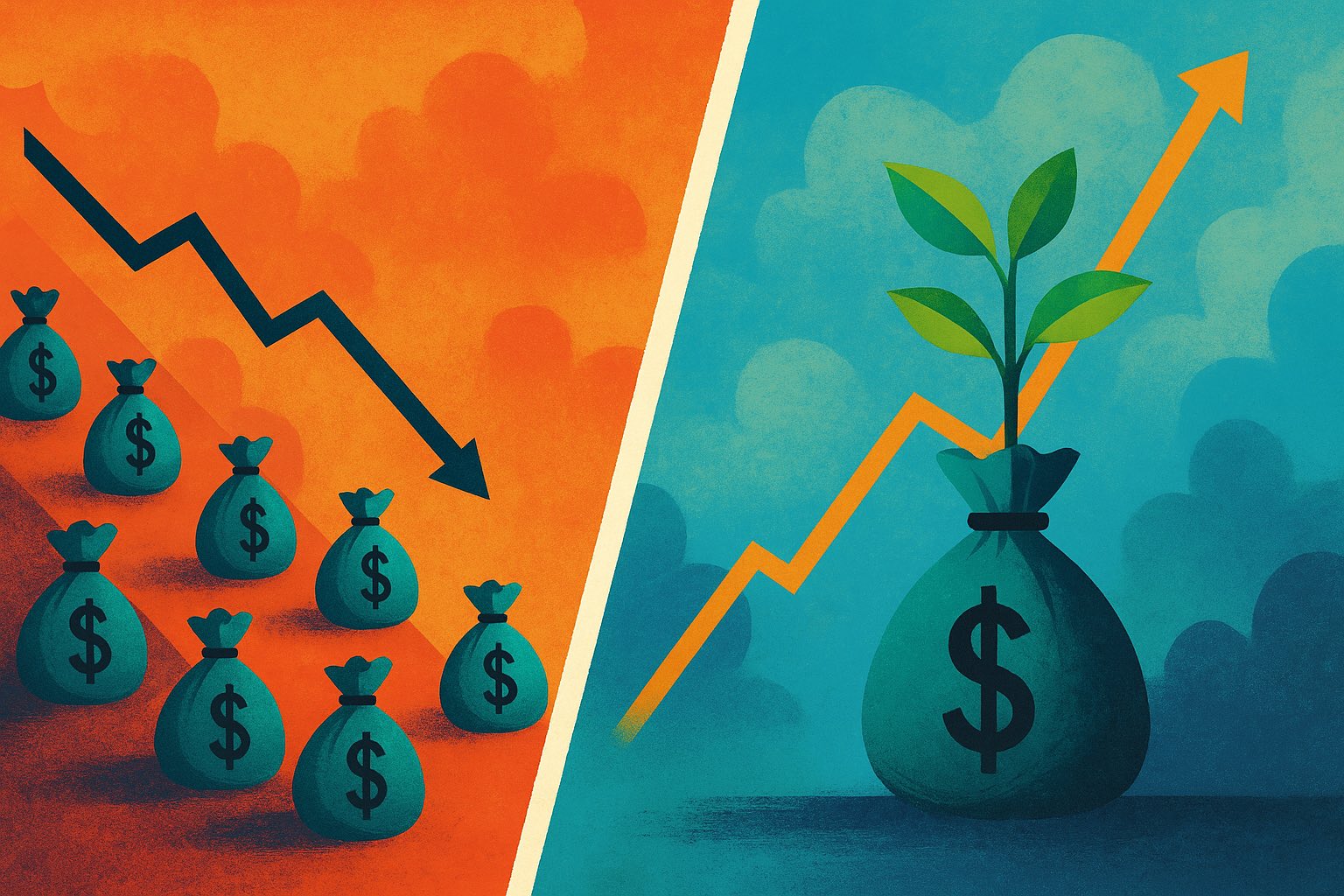
Trading gold is frequently marketed as a foolproof hedge against inflation and a path to quick profit, yet it remains a challenging endeavor that rarely yields long-term success for casual investors. Because gold is a non-yielding asset, it lacks the cash flow mechanics of stocks or bonds, leaving investors almost entirely dependent on price appreciation, which is notoriously volatile and influenced by complex macroeconomic factors beyond the reach of the average retail participant.
The Nature of Gold as a Non-Yielding Asset
To understand why gold trading often fails the casual investor, one must first recognize the fundamental nature of the metal. Unlike shares in a company—which represent ownership in a business capable of generating earnings—or bonds, which provide periodic interest payments, gold produces nothing. It sits in a vault, a physical storage unit, or a digital ledger.
For an investor to "make money" on gold, they must sell it for a higher price than they paid, minus the transaction costs and potential storage fees. This creates a "greater fool" dynamic where the only driver of profit is the expectation that someone else will pay more for the asset later. In contrast, productive assets like dividend-paying stocks or rental properties provide a secondary layer of return even if the asset price remains stagnant. Casual investors, who often lack the capital to wait for multi-year commodity cycles to turn, find themselves trapped by the lack of yield, which does nothing to offset their opportunity costs.
Transaction Costs and Hidden Hurdles
Casual investors often underestimate the friction costs associated with gold trading. Whether dealing in physical bullion or financial derivatives, the barrier to profit is significantly higher than in traditional equity markets.
Physical Gold Premiums
When purchasing physical gold coins or bars, investors do not pay the "spot price" seen on financial news tickers. They pay the spot price plus a premium, which covers the costs of refining, minting, distribution, and the dealer’s profit margin. These premiums can range from 3% to 15% or more, depending on the quantity and the form factor (e.g., small fractional coins often carry higher percentage premiums than large bars). To break even, the price of gold must rise sufficiently just to cover the initial "buy-side" premium, let alone the "sell-side" discount applied by the dealer.
Financial Derivatives and Leverage
Many casual investors turn to Gold ETFs or futures contracts to avoid physical storage issues. While these products are more liquid, they introduce their own complications:
- Expense Ratios: ETFs holding physical gold pass the costs of auditing, insuring, and storing the gold onto the shareholder through annual management fees.
- Leverage Risks: Trading futures or options allows investors to control large amounts of gold with small deposits. However, in the high-volatility environment of precious metals, small downward movements can trigger margin calls, wiping out an investor’s account entirely.
Market Drivers: The Complexity of Global Macroeconomics
Gold is often touted as an "inflation hedge," but the historical reality is nuanced. Gold’s price is inversely correlated with real interest rates. When interest rates rise—a common occurrence in the 2026 economic environment—the opportunity cost of holding non-yielding gold increases. Investors shift capital into high-yield savings accounts, Treasury bills, or corporate bonds.
Because gold trading is driven by speculative flows, institutional positioning, and central bank policies, it is rarely a simple "buy low, sell high" game. Casual investors lack the proprietary data and real-time analytical tools that hedge funds use to track these macro shifts. By the time a casual investor perceives an inflation signal, the market has often already priced in the gold movement, leading to "buying the top" and subsequent losses when the market corrects.
Comparative Analysis: Gold vs. Traditional Assets
To visualize why casual investors frequently struggle with gold, it is useful to compare the mechanics of ownership versus other investment vehicles.
| Feature | Physical Gold | Dividend-Paying Stocks | Treasury Bonds |
|---|---|---|---|
| Yield | None | Quarterly/Annual Dividends | Semi-annual Interest |
| Primary Driver | Speculative Demand | Earnings Growth | Interest Rate Policy |
| Storage Cost | High (Insurance/Vault) | Negligible (Brokerage) | Negligible (Brokerage) |
| Liquidity | Low (Requires Dealer) | High (Market Exchange) | High (Market Exchange) |
| Tax Treatment | Collectibles Rate (Higher) | Capital Gains/Qualified Div | Ordinary Income |
As shown in the table, physical gold carries a heavy burden of overhead that can erode the total return, whereas productive assets generate a compounding effect that does not exist in the gold market.
The Psychological Trap of Volatility
Gold is often marketed as a "safe haven," which leads casual investors to believe it is a low-risk asset. This is a dangerous misnomer. While gold may hold value over centuries, its short-term price action is highly volatile. This volatility creates a psychological trap:
- The FOMO Phase: Investors see gold prices climbing during a period of geopolitical uncertainty and enter the market at an elevated price point.
- The Anxiety Phase: As soon as the immediate crisis passes or interest rates tick upward, the price often retracts. The casual investor, seeing their principal drop, experiences panic.
- The Exit: Lacking the deep conviction or the long-term holding horizon of institutional gold bugs, the casual investor often sells during a dip to "cut their losses," effectively locking in the financial failure they hoped to avoid.
Prerequisites for Serious Gold Exposure
For those still interested in gold, the entry requirements for successful participation differ greatly from casual retail trading. Successful gold exposure usually requires:
- A Portfolio Anchor Approach: Gold should generally represent no more than 5% to 10% of a diversified portfolio. Treating it as a "get rich quick" speculative instrument is a recipe for volatility-induced loss.
- Cost Minimization: Using low-cost, physically backed ETFs or buying bullion in larger, lower-premium lots is essential to keep entry costs low.
- Long-term Horizon: Investors must be prepared to hold the asset for decades, not weeks. Gold acts as a store of value over generational timeframes, not as a day-trading vehicle.
- Knowledge of Tax Implications: Understanding that many tax jurisdictions treat physical gold as a "collectible" (subject to higher capital gains tax rates) is critical for net-profit calculations.
Frequently Asked Questions
Is gold a good investment for retirement planning? It depends. Gold serves as a potential hedge against extreme tail-risk events or currency devaluation, but it does not provide the compounding growth required to build a retirement nest egg. Most financial professionals suggest that if it is included at all, it should be a minor, non-core holding.
What is the "spot price" and why does it differ from the store price? The spot price is the current market value for one troy ounce of gold available for immediate delivery. The "store price" includes the spot price plus the "premium," which accounts for the fabrication, marketing, transportation, and dealer markup of the physical product.
Can I trade gold through my brokerage account? Yes, most retail brokerage accounts allow the purchase of Gold ETFs, which track the spot price of gold. While this eliminates physical storage issues, you are still subject to market volatility and the fund's internal expense ratios, which reduce your overall performance over time.
Is it safer to hold gold coins or bars? Both carry similar risks regarding market price, but gold bars generally have lower premiums than coins because they are cheaper to manufacture. However, coins may be easier to liquidate in small amounts during a crisis, whereas a large bar is an "all-or-nothing" liquidity event.
Why does gold lose value when interest rates rise? When central banks increase interest rates, the yield on cash-like assets (like government bonds) rises. Since gold pays no interest, it becomes less attractive to investors who can now earn a guaranteed return elsewhere, causing them to sell gold and shift their capital into interest-bearing investments.
Practical Next Steps for the Investor
If you currently hold gold or are considering it, assess your objective. If your goal is wealth accumulation, examine whether your capital would be more efficiently deployed in assets that provide cash flow. If your goal is portfolio protection, ensure your gold exposure is limited to a small percentage of your net worth and verify that your purchasing method (ETF vs. bullion) minimizes premium and management costs. Consult with a qualified financial advisor who understands your specific tax situation and long-term liquidity needs before making a significant allocation to non-yielding commodities.
Image Gallery
Select an image to open it in a new tab.
Ingrid Bjornson
Global Cyber Policy and Regulation Analyst
