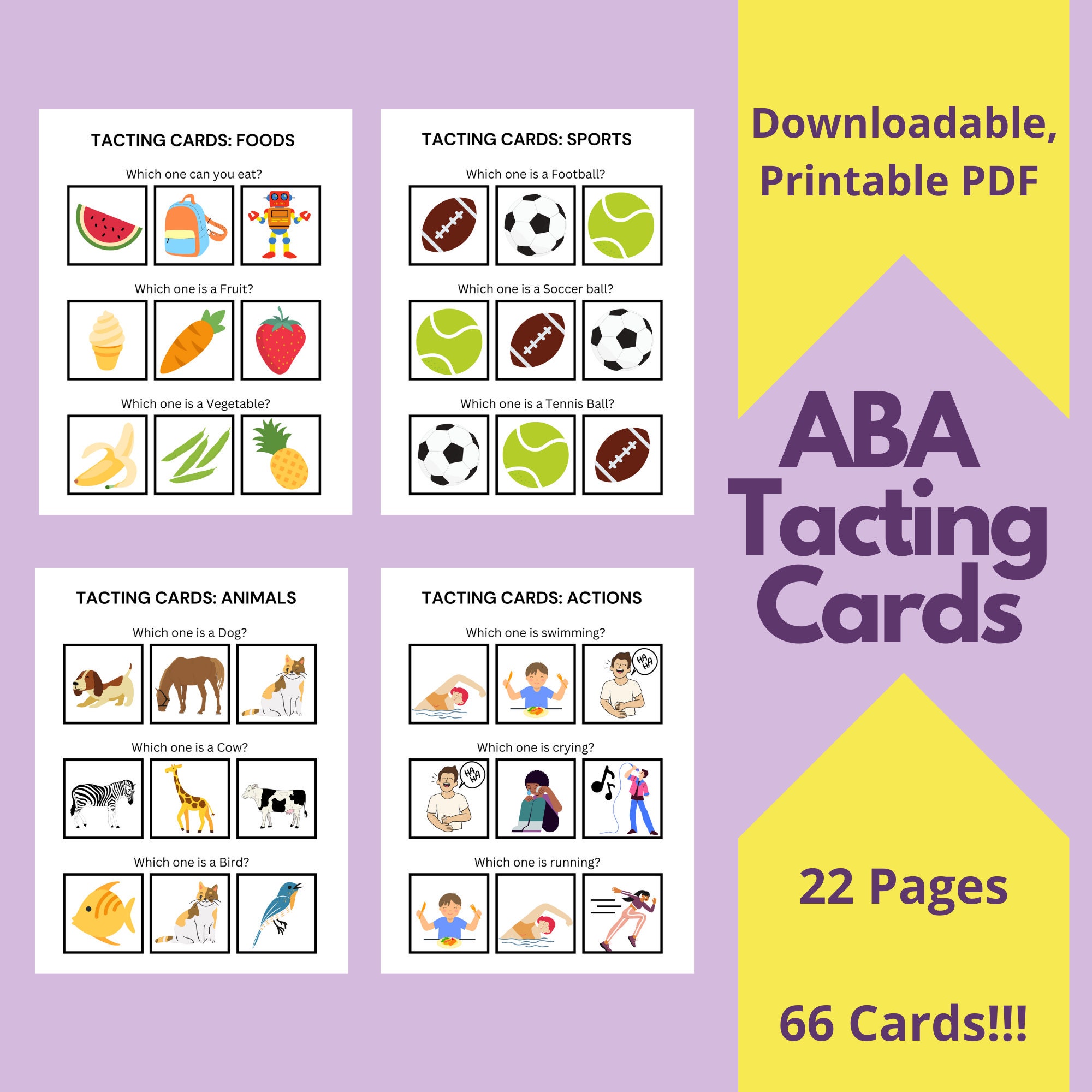
Tact training is a systematic instructional procedure in Applied Behavior Analysis (ABA) designed to teach a learner to label or name objects, actions, properties, or events in their environment. This process involves bringing a specific verbal response under the functional control of a non-verbal discriminative stimulus ($S^D$)—such as seeing a dog, smelling smoke, or feeling heat—and maintaining that response through generalized conditioned reinforcement like social praise or tokens.
Understanding the Tact: A Verbal Behavior Foundation
In his 1957 work Verbal Behavior, B.F. Skinner revolutionized the way behavior analysts approach language by focusing on the function of communication rather than its form. He identified several "verbal operants," and the tact is one of the most critical for functional living. The term "tact" is derived from "contact," specifically referring to the speaker making contact with the physical environment.
Unlike a mand (a request), which is motivated by a state of deprivation or an aversive stimulus and results in a specific reinforcer, a tact is motivated by the presence of a non-verbal stimulus. For example, if a child says "cookie" because they are hungry and want to eat, that is a mand. If the child sees a cookie on a counter and says "cookie" simply to name it, and the parent responds with "That’s right, it is a cookie!", that is a tact.
The primary goal of tact training in ABA is to expand a learner’s ability to describe the world around them, which serves as the bedrock for more complex social interactions, conversational skills, and academic success. By 2026, the integration of Natural Environment Teaching (NET) with traditional Discrete Trial Training (DTT) has become the standard for ensuring these skills are not just learned by rote but are used spontaneously in everyday life.
The Functional Relationship: Stimulus Control and Reinforcement
To define the process of tact training, one must first understand the two pillars that support it: stimulus control and the reinforcement schedule.
Non-Verbal Discriminative Stimuli ($S^D$)
The "trigger" for a tact must be non-verbal. This means the learner observes something through their senses (sight, hearing, touch, taste, or smell). In formal training, we begin with clear, distinct visual stimuli, such as a picture card or a physical object. As the learner progresses, the stimuli become more complex, moving from "apple" (a noun) to "red apple" (noun-adjective) to "eating apple" (noun-verb).
Generalized Conditioned Reinforcement
One of the most defining characteristics of a tact is that it does not result in the item named. If a learner names a "ball" and is then given the ball to play with, the response is technically functioning as a mand. In pure tact training, the reinforcement is generalized. This means the reward is social (e.g., "Good job naming that!"), educational (e.g., tokens on a board), or otherwise unrelated to the specific object. This is vital because it teaches the learner to communicate for the sake of sharing information rather than just to get their needs met.
Prerequisites for Beginning Tact Training
Before initiating a formal tact training protocol, a Board Certified Behavior Analyst (BCBA) or lead therapist must ensure the learner possesses certain prerequisite skills. Attempting tact training too early can lead to frustration and prompt dependency.
- Echoic Repertoire: The learner should be able to vocally imitate sounds or words when prompted. Since many tact training procedures use echoic prompts (e.g., the teacher says "Say ball"), the ability to repeat is essential.
- Listener Responding (Receptive Identification): It is often beneficial if the learner can already identify the object receptively (e.g., "Point to the car"). While not always a strict requirement, it indicates the learner can discriminate between different visual stimuli.
- Basic Manding: Usually, ABA programs prioritize manding (requesting) before tacting. Manding teaches the learner that "talking works" and provides immediate, powerful reinforcement.
- Scanning Skills: The learner must be able to visually scan an array of items or focus on a single stimulus presented by the instructor.
Phase-by-Phase Process of Tact Training
Defining the process of tact training requires a look at the "Transfer of Stimulus Control" procedure. We are moving the control of the response from an echoic prompt to the visual stimulus itself.
Phase 1: Assessment and Target Selection
Using tools like the VB-MAPP (Verbal Behavior Milestones Assessment and Placement Program) or the ABLLS-R (Assessment of Basic Language and Learning Skills-Revised), the clinician identifies which labels are missing from the learner's repertoire. Targets are selected based on functionality—words that the learner encounters frequently in their natural environment.
Phase 2: The Initial Trial (Echoic to Tact Transfer)
The instructor presents the non-verbal stimulus (e.g., a picture of a cat) and immediately provides a vocal prompt.
- Instructor: (Holds up picture of cat) "What is it? Cat."
- Learner: "Cat."
- Instructor: "Right! That is a cat." (Provides reinforcement).
Phase 3: Prompt Fading
The goal is to remove the vocal prompt so the learner responds only to the picture and the question "What is it?".
- Partial Echoic: "What is it? C—"
- Delayed Prompt: The instructor holds up the picture and waits 2-3 seconds before providing the prompt, giving the learner a chance to respond independently.
Phase 4: Independent Tacting
The learner correctly identifies the stimulus without any vocal assistance.
- Instructor: (Shows picture) "What’s this?"
- Learner: "Cat."
- Instructor: "Awesome! You're right!"
Phase 5: Generalization
Once a tact is mastered in a controlled setting (DTT), it must be moved to the natural environment. This involves showing different types of cats (different colors, sizes, or real cats vs. cartoon cats) and practicing in different rooms or with different people.
Selecting Targets: What to Teach First
Not all words are created equal in tact training. To maximize success, instructors should follow a hierarchy of target selection.
| Category | Priority | Reasoning |
|---|---|---|
| High-Frequency Nouns | Level 1 | Objects the learner sees daily (cup, bed, shoes, car). |
| Functional Items | Level 1 | Items related to the learner's routines (toothbrush, backpack). |
| People/Characters | Level 2 | Family members (Mom, Dad) or favorite characters. |
| Common Actions | Level 2 | Verbs that are easily observable (jumping, eating, sleeping). |
| Properties/Adjectives | Level 3 | Descriptive words like colors, shapes, and sizes (big/small). |
| Prepositions/Relations | Level 4 | Spatial concepts (on, under, next to). |
Advanced Tact Training: Beyond Simple Naming
As a learner progresses through the levels of the VB-MAPP or similar assessments in 2026, tact training evolves from simple one-word labels to complex linguistic structures.
Tacting Actions (Verbs)
Teaching verbs requires the learner to discriminate between what an object is and what is happening. This often involves using videos or live demonstrations. For example, the instructor might jump and ask, "What am I doing?" The correct tact is "jumping."
Tacting Parts and Features
This involves labeling components of a whole. Instead of just "car," the learner is taught to tact "wheels," "windows," and "door." This increases the learner’s descriptive precision.
Tacting Private Events
One of the most challenging aspects of ABA is teaching a learner to tact internal states, such as "I’m hungry," "My tummy hurts," or "I am frustrated." Since the instructor cannot see the internal stimulus, they must rely on "public accompaniments." If a child is rubbing their eyes, the instructor might say, "You feel tired," helping the learner associate the internal sensation with the verbal label.
The Autoclitic Tact
The autoclitic is a secondary verbal operant that modifies the primary tact. For example, "I see a big red bus." The words "I see a" and "big red" provide more information about the speaker’s relationship to the stimulus. Training this involves reinforcing longer sentence structures and correct grammar.
Data Collection and Progress Monitoring
In a professional ABA setting, every trial is recorded. Data collection in 2026 typically uses digital platforms where RBTs (Registered Behavior Technicians) track:
- Independent Responses: The learner tacted without prompts.
- Prompted Responses: The level of prompting required (Full Echoic, Partial Echoic, Phonemic).
- Errors: Incorrect labels or "scrolling" (listing multiple words hoping one is right).
Cold Probe Data: Many clinicians prefer "cold probes," where the first time a target is presented in a day, the response is recorded. This determines if the skill has truly been mastered and retained overnight, rather than just being "primed" by recent repetition.
Common Challenges and Troubleshooting in Tact Acquisition
The process of tact training is rarely a straight line. Several common obstacles can arise:
1. Rote Responding
The learner may memorize a specific picture but fail to recognize the object in real life.
- Solution: Use multiple exemplars. Use photos, line drawings, and 3D objects for every target word.
2. Prompt Dependency
The learner waits for the instructor to start the word before speaking.
- Solution: Implement a strict Constant Time Delay (CTD). Increase the wait time between the $S^D$ and the prompt, and ensure that independent responses receive a higher magnitude of reinforcement than prompted ones.
3. Tact-Mand Blurring
The learner tacts "juice" and then gets upset when they aren't given juice.
- Solution: Be very clear with reinforcement. Ensure that when a tact is being taught, the learner receives social praise or a different preferred item, never the item they named. Conduct separate manding sessions where they do get the item they ask for.
4. Scanning Deficits
If a learner is struggling to tact when an item is placed on a table with other items, they may lack visual discrimination skills.
- Solution: Return to simpler discrimination tasks or use a "neutral" background (like a plain white table) to reduce visual "noise."
Comparing Primary Verbal Operants
To properly define the tact, it must be viewed in the context of its "siblings" in the verbal behavior family.
| Operant | Antecedent (The "Trigger") | Consequence (The "Reward") | Example |
|---|---|---|---|
| Mand | Motivation (Hunger, Thirst, Need) | Specific Reinforcer (The item requested) | Saying "Water" and getting water. |
| Tact | Non-Verbal Stimulus (Seeing, Hearing) | Generalized Reinforcer (Social praise) | Saying "Plane!" when seeing one in the sky. |
| Echoic | Vocal Verbal Stimulus | Generalized Reinforcer (Social praise) | Teacher says "Apple," learner says "Apple." |
| Intraverbal | Vocal Verbal Stimulus (No point-to-point correspondence) | Generalized Reinforcer (Social praise) | Teacher asks "Where do you live?", learner says "New York." |
Frequently Asked Questions
What is the difference between a tact and a label?
In common parlance, they are often used interchangeably. However, in ABA, "tact" specifically refers to the functional relationship between a non-verbal stimulus and a verbal response. "Labeling" is a description of the topography (what the word is), while "tacting" describes the behavior's cause and reinforcement.
Why is tacting taught after manding?
Manding is taught first because it benefits the learner directly. It reduces frustration by allowing them to communicate their needs. Once the learner understands that "communication has power," they are usually more motivated to engage in the more "social" task of tacting, which benefits the listener more than the speaker.
Can a non-vocal person learn to tact?
Absolutely. The process of tact training is the same whether the learner uses vocal speech, Sign Language, or an AAC (Augmentative and Alternative Communication) device. The "verbal response" is simply the act of signing or pressing a button on a device in response to seeing an object.
How many tacts should a child know?
This varies significantly based on age and developmental level. By age 3, a typically developing child can usually tact hundreds of items and actions. In ABA, we look at the VB-MAPP milestones: Level 1 (0-18 months) aims for 10 tacts; Level 2 (18-30 months) aims for 200 tacts; Level 3 (30-48 months) aims for 1,000+ tacts including complex descriptions.
What is "spontaneous tacting"?
Spontaneous tacting occurs when a learner names something in their environment without being asked "What is it?" This is the "gold standard" of tact training. It shows that the learner is naturally motivated to share their experiences with others. It is encouraged by reinforcing "novel" observations that the learner makes on their own.
Final Recommendations for Practitioners
When defining and implementing the process of tact training in 2026, the focus should remain on functional communication. Avoid teaching "academic" words that the learner will never use. Instead, focus on the objects and actions that populate their specific world.
Always prioritize generalization from the very first mastered trial. If a learner can only name a "chair" when sitting in their therapy room looking at a specific flashcard, they haven't truly mastered the tact. Move the lessons to the kitchen, the park, and the grocery store. Use different people to run the trials. The end goal of tact training is not just a high score on a data sheet, but a learner who can look at the world and tell you what they see.
Image Gallery
Select an image to open it in a new tab.
Mateo Castillo
Decentralized Finance and E-Payments Strategist
