Scott Morrison’s Net Worth in Context: An Analysis of Public Service and Financial Transparency
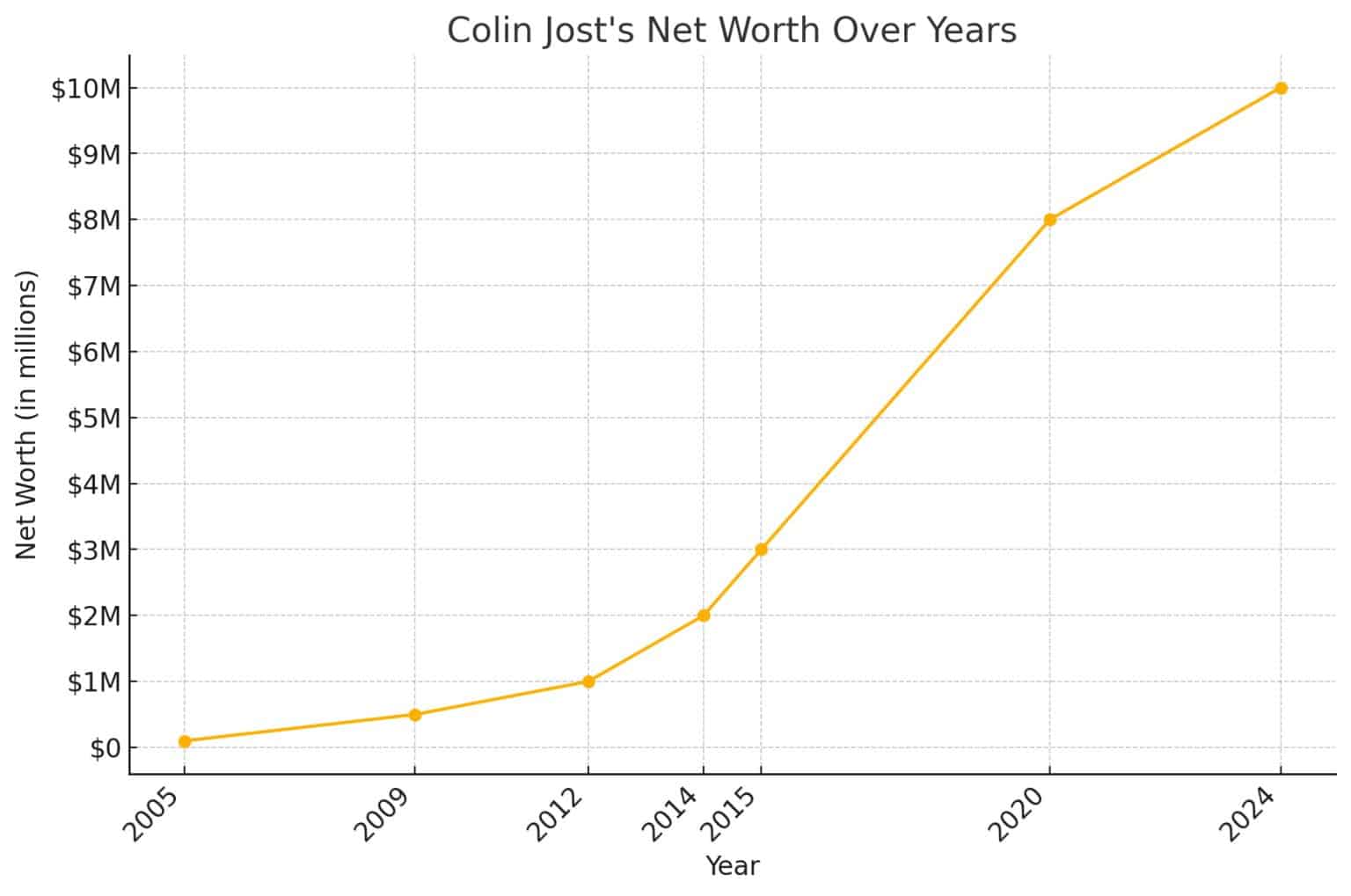
Determining the net worth of a former high-ranking government official involves analyzing public disclosure records, salary structures, and the regulatory environment governing Australian parliamentarians. While estimates regarding Scott Morrison's wealth are frequently discussed in media, his actual net worth is not a matter of public record beyond the mandatory disclosures of assets and liabilities required by the Register of Members’ Interests.
The discussion surrounding the personal wealth of former Prime Minister Scott Morrison often serves as a proxy for broader questions about political accountability, the compensation of public officials, and the transparency of asset disclosures within the Australian parliamentary system. To understand this topic, it is essential to distinguish between the public salary earned during his tenure as a Member for Cook and the subsequent transition to private sector roles.
The Mechanism of Parliamentary Disclosures
In Australia, the integrity of the political process relies on the transparency of members' financial interests. Every Member of the House of Representatives is required to provide a statement of their registrable interests to the Registrar of Members' Interests. This document, which is updated periodically, is intended to prevent conflicts of interest and maintain public trust.
However, the Register of Members’ Interests is not a balance sheet. It does not require members to provide precise valuations of their assets, nor does it demand a total net worth figure. Instead, it asks for the disclosure of items such as real estate, shareholdings, memberships, and gifts. Because these disclosures focus on preventing influence peddling rather than wealth auditing, they are intentionally qualitative rather than quantitative.
When analysts attempt to calculate a net worth, they are effectively performing an estimation based on publicly available salary benchmarks. For context, the base salary of a federal parliamentarian in Australia is set by the Remuneration Tribunal. During his time as Prime Minister, Morrison received a significantly higher salary, reflecting the increased responsibilities of the office. Once a member leaves the House of Representatives, they are no longer required to maintain a current Register of Members' Interests, meaning their ongoing financial activities become private.
Salary Structures in the Australian Federal Government
To provide accurate context, one must look at the official compensation for Australian political roles. The Remuneration Tribunal determines the salaries for Members of Parliament (MPs), Ministers, and the Prime Minister. These salaries are indexed and public, providing a reliable baseline for calculating earnings during years of service.
The following table illustrates the conceptual tiers of government compensation that shaped the professional income of a Prime Minister:
| Role Level | Primary Income Basis | Contextual Note |
|---|---|---|
| Backbench MP | Base Parliamentary Salary | Standard annual remuneration |
| Cabinet Minister | Base + Ministerial Allowance | Represents additional responsibilities |
| Prime Minister | Base + Higher Office Allowance | Includes specialized service benefits |
| Post-Parliamentary | Private Sector Consultancies | Non-disclosed market-rate income |
Understanding these figures is essential for any realistic appraisal. A politician's income is high by national standards but is often misconstrued as "wealth accumulation" without accounting for the tax liabilities, the costs of maintaining a public-facing lifestyle, and the lack of traditional career progression during the years spent in Canberra.
The Transition from Public Office to the Private Sector
A critical factor in the financial trajectories of former Prime Ministers is the transition to post-parliamentary life. Upon leaving office, individuals often take up roles in corporate advisory, public speaking, or board memberships. These roles are governed by the Statement of Ministerial Standards, which dictates the cooling-off periods for former Ministers and Prime Ministers to prevent the weaponization of "insider" knowledge or government contacts.
In the case of Scott Morrison, his departure from the House of Representatives in 2024 marked the end of his public disclosure requirements. Any wealth accumulated since then is the product of private sector engagements, the valuation of which remains entirely outside the purview of the public record. Any attempt to verify "net worth" after this period is inherently speculative, as private income does not need to be declared to any public body.
Common Misconceptions Regarding Political Wealth
Public curiosity about a politician's net worth often conflates "income" with "wealth." Income is the flow of money, whereas wealth (net worth) is the stock of assets minus liabilities. Several factors contribute to the confusion surrounding this subject:
- Asset Valuation: Disclosures list property, but not the equity held in that property. A home listed in a registry does not account for the mortgage balance, which can be substantial.
- Superannuation: Parliamentarians have access to superannuation arrangements that differ from the standard private-sector model, particularly for those elected before certain legislative changes. This often leads to inflated, incorrect estimates in informal media reports.
- Spousal Income: Financial disclosures often include spousal interests. Analysts frequently conflate the net worth of a household with the personal wealth of the politician, failing to account for independent income sources of family members.
- Taxation: High salaries for public officials attract the top marginal tax rate, significantly reducing the "take-home" potential compared to private sector roles of similar prestige.
The Role of Transparency and Regulatory Limits
The Australian approach to financial transparency is built on the principle of conflict management rather than public voyeurism. The system is designed to identify potential biases that could sway public policy. By requiring disclosure of shareholdings and directorships, the system ensures that the electorate knows if a politician has a vested interest in a particular industry.
It is important for the public to recognize that the Register of Members' Interests is not intended to be a financial reporting tool for the purpose of economic analysis. When readers encounter speculative headlines regarding a politician’s wealth, they should understand that these figures are typically derived from extrapolated salary data, often failing to account for debt, cost of living, or tax obligations.
Why Verification Is Often Impossible
Attempts to calculate an exact net worth are hindered by the legal reality that private individuals—including former Prime Ministers—are under no obligation to disclose their bank accounts, investment portfolios, or personal debts once they leave office.
Any article or report claiming a "verified" net worth for a private citizen is likely using proprietary algorithms or third-party databases that rely on public records of property ownership (such as land titles) and business filings. These sources are incomplete because they cannot account for:
- Non-disclosed cash holdings or liquid assets.
- Trust structures or family holding companies.
- Liabilities such as mortgages, personal loans, or business debt.
- Private equity or non-public business interests.
For the average citizen, the takeaway is that official transparency exists to protect the democratic process, not to provide a public ledger of individual wealth. Financial interest registers serve as a check on power, but they remain an incomplete metric for gauging the total personal finances of any political figure.
Frequently Asked Questions
Are Australian politicians required to release their tax returns? No. There is no legal requirement in Australia for federal parliamentarians to release their personal tax returns. Disclosure is strictly limited to the Register of Members' Interests, which focuses on potential conflicts of interest rather than total income or tax liability.
Why are media estimates of political net worth often wildly different? Media outlets often use different methodologies. Some calculate a "best guess" by totaling every salary a politician earned during their career, while others attempt to estimate the market value of real estate and business connections. These approaches are inherently flawed because they ignore taxes, spending, and debt, leading to widely varying and often inaccurate figures.
What is the Register of Members' Interests? It is a mandatory public document maintained by the Clerk of the House of Representatives. It tracks a politician's financial interests—such as gifts, property holdings, and share portfolios—to ensure transparency and identify potential conflicts between private interests and public duties.
Does a former Prime Minister continue to receive a salary? No. Upon leaving office, former Prime Ministers transition to private life. They may be entitled to specific "former parliamentarian" benefits, such as office space or travel assistance depending on their tenure and post-parliamentary activities, but these are defined by the Remuneration Tribunal and do not constitute a salary for work performed.
Where can the public verify a current politician's declared interests? The most reliable source is the official Parliament of Australia website, which hosts the current and historical Registers of Members' Interests. These documents are public records available for inspection by any member of the community.
Final Recommendation
When assessing information regarding the financial status of public figures, prioritize official parliamentary disclosures over secondary media reports. The Register of Members' Interests provides a verified, though limited, view of a politician’s financial environment. Understand that "net worth" is a private matter once a politician transitions out of public office, and claims regarding their wealth from non-official sources should be viewed with skepticism, as they lack access to private banking and tax information. If the goal is to evaluate potential conflicts of interest, rely solely on the formal registers maintained by the Parliament of Australia.

Image Gallery
Select an image to open it in a new tab.

Ingrid Bjornson
Global Cyber Policy and Regulation Analyst
