The Best Furnace Fuel in Minecraft: A Comprehensive Efficiency Guide for 2026

The best furnace fuel in Minecraft depends on your current progression: Lava Buckets provide the highest burn time per slot (100 items), while Dried Kelp Blocks and Bamboo are the superior choices for automated, renewable systems. For general survival, Coal Blocks offer the most efficient storage-to-smelt ratio.
In the world of Minecraft, efficiency is the difference between a thriving industrial base and a tedious grind for resources. Whether you are smelting stacks of Iron Ore for a new project or cooking Raw Porkchops to survive the night, understanding the mechanics of furnace fuel is essential. As of 2026, the mechanics of smelting remain a cornerstone of gameplay, influenced by the introduction of specialized blocks and renewable farming techniques.
The Mechanics of Smelting: Ticks and Durations
To determine the "best" fuel, one must first understand how Minecraft calculates heat. Every fuel source in the game has a specific "burn time" measured in game ticks. A standard furnace requires 200 ticks (10 seconds) to smelt or cook a single item.
When you place a fuel item into a furnace, smoker, or blast furnace, the fuel is consumed, and the furnace remains active for the duration of that item's tick value. If the furnace finishes smelting an item and there is still burn time remaining, it will immediately begin the next item. However, if no items are left to smelt, the remaining burn time is wasted. This makes the "duration" of a fuel source just as important as its "burn count."
The Multiplier Effect: Smokers and Blast Furnaces
While standard furnaces handle all items, Smokers (for food) and Blast Furnaces (for ores and metal items) operate at twice the speed. They still consume the same amount of fuel per item, but they consume it twice as fast. For example, a piece of Coal that lasts 80 seconds in a standard furnace will only last 40 seconds in a Blast Furnace, but it will still smelt 8 items in both cases.
The Tier List: Comparative Analysis of Primary Fuels
1. Lava Buckets: The Long-Distance Champion
Lava Buckets are arguably the most powerful fuel source for bulk smelting. A single bucket of lava lasts for 20,000 ticks, which equates to 1,000 seconds or exactly 100 items.
- Pros: Highest efficiency per slot; renewable via Pointed Dripstone and Cauldrons; returns an empty bucket to the player (or hopper) after consumption.
- Cons: Non-stackable, making it difficult to automate without complex hopper systems; high risk of "waste" if you smelt fewer than 100 items at a time.
- Best Use: Smelting massive quantities of cobblestone into stone or glass production.
2. Coal Blocks: The Industrial Standard
A Coal Block is crafted from nine individual pieces of coal. In a furnace, it lasts for 16,000 ticks, smelting 80 items. This is a significant upgrade over smelting nine individual pieces of coal, which would only yield 72 items total.
- Pros: High density; stackable up to 64; easy to transport in large quantities.
- Cons: Not renewable (unless farming Wither Skeletons); requires manual crafting.
- Best Use: Long-term storage and mid-to-late game manual smelting.
3. Dried Kelp Blocks: The Sustainable Workhorse
Dried Kelp Blocks have revolutionized Minecraft's "green energy" sector. One block smelts 20 items. Since kelp can be grown underwater with zero player input, it represents a nearly infinite fuel source.
- Pros: Fully renewable; easily automated with observers and pistons; high yield.
- Cons: Requires an initial smelting process (you must smelt the raw kelp to get the dried version); low burn time per block compared to coal.
- Best Use: Automated fuel "loops" where the kelp farm feeds the furnaces that smelt the kelp.
4. Blaze Rods: The Hunter's Reward
Blaze Rods are often overlooked but are highly effective. One rod smelts 12 items. If you have a Blaze farm in the Nether, you likely have more rods than you will ever need for potions or Eyes of Ender.
- Pros: Better efficiency than coal; renewable via mob farms.
- Cons: Dangerous to obtain without a dedicated farm; non-stackable in some older versions (though stackable in modern 2026 editions).
- Best Use: Late-game players with Nether-based infrastructure.

Comparing Fuel Efficiency and Burn Times
The following table compares the most common fuel sources used in 2026, ranked by their smelting capacity per unit.
| Fuel Source | Burn Time (Ticks) | Items Smelted | Renewability | Best Application |
|---|---|---|---|---|
| Lava Bucket | 20,000 | 100 | Yes (Dripstone) | Bulk Stone/Glass |
| Coal Block | 16,000 | 80 | No (Mining) | Manual Smelting |
| Dried Kelp Block | 4,000 | 20 | Yes (Farming) | Automated Systems |
| Blaze Rod | 2,400 | 12 | Yes (Nether Farm) | Fortress Bases |
| Coal / Charcoal | 1,600 | 8 | Limited / Yes | Early Game |
| Boat (Any Wood) | 1,200 | 6 | Yes (Crafting) | Emergency Fuel |
| Planks (Any) | 300 | 1.5 | Yes (Trees) | Starter Bases |
| Bamboo | 50 | 0.25 | Yes (Farming) | Massive Zero-Tick Farms |
Early Game: From Planks to Charcoal
When you first spawn into a world, you won't have access to Lava Buckets or Kelp Blocks. Your first instinct might be to burn Logs, but this is inefficient.
A single Log smelts 1.5 items. However, if you craft that Log into 4 Planks, you can smelt 6 items. Better yet, if you use a few planks to smelt a Log into Charcoal, that single piece of Charcoal will smelt 8 items.
The "Charcoal Loop" is the most effective strategy for the first few days of survival. By using 1 log to create Charcoal, you effectively turn a low-efficiency fuel into a high-efficiency one that is functionally identical to mined coal.
The Automation Revolution: Bamboo and Scaffolding
For players who prefer "set and forget" systems, high-frequency fuels like Bamboo are the gold standard.
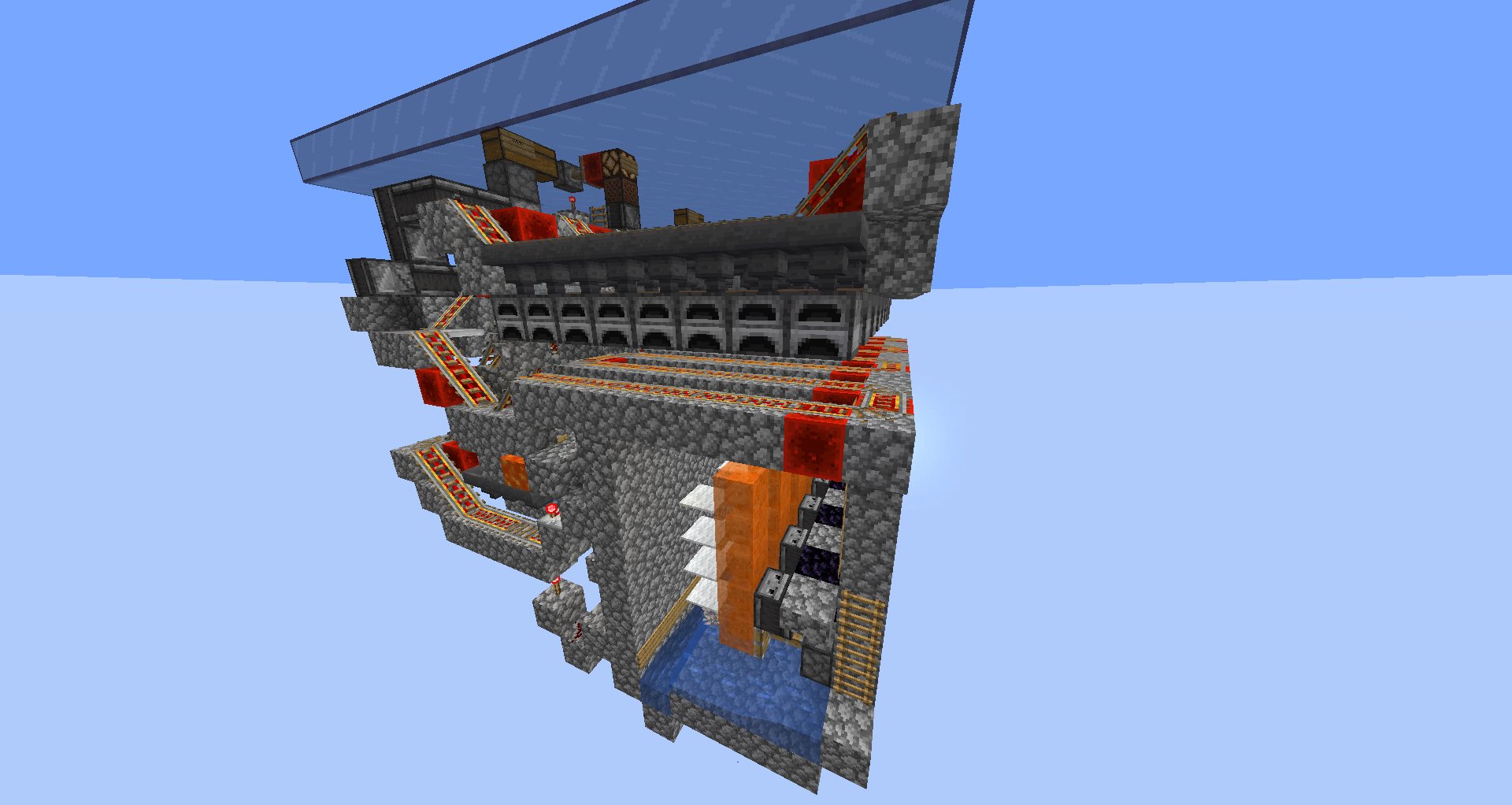
A single piece of Bamboo only smelts 0.25 items, meaning you need four pieces of bamboo to smelt one item. While this sounds terrible for manual use, Bamboo is one of the fastest-growing plants in Minecraft. In 2026, large-scale Bamboo farms utilize flying machines or observer-piston arrays to harvest thousands of stalks per hour. When fed into a massive "Super Smelter" via hoppers, Bamboo provides a never-ending stream of fuel that costs the player nothing but the initial build time.
Scaffolding was previously a top-tier fuel, but balance changes have moved it closer to wooden slabs in terms of efficiency. It remains a viable option if you have an excess of bamboo and string, but most players now prefer using the raw bamboo directly in high-volume systems.
Renewable Lava: The Infinite Heat Source
Since the introduction of the Pointed Dripstone mechanic, Lava has become a fully renewable resource. By placing a lava source block above a solid block with a Pointed Dripstone underneath, you can "drip" lava into a cauldron placed below.
Over time, the cauldron fills with lava. This allows players to create massive "lava refineries."
- Set up 50-100 cauldrons with dripstone.
- Use buckets to collect the lava.
- Place the lava into a Super Smelter's fuel intake hoppers.
- The hoppers will pull the lava, use it, and leave the empty buckets in the furnace's fuel slot.
- Use a separate hopper to pull the empty buckets and return them to the cauldrons via a water stream or dropper elevator.
This setup is considered the "End Game" of Minecraft smelting efficiency. It provides the highest heat output in the game with zero long-term resource cost.
Common Mistakes and Efficiency Loss
- Smelting "On-Demand": Using a Coal Block to smelt 10 pieces of Iron Ore is a massive waste. You lose 70 items' worth of burn time. Always wait until you have a full stack (64) before using high-value fuels like Coal Blocks or Lava.
- Ignoring the Bucket Return: If you automate Lava Buckets, remember that the furnace "clogs" with empty buckets. You must have a hopper underneath or to the side of the furnace configured to filter out empty buckets, or the furnace will stop working once the fuel slot is filled with empty containers.
- Over-reliance on Wood: Burning logs or planks in the mid-game is a sign of poor resource management. The time spent chopping trees is better spent setting up a simple Kelp or Bamboo farm.
Frequently Asked Questions
Which fuel lasts the longest in a furnace?
The Lava Bucket has the longest burn time of any single item in Minecraft, lasting 1,000 seconds (20,000 ticks) and smelting exactly 100 items. It is the only fuel that can smelt more than a single stack (64) of items in a single go.
Is Charcoal better than Coal?
In terms of performance, Coal and Charcoal are identical; both smelt 8 items. However, Charcoal is renewable (made from wood), while Coal must be mined or looted. Charcoal is generally "better" for players who want to avoid depleting the natural resources of their local caves.
Can you use wooden tools as fuel?
Yes, any wooden tool, including swords, pickaxes, and shovels, can be used as fuel. However, they are highly inefficient, usually only smelting a single item. This is generally only recommended for "deleting" old, damaged tools while getting a tiny bit of value back.
Why won't my furnace take my Lava Bucket?
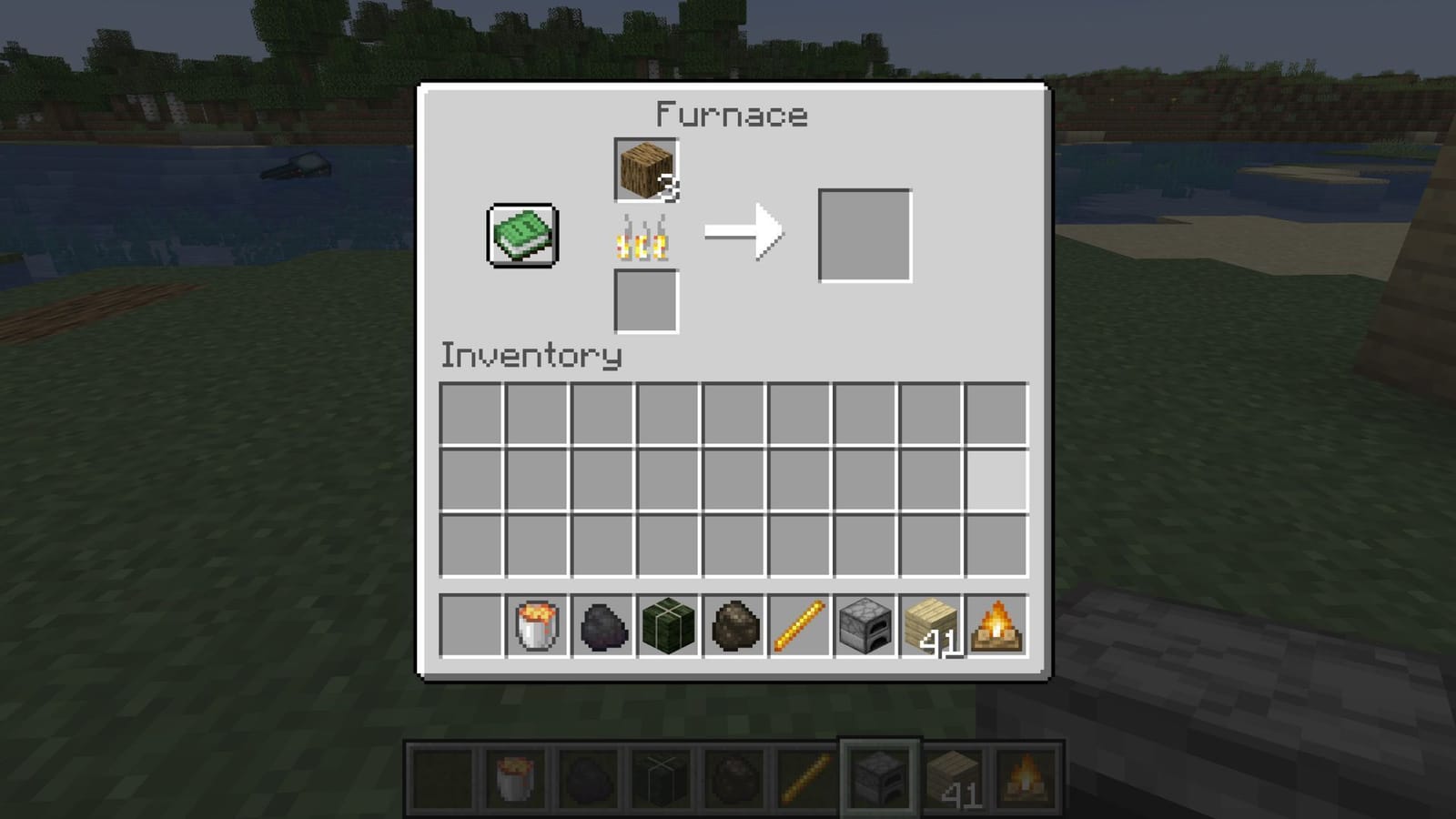
Ensure you are placing the bucket in the bottom slot (the fuel slot), not the top slot (the item slot). Also, if you are using a hopper to feed the furnace, the fuel hopper must point into the side of the furnace, not the top.
Is Dried Kelp better than Bamboo?
Dried Kelp is better for manual smelting because it is more condensed (20 items per block). Bamboo is better for fully automated "Super Smelters" because it does not require the intermediate step of being crafted into blocks or being smelted first.
Final Recommendation: Which Fuel Should You Use?
For the ultimate Minecraft experience in 2026, your fuel choice should evolve with your world.
- Early Game: Use Charcoal. It is easy to produce and far more efficient than burning raw wood.
- Mid Game: Transition to a Dried Kelp Farm. It provides a massive amount of stackable fuel that allows you to clear out nearby caves of coal for use in torches and trading.
- Late Game: Build a Dripstone Lava Farm for bulk projects or a Large-Scale Bamboo Farm for your automated Smoker and Blast Furnace arrays.
By matching your fuel source to your specific task, you minimize waste and maximize the time you spend building rather than gathering resources. For more information on advanced automation, consult the Official Minecraft Wiki for the most up-to-date tick values and technical specifications.
Image Gallery
Select an image to open it in a new tab.



Mateo Castillo
Decentralized Finance and E-Payments Strategist
