
In New York State, workers’ compensation insurance through the New York State Insurance Fund (NYSIF) provides two distinct types of protection: Part One (Workers’ Compensation), which covers an injured employee’s medical bills and lost wages regardless of fault, and Part Two (Employers Liability), which protects the employer against lawsuits stemming from those same work-related injuries or illnesses. While Part One is statutory and generally limits an employee's right to sue, Part Two provides a critical financial safety net for legal defenses and damages in cases where an employer can still be held liable under New York law.
New York’s insurance landscape is unique, particularly regarding the interaction between the New York State Insurance Fund (NYSIF) and the state’s rigorous labor laws. For business owners, understanding the nuances of Employers Liability (EL) is just as vital as maintaining standard Workers’ Compensation (WC) coverage. As of 2026, the regulatory environment continues to demand strict compliance, making it essential to distinguish how these coverages function to protect a company’s assets.
The Role of NYSIF in New York’s Insurance Market
The New York State Insurance Fund (NYSIF) was established in 1914 as a non-profit state agency. Its primary mandate is to guarantee the availability of workers’ compensation and disability insurance at the lowest possible cost to New York employers while maintaining a solvent fund. Unlike private carriers, NYSIF is often referred to as the "carrier of last resort," meaning it must provide coverage to any employer that applies, regardless of the risk profile, provided the employer pays the premium and follows safety protocols.
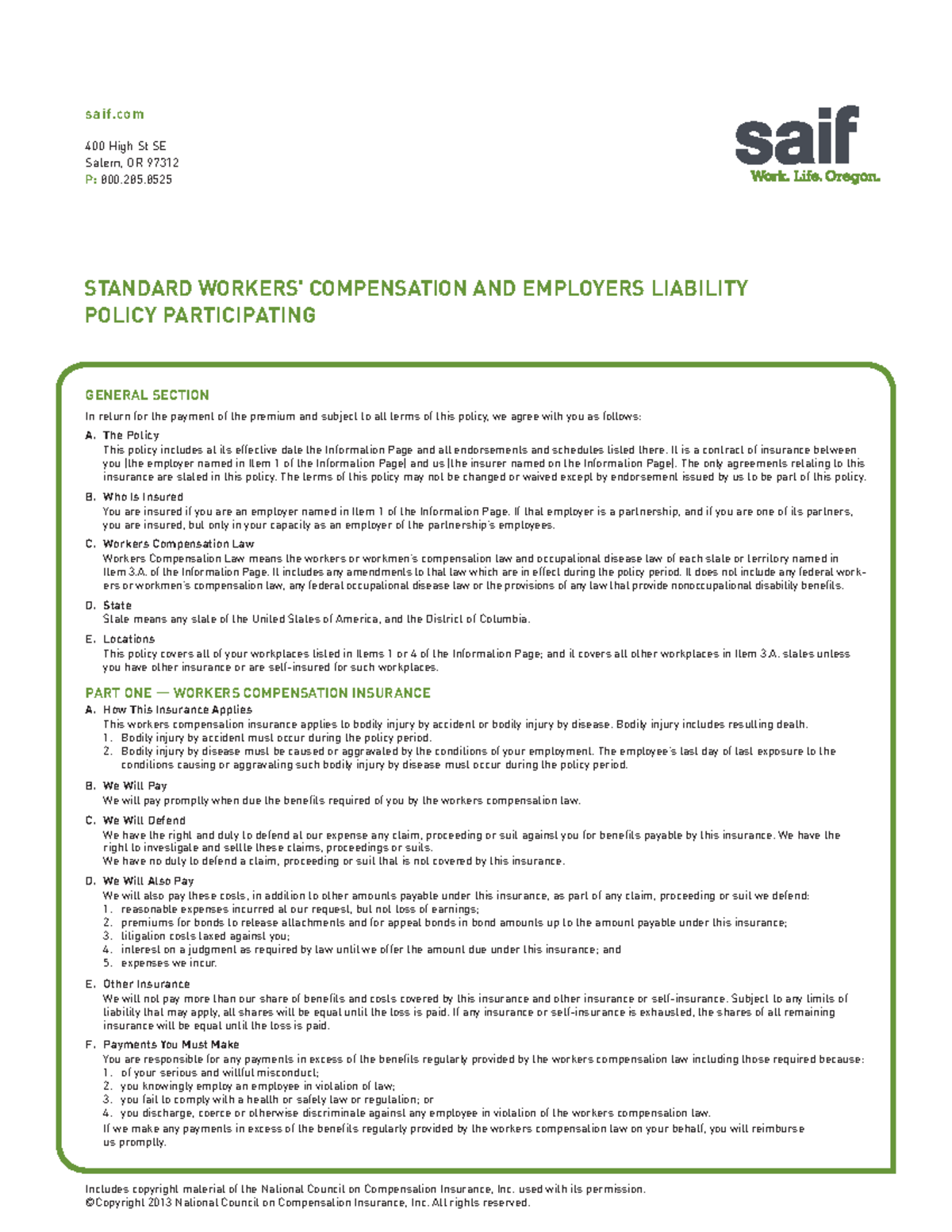
However, NYSIF is also a massive market competitor, often insuring over 30% of the market in New York. Because it is a state agency, its policies are strictly aligned with the New York Workers’ Compensation Law. When an employer secures a policy through NYSIF, they are obtaining a "Standard Workers’ Compensation and Employers Liability Policy." This document is divided into two primary sections, each serving a different purpose in the event of a workplace accident.
Part One: Workers’ Compensation (The Statutory Benefit)
Part One of the NYSIF policy is the most familiar to business owners. It is "statutory," meaning the benefits are defined by state law rather than the insurance contract itself. There are no dollar limits on the benefits paid under Part One; the carrier (NYSIF) is responsible for whatever medical care and indemnity (lost wage) payments the law requires for a covered injury.
In exchange for these guaranteed benefits, New York law generally prohibits employees from suing their employers for negligence. This is known as the "exclusive remedy" doctrine. If an employee is injured by a falling crate in a warehouse, they receive medical coverage and a portion of their salary through NYSIF, but they cannot typically file a personal injury lawsuit against their employer to seek "pain and suffering" damages.

Part Two: Employers Liability (The Defense Against Lawsuits)
Despite the exclusive remedy doctrine, there are specific circumstances where an employer can be sued. This is where Part Two, Employers Liability, becomes active. This coverage protects the employer against "tort" liability—claims for damages that fall outside the statutory benefits of workers' compensation.
Common scenarios where Employers Liability coverage is triggered include:
- Third-Party Over Actions: This is the most frequent use of EL coverage in New York. It occurs when an injured employee sues a third party (such as a building owner or equipment manufacturer), and that third party then sues the employer for contribution or indemnification.
- Loss of Consortium: A lawsuit filed by the spouse of an injured worker for the loss of companionship or services resulting from the work-related injury.
- Dual Capacity Suits: Claims where an employer may be held liable in a capacity other than just as an employer (e.g., if the employer manufactured the defective tool that caused the injury).
- Consequential Bodily Injury: Claims by a family member of the injured worker who suffers a physical injury as a direct result of the worker's injury (e.g., a spouse suffering a heart attack upon hearing of the worker's death).
New York’s Section 11 and "Grave Injuries"
In 1996, New York passed significant reforms to Section 11 of the Workers’ Compensation Law to limit the exposure of employers to third-party over actions. Under current 2026 standards, a third party cannot sue an employer for contribution or indemnity unless the employee has suffered a "grave injury."
The definition of a grave injury is extremely specific and narrow. It includes:
- Death.
- Permanent and total loss of use or amputation of an arm, leg, hand, or foot.
- Loss of multiple fingers or toes.
- Paraplegia or quadriplegia.
- Total and permanent blindness or deafness.
- Permanent and severe facial disfigurement.
- Acquired brain injury causing permanent total disability.
If the injury does not meet this high "grave" threshold, the employer is generally immune from third-party lawsuits. However, the legal costs to defend against such allegations are still covered under the Employers Liability portion of the NYSIF policy.
Understanding Coverage Limits and NYSIF Policy Structure
Unlike Part One, which has no dollar limit, Part Two (Employers Liability) is subject to specific financial limits. When reviewing a NYSIF policy, you will typically see three distinct limits for Employers Liability:
| Limit Type | Description | Standard Minimum |
|---|---|---|
| Bodily Injury by Accident | The maximum amount paid for any one single accident, regardless of the number of employees injured. | $100,000 |
| Bodily Injury by Disease (Policy Limit) | The total amount paid for all disease-related claims during the policy period. | $500,000 |
| Bodily Injury by Disease (Per Employee) | The maximum amount paid for any one employee suffering from an occupational disease. | $100,000 |
Many New York businesses, especially those in construction or heavy industry, opt for higher limits (e.g., $1,000,000 / $1,000,000 / $1,000,000) to satisfy contractual requirements with general contractors or to provide a deeper layer of protection.
The Interaction with New York Labor Law 240 and 241
New York’s "Scaffold Law" (Labor Law 240) and Section 241 create a high-risk environment for employers. These laws impose "strict liability" on property owners and contractors for gravity-related injuries (falls from heights or falling objects).
In a typical scenario, a subcontractor's employee falls from a ladder. The employee sues the general contractor and the property owner under Labor Law 240. Because the property owner is held strictly liable, they immediately turn to the subcontractor (the employer) and sue them for indemnification. If the injury is "grave," the subcontractor’s NYSIF Employers Liability coverage must defend the suit and pay the judgment up to the policy limits. Without Part Two coverage, the subcontractor would have to pay these legal costs and settlements out of pocket, which often leads to bankruptcy for smaller firms.
Premiums, Audits, and NYSIF Compliance
The cost of your workers' compensation and employers liability insurance with NYSIF is primarily driven by three factors: Payroll, Classification Codes, and the Experience Rating Modifier (MOD).
Payroll and Classification
NYSIF calculates premiums by multiplying your total payroll (per $100) by a rate assigned to your specific industry (Class Code). For example, a roofing company will have a much higher rate than an accounting firm because the risk of a "grave injury" or a standard workers' comp claim is significantly higher. In 2026, NYSIF continues to use automated payroll reporting tools through its digital portal to ensure accuracy throughout the year.
The Experience Rating Modifier (MOD)
The MOD is a multiplier that reflects your company's claims history compared to the industry average. If your company has fewer accidents than average, your MOD will be below 1.0 (a credit), lowering your premium. If you have a high frequency of claims, your MOD will rise above 1.0 (a debit), increasing your costs. Since Employers Liability claims are rare but extremely expensive, a single grave injury claim can negatively impact an employer's MOD for years.
The Annual Audit
NYSIF performs annual audits to ensure the estimated payroll at the start of the policy matches the actual payroll at the end. Failure to cooperate with a NYSIF audit can lead to a "test audit" or "estimated audit" where the premium is arbitrarily increased by up to 300% as a penalty. It is critical for employers to maintain clear records of subcontractors and their certificates of insurance; otherwise, NYSIF will charge the employer for the subcontractor's payroll as if they were employees.
Common Exclusions in Employers Liability
While Part Two is broad, it does not cover everything. Notable exclusions in a NYSIF policy include:
- Contractual Liability: Liability assumed under a contract (though this is often a complex legal area where EL still provides some protection).
- Punitive Damages: EL typically does not pay for fines or penalties intended to punish the employer for gross negligence or intentional acts.
- Employment Practices: Claims for wrongful termination, sexual harassment, or discrimination are not covered by Workers' Comp/EL. These require a separate Employment Practices Liability Insurance (EPLI) policy.
- Intentional Acts: If an employer intentionally causes injury to an employee, the EL coverage will not apply, and the employer will face direct legal and potentially criminal consequences.
Practical Steps for New York Employers in 2026
To effectively manage the risks associated with workers' compensation and employers liability through NYSIF, business owners should follow a proactive strategy:
- Verify Coverage Limits: Ensure your EL limits meet the requirements of your client contracts. Many master service agreements now require a minimum of $1 million in Employers Liability coverage.
- Implement Robust Safety Programs: Since NYSIF is a state fund, they offer various safety incentive programs and premium credits (such as the Safe Patient Handling Act credits for healthcare) that can reduce costs.
- Monitor Subcontractors: Always collect updated Certificates of Insurance from every subcontractor. Ensure their policies include both Workers' Comp and Employers Liability. If their policy lapses, you become the "de facto" insurer, and NYSIF will charge you the premium for their workers.
- Report Injuries Immediately: Late reporting of claims can lead to penalties and can make it harder for NYSIF to defend against fraudulent or exaggerated claims. In 2026, immediate digital reporting is the standard expectation for all NYSIF policyholders.
Frequently Asked Questions
Is Employers Liability insurance mandatory in New York?
Yes. In New York, the Standard Workers' Compensation policy automatically includes Employers Liability (Part Two). Because workers' compensation is mandatory for almost all employers with at least one employee (including part-time workers and most household employees), Employers Liability coverage is essentially mandatory as well.
How does NYSIF differ from private insurance carriers?
NYSIF is a state-run entity that must provide coverage to any employer. Private carriers can "cherry-pick" the safest businesses and decline those with high risks or poor claims histories. While NYSIF is often the only option for high-risk industries, it also offers competitive rates and dividends to many "standard" businesses.
Can an employee waive their right to Workers' Compensation to sue me?
No. Under New York law, an employee cannot waive their right to workers' compensation benefits. Any agreement to do so is generally considered void and unenforceable. The "exclusive remedy" is a legal protection for the employer that cannot be bargained away by the worker.
Does NYSIF cover "Third-Party Over" claims?
Yes. Part Two (Employers Liability) of the NYSIF policy is specifically designed to provide a defense and potential settlement funds for third-party over actions, provided the injury meets the "grave injury" criteria defined in Section 11 of the NY Workers' Compensation Law or if there is a written contract for indemnification entered into prior to the accident.
What happens if I don't have NYSIF or other coverage?
Failure to maintain workers' compensation and employers liability insurance in New York is a serious offense. Penalties can reach $2,000 for every 10 days of non-compliance. Additionally, the employer becomes personally liable for all medical and wage benefits for an injured worker, and they lose the "exclusive remedy" protection, meaning the employee can sue them directly for unlimited damages.
Summary of Actionable Advice
For New York business owners in 2026, the primary goal should be maintaining continuous coverage with NYSIF or a private carrier to avoid catastrophic legal exposure. You should review your policy annually to ensure your Employers Liability limits are sufficient for your industry's risk, particularly if you operate in construction or manufacturing where "grave injuries" and "third-party over" lawsuits are more prevalent. Always utilize NYSIF's online tools for payroll reporting and claim management to maintain compliance and avoid unnecessary audit-related premium spikes.
Image Gallery
Select an image to open it in a new tab.

Declan O'Connor
Higher Education and Campus Culture Reporter
