Understanding the Othmer Method of Neurofeedback: A Comprehensive Guide to Infra-Low Frequency Training

The Othmer Method of neurofeedback is a specialized approach to brain training that focuses on the brain's "infra-low" frequencies to promote self-regulation. Developed by Dr. Siegfried and Susan Othmer, this method uses real-time brainwave monitoring to provide feedback, helping the nervous system stabilize and improve its functional performance across various neurological and emotional conditions.
The Evolution of the Othmer Method
The Othmer Method represents a significant shift in the field of biofeedback, moving away from traditional reward-based systems toward a process of endogenous neuromodulation. To understand the current landscape of this method in 2026, it is essential to trace its development from the early work of the Othmers in the 1980s.
Siegfried and Susan Othmer originally entered the field following their experience with their son, Brian, who suffered from severe epilepsy and behavioral issues. After witnessing the efficacy of traditional SMR (Sensory Motor Rhythm) training, the Othmers dedicated their careers to refining the technology and clinical application of neurofeedback. Through their organization, the EEG Institute, they transitioned from training higher frequency bands (like Beta and Theta) to discovering the profound impact of frequencies below 0.1 mHz.
By the mid-2000s, the discovery of Infra-Low Frequency (ILF) training fundamentally changed the Othmer Method. This shift was based on the observation that the brain’s most fundamental regulatory processes occur at extremely slow timescales. While traditional neurofeedback often seeks to "push" the brain toward a specific state, the Othmer Method provides the brain with a mirror of its own activity, allowing it to self-correct based on its internal rhythms.
Core Principles: How ILF Neurofeedback Differs from Traditional Methods
The Othmer Method is often categorized as "symptom-based" rather than "map-based." While many neurofeedback practitioners rely on a Quantitative EEG (QEEG) or "brain map" to dictate training protocols, Othmer Method practitioners prioritize the client’s lived experience and physiological responses.
The Shift from Frequency Bands to Infra-Low Frequencies
In classic neurofeedback, clinicians typically target specific frequency ranges such as Alpha (8–12 Hz) or Beta (15–18 Hz). The goal is often to increase or decrease the amplitude of these waves. The Othmer Method, however, operates primarily in the Infra-Low Frequency (ILF) range—frequencies less than 0.1 mHz.
These slow oscillations are believed to be related to the "resting state networks" of the brain, such as the Default Mode Network (DMN). These networks act as the foundation for higher-level cognitive and emotional processing. By training at this foundational level, the Othmer Method aims to influence the brain's global regulatory framework rather than just localized activity.
Endogenous Neuromodulation and Self-Regulation
The Othmer Method relies on the principle of endogenous neuromodulation. In this context, "endogenous" means originating from within. The feedback provided to the client—usually in the form of a video game, a movie that changes contrast, or tactile vibrations—is not a "reward" for doing something right. Instead, it is a continuous stream of information that reflects the brain's own ILF activity.
When the brain sees its own behavior in real-time, it recognizes the patterns. Because the brain is an inherently self-organizing system, it uses this information to optimize its own functioning. This is akin to looking in a mirror to correct your posture; the mirror doesn't "fix" you, but the information it provides allows you to fix yourself.
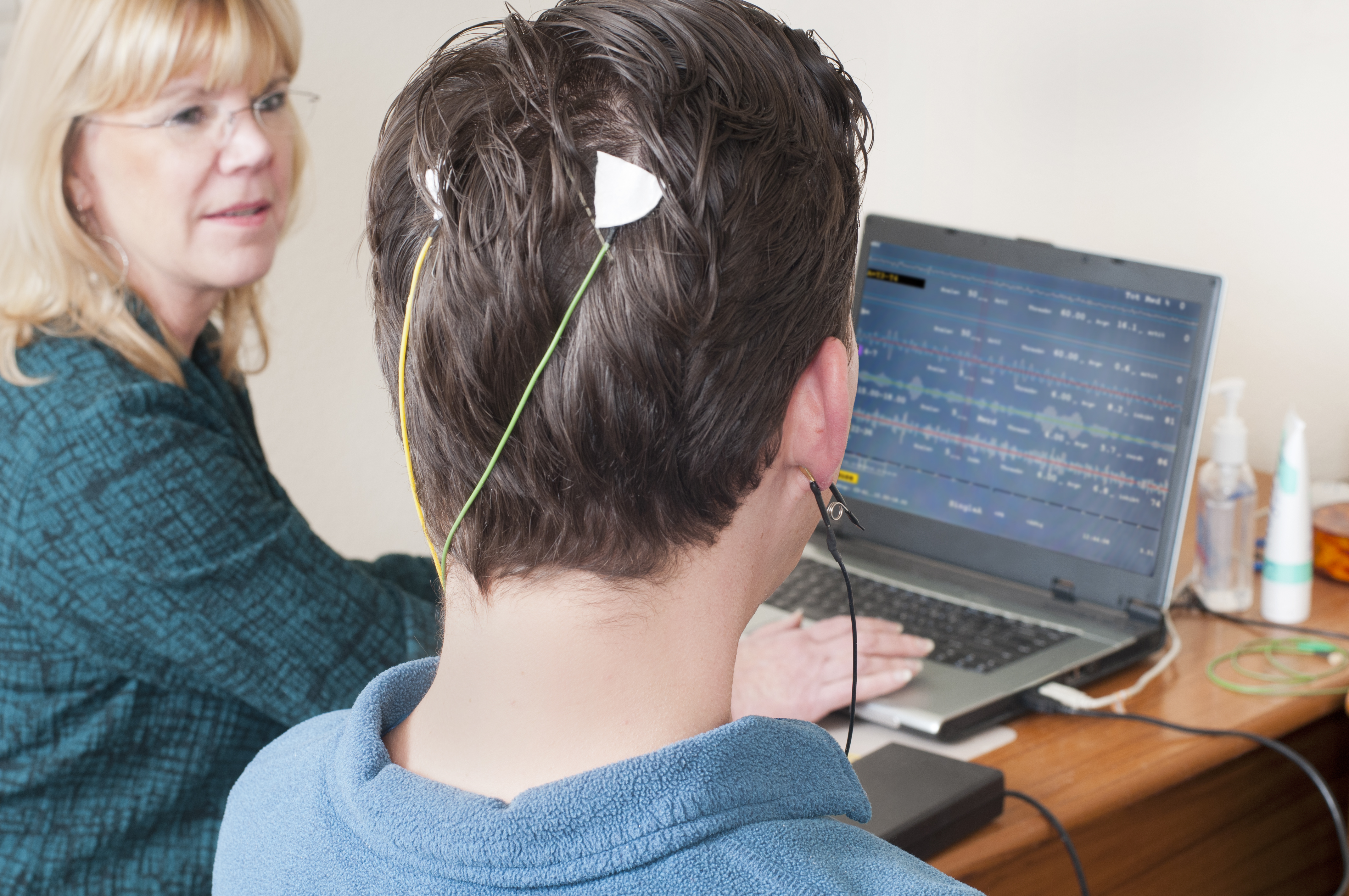
The Technical Framework: Equipment and Software
As of 2026, the Othmer Method utilizes specific hardware and software configurations designed to handle the high sensitivity required for ILF signal processing.
- The NeuroAmp: This is the specialized amplifier developed by the EEG Institute (distributed through EEG Info). Unlike standard EEG amplifiers, the NeuroAmp is engineered to capture extremely low-frequency signals without the "noise" or drift that typically plagues DC-coupled measurements.
- Cygnet Software: This software is the engine of the Othmer Method. It processes the raw EEG signal and translates it into the feedback the client interacts with. It allows clinicians to adjust the "Optimal Frequency" (ORF) with extreme precision, sometimes down to decimal points in the micro-Hertz range.
- Bipolar Montage: The Othmer Method primarily uses bipolar electrode placements (linking two active sites) rather than monopolar placements (one active site and one neutral reference). This focuses the training on the relationship between two brain areas, which is critical for improving network connectivity.
The Clinical Process: What to Expect During an Othmer Method Session
An Othmer Method practitioner begins with a comprehensive clinical interview. Because the method does not strictly require a QEEG to begin, the clinician looks for "symptoms of dysregulation" categorized into several domains:
- Arousal levels: Is the client hyper-aroused (anxiety, insomnia, anger) or hypo-aroused (depression, brain fog, fatigue)?
- Stability: Does the client experience sudden shifts, such as migraines, seizures, or mood swings?
- Physical symptoms: Does the client struggle with chronic pain, digestive issues, or motor coordination?
Finding the Optimal Reinforcement Frequency (ORF)
The most unique aspect of an Othmer session is the search for the Optimal Reinforcement Frequency. The clinician starts training at a baseline frequency and observes the client’s immediate subjective response.
If the client feels more relaxed, grounded, and alert, the frequency is likely correct. If the client feels agitated, "wired," or develops a headache, the clinician will adjust the frequency—often moving it lower. This real-time titration makes the Othmer Method highly individualized. In a 2026 clinical setting, practitioners use a sophisticated array of feedback tools, including VR headsets and high-definition tactile transducers, to deepen the brain's engagement with the signal.
Session Logistics
A typical session lasts 30 to 45 minutes. Electrodes are placed on the scalp using conductive paste. The client then watches a visual display or engages with a specialized video game. There is no conscious effort required; the client is encouraged to simply "be present" with the feedback. A standard course of training often involves 20 to 40 sessions, depending on the severity of the dysregulation.
Target Applications: Who Benefits Most?
The Othmer Method’s focus on the autonomic nervous system and foundational regulatory networks makes it applicable to a wide range of conditions. Extensive clinical reporting and research, such as studies found on PubMed, have explored its efficacy in the following areas:
- PTSD and Developmental Trauma: By stabilizing the "right-brain" regulatory circuits, the method helps individuals with trauma feel safe in their bodies, reducing the frequency of flashbacks and hyper-vigilance.
- ADHD and Executive Function: Training helps the brain maintain a steady state of "calm focus," reducing impulsivity and distractibility.
- Sleep Disorders: Many clients report significant improvements in sleep latency and quality after just a few sessions, as the brain learns to transition more effectively into restorative states.
- Chronic Pain and Migraines: By addressing the vascular and neural stability of the brain, the Othmer Method can reduce the intensity and frequency of pain events.
- Autism Spectrum Disorder (ASD): The method is frequently used to reduce sensory overload and improve emotional regulation in neurodivergent individuals.
Comparison of Neurofeedback Approaches
| Feature | Othmer Method (ILF) | Classic Amplitude Training | Z-Score Training |
|---|---|---|---|
| Primary Target | Frequencies < 0.1 mHz | 1–40 Hz (Alpha, Beta, etc.) | Deviation from a normative database |
| Mechanism | Endogenous Neuromodulation | Operant Conditioning (Rewards) | Statistical Normalization |
| Clinical Focus | Symptom-based / Physiological | QEEG-based / Protocol-driven | QEEG-based / Database-driven |
| Goal | Self-regulation of brain networks | Changing amplitude of waves | Moving brain toward "average" |
| Typical Feedback | Sensory (Visual/Tactile/Audio) | Audio tones/Point-based games | Comparative data streams |
Practical Considerations: Costs, Duration, and Finding a Practitioner
In 2026, neurofeedback is increasingly recognized, but it is still often considered an elective or "out-of-network" service.
Costs
Individual sessions typically range from $120 to $250, depending on the practitioner's location and expertise. Some clinics offer package rates for 20 sessions, which can reduce the per-session cost. While some insurance plans (specifically for CPT code 90901 - Biofeedback) may cover a portion of the treatment, many clients pay out-of-pocket.
Finding a Certified Practitioner
It is crucial to work with a practitioner who has been specifically trained in the Othmer Method. The EEG Info International Directory is the primary resource for locating clinicians who use the NeuroAmp and Cygnet software. Look for practitioners who maintain "OM" (Othmer Method) certifications or are affiliated with the Association for Applied Psychophysiology and Biofeedback (AAPB).
Potential Side Effects and Safety
The Othmer Method is non-invasive and generally considered safe. However, because it is a powerful tool for changing brain state, "adverse reactions" can occur if the frequency is not properly titrated. These are typically temporary and include:
- Mild headaches or "pressure" in the head.
- Temporary fatigue or sleepiness.
- Increased vividness of dreams.
- Irritability or "feeling wired" if the frequency is too high.
A skilled practitioner can resolve these issues almost immediately by adjusting the training frequency during the session. There are no known long-term negative side effects, as the training does not introduce anything into the brain (no electricity or chemicals); it only provides information.
Frequently Asked Questions
Is the Othmer Method a form of "Brainwashing" or Shock Therapy?
No. The Othmer Method is a passive monitoring and feedback system. It does not send any electrical current or stimulation into the brain. It simply "shows" the brain its own electrical patterns. The changes that occur are the result of the brain learning to self-regulate more efficiently.
How many sessions are usually required to see results?
While some individuals notice changes in sleep or mood within the first 3 to 5 sessions, a standard clinical course is usually 20 sessions to ensure the changes are "locked in." For complex conditions like chronic trauma or severe ASD, 40 to 60 sessions or long-term maintenance may be necessary.
Can the Othmer Method be used alongside medication?
Yes. In fact, many clients seek neurofeedback to help them eventually reduce their reliance on medications for ADHD, anxiety, or sleep. However, any changes to medication must be managed by a prescribing physician. As the brain becomes more efficient, the same dose of medication may feel more potent, necessitating a medical review.
Does the Othmer Method require a QEEG?
While a QEEG can provide interesting insights, the Othmer Method does not require one to be effective. The method relies on the "clinical picture"—the symptoms the client reports—to guide the training. Practitioners believe that the brain's response to the training itself is the most accurate "map" available.
Is the training permanent?
For most people, the gains made during a full course of neurofeedback are long-lasting. This is due to neuroplasticity; once the brain learns a more efficient way to regulate itself, it tends to maintain that state, much like learning to ride a bicycle. Some clients choose to return for "tune-up" sessions during times of high stress.
Final Recommendation
If you or a loved one are struggling with symptoms of nervous system dysregulation—ranging from chronic anxiety and sleep issues to complex trauma or ADHD—the Othmer Method offers a highly individualized, non-invasive path toward recovery. The first step is to schedule an initial consultation with a certified practitioner to determine if your symptoms align with the regulatory domains addressed by ILF training. Ensure that your clinician uses modern equipment and has a clear plan for titrating your Optimal Reinforcement Frequency, as this personalization is the hallmark of the Othmer Method's success.
Image Gallery
Select an image to open it in a new tab.

Zara El-Hashem
Sociocultural Dynamics and Academics Writer
