How to Prepare a Watermelon Tomato Cucumber Salad: A Comprehensive Guide

Preparing a watermelon tomato cucumber salad is a straightforward process that centers on balancing sweet, acidic, and savory profiles through ingredient selection, proper knife work, and thoughtful seasoning. By layering chilled melon, ripe tomatoes, and crisp cucumbers with fresh herbs and a balanced vinaigrette, you create a refreshing dish that highlights summer produce.
The Foundation of the Salad: Selecting Premium Ingredients
The success of a watermelon tomato cucumber salad relies entirely on the quality of its raw components. Because this dish is rarely cooked, the inherent flavor profile of each fruit and vegetable is exposed.
Watermelon Selection and Preparation
When choosing a watermelon, look for a heavy, symmetrical fruit with a creamy yellow “field spot,” which indicates it ripened on the vine. To prepare the melon for a salad, remove the rind entirely, including the tough white layer between the flesh and the skin. Cube the remaining red flesh into one-inch uniform pieces. Consistency in sizing ensures that every bite provides the correct ratio of sweetness to the other ingredients.
Tomato Varieties
Tomatoes bring the acidity and umami necessary to offset the sugar in the watermelon. For the best results, use heirloom tomatoes or cherry tomatoes. Heirlooms offer a visual complexity and a depth of flavor that standard slicing tomatoes often lack, while cherry or grape tomatoes provide a convenient "pop" of texture. If using larger tomatoes, remove the excess seeds and gel-like membranes; this prevents the salad from becoming overly watery when combined with the salt in the dressing.
Cucumber Crispness
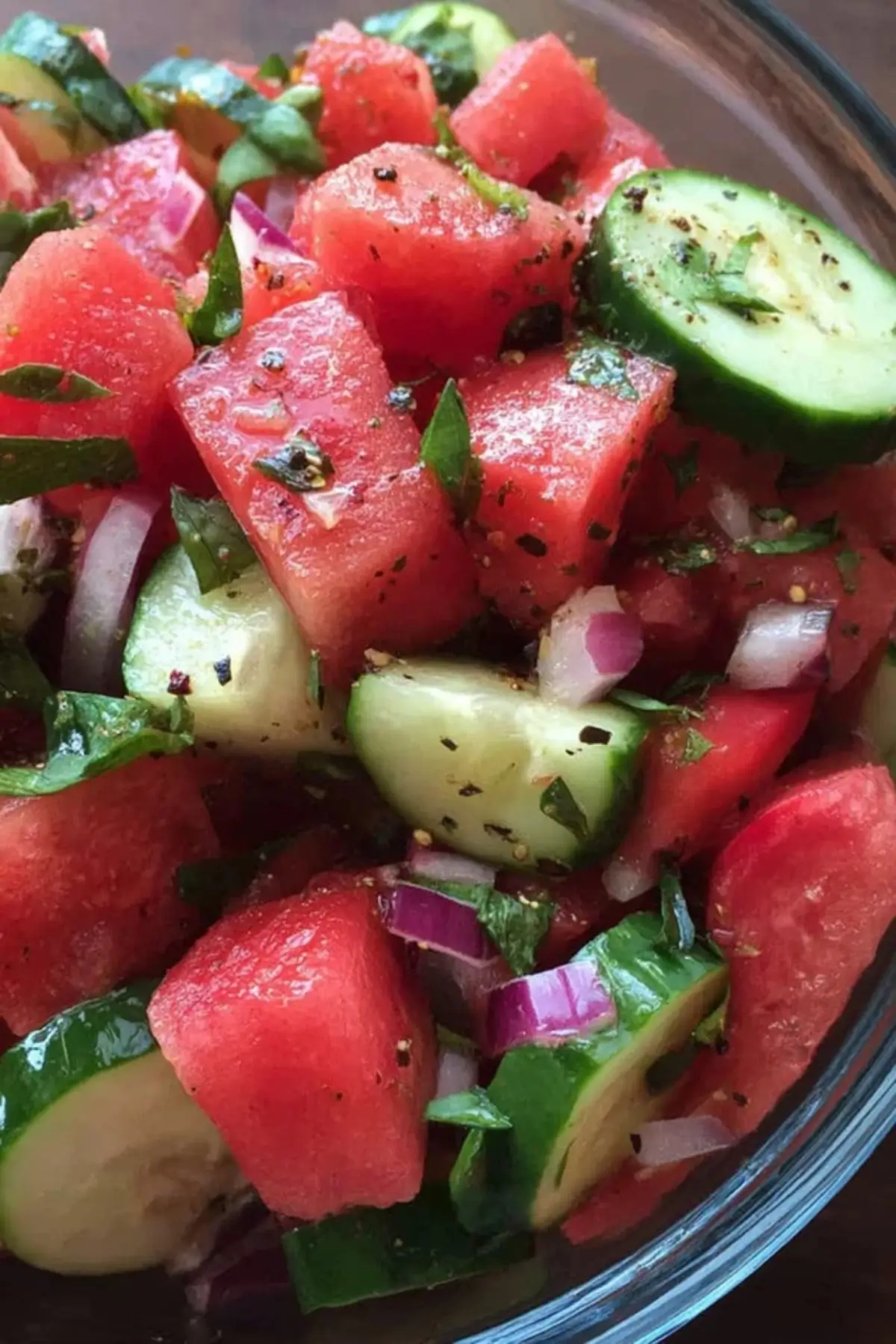
English or Persian cucumbers are preferred for this salad because of their thin, edible skins and minimal seed content. Unlike standard field cucumbers, these varieties do not require peeling or seeding, which saves preparation time and maintains structural integrity. Slice them into half-moons or rounds of similar thickness to your watermelon cubes.
Balancing Flavors: Aromatics and Seasoning
Once the primary ingredients are prepared, the salad requires a bridge—a combination of herbs, acid, and salt that marries the disparate flavors.
Fresh Herbs
Mint and basil are the traditional choices for this salad. Mint echoes the cooling sensation of the watermelon, while basil provides a peppery, anise-like undertone that pairs naturally with tomatoes. You should hand-tear the leaves just before serving; bruising the leaves with a knife often leads to oxidation and premature wilting.
The Role of Salt and Fats
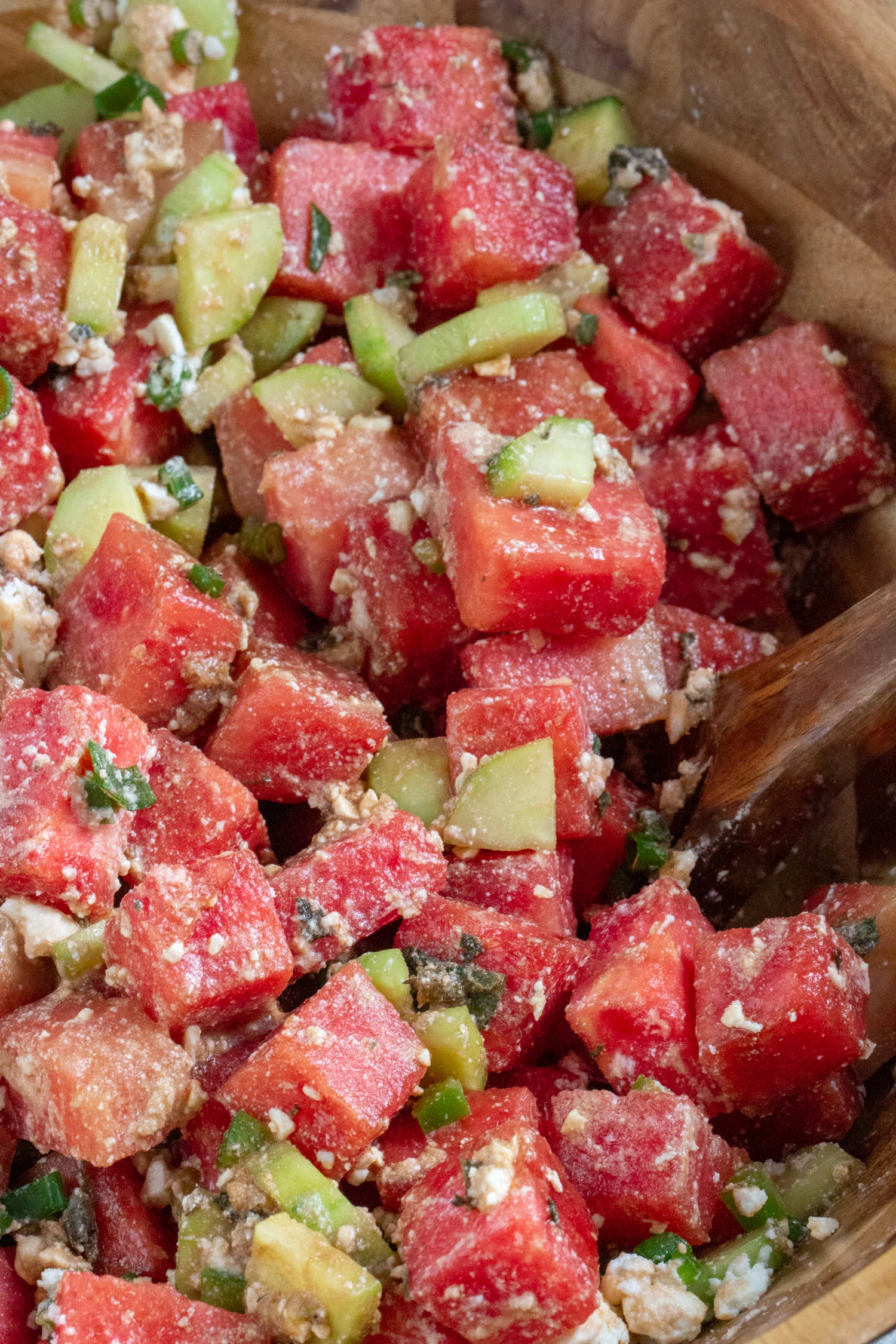
Salt is essential to draw out the juices of the tomatoes and cucumbers, creating a natural sauce. Use a high-quality flaky sea salt rather than fine table salt to provide occasional bursts of seasoning. Additionally, incorporating a creamy element, such as crumbled feta or goat cheese, adds a saline bite that cuts through the sweetness of the fruit. If you prefer a dairy-free option, thinly sliced avocado can serve a similar purpose, providing richness through healthy monounsaturated fats.
Practical Preparation Steps
To achieve the best results, follow this sequential approach to maintain texture and flavor vibrancy.
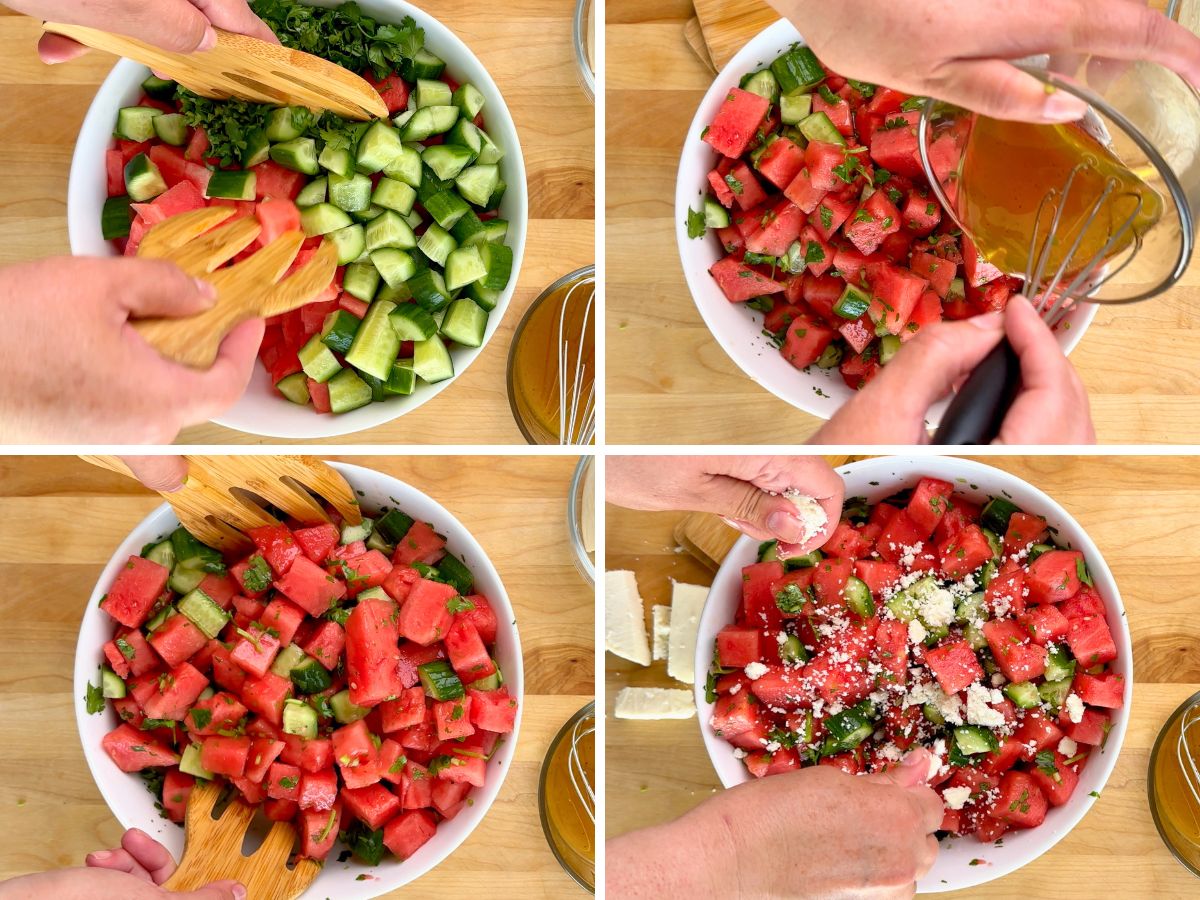
- Prep the Base: Cube the watermelon and cucumber, and halve the tomatoes. Place them in a large non-reactive bowl (glass, ceramic, or stainless steel).
- Dress Lightly: Create a vinaigrette using a 3:1 ratio of high-quality extra virgin olive oil to a mild acid, such as lime juice or white balsamic vinegar. Avoid heavy, thick dressings that might coat the fruit too heavily and mask their individual flavors.
- Incorporate Aromatics: Add the torn herbs and any optional additions like thinly sliced red onion or jalapeño for heat.
- Toss Gently: Use a wide spatula to fold the ingredients together. Avoid vigorous tossing, as the watermelon cubes are fragile and can easily break down into a mushy consistency.
- Resting Period: Allow the salad to sit for 10 to 15 minutes before serving. This brief period allows the salt and vinaigrette to mingle with the natural juices released by the vegetables, creating a light, integrated dressing at the bottom of the bowl.
Comparison of Salad Components
The following table outlines how different ingredients contribute to the overall composition and texture of the dish.
| Ingredient | Primary Function | Preparation Tip |
|---|---|---|
| Watermelon | Sweetness / Hydration | Cube into 1-inch pieces; chill before cutting. |
| Heirloom Tomato | Acid / Umami | Remove seeds to prevent excess liquid. |
| English Cucumber | Texture / Crunch | Slice into half-moons; do not peel. |
| Feta Cheese | Salt / Creaminess | Crumble just before tossing to maintain shape. |
| Mint / Basil | Brightness / Aroma | Tear by hand to avoid browning. |
| Olive Oil | Emulsification / Fat | Use cold-pressed for a fruity finish. |
Troubleshooting Common Issues
Preparation of this salad often results in two common problems: excessive liquid accumulation or lackluster flavor.
Managing Excess Liquid
Watermelon and tomato are both high-water-content ingredients. If the salad sits for too long—usually more than an hour—the salt will pull too much water from the cells, resulting in a soup-like consistency. To troubleshoot this, always drain the tomatoes of their inner seeds before mixing, and only add the salt immediately before service. If you are preparing the dish for an event, keep the fruit and vegetables stored separately and combine them at the last possible moment.
Enhancing Flavor Profile
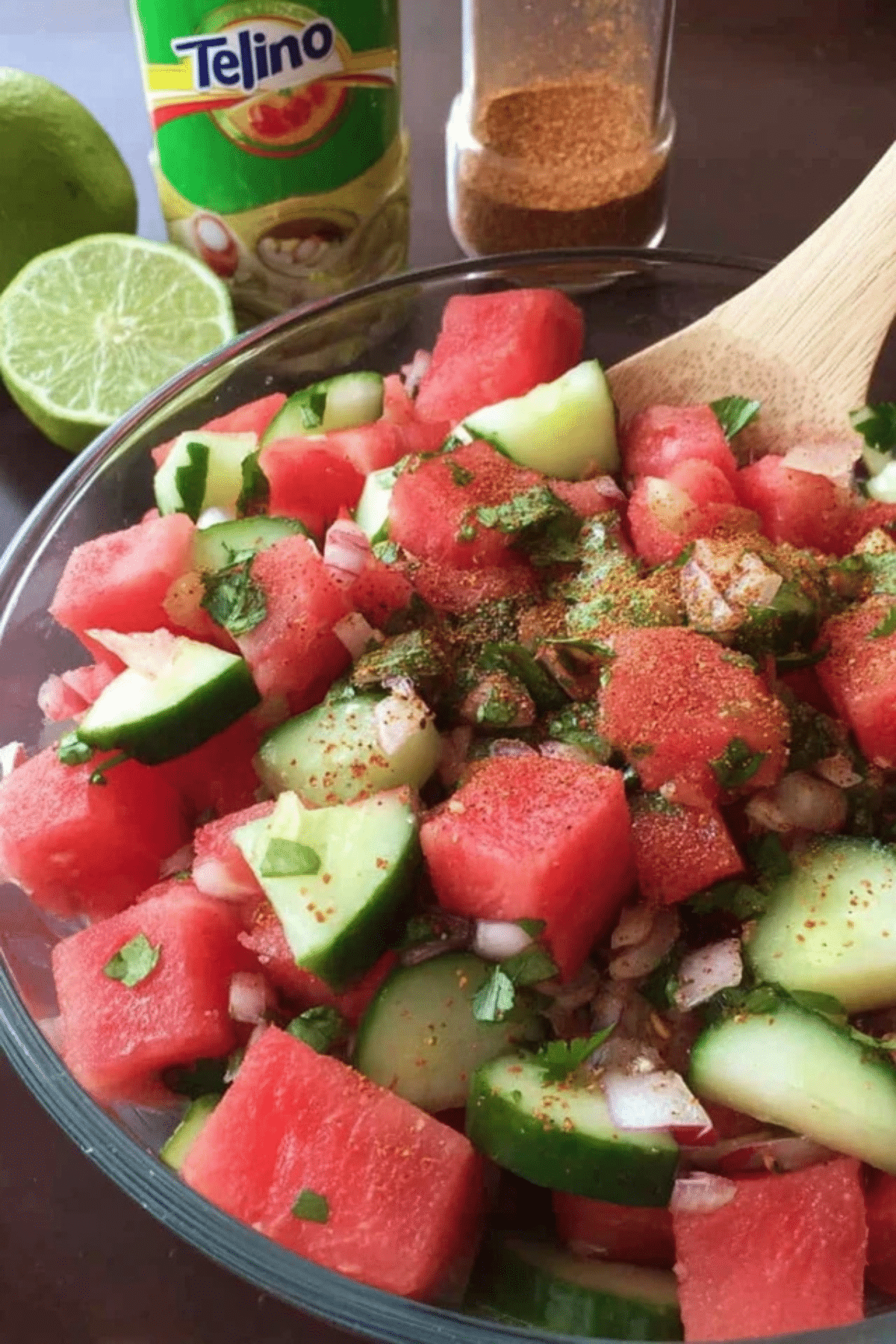
If the salad tastes “flat,” it is almost always a result of insufficient acidity. Watermelon is very sweet, and it requires a sharp contrast to feel like a savory salad rather than a fruit cup. If your tomatoes are not particularly acidic, increase the lime juice or vinegar content slightly. You may also add a pinch of chili flakes or a small amount of finely zested lime rind, which adds essential oils and aromatic intensity without adding moisture.
Frequently Asked Questions
Should I refrigerate the salad after tossing?
It is best to serve this salad at room temperature or lightly chilled. While the ingredients should be stored in the refrigerator, serving the salad immediately after it has been cold-soaked often dulls the vibrancy of the herbs and the sweetness of the melon. If you must chill it, limit it to 20 minutes maximum.
Can I prepare this salad a day in advance?
It is not recommended to assemble the full salad more than an hour before serving. You can prep the watermelon and cucumbers the night before, storing them in airtight containers, but the tomatoes should remain at room temperature until serving, and the dressing and herbs should never be added until the final step.
What is the best type of vinegar to use?
White balsamic vinegar is the professional standard for this salad because it provides the necessary acidity while remaining clear, which keeps the salad looking bright. Standard balsamic vinegar will turn the watermelon a muddy brown color and mask the fresh flavor of the herbs.
Does this salad require a protein addition?
While the salad is traditionally served as a side dish, you can make it a light main course by adding grilled shrimp or chickpeas. These additions provide protein and fiber without clashing with the delicate, refreshing nature of the fruit base.
What if I cannot find English cucumbers?
If you only have access to standard waxed cucumbers, peel them entirely, as the thick, waxy skin is unpleasant to chew. Additionally, split the cucumber lengthwise and use a spoon to scoop out the seedy center channel, as these seeds can be watery and bitter.
Are there alternatives to feta cheese?
Yes, if you want a different texture, small pearls of fresh mozzarella provide a creamy, mild contrast. For a vegan-friendly version, a dollop of toasted pine nuts or sunflower seeds provides an excellent crunch that complements the texture of the melon.
Final Recommendation
To ensure the best possible experience when preparing a watermelon tomato cucumber salad, focus on temperature and timing. Chill your watermelon thoroughly before dicing, but maintain your tomatoes at room temperature to preserve their full flavor profile. Always salt the salad at the moment of serving to maintain the structural crispness of the cucumbers. By treating each ingredient with care and focusing on the balance of acid and salt, you will achieve a professional-quality dish that emphasizes the natural best qualities of your seasonal produce.
Image Gallery
Select an image to open it in a new tab.




Akira Tanaka
International Academic Trends Correspondent
