How the Federal Poverty Level Is Determined: A Comprehensive Guide

The Federal Poverty Level (FPL)—often referred to as the Federal Poverty Guidelines—is determined by the U.S. Department of Health and Human Services (HHS). These figures are calculated annually based on the previous year’s Consumer Price Index (CPI) to account for inflation, providing a threshold used by federal and state agencies to determine financial eligibility for various public assistance programs.
Understanding the Origin of the Federal Poverty Level
To understand how the Federal Poverty Level is determined today, one must recognize the distinction between the "Poverty Thresholds" and the "Poverty Guidelines." These two terms are frequently conflated, yet they serve different administrative purposes.
The Census Bureau produces the Poverty Thresholds. These are the statistical yardsticks used primarily for historical research and calculating the number of people living in poverty in the United States. These thresholds were originally developed in the 1960s by Mollie Orshansky of the Social Security Administration. She based the calculation on the cost of a minimum food diet and multiplied that figure by three, under the assumption that the average family spent one-third of their income on food at that time.
In contrast, the Poverty Guidelines—the metrics most individuals interact with—are a simplified version of these thresholds. The Department of Health and Human Services issues these guidelines annually. Because the Census Bureau’s thresholds are complex and include many variations based on the age of family members or the number of children, the HHS guidelines provide a streamlined table for administrative use.
The Annual Calculation Process
The primary mechanism for adjusting the FPL is the Consumer Price Index for All Urban Consumers (CPI-U), published by the Bureau of Labor Statistics (BLS). This index measures the average change over time in the prices paid by urban consumers for a market basket of consumer goods and services.
Each year, the HHS Office of the Assistant Secretary for Planning and Evaluation (ASPE) updates the guidelines. The process is mechanical rather than policy-driven; it is essentially a mathematical adjustment for inflation. The previous year’s guidelines are adjusted by the percentage change in the CPI-U. This ensures that as the cost of living rises, the income levels that qualify a family as "living in poverty" rise correspondingly, preventing the erosion of eligibility for benefits due to inflation.
The guidelines are generally published in the Federal Register early each calendar year. Once published, these figures become the official standard for the current cycle until the following year’s update.
Structural Variables in the Guidelines
The FPL is not a single number but a grid based on two primary factors: household size and geographic location.
Household Size
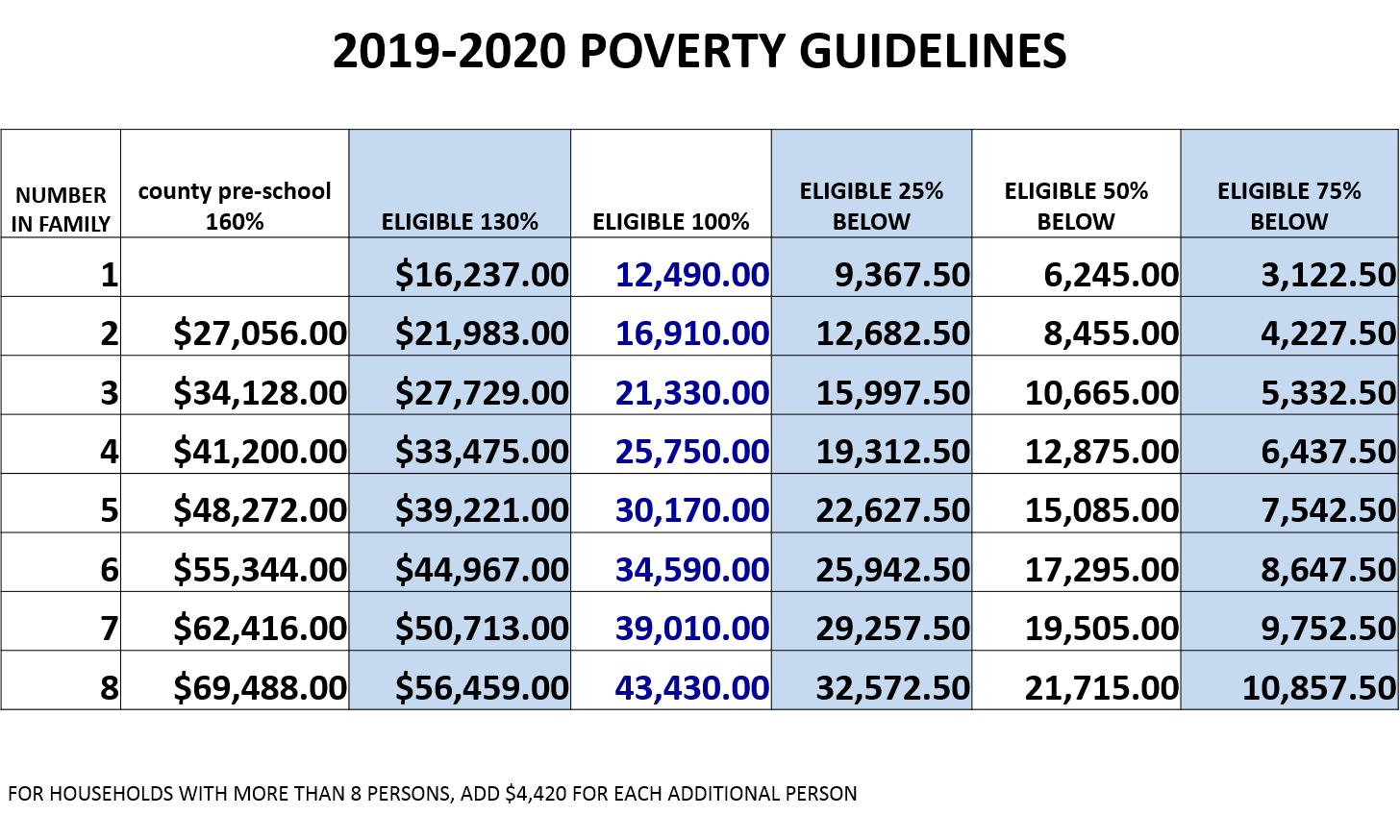
The guidelines provide a base poverty figure for a one-person household. From there, it adds a specific "incremental amount" for each additional person in the household. This ensures that the FPL scales logically as family size increases. For example, a family of four requires significantly more income to meet basic needs than a single individual; the calculation accounts for this by setting higher income ceilings for larger family units.
Geographic Distinctions
There are three distinct sets of poverty guidelines:
- The 48 Contiguous States and the District of Columbia: This is the standard set used for the majority of the U.S. population.
- Alaska: Because the cost of living—particularly for energy, transportation, and goods—is significantly higher in Alaska than in the contiguous states, the FPL is adjusted upward to reflect these regional economic realities.
- Hawaii: Similar to Alaska, the FPL for Hawaii is set higher than the contiguous states to account for the unique cost-of-living profile of the islands, where most goods must be imported.
Why the FPL Matters: Eligibility and Programs
The FPL is the fundamental "means test" for many federal and state programs. Governments and organizations use a percentage of the FPL (e.g., 133%, 200%, or 400%) to establish who qualifies for assistance.
Key Programs Utilizing the FPL
- Medicaid and CHIP: Eligibility for Medicaid expansion under the Affordable Care Act (ACA) is often tied to a percentage of the FPL.
- Marketplace Subsidies: The Advance Premium Tax Credit (APTC), which lowers monthly insurance premiums for people purchasing plans through the Health Insurance Marketplace, is scaled based on how far an individual’s income falls within the FPL brackets.
- SNAP (Supplemental Nutrition Assistance Program): While SNAP has its own complex eligibility rules, the FPL often serves as a baseline for determining net income thresholds.
- Head Start and LIHEAP: Programs like the Low Income Home Energy Assistance Program (LIHEAP) and the Head Start educational program use the FPL to prioritize services for families with the greatest financial need.
Comparison of FPL Application Types
| Category | Primary Use | Governing Body |
|---|---|---|
| Poverty Thresholds | Statistical reporting, poverty rate tracking | U.S. Census Bureau |
| Poverty Guidelines | Program eligibility, financial assistance | HHS (ASPE) |
| State-Specific Levels | State-funded welfare or supplemental aid | State Departments |
Limitations and Criticisms
While the FPL is a standardized, efficient tool for administration, it faces significant criticism from economists and policy analysts. The primary critique is that the methodology, which remains rooted in the 1960s "food-multiplied-by-three" concept, does not accurately reflect the modern cost of living.
In 2026, household expenses look vastly different than they did in the 1960s. Today, housing, childcare, healthcare, and internet connectivity constitute the majority of a family’s budget, while the relative share spent on food has decreased. Critics argue that the current FPL does not capture the "real" cost of participating in modern society. Furthermore, the FPL does not vary by geographic location within the contiguous states; a family living in a rural area with low rent is measured by the same FPL as a family living in an expensive metropolitan hub like San Francisco or New York City, leading to potential inequities in program access.
FAQ: Frequently Asked Questions
Is the FPL the same as the "poverty line"?
Yes, the terms are often used interchangeably. The "poverty line" is the colloquial term for the Federal Poverty Guidelines or Thresholds.
Does the FPL change if my family size changes during the year?
The FPL itself is updated once a year. However, if you are applying for a program (like Marketplace insurance), the eligibility is usually determined based on your projected annual income and your household size at the time of application or as expected for the tax year.
Do tax credits and government benefits count as income when calculating FPL?
Generally, the FPL is calculated using "Modified Adjusted Gross Income" (MAGI) for many federal programs. This includes wages, interest, and dividends, but it often excludes certain non-taxable benefits. Always refer to the specific agency’s definition of income when applying for aid.
Does the FPL vary by age?
The HHS poverty guidelines do not vary by the age of the householder. While the Census Bureau’s Poverty Thresholds do have different figures for households headed by individuals over 65, the Guidelines used for public assistance are standardized across all age groups.
How can I find the current year’s FPL table?
The U.S. Department of Health and Human Services publishes the annual table on the official ASPE website. Most state agencies also provide links to these tables to help residents verify their eligibility for local programs.
Determining Your Next Action
If you are attempting to determine your eligibility for government assistance, start by gathering your total household income for the current year. Once you have a clear figure, visit the official HHS ASPE website to locate the most recent Poverty Guidelines table. Identify your household size and compare your income against the corresponding line.
If your income falls below a certain percentage of the FPL—for example, if you earn less than 150% of the FPL—you may qualify for enhanced subsidies or specific social safety net programs. Because eligibility criteria change and are determined at the agency level, you should use the FPL as a preliminary screening tool and then contact the specific program administrator (such as your state’s Medicaid office or a Marketplace representative) for an official determination.
Image Gallery
Select an image to open it in a new tab.
Declan O'Connor
Higher Education and Campus Culture Reporter
