The Complete Brad Stevens Basketball Career Timeline: From DePauw to NBA Champion Executive
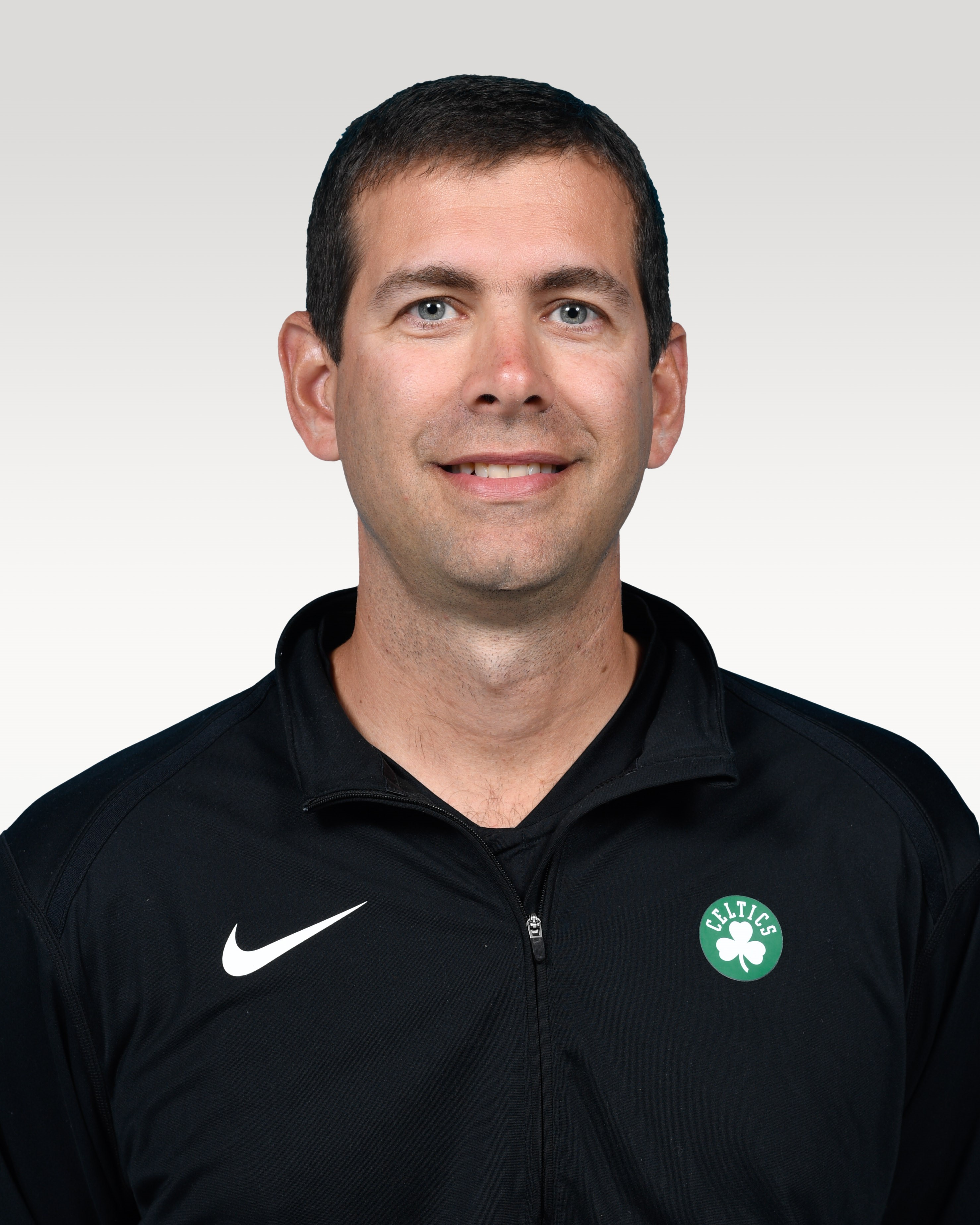
Brad Stevens' basketball career is a masterclass in professional evolution, moving from a Division III player at DePauw to a legendary college coach at Butler, an elite NBA head coach, and finally the President of Basketball Operations for the Boston Celtics, where he architected the 2024 NBA Championship roster.
The trajectory of Brad Stevens is unique in the modern basketball landscape. Unlike many of his peers who transitioned from high-level professional playing careers into coaching, Stevens relied on a rigorous analytical approach, an even-keeled temperament, and an extraordinary grasp of tactical efficiency. As of 2026, he remains one of the most influential figures in basketball management, serving as a blueprint for how technical coaching expertise can be successfully converted into executive leadership.
The Foundation: Playing Years and Early Career (1995–2000)
Before he was a household name in the NCAA and NBA, Brad Stevens was a standout high school player in Zionsville, Indiana. Basketball is culturally ingrained in Indiana, and Stevens was no exception, setting school records that foreshadowed his deep understanding of the game.
DePauw University (1995–1999)
Stevens attended DePauw University, a Division III school in Greencastle, Indiana. While he was a talented player—earning All-Conference honors and serving as a team captain—his time at DePauw was arguably more important for his academic development. He earned a degree in economics, a discipline that would later inform his data-driven approach to coaching and salary cap management.
At DePauw, Stevens was known more for his intelligence and work ethic than for raw athleticism. He realized early on that his future in the game would likely be on the sidelines rather than the court. This self-awareness allowed him to begin studying the game from a structural perspective while still a student-athlete.
The Corporate Detour (1999–2000)
Immediately following graduation, Stevens took a job at Eli Lilly, a major pharmaceutical company in Indianapolis. However, the pull of the basketball court was too strong. Within a year, he made the risky decision to leave a stable corporate career to take a volunteer (and eventually low-paid) position at Butler University. This transition is often cited as the "sliding doors" moment of his career, proving his commitment to the craft over financial security.
The Butler University Era: A Tactical Revolution (2000–2013)
Stevens' tenure at Butler is divided into two distinct phases: his apprenticeship as an assistant and his historic run as the youngest head coach to reach back-to-back national championship games.
Learning the "Butler Way" (2000–2007)
Stevens began as a volunteer in the basketball office before being promoted to a full-time assistant under Thad Matta and later Todd Lickliter. During this period, Butler established itself as a mid-major powerhouse. Stevens was instrumental in scouting and film prep, gaining a reputation as a "video room rat." When Lickliter left for Iowa in 2007, the university took a chance on the 30-year-old Stevens, promoting him to head coach.
Head Coaching Dominance (2007–2013)
The Stevens era at Butler was characterized by defensive discipline and "The Butler Way"—a philosophy emphasizing team-first play and mental toughness.
- 2007–2009: Stevens set a record for the most wins by a coach in his first two seasons (56).
- The 2010 Run: Butler entered the NCAA Tournament as a 5-seed and went on a historic run to the National Championship game against Duke. Gordon Hayward’s half-court heave at the buzzer nearly resulted in the greatest upset in college basketball history.
- The 2011 Encore: Despite losing Hayward to the NBA, Stevens led a 8-seed Butler team back to the National Championship game, a feat that defied all statistical probability and cemented his status as a tactical genius.
By the time he left Butler in 2013, Stevens had compiled a 166–49 record, multiple Horizon League titles, and had successfully navigated the school’s transition into the Atlantic 10 and eventually the Big East.
The Boston Celtics: Transitioning to the NBA (2013–2021)
On July 3, 2013, the Boston Celtics shocked the basketball world by hiring Stevens to replace Doc Rivers. At the time, the Celtics were entering a massive rebuilding phase following the trades of Kevin Garnett and Paul Pierce.
Rebuilding the Green (2013–2016)
The early NBA years were a test of Stevens’ patience. His first season resulted in only 25 wins, but his impact was immediate in terms of player development and culture. By the 2014-15 season, he led a roster largely composed of role players to the playoffs, a testament to his ability to maximize "marginal" talent through innovative spacing and defensive schemes.
Contender Status (2016–2021)
As the Celtics acquired more talent—including Isaiah Thomas, Al Horford, and later drafting Jayson Tatum and Jaylen Brown—Stevens elevated the team into the Eastern Conference elite.
- 2017: Led the Celtics to the #1 seed in the East and an Eastern Conference Finals appearance.
- 2018: Perhaps his greatest coaching performance, Stevens led a team missing stars Kyrie Irving and Gordon Hayward to within one game of the NBA Finals.
- Tactical Reputation: During this era, Stevens became famous for his "ATO" (After Time Out) plays. Analytics showed that the Celtics were consistently among the most efficient teams in the league when coming out of a huddle, a direct reflection of Stevens' preparation.
Despite multiple trips to the Conference Finals, the elusive championship remained out of reach during his coaching tenure, leading to a surprising organizational shift in 2021.
The Executive Ascent: President of Basketball Operations (2021–Present)
In June 2021, Danny Ainge retired as the President of Basketball Operations, and Stevens was immediately named his successor. He moved from the bench to the front office, a transition rarely seen in the modern NBA.
Immediate Impact and Key Acquisitions
As an executive, Stevens displayed the same clinical, unemotional decision-making that defined his coaching. He recognized that the Tatum-Brown core needed specific veteran archetypes to succeed. His first major move was re-acquiring Al Horford, followed by the trade for Derrick White—a move that initially drew skepticism but proved to be a masterstroke of roster construction.
The 2024 Championship Architecture
The 2023-24 season was the culmination of the "Stevens Method" in the front office. In a single offseason, he traded away franchise pillar Marcus Smart to acquire Kristaps Porziņģis and capitalized on the Milwaukee Bucks' trade for Damian Lillard to snag Jrue Holiday. These moves created one of the most statistically dominant starting lineups in NBA history.
The result was the 2024 NBA Championship, the 18th in Celtics history. While Joe Mazzulla was the coach on the sidelines, the basketball world recognized the title as a victory for Stevens' vision. By 2026, Stevens has established a gold standard for roster sustainability under the NBA's restrictive "Second Apron" salary cap rules, keeping the Celtics in perennial contention through savvy drafting and high-value trades.
Brad Stevens Career Milestones and Statistics
The following table summarizes the key metrics and achievements across the different phases of Stevens' career.
| Phase | Organization | Role | Key Achievement |
|---|---|---|---|
| 1995–1999 | DePauw University | Player | All-Conference Selection (D-III) |
| 2001–2007 | Butler University | Assistant Coach | Built the "Butler Way" identity |
| 2007–2013 | Butler University | Head Coach | 2x NCAA Championship Appearances |
| 2013–2021 | Boston Celtics | Head Coach | 3x Eastern Conference Finals |
| 2021–2026 | Boston Celtics | President of Ops | 2024 NBA Champion (Executive) |
| Career Record | NCAA Head Coach | 166–49 (.772) | Highest win % in Butler history |
| Career Record | NBA Head Coach | 354–282 (.557) | 7 consecutive playoff appearances |
The Philosophy of the "Stevens Method"
Understanding the timeline of Brad Stevens requires an appreciation for his specific approach to basketball logic. His career isn't just a list of dates; it is the evolution of a philosophy that has influenced the entire league.
Analytics and Efficiency
Coming from an economics background, Stevens was an early adopter of advanced metrics. At Butler, he focused on "points per possession" long before it was a standard broadcast stat. In the NBA, he pioneered "positionless basketball," valuing players who could switch defensively and shoot from multiple spots on the floor, regardless of their height.
Emotional Regulation
Stevens is famously stoic. Whether his team hits a game-winner or suffers a blowout, his demeanor remains consistent. This "even-keeled" approach served him well in the high-pressure environment of Boston sports. It allowed his players to remain focused on the process rather than the result, a trait that became a hallmark of the Celtics' identity during the mid-2020s.
Roster Construction in the New CBA
As an executive in 2026, Stevens has mastered the complexities of the new Collective Bargaining Agreement (CBA). While other teams struggled with the "second apron" luxury tax penalties, Stevens utilized trades and contract extensions (such as those for Jaylen Brown and Jrue Holiday) to lock in a championship core while maintaining enough flexibility to fill the bench with high-IQ, low-cost veterans.
Frequently Asked Questions
What was Brad Stevens' record at Butler?
Brad Stevens finished his college coaching career with a record of 166–49. He led the Bulldogs to two National Championship games (2010 and 2011) and won four Horizon League regular-season titles. His .772 winning percentage remains one of the highest for any coach with at least five years of experience in Division I history.
Why did Brad Stevens stop coaching?
In June 2021, Stevens transitioned to the front office to replace Danny Ainge. While he was still considered one of the best coaches in the league, the move allowed him to have more control over the long-term direction of the franchise and provided a better work-life balance after eight grueling seasons on the NBA sidelines.
Did Brad Stevens play in the NBA?
No, Brad Stevens did not play in the NBA. He played Division III basketball at DePauw University. His lack of a professional playing pedigree made his rapid ascent to the top of the NBA coaching and executive ranks even more remarkable, as he had to earn respect entirely through his tactical and managerial expertise.
How many championships has Brad Stevens won?
As of 2026, Brad Stevens has won one NBA Championship as an executive (2024). While he reached the National Championship game twice as a college coach and the Eastern Conference Finals three times as an NBA coach, the 2024 title was his first "Ring" at the highest level of the sport.
What are Brad Stevens' most famous trades as an executive?
His most impactful trades include the acquisition of Al Horford (2021), the trade for Derrick White (2022), and the twin blockbusters in 2023 that brought Kristaps Porziņģis and Jrue Holiday to Boston. These moves are credited with transforming the Celtics from a talented but inconsistent team into a disciplined championship juggernaut.
Future Outlook and Legacy
As we look at Brad Stevens' career from the perspective of 2026, his legacy is that of a "connector." He bridged the gap between the old-school grit of Indiana basketball and the new-school world of NBA analytics. His success in the front office has led other franchises to consider former coaches for executive roles, seeking that same blend of on-court knowledge and strategic planning.
For those looking to follow a similar path in sports management or coaching, the next action is clear: prioritize the study of the game's structural elements—salary cap mechanics, defensive rotations, and psychological resilience. Brad Stevens proved that a background in economics and a passion for video work could be just as valuable as a 40-inch vertical leap.
To stay updated on the current state of the Boston Celtics and Stevens' ongoing executive decisions, you can follow the official NBA Celtics News portal or the Butler University Athletics archives for historical context on his collegiate coaching roots.
Image Gallery
Select an image to open it in a new tab.


Simon Caldwell
Enterprise Technology and Systems Editor
