
Using home equity to pay off debt involves trading unsecured, high-interest obligations—such as credit cards or personal loans—for a secured loan backed by your property, which typically offers lower interest rates and potentially tax-deductible interest, though it puts your home at risk if you default.
For many homeowners, the accumulation of high-interest debt can become an overwhelming financial burden. When monthly minimum payments stretch household budgets to their limits, individuals frequently look toward alternative financial instruments to regain control. One of the most prominent strategies considered is leveraging home equity—the difference between a home’s current market value and the remaining balance of its mortgage.
While converting unsecured debt into secured debt can significantly reduce monthly obligations and lower overall interest expenses, the decision requires a careful assessment of mechanics, costs, eligibility criteria, and severe long-term risks. Understanding how this financial maneuver operates ensures that homeowners make informed decisions aligned with their broader financial health.
Understanding Home Equity and Borrowing Mechanisms
Home equity accumulates over time through two primary drivers: the gradual repayment of the principal balance on an existing mortgage and the appreciation of the property's market value within real estate markets. As equity builds, it represents a substantial pool of accumulated wealth that can be accessed through specific financial products. To use this value for debt consolidation, homeowners typically rely on two distinct financial vehicles: a Home Equity Loan or a Home Equity Line of Credit (HELOC).
Home Equity Loans (Second Mortgages)
A home equity loan functions as a lump-sum loan secured by the property. Lenders disburse the approved funds in a single payment at the closing table. These loans typically feature fixed interest rates, meaning the monthly principal and interest payment remains constant over a predictable repayment term, which commonly ranges from five to thirty years.
This predictability makes budgeting straightforward. Homeowners receive the exact amount needed to clear out scattered consumer debts, execute a single payoff transfer, and transition to one consolidated monthly payment.
Home Equity Lines of Credit (HELOC)
Conversely, a HELOC operates as a revolving line of credit, functioning similarly to a credit card backed by residential real estate. During the "draw period"—often lasting ten years—borrowers can access funds as needed up to a predetermined credit limit, typically making interest-only payments on the drawn balance.
Following the draw period, the loan enters the "repayment period," during which the borrower can no longer draw new funds and must repay both the principal and accumulated interest over a set term. HELOCs usually feature variable interest rates, meaning monthly payments fluctuate in response to broader economic shifts and benchmark interest rate movements set by central banks.
| Feature | Home Equity Loan | Home Equity Line of Credit (HELOC) |
|---|---|---|
| Fund Disbursement | Lump sum at closing | Revolving draw as needed |
| Interest Rate Structure | Fixed rate | Variable rate (typically) |
| Repayment Schedule | Immediate principal and interest payments | Interest-only during draw, then principal + interest |
| Best Suited For | Fixed debt consolidation amounts | Ongoing or phased expenses |
| Payment Predictability | High (fixed monthly payment) | Low (fluctuates with market rates) |
The Mechanics of Debt Consolidation with Equity
The core appeal of utilizing home equity to address liabilities lies in interest rate arbitrage. Credit cards, unsecured personal loans, and retail financing frequently carry double-digit Annual Percentage Rates (APRs), sometimes exceeding 20% to 30%. In contrast, borrowing against residential real estate generally commands lower interest rates because the lender holds a secured lien against a tangible asset.
When executing a debt consolidation strategy, the borrower secures the home equity product and directs the funds specifically toward liquidating high-interest accounts. For instance, a homeowner carrying balances across five different credit cards at an average interest rate of 22% can replace those fragmented liabilities with a single home equity loan carrying a significantly lower single-digit interest rate.
This restructuring achieves two immediate objectives:
- It reduces the weighted average interest rate paid across all outstanding obligations.
- It eliminates multiple monthly billing cycles and due dates, replacing them with one streamlined payment.
However, substituting unsecured debt with secured debt alters the legal nature of the liability. Credit card companies cannot seize a consumer's house for non-payment of revolving balances; they must rely on collection agencies, lawsuits, or court-mandated judgments. When that same debt is refinanced into a home equity loan or HELOC, the underlying collateral is the primary residence. Failure to meet the new consolidated monthly obligation can trigger foreclosure proceedings, placing the family home at direct risk.

Prerequisites, Qualification, and Costs
Accessing home equity is not automatic; lenders enforce stringent underwriting standards to verify that the borrower possesses adequate financial stability and property value to support additional debt.
Core Eligibility Criteria
- Equity Cushion: Most lenders require homeowners to retain a specific percentage of equity in the property after the new loan is issued. Typically, lenders limit total borrowing (first mortgage plus the new equity loan or HELOC) to a maximum of 80% to 85% of the home's appraised value, known as the Combined Loan-to-Value (CLTV) ratio.
- Credit Score: While credit requirements vary by financial institution, qualifying for favorable interest rates generally requires a credit score in the mid-to-high 600s or above. Borrowers with lower scores may face higher interest rates or find approval difficult.
- Debt-to-Income (DTI) Ratio: Lenders evaluate the borrower’s monthly debt obligations relative to their gross monthly income. A lower DTI ratio demonstrates an enhanced capacity to absorb the new loan payment.
- Income Verification: Proof of steady, verifiable employment or income streams is mandatory. Lenders examine W-2 forms, tax returns, and bank statements to confirm repayment capacity.
Upfront Fees and Closing Costs
Borrowing against real estate incurs transaction expenses similar to obtaining a primary mortgage. Homeowners must budget for these costs, which can range from 2% to 5% of the loan amount, including:
- Appraisal Fees: Professional home valuations required to establish current market worth.
- Origination and Processing Fees: Administrative charges levied by the lending institution.
- Title Search and Insurance: Legal checks to ensure the property title is free of unrecorded liens or ownership disputes.
- Recording Fees: Government charges for updating public property records.
Advantages and Strategic Benefits
When executed with financial discipline, using home equity to eliminate debt offers notable advantages.
- Lower Interest Expenses: The most immediate benefit is the reduction in interest charges over the life of the debt, allowing a larger portion of each monthly payment to reduce the principal balance rather than servicing high interest charges.
- Simplified Cash Flow Management: Managing a single monthly payment reduces administrative oversight, minimizing the risk of missed payment deadlines and late fees associated with juggling multiple accounts.
- Potential Tax Implications: Historically, interest paid on home equity loans and lines of credit could be deducted from federal income taxes if the funds were used to "buy, build, or substantially improve" the taxpayer's home. Under current Internal Revenue Service (IRS) guidelines governed by provisions such as the Tax Cuts and Jobs Act, interest on home equity debt is generally not deductible if the funds are used for personal living expenses, credit card consolidation, or other non-home-related purposes. Homeowners should consult a qualified tax professional to evaluate their specific jurisdictional tax obligations.
Risks and Critical Drawdowns
Despite the financial optimization potential, this strategy carries severe structural hazards that require careful risk management.
- Risk of Foreclosure: The most significant hazard is the conversion of unsecured debt into secured debt. If unexpected life events—such as job loss, medical emergencies, or income reduction—impair the borrower's ability to service the home equity loan, the lender retains the legal right to foreclose on the property.
- False Sense of Financial Security: Consolidating credit card debt clears the balances on revolving accounts, but it does not alter spending habits. If the borrower continues to accumulate new credit card debt while maintaining the new home equity loan, they double their overall debt burden, threatening long-term financial stability.
- Property Value Volatility: Real estate markets fluctuate. If local property values decline sharply, a homeowner could find themselves "underwater," owing more on their combined mortgages than the home is worth, which restricts options to sell or refinance.
Alternatives to Home Equity Borrowing
Before committing home equity to debt resolution, consumers should evaluate alternative strategies that do not place residential property at risk:
- Debt Management Plans (DMPs): Administered by accredited credit counseling agencies, DMPs involve working with creditors to lower interest rates and consolidate unsecured debts into a single monthly payment without taking out new loans.
- Unsecured Personal Loans: These loans do not require collateral, shielding the home from direct risk, though interest rates may be higher than those attached to home equity products.
- Direct Debt Settlement: Negotiating directly with creditors or utilizing professional debt settlement services to resolve accounts for less than the total owed, noting potential impacts on credit scores.
Frequently Asked Questions
Can I use a home equity loan to pay off all types of debt?
Yes, homeowners can technically use funds from a home equity loan or HELOC to pay off virtually any unsecured liability, including credit cards, medical bills, student loans, and personal loans. However, using secured property wealth to pay consumer spending debt requires strict financial discipline to avoid repeating cycles of debt accumulation.
How does using home equity affect my credit score?
Initially, applying for a home equity loan triggers a hard inquiry on your credit report, which can cause a temporary, minor drop in your score. Furthermore, adding a new installment loan alters your credit mix and total debt profile. However, paying off high revolving credit card balances often significantly lowers your credit utilization ratio, which can boost your overall credit score over the medium to long term if accounts are managed responsibly.
What happens if I sell my home before the equity loan is paid off?
When you sell a residential property, all outstanding liens against the title—including the primary mortgage and any home equity loans or HELOCs—must be fully satisfied from the proceeds of the sale at the closing table. If the sale price is insufficient to cover all outstanding loan balances, the seller must bring cash to the closing to clear the remaining debt.
Is the interest on a home equity loan tax-deductible when used for debt consolidation?
Generally, no. According to IRS guidelines, home equity loan interest is only tax-deductible if the borrowed funds are used to buy, build, or substantially improve the taxpayer's home that secures the loan. Using the proceeds to pay off credit cards or personal debts typically disqualifies the interest from being tax-deductible.
What is the difference between a home equity loan and a cash-out refinance?
A home equity loan involves taking out a second mortgage while keeping your existing first mortgage and its current interest rate intact. A cash-out refinance replaces your current mortgage entirely with a new, larger mortgage, allowing you to pocket the difference in cash. If your current mortgage features a low interest rate, a home equity loan is often preferable to preserve that rate.
Conclusion and Next Actions
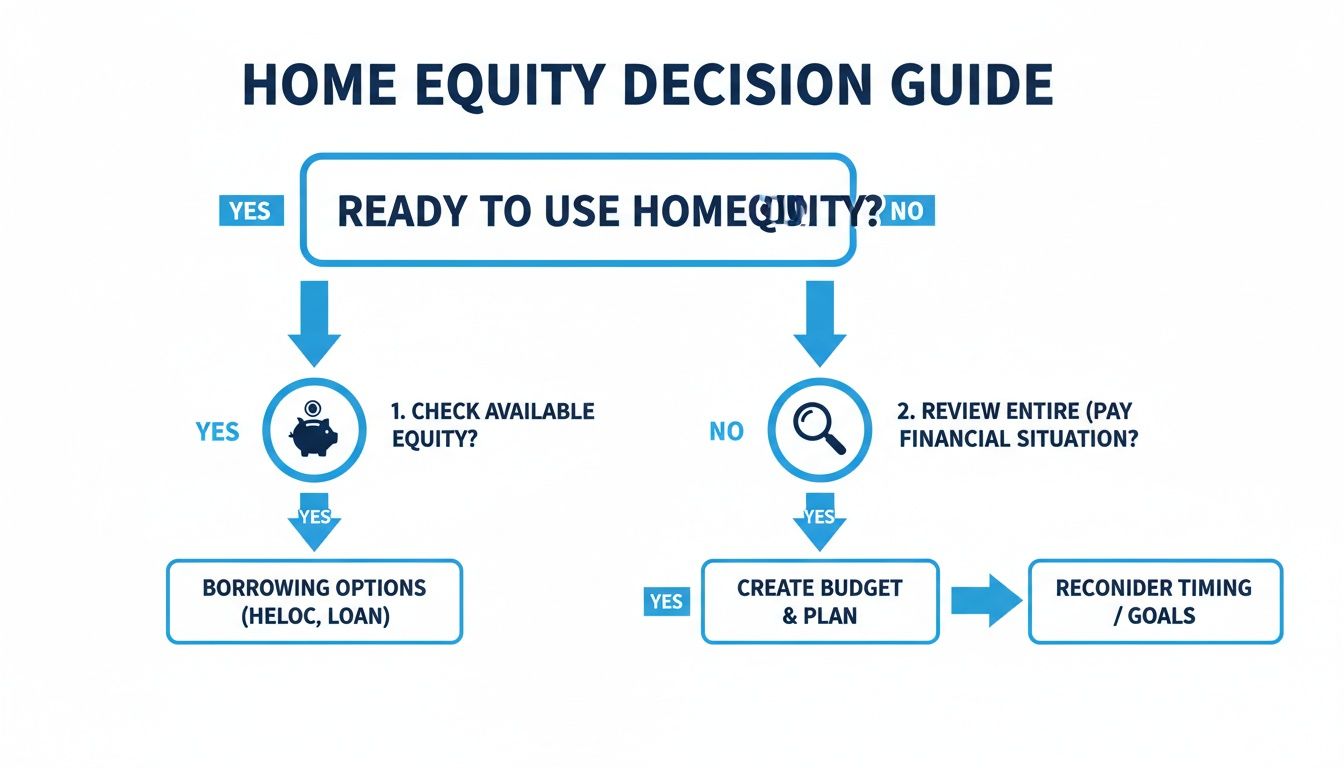
Using home equity to pay off debt is a powerful financial tool that can drastically reduce interest costs and streamline monthly budgeting, but it fundamentally shifts unsecured consumer obligations into a secured lien against your home. Before pursuing this path, evaluate your complete financial picture by pulling a free credit report, obtaining an accurate professional appraisal of your property, and calculating your exact debt-to-income ratio. Consult a certified financial planner or housing counselor to weigh the long-term security of your home against the short-term relief of debt consolidation.
Image Gallery
Select an image to open it in a new tab.

Lars Thomsen
Global Labor Markets and Economic Strategy Editor
