Understanding the CT Minimum Auto Insurance Limits: A Comprehensive Guide for 2026

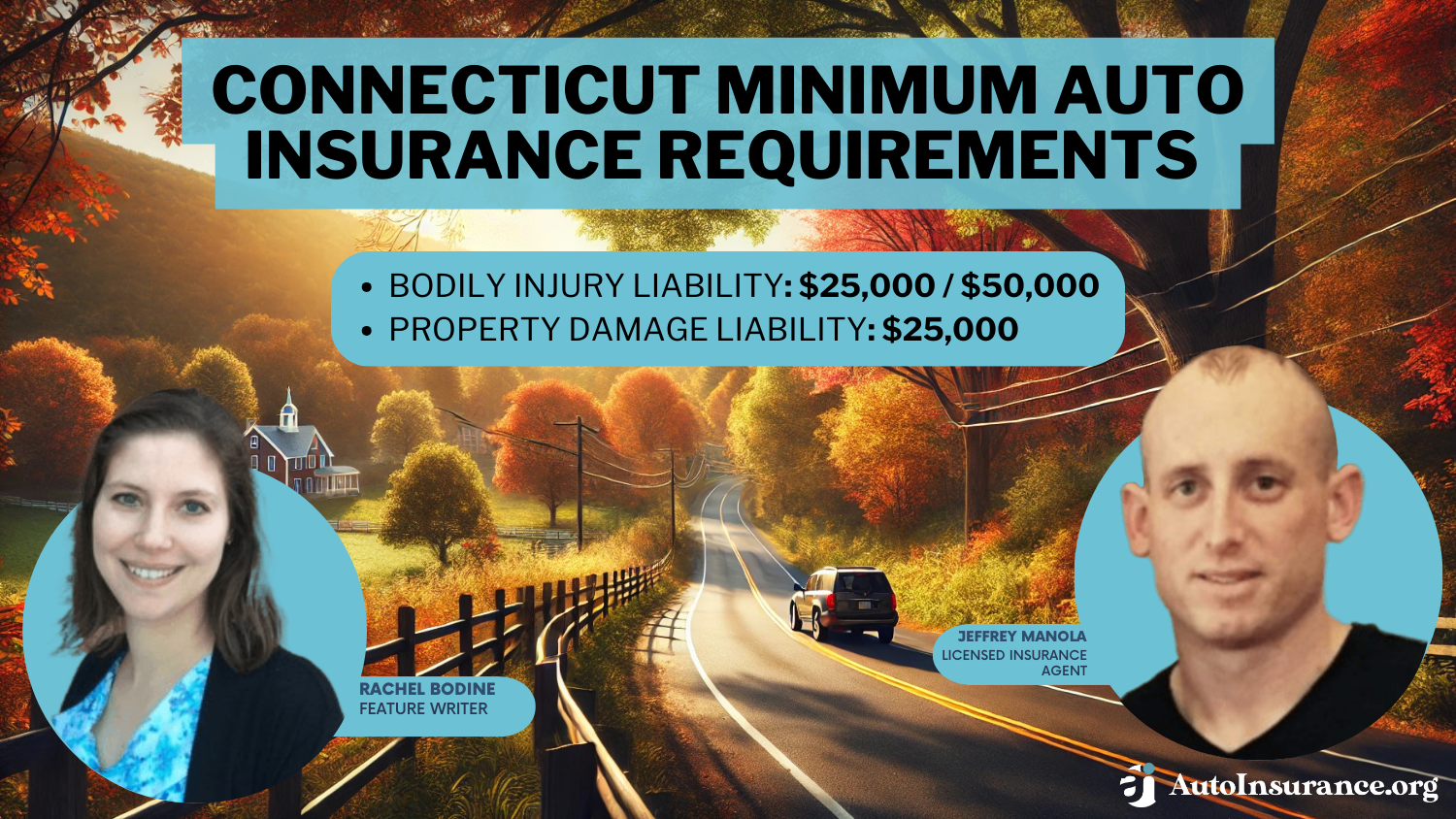
Connecticut drivers are legally required to carry minimum liability insurance coverage to operate a motor vehicle on public roads. As of 2026, the state-mandated minimums are 25/50/25, which translates to $25,000 for bodily injury per person, $50,000 for bodily injury per accident, and $25,000 for property damage per accident. Maintaining these limits ensures compliance with state law and provides essential financial protection.
The Legal Framework for Connecticut Auto Insurance
In Connecticut, the Department of Motor Vehicles (DMV) enforces strict financial responsibility laws. These laws exist to ensure that if a driver is found at fault in an accident, they have the financial resources to compensate other parties for medical bills or property repairs. The "25/50/25" structure is a universal requirement for all private passenger vehicles registered within the state.
Understanding these numbers is vital for every driver. The first two figures refer to "Bodily Injury" liability:
- $25,000 per person: This is the maximum amount your insurance company will pay for the medical expenses, lost wages, and other related costs for a single individual injured in an accident where you are at fault.
- $50,000 per accident: This is the total cap for bodily injury expenses for all individuals involved in a single accident, regardless of how many people were hurt.
The final figure, $25,000 for property damage, covers the costs of repairing or replacing another person’s property, such as their vehicle, a fence, a utility pole, or other infrastructure damaged in a collision.
Why Minimum Limits Often Fall Short
While 25/50/25 satisfies the legal requirement for driving in Connecticut, insurance experts frequently describe these limits as the "floor" rather than the "ceiling" of recommended coverage. Relying strictly on these minimums can expose a driver to significant personal financial risk.
Modern vehicle costs have surged significantly by 2026. The average cost of a new passenger vehicle often exceeds $45,000, and luxury or electric vehicles can be far more expensive. If you strike a high-end vehicle and cause a total loss, the repair or replacement costs will likely exceed your $25,000 property damage limit. Under Connecticut law, you are personally responsible for any costs that exceed your insurance policy's limits. This means your personal assets—including savings, retirement accounts, or future wages—could be subject to a legal judgment to cover the remaining balance.
Similarly, medical costs have risen. A single serious injury can easily result in hospital bills exceeding $50,000. If your coverage is capped at $50,000 per accident, you become liable for any additional medical expenses, which can lead to severe financial hardship.
Comparative Analysis: Minimum vs. Recommended Coverage
The following table illustrates the potential vulnerability of holding only state-mandated minimums compared to common, more robust coverage levels.
| Coverage Component | State Minimum (CT) | Recommended (Standard) | Financial Protection Benefit |
|---|---|---|---|
| Bodily Injury (Per Person) | $25,000 | $100,000 | Protects against major medical lawsuits |
| Bodily Injury (Per Accident) | $50,000 | $300,000 | Handles multi-car/multi-passenger accidents |
| Property Damage | $25,000 | $50,000–$100,000 | Covers modern, high-value vehicle repair |
| Uninsured/Underinsured | $25,000 | $100,000+ | Protection if the other driver lacks insurance |
Uninsured and Underinsured Motorist Coverage
A critical component of the Connecticut insurance landscape is Uninsured/Underinsured Motorist (UM/UIM) coverage. Connecticut law requires that you carry at least $25,000 per person and $50,000 per accident in uninsured motorist coverage.
This coverage is vital because a significant percentage of drivers on the road may be driving illegally without insurance or with insufficient limits to pay for your damages. If you are involved in a collision with an uninsured driver who is at fault, your own UM policy acts as a safety net, paying for your medical bills and, depending on your policy details, property damages. Many Connecticut insurance agents recommend carrying UM/UIM limits that match your own liability limits to ensure you are adequately protected in any scenario.
The Role of Supplemental Coverage
Beyond liability and UM/UIM, Connecticut drivers often choose to add optional coverages that, while not mandated by the state, are essential for complete protection.
Collision Coverage
Collision coverage pays to repair or replace your vehicle if it is damaged in an accident, regardless of who is at fault. If you are financing or leasing your vehicle, your lender will almost certainly require you to carry this coverage.
Comprehensive Coverage
Comprehensive coverage protects your vehicle against non-collision incidents. This includes theft, vandalism, fire, natural disasters, and damage caused by hitting an animal. In 2026, with the increasing frequency of severe weather events and rising vehicle crime rates in urban areas, many Connecticut drivers opt for this coverage as a necessary safeguard.
Medical Payments (MedPay)
MedPay provides coverage for medical expenses for you and your passengers after an accident, regardless of who is at fault. It is often used to cover co-pays or deductibles associated with health insurance, providing a seamless transition from the accident scene to the hospital.
Maintaining Proof of Insurance in 2026
Connecticut requires you to maintain evidence of insurance at all times. Since the state transitioned to digital verification systems, the DMV can cross-reference your registration with real-time data provided by insurance carriers. However, it remains a best practice to carry an insurance identification card—either physical or digital—in your vehicle.
If your insurance lapses, your insurance provider is required to notify the Connecticut DMV. This triggers a warning process. If you do not resolve the lapse by providing proof of new coverage or cancelling the vehicle registration, the DMV may suspend your registration and potentially your driver's license. Fines for driving without insurance in Connecticut are cumulative and can become a significant financial burden quickly.
Common Mistakes and How to Avoid Them
- Prioritizing Premium over Protection: Choosing the lowest limits to secure the cheapest monthly premium can result in catastrophic financial losses later. Always review your asset profile—if you own a home or have significant savings, you need higher liability limits to protect them.
- Neglecting Household Changes: If a new driver is added to your policy, or if you purchase a new vehicle, your existing limits may no longer be appropriate. Periodic reviews with your insurance agent are essential.
- Ignoring Umbrella Policies: If your assets are substantial, standard auto insurance limits may still be insufficient. An umbrella insurance policy provides an extra layer of liability protection that kicks in once your auto policy limits are exhausted.
- Assuming Medical Insurance Covers Everything: Do not rely solely on your personal health insurance to cover accident-related injuries. Many health plans have exclusions for motor vehicle accidents, and they may seek subrogation (repayment) from any insurance settlement you receive.
Frequently Asked Questions
Does Connecticut require "No-Fault" insurance? No. Connecticut is a "tort" state, also known as an "at-fault" state. This means the person who causes the accident is responsible for the damages. You must prove the other party was negligent to recover costs from their insurance.
Can I carry more than the minimum liability? Yes, and it is highly encouraged. You can increase your liability limits to $100,000, $300,000, or even $500,000 per accident. These higher limits provide much greater financial security without causing a linear increase in your premium.
What happens if I move to Connecticut from another state? You must register your vehicle in Connecticut and obtain an insurance policy that meets Connecticut’s specific minimum requirements. Your previous state’s limits may not satisfy Connecticut's laws.
Is gap insurance included in the minimum requirements? No. Gap insurance is an optional coverage that pays the difference between your vehicle’s current value and the amount you owe on a loan or lease if the car is totaled. It is not a state requirement, but it is highly recommended if you have a high-balance loan.
Expert Guidance for Policy Decisions
When assessing your insurance needs, do not simply aim to meet the legal minimum. A helpful exercise is to list your significant assets and consider the potential cost of a major accident involving multiple vehicles or severe injuries. If you are uncertain about the right level of coverage, speak with an independent insurance agent who can provide quotes from multiple carriers.
Always ensure your policy includes adequate Uninsured Motorist coverage, as this protects you directly from the risks posed by other drivers. By taking a proactive approach to your coverage, you shift the focus from merely satisfying a DMV requirement to ensuring that you and your financial future are shielded from the unpredictability of the road.

Image Gallery
Select an image to open it in a new tab.


Mateo Castillo
Decentralized Finance and E-Payments Strategist
