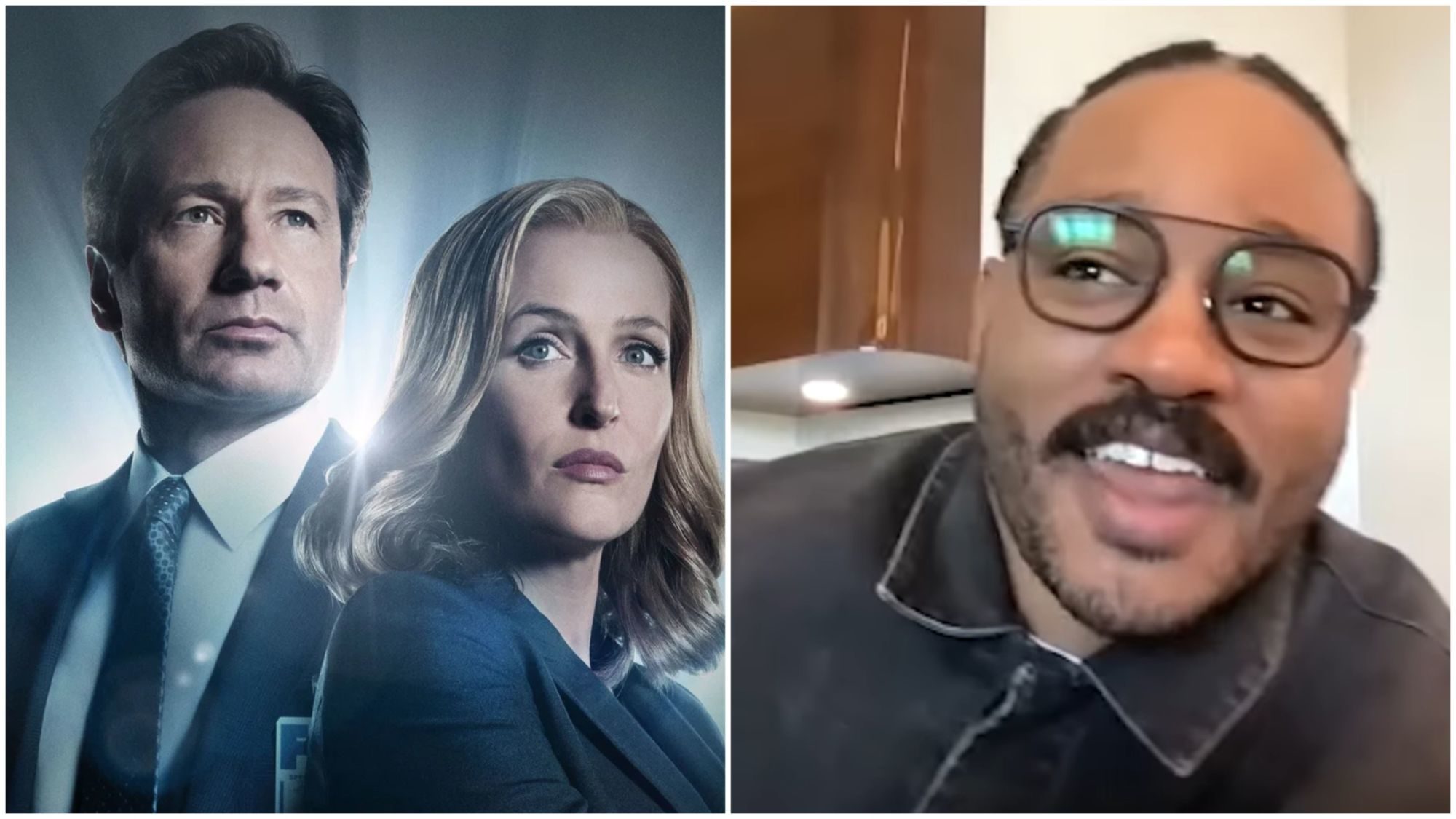
The secrets of The X-Files encompass a mixture of production hurdles, such as the casting of Gillian Anderson against network wishes, the creative evolution of the complex "Mythology" arc, and the atmospheric use of Vancouver’s climate. These elements combined to create a genre-defining series that explored government conspiracy, extraterrestrial life, and the paranormal.
The Unlikely Casting of Mulder and Scully
When Chris Carter first envisioned The X-Files in the early 1990s, he faced significant resistance from Fox executives regarding his lead actors. The chemistry between David Duchovny (Fox Mulder) and Gillian Anderson (Dana Scully) is now considered the bedrock of the show's success, but it was nearly a partnership that never happened.
Fighting for Gillian Anderson
In 1993, television networks were looking for "bombshell" leads for their procedural dramas. Gillian Anderson, then a relatively unknown theater actress with little screen experience, did not fit the archetype the studio had in mind for a female lead. Executives pushed for a more conventionally "glamorous" actress to play the role of the medical doctor and FBI agent.
Chris Carter famously stood his ground. He argued that Anderson possessed an intellectual intensity and a "no-nonsense" demeanor that was essential for a character whose primary role was to act as the scientific skeptic. Carter’s insistence on Anderson is perhaps the most pivotal "secret" to the show's longevity. Without her grounded performance, the more fantastical elements of the show might have lacked the necessary gravitas to be taken seriously by a mainstream audience.
David Duchovny’s Deadpan Delivery
David Duchovny was already a known entity, particularly for his role as a cross-dressing DEA agent in Twin Peaks. However, his "secret" contribution to Mulder was the infusion of dry, sardonic humor into a character that could have easily become a one-dimensional fanatic. Duchovny helped shape Mulder’s vulnerability, ensuring that his quest for the "Truth" felt like a personal burden rather than just a plot device.
The Architecture of the Mythology: A Creative Accident
One of the most persistent questions among fans is whether the "Mythology"—the overarching story of government collaboration with aliens—was planned from the beginning. From our vantage point in 2026, looking back at the complete series and its subsequent revivals, it is clear that the Mythology was largely an exercise in creative improvisation.
The Impact of Gillian Anderson’s Pregnancy
A significant secret regarding the show's lore is that the "alien abduction" plotline was born out of necessity. When Gillian Anderson became pregnant during Season 2, the production could not simply stop. To account for her absence, the writers developed the storyline where Scully is kidnapped by Duane Barry and subsequently experimented upon by the "Syndicate."
This twist, intended to cover a maternity leave, became the catalyst for the entire series-long conspiracy. It transformed The X-Files from a simple "monster-of-the-week" anthology into a serialized epic. The "Black Oil" (or Purity), the Syndicate’s collaboration with the Colonists, and the complex web of betrayals all stemmed from the need to explain why Scully was missing for a few episodes.
The Purity of the Black Oil
The Black Oil (Purity) is arguably the show's most iconic extraterrestrial element. On-set, the "secret" to its terrifying appearance was remarkably simple. The viscous substance was created using a mixture of molasses and surgical lubricant, colored with dark pigments. For scenes where the oil moved under a character's skin, the special effects team used magnetic fluids and tubing hidden beneath prosthetic layers. This low-tech solution created some of the most haunting imagery in 1990s television.
Visual Alchemy: The Vancouver Aesthetic
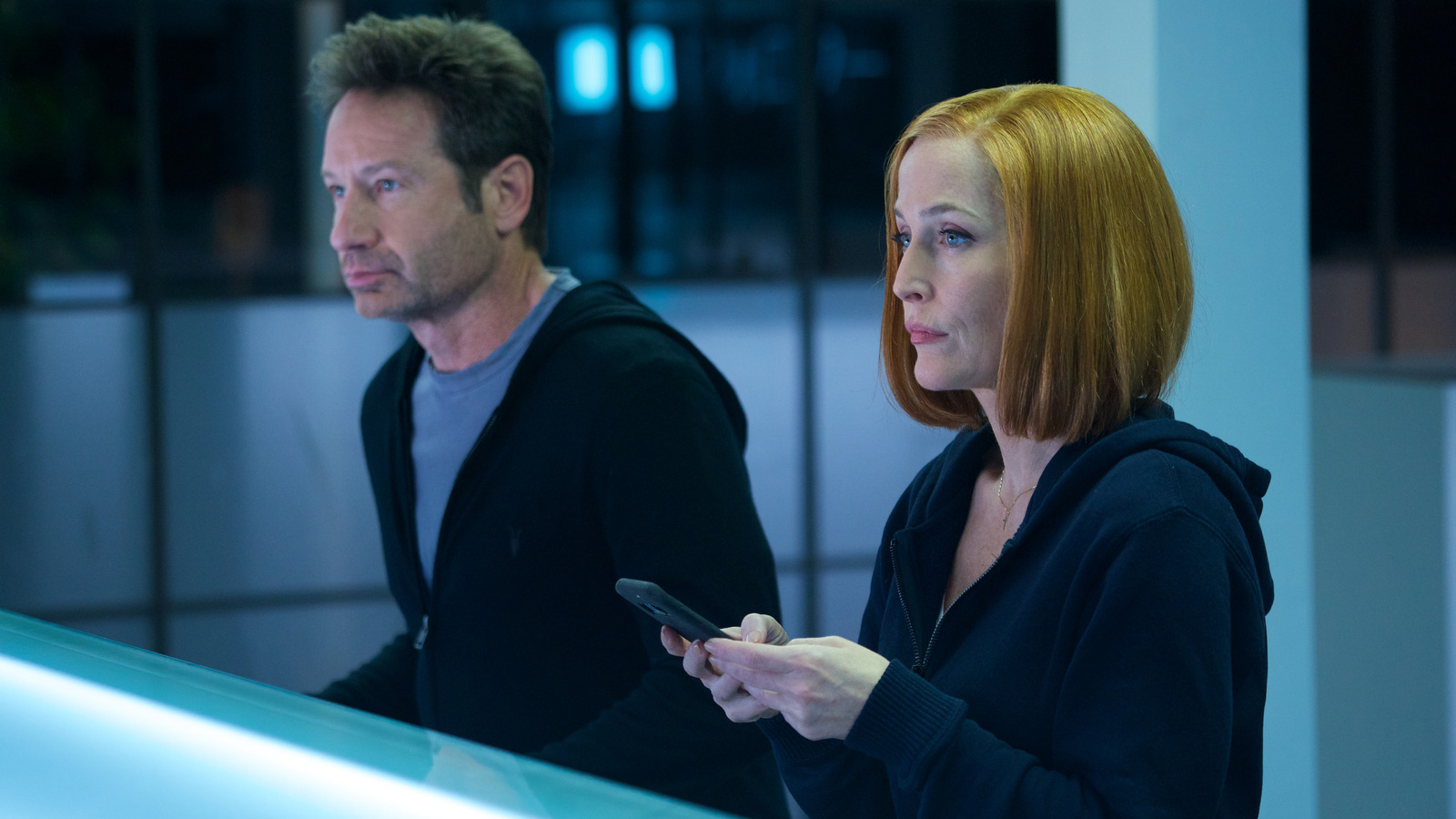
For the first five seasons, The X-Files was filmed in Vancouver, British Columbia. This location choice was not just a budgetary decision; it provided the "secret" visual DNA of the series. The constant overcast skies, dense evergreen forests, and persistent drizzle created a natural "noir" atmosphere that reflected the show's themes of isolation and paranoia.
Darkness as a Narrative Tool
The show's cinematography, led early on by Thomas Del Ruth and later by John S. Bartley, utilized a style known as "chiaroscuro"—the dramatic use of light and shadow. The secret behind the show's darkness was twofold:
- Atmosphere: It heightened the sense of the unknown, making every shadow a potential hiding place for a monster or a government assassin.
- Budgetary Constraints: In the early seasons, the show had a limited budget for special effects. By keeping the monsters in the dark and revealing them only in glimpses, the production team could hide the limitations of the prosthetic suits and puppets, allowing the audience’s imagination to fill in the gaps.
When the production moved to Los Angeles in Season 6 at David Duchovny’s request, the show underwent a radical visual shift. The "sunny" X-Files lost some of the damp, claustrophobic dread of the Pacific Northwest, a transition that remains a point of contention among purists to this day.
The Writers' Room: The Architects of Success
The "secret" to the show's intellectual depth lay in its incredible roster of writers, many of whom went on to redefine television in the 21st century.
- Vince Gilligan: Long before he created Breaking Bad and Better Call Saul, Gilligan was a key writer and producer for The X-Files. He was responsible for some of the show's most humanistic episodes, such as "Pusher" and "Drive."
- Darin Morgan: Morgan wrote only a handful of episodes, but he is credited with introducing the "post-modern" X-Files. Episodes like "Clyde Bruckman’s Final Repose" and "Jose Chung’s 'From Outer Space'" satirized the show's own tropes and examined the nature of storytelling and memory.
- The Lone Gunmen: These fan-favorite characters (Byers, Frohike, and Langley) were originally intended to be one-off guests. However, their dynamic was so popular that they became recurring fixtures and eventually starred in their own spin-off.
Real-World Foundations: Fact vs. Fiction
Chris Carter’s primary inspiration for the series was a report he read suggesting that millions of Americans believed they had been abducted by aliens. However, many of the "secrets" in the show were lifted directly from declassified government programs and historical events.
Project Blue Book and The Majestic 12
The show frequently references "Project Blue Book," which was a real series of studies by the United States Air Force concerning UFOs between 1952 and 1969. Similarly, the "Majestic 12" (MJ-12) mentioned in the show is based on a real-world conspiracy theory involving a secret committee of scientists and military leaders purportedly formed in 1947 by President Harry S. Truman.
By weaving these real historical names and rumors into the script, the show blurred the lines between fiction and reality, fostering a culture of "Extreme Possibility" that resonated with the post-Watergate and post-Cold War skepticism of the 1990s.
The FBI Vault
The FBI maintains an actual electronic reading room called "The Vault," which contains thousands of pages of declassified documents on subjects ranging from "Unexplained Phenomenon" to famous criminals. Many X-Files writers utilized these records for inspiration, ensuring that even the most "out there" episodes had a kernel of bureaucratic realism. For more on the real historical records of the FBI, you can explore the FBI Vault's official history records.
Technical Specifications and Production Secrets
The technical execution of the show required a high level of coordination between the practical effects, makeup, and sound departments.
| Element | Production Secret | Practical Implementation |
|---|---|---|
| The Flukeman | The actor (Darin Morgan) could not breathe or eat in the suit. | A full-body latex mold was used; the actor had to be fed through a straw. |
| Alien Bounty Hunter | The "green blood" was a chemical compound. | A mixture of glow-stick fluid and methylcellulose was used for the "toxic" effect. |
| Mulder's Office Poster | The "I Want to Believe" poster was an original creation. | The original photo was taken by a crew member; copyright issues required it to be redesigned multiple times. |
| The Whistle Theme | The iconic echo was an accident. | Mark Snow accidentally hit a delay pedal while playing a simple melody on a synthesizer. |
Hidden Symbols and Easter Eggs
Throughout its eleven seasons and two feature films, The X-Files was littered with hidden details that only the most dedicated "X-Philes" would notice.
10:13 and 11:21
The numbers 10:13 and 11:21 appear frequently as times on clocks, apartment numbers, or dates in the series. These are not random; 10/13 is Chris Carter’s birthday, and 11/21 is the birthday of his wife, Lori Sanders. This personal touch became a recurring "secret" signature for the production company, Ten Thirteen Productions.
The Cigarette Smoking Man’s Origins
The Cigarette Smoking Man (CSM), played by William B. Davis, was originally cast as an extra with no lines in the "Pilot." He was simply meant to be an ominous presence in the background. However, Davis’s screen presence was so commanding that he was brought back and eventually transformed into the series' primary antagonist. The secret to his character’s menace was his silence; for the first year of the show, he barely spoke, making his eventual dialogue far more impactful.
The Cultural Legacy in 2026
As of 2026, The X-Files remains a cornerstone of modern television. Its influence can be seen in almost every procedural that balances episodic cases with a larger narrative arc (often called the "X-Files model"). The "secret" to its enduring relevance is its focus on the human condition—the desire to believe in something larger than oneself, the fear of being lied to by those in power, and the enduring bond of friendship and professional respect.
The show's revival in 2016 and 2018 (Seasons 10 and 11) attempted to modernize these "secrets" for the age of social media and "fake news," proving that the "Truth" is just as elusive now as it was in 1993. For those looking to understand the cultural impact of the series, the Library of Congress maintains several records regarding the show's influence on American media and its reflection of 1990s social anxieties.
Frequently Asked Questions
What was the "I Want to Believe" poster's secret origin?
The original poster seen in Mulder's office was created using a photograph of a UFO that was eventually caught in a copyright dispute. Chris Carter had to have several versions made to avoid legal issues. The specific image of the saucer became a symbol of the show's central theme: the tension between faith and evidence.
Is the "Black Oil" based on a real substance?
While the alien "Purity" is fictional, the concept was inspired by rumors of sentient "nanotech" and the real-world discovery of extremophiles—organisms that live in conditions previously thought to be uninhabitable. The visual design was meant to evoke petroleum, tapping into 20th-century anxieties about oil and industrialization.
Why did David Duchovny leave the show in Season 8?
The "secret" behind Duchovny's departure was a combination of a desire to pursue a film career and a legal dispute with 20th Century Fox over syndication profits. This led to the introduction of Agents Doggett (Robert Patrick) and Reyes (Annabeth Gish), which polarized the fanbase but allowed the show to explore new dynamics.
Was the relationship between Mulder and Scully planned?
Initially, Chris Carter was adamant that there would be no romance between the leads. The "secret" to their eventual relationship was the overwhelming fan response. "Shippers" (short for "relationshippers") became a dominant force in the early internet fandom, eventually convincing the writers to lean into the romantic tension that had naturally developed through the actors' chemistry.
What happened to the Cigarette Smoking Man in the finale?
The character’s fate was a closely guarded secret during the production of the 2018 finale. While he appeared to perish multiple times throughout the series, the 2026 retrospective consensus is that his character represents the "immortality" of government secrets—even if the man dies, the conspiracy he represents continues.
Final Recommendation
For those looking to dive deeper into the "secrets" of the series, the best course of action is to watch the episodes in their original broadcast order, paying close attention to the credits. Many of the most interesting "secrets" are found in the names of the writers and directors who would go on to shape the "Golden Age" of television. For a comprehensive database of production credits and cast history, visiting the official IMDb page for The X-Files is highly recommended.
Image Gallery
Select an image to open it in a new tab.
Lars Thomsen
Global Labor Markets and Economic Strategy Editor
