How a Pet Tracker Device Works: Technology, Architecture, and Real-Time Location Tracking
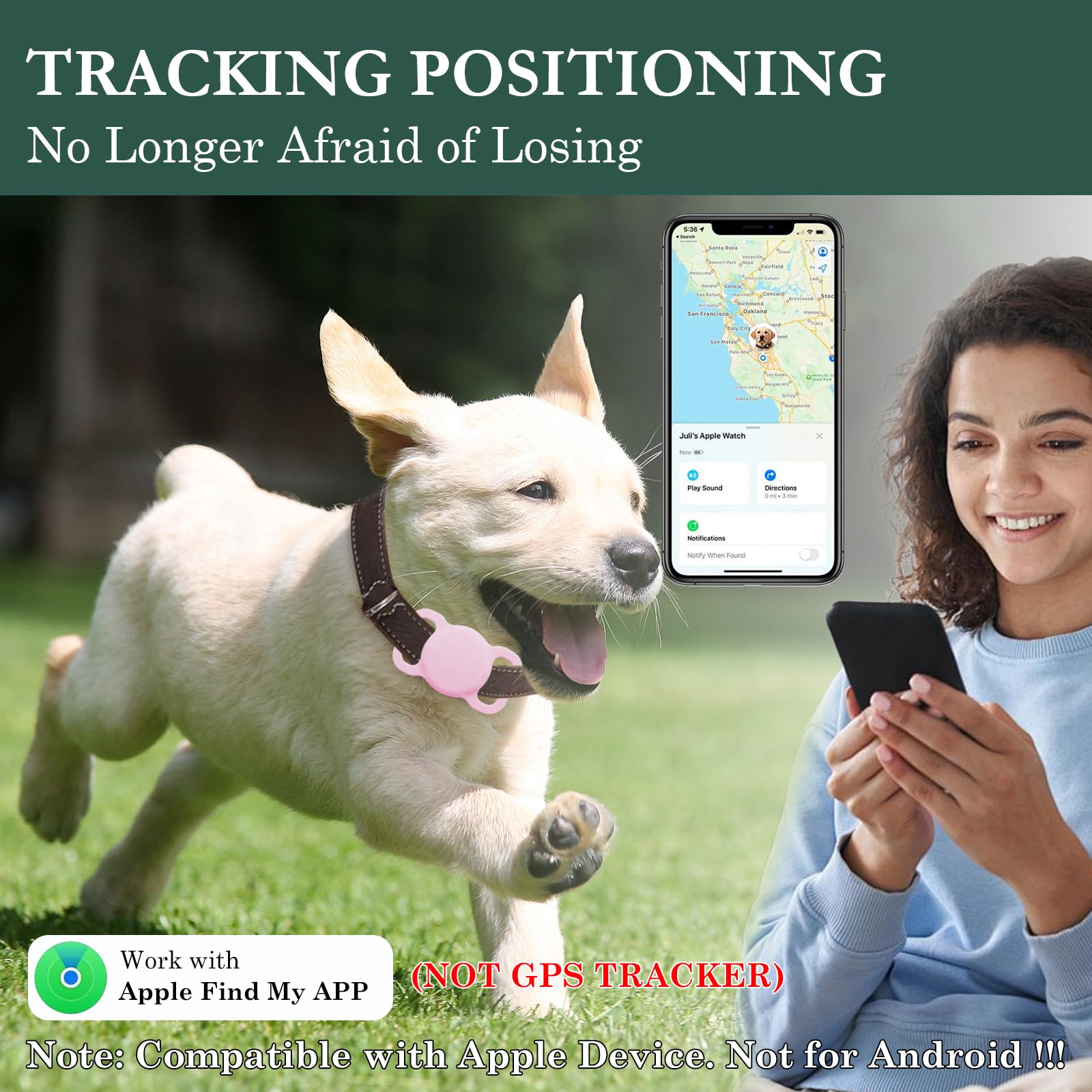
A pet tracker device works by combining Global Positioning System (GPS) technology, cellular communication networks, and localized Wi-Fi or Bluetooth signals to pinpoint a pet's geographic coordinates and transmit that data in real-time to a mobile application or web dashboard used by the pet owner.
Introduction to Modern Pet Tracking Technology
Losing a pet is one of the most distressing experiences a pet owner can face. Traditional methods of identification, such as microchips and metal or plastic ID tags, have significant limitations during an active escape. While a microchip is invaluable for permanent identification, it is passive; it does not broadcast a real-time signal and requires a veterinarian or animal shelter with a specialized scanner to read the embedded code. Traditional ID tags depend entirely on an honest finder spotting the animal and making a phone call.
To bridge this gap in real-time safety, consumer electronics engineers adapted multi-constellation satellite navigation and cellular telemetry into lightweight, collar-mounted hardware. Understanding how a pet tracker device works requires looking beyond the sleek plastic casing to examine the complex ecosystem of satellite networks, cellular towers, cloud servers, and smartphone applications operating simultaneously.
Whether worn by an adventurous outdoor cat or an escape-artist canine, a modern pet tracker functions as a miniaturized IoT (Internet of Things) node. It continuously samples its physical environment, calculates its coordinates through trilateration, and pushes that telemetry data across long distances so humans can monitor their movements on a digital map.
Core Components of a Pet Tracker
To understand the mechanics of pet tracking, it helps to break down the physical device into its core hardware components. Each element plays a distinct role in capturing location data and ensuring it reaches the owner's smartphone.
The GPS and GNSS Receiver
At the heart of every true GPS pet tracker is a Global Navigation Satellite System (GNSS) receiver chip. This internal antenna listens for microwave signals broadcast continuously by orbiting satellite constellations—primarily the United States GPS network, but frequently supplementing with Russia's GLONASS, the European Union's Galileo, and China's BeiDou systems.
The receiver calculates its distance from at least four different satellites by measuring the precise time it takes for their signals to arrive. Through a mathematical process called trilateration, the device determines its exact latitude, longitude, and altitude on Earth.
Cellular Modem and SIM Technology
A standard GPS receiver is purely a listening device; it can calculate where it is, but it cannot tell anyone else. To transmit these coordinates, a pet tracker must feature an integrated cellular modem (typically LTE-M or NB-IoT, which are low-power wide-area network technologies designed for IoT devices).
Much like a smartphone, the tracker contains a physical SIM card or an embedded eSIM. This allows the device to connect to local cellular carrier networks (such as AT&T, Verizon, T-Mobile, or international equivalents) to upload its positional data packets to the cloud. This cellular dependency means that real-time GPS tracking requires an ongoing monthly or annual subscription service fee to cover data transmission costs.
Wi-Fi and Bluetooth Modules
Because continuous GPS calculation and cellular transmission consume massive amounts of battery power, modern trackers incorporate secondary short-range radios.
- Wi-Fi Positioning: When a pet is indoors or near a known wireless router, the device can scan nearby Wi-Fi access point MAC addresses and cross-reference them with global location databases. This saves battery by bypassing the need to lock onto distant satellites and provides accurate indoor tracking where GPS signals cannot penetrate.
- Bluetooth Low Energy (BLE): Bluetooth allows the tracker to communicate directly with the owner's smartphone when they are in close proximity. This establishes a "safe zone" or virtual leash, drastically reducing power consumption while the pet is inside the home or yard.
Power Management and Batteries
Powering a device that maintains constant satellite contact and cellular connection in a package weighing less than 30 grams is an engineering marvel. Rechargeable lithium-ion or lithium-polymer batteries are standard. Manufacturers employ aggressive power-saving firmware states—such as sleeping when motion sensors detect the pet is resting, and waking up to poll satellites only when movement or boundary breaches are detected.

Step-by-Step Breakdown of the Tracking Process
The lifecycle of a single location update happens in fractions of a second, repeating continuously as long as the device is powered on and active.
| Stage | Operational Process | Hardware/Software Involved |
|---|---|---|
| 1. Motion Sensing | Accelerometers detect if the pet is moving, sleeping, or running, adjusting polling frequency. | MEMS Accelerometer |
| 2. Satellite Lock | The device receives time-stamped radio waves from at least four satellites to calculate coordinates. | GNSS Receiver Chip & Antenna |
| 3. Cellular Uplink | The calculated latitude and longitude are packaged into a small data packet and sent via cell towers. | Cellular Modem & SIM/eSIM |
| 4. Cloud Processing | Telemetry servers receive the data packet, decrypt it, and map the coordinates to a digital interface. | Remote Cloud Infrastructure |
| 5. User Display | The mobile app fetches the processed location and renders a marker on an interactive street or satellite map. | Smartphone Application (iOS/Android) |
1. Spatial Sampling and Motion Detection
The process begins with an internal accelerometer. If the pet is curled up sleeping on the living room rug, the tracker enters a deep sleep state to conserve energy. Once the accelerometer detects motion—signaling that the pet is walking or running—the device initiates a positioning sequence.
2. Acquiring the Position Fix
The GNSS receiver activates and listens for overhead satellites. Obtaining an initial "cold start" fix can take anywhere from 10 to 30 seconds as the device downloads orbital data. Subsequent "warm starts" happen much faster. Once the math is complete, the device has a definitive set of geographic coordinates.
3. Transmitting Data Over Cellular Networks
With coordinates secured, the tracker uses its cellular modem to dial out via local cell towers. The data sent is remarkably lightweight—essentially a string of numbers representing latitude, longitude, speed, and heading.
4. Cloud Routing and App Presentation
The cellular tower routes this data packet over the internet to the manufacturer's secure cloud servers. The cloud software processes the raw coordinates, translates them into human-readable map data (such as Google Maps or Apple Maps APIs), and pushes a notification to the owner's smartphone app via push notifications or WebSocket connections.
Distinguishing True GPS Trackers from Bluetooth Finders
A common point of confusion for consumers is the difference between a real-time GPS pet tracker and a Bluetooth item finder (such as an Apple AirTag, Tile, or Samsung Galaxy SmartTag). While both are small and attach to a collar, their underlying working principles are vastly different.
| PET TRACKING TECHNOLOGY TYPES | |
|---|---|
| GPS / Cellular Trackers | Bluetooth Finders |
| • Independent global tracking | • Relies on passing smartphones |
| • Requires cellular subscription | • No monthly subscription fee |
| • Built-in GNSS satellite chip | • Short-range (approx. 30-100 feet) |
| • Ideal for active outdoor pets | • Ideal for indoor use / keys |
How Bluetooth Finders Work
Bluetooth trackers do not have GPS chips or cellular modems. Instead, they broadcast a secure, rolling Bluetooth Low Energy signal. If a pet wearing a Bluetooth tracker runs away, that tag is entirely dependent on another person walking past within 30 to 100 feet whose smartphone happens to be running the corresponding network app (such as the Apple Find My network). That stranger's phone anonymously picks up the tag's broadcast and relays its location to the cloud.
While effective in densely populated urban environments with millions of participating smartphones, Bluetooth finders fail in rural areas, forests, or quiet neighborhoods where nobody walks by with the matching ecosystem device.
How GPS Trackers Work
Conversely, a GPS/cellular tracker does not rely on random strangers walking past. Because it contains its own cellular radio, it communicates directly with cell towers and satellites independently. If your dog runs into a remote state park, the tracker uses satellites to find itself and cell towers to report that location straight to your phone, regardless of how many people are around.
Geofencing and Virtual Boundaries
One of the most powerful features enabled by the constant connectivity of a pet tracker is the "geofence," or virtual boundary. Owners can use the companion mobile app to draw a digital perimeter around safe zones, such as their home, backyard, or a trusted relative's house.
How Geofencing Operates
The geofence is not a physical barrier, but rather a set of GPS coordinates stored either on the cloud server or directly within the tracker's firmware. The device continuously compares its current GPS coordinates against the boundary parameters.
- Inside the Zone: As long as the pet's coordinates fall within the defined polygon, the tracker remains in a normal battery-saving reporting mode (e.g., updating location every 5 to 15 minutes).
- Boundary Breach: The moment the tracker detects coordinates outside the perimeter, it triggers an immediate alert state. The device instantly switches to high-frequency tracking mode (often updating every 2 to 5 seconds) and pushes an instant notification to the owner's phone reading something like: "Max has left the Home Safe Zone."
Limitations and Operational Challenges
While pet tracking technology has advanced significantly, physics and environmental factors still impose certain operational constraints that owners must navigate.
Environmental Obstacles to GPS Signals
GPS signals operate on microwave frequencies that struggle to penetrate dense physical barriers.
- Urban Canyons: Tall concrete and steel skyscrapers can reflect or block satellite signals, leading to multipath interference where the tracker calculates an inaccurate position.
- Heavy Tree Canopies and Terrain: Thick foliage, deep valleys, or dense indoor environments can obscure the line-of-sight required between the tracker and orbiting satellites. When GPS is unavailable, devices automatically fall back on less precise cell-tower triangulation or Wi-Fi positioning.
Cellular Coverage Gaps
Because pet trackers rely on commercial cellular networks to transmit their data, they are subject to the same dead zones as mobile phones. If a pet wanders into a remote wilderness area with zero cellular reception, the tracker may successfully calculate its GPS position, but it will be temporarily unable to transmit that data to the owner until it re-establishes a cellular connection. (Some advanced models mitigate this by storing historical tracking logs locally and uploading them once cellular service returns).
Battery Life Trade-Offs
There is a direct engineering compromise between tracking frequency and battery life.
- If a device updates its location every 3 seconds to provide a hyper-accurate, real-time breadcrumb trail during a chase, the battery may drain in a matter of hours.
- If the device conserves battery by checking in only once an hour, a lost pet could travel miles away before the owner receives an updated location.
Manufacturers solve this balance through "LIVE tracking" modes that owners can manually activate the moment an escape is detected, shifting the device from low-power resting mode to high-frequency emergency reporting.
Frequently Asked Questions
Do pet trackers require a monthly subscription?
Yes, true GPS and cellular pet trackers require a recurring subscription plan. Because the device utilizes commercial cellular networks (LTE-M/NB-IoT) to transmit data packets from the collar to your smartphone, the manufacturer must pay cellular service providers for that data transmission. Bluetooth-based trackers do not require subscriptions because they rely on other people's smartphones to relay data.
Can a pet tracker replace a microchip?
No, pet trackers and microchips serve entirely different purposes and complement one another rather than competing. A microchip is a permanent, passive identification method implanted under the skin that cannot fall off or run out of battery, used primarily by shelters to look up owner contact information. A pet tracker is an active, external electronic device used for real-time location monitoring and active recovery.
Are pet trackers safe for small cats and dogs?
Modern pet trackers are engineered to be lightweight, typically weighing between 25 and 40 grams, making them suitable for most cats and dogs weighing over 8 to 10 pounds. However, very small toy breeds or kittens may find the physical bulk cumbersome. Manufacturers design collars and attachment clips with safety breakaway mechanisms to ensure that if a cat gets snagged on a tree branch, the collar releases safely.
How accurate is the location provided by a pet tracker?
Under optimal outdoor conditions with a clear view of the sky, a GPS pet tracker is typically accurate to within 3 to 10 meters (10 to 33 feet). Accuracy degrades indoors, under heavy tree cover, or in dense urban areas surrounded by tall buildings, where positioning may shift to Wi-Fi or cellular tower estimates with wider radiuses.
What happens if my pet escapes outside of cellular range?
If your pet enters an area without cellular coverage, the tracker cannot transmit live updates to your smartphone in real-time. However, many modern devices store the location history locally in onboard memory chips and will automatically upload the missed breadcrumb trail the moment the device reconnects to a cellular tower.
Conclusion and Next Actions
Understanding how a pet tracker device works empowers owners to choose the right technology for their animal's specific lifestyle and environment. Whether you opt for a satellite-linked GPS device for outdoor hiking adventures or a lightweight Bluetooth tag for urban apartment living, recognizing the interplay between GNSS satellites, cellular networks, and smartphone applications ensures you can respond effectively in an emergency.
If you are shopping for a tracker, evaluate your local cellular coverage, your pet's typical roaming habits, and battery longevity preferences before committing to a hardware ecosystem and data plan.
Image Gallery
Select an image to open it in a new tab.


Lars Thomsen
Global Labor Markets and Economic Strategy Editor
