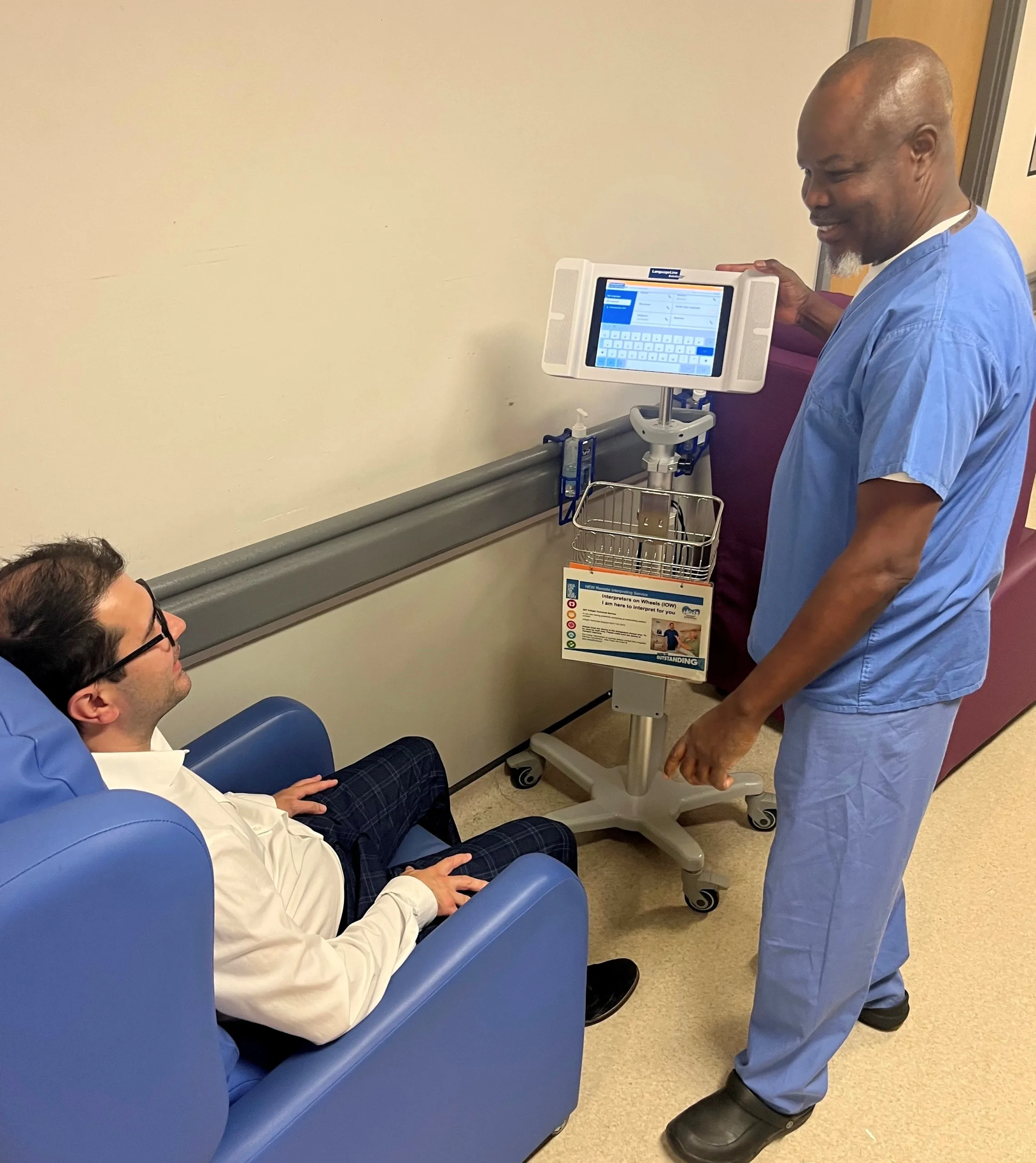
Hospital interpreting services in healthcare provide professional linguistic support to ensure effective communication between medical providers and patients with Limited English Proficiency (LEP) or those who are Deaf or Hard of Hearing. These services are essential for clinical accuracy, legal compliance under Section 1557 of the Affordable Care Act, and the delivery of equitable patient care.
The necessity for professional hospital interpreting services has never been more critical than in 2026. As global migration patterns and demographic shifts continue to diversify patient populations, healthcare systems face the dual challenge of providing high-quality care while meeting stringent federal and state mandates. Language access is not merely a "nice-to-have" amenity; it is a fundamental component of patient safety and a legal requirement for any facility receiving federal financial assistance.
The Legal and Ethical Mandate for Language Access
In the United States, the framework for hospital interpreting services is built upon several key legislative pillars. The most significant is Title VI of the Civil Rights Act of 1964, which prohibits discrimination on the basis of national origin. This has been interpreted by the courts and the Department of Health and Human Services (HHS) to include language access for LEP individuals.
Furthermore, Section 1557 of the Patient Protection and Affordable Care Act (ACA) provides specific protections against discrimination in health programs. By 2026, the enforcement of these rules has become highly standardized. Hospitals are required to provide "meaningful access" to their programs, which translates to the provision of qualified interpreters at no cost to the patient.
Ethically, the principle of Informed Consent is impossible to uphold if the patient cannot understand the risks, benefits, and alternatives of a procedure. Professional interpreters ensure that the patient’s voice is heard and that the physician’s instructions are understood with the nuance required for complex medical decision-making.
Primary Modes of Medical Interpretation
As of 2026, healthcare facilities generally utilize a multimodal approach to language access. No single method fits every clinical scenario, so a robust system integrates three primary delivery models:
1. On-Site Interpreting (OSI)
On-site interpreting involves a professional interpreter physically present in the room with the clinician and the patient.
- Best For: End-of-life discussions, complex surgical consents, psychiatric evaluations, and pediatric oncology.
- Pros: Captures non-verbal cues, builds the highest level of rapport, and is generally preferred for sensitive or highly emotional encounters.
- Cons: Higher cost due to travel time and minimum hour requirements; may not be available for rare dialects on short notice.
2. Video Remote Interpreting (VRI)
VRI uses high-definition video conferencing equipment or tablets to connect a clinician with a remote interpreter. In 2026, VRI has become the standard for emergency departments and urgent care centers due to the ubiquity of 5G and fiber-optic hospital networks.
- Best For: Routine examinations, intake assessments, and discharge planning.
- Pros: Provides visual contact (important for American Sign Language), faster response times than on-site, and lower cost.
- Cons: Requires stable, high-speed internet bandwidth; can be impersonal in high-trauma situations.
3. Over-the-Phone Interpreting (OPI)
OPI is the most established remote modality, connecting users to an interpreter via a standard telephone line or a dedicated "blue phone" in a hospital room.
- Best For: Brief administrative tasks, appointment scheduling, and rare languages where video or on-site options are unavailable.
- Pros: Available 24/7/365, supports hundreds of languages, and is the most cost-effective.
- Cons: Lack of visual cues can lead to misunderstandings in complex clinical interactions.
The Role of the Qualified Medical Interpreter
A common mistake in healthcare is assuming that any bilingual staff member or family member can act as an interpreter. In 2026, regulatory bodies like The Joint Commission and HHS emphasize the necessity of "qualified" interpreters.
Professional medical interpreters are trained in:
- Medical Terminology: Understanding the difference between "hypertension" and "high blood pressure" in various cultural contexts.
- Code of Ethics: Maintaining confidentiality (HIPAA compliance), impartiality, and accuracy.
- Cultural Brokerage: Identifying when a cultural misunderstanding might be hindering care and intervening appropriately without overstepping boundaries.
- Memory Skills: Utilizing specialized techniques to retain and relay long segments of speech accurately.
The use of "ad hoc" interpreters—such as the patient's children or untrained staff—is strongly discouraged and, in many cases, legally restricted. Untrained interpreters are significantly more likely to make clinically relevant errors, omit information, or inject their own biases into the conversation.
Technical Standards and Integration in 2026
Modern hospital interpreting services are no longer standalone units; they are integrated into the hospital’s Electronic Health Record (EHR) systems. Systems like Epic, Cerner, and Meditech now feature "one-touch" interpreting buttons within the patient's digital chart. This allows a clinician to launch a VRI session or request an on-site interpreter with a single click, automatically logging the encounter for compliance and billing purposes.
Technical Requirements for VRI
For a hospital to successfully implement VRI in 2026, certain technical benchmarks must be met:
- Bandwidth: Minimum of 1.5 Mbps symmetric (upload/download) for high-definition video.
- Security: End-to-end encryption compliant with updated HIPAA and HITECH standards.
- Hardware: Medical-grade tablets with antimicrobial coatings and dedicated audio-enhancement peripherals.
Comparison of Interpreting Modalities
The following table compares the primary service models to assist healthcare administrators in resource allocation.
| Feature | On-Site Interpreting | Video Remote (VRI) | Over-the-Phone (OPI) |
|---|---|---|---|
| Response Time | 30–120 minutes (Scheduled) | < 30 seconds | < 15 seconds |
| Non-Verbal Cues | Excellent | Good | None |
| ASL Support | Yes | Yes (Required by ADA) | No |
| Cost Basis | Per hour (with minimums) | Per minute | Per minute |
| Best Use Case | Complex/Emotional Care | Emergency/Routine | Admin/Rare Dialects |
| Reliability | Dependent on travel | Dependent on Wi-Fi/5G | Highly reliable |
Patient Safety and Clinical Outcomes
The impact of professional interpreting on patient safety cannot be overstated. Research consistently shows that LEP patients who do not have access to professional interpreters:
- Experience higher rates of medical errors.
- Are more likely to be readmitted within 30 days of discharge.
- Have longer hospital stays due to delays in diagnosis or misunderstandings of treatment plans.
- Have lower adherence to medication regimens post-discharge.
By investing in professional services, hospitals mitigate these risks. For instance, in an oncology setting, an interpreter ensures that the patient understands the specific staging of their cancer and the rigorous requirements of a chemotherapy schedule. In the ED, an interpreter can be the difference between identifying a life-threatening allergic reaction and misinterpreting it as a common virus.
Implementing a Language Access Plan (LAP)
For healthcare organizations, the implementation of hospital interpreting services requires a structured Language Access Plan. This plan serves as a roadmap for staff and ensures that the facility remains in compliance with federal law.
- Assessment: Identify the top 15 languages spoken in the hospital’s primary service area. This data is usually derived from the U.S. Census Bureau and internal patient registration data.
- Policy Development: Establish clear protocols for when and how to call an interpreter. This should include a "right to refuse" policy for when patients want to use family, though the hospital may still choose to have a professional present to "monitor" the accuracy.
- Staff Training: All front-line staff—from security and registration to nurses and surgeons—must know how to access interpreting equipment.
- Notice of Rights: Post signage in the most common languages (the "top 15" taglines required by Section 1557) informing patients that free interpreting services are available.
Financial Considerations and ROI
While there is an upfront cost to contracting with language service providers (LSPs), the return on investment (ROI) is realized through the reduction of "never events" and malpractice claims. In 2026, many insurance payers and government programs have begun linking reimbursement rates to health equity metrics, which include the provision of language services.
Moreover, the cost of OPI and VRI has stabilized as the technology has matured. By 2026, most hospitals use a "blended" billing model where they pay a flat monthly access fee plus a per-minute rate for usage. This allows for predictable budgeting while ensuring scalability during surges in patient volume.
Frequently Asked Questions
1. Can a patient's family member or friend act as the interpreter?
While a patient may request a family member, it is generally discouraged in a clinical setting. Family members often lack the necessary medical vocabulary and may omit or sugarcoat "bad news" to protect the patient. Furthermore, using a child as an interpreter is considered a violation of Section 1557 of the ACA except in extreme, life-threatening emergencies where no other option exists. Hospitals often provide a professional interpreter alongside a family member to ensure accuracy and patient safety.
2. Is the hospital or the patient responsible for the cost of the interpreter?
Under federal law in the United States, the healthcare provider (the hospital or clinic) is responsible for the cost of interpreting services. Patients cannot be charged for these services, nor can the cost be passed on to their insurance as a separate line item. Providing these services is considered a cost of doing business as a recipient of federal funds.
3. How does a hospital determine which languages to prioritize for on-site staff?
Hospitals typically conduct a "Four-Factor Analysis" as recommended by the Department of Justice. This involves looking at the number or proportion of LEP persons in the service area, the frequency of contact, the nature and importance of the program, and the resources available. In 2026, real-time data analytics from EHR systems help hospitals decide which languages require a full-time staff interpreter versus a remote contract service.
4. What certifications should a hospital look for in an interpreting service?
Hospitals should ensure their interpreters hold certifications from recognized bodies such as the Certification Commission for Healthcare Interpreters (CCHI) or the National Board of Certification for Medical Interpreters (NBCMI). Additionally, the service provider should be able to demonstrate compliance with ISO 17100 (Translation Services) or ISO 13611 (Community Interpreting) standards.
5. How does American Sign Language (ASL) interpreting differ from spoken language services?
ASL interpreting is governed not only by the ACA but also by the Americans with Disabilities Act (ADA). Under the ADA, hospitals must provide "effective communication," which often requires a certified ASL interpreter. Video Remote Interpreting (VRI) is a popular choice for ASL, but the equipment must meet specific federal standards for video quality and frame rate to ensure that the signs are legible and fluid.
Recommendation for Healthcare Administrators
To ensure optimal patient care and legal protection in 2026, healthcare facilities should move away from relying on a single modality. The most effective strategy is a hybrid language access model. This involves employing a small core of on-site staff interpreters for the most common languages (e.g., Spanish or Mandarin) and high-stakes departments, while utilizing a robust, EHR-integrated VRI/OPI contract for all other languages and after-hours needs. Regular auditing of interpreter logs and patient satisfaction scores among LEP populations should be a standard part of the hospital's Quality Improvement (QI) program.
Image Gallery
Select an image to open it in a new tab.
Vivian Cho
Executive IT and Emerging Technologies Reporter
