
Security in cloud computing refers to the broad set of policies, technologies, applications, and controls utilized to protect virtualized IP, data, applications, services, and the associated infrastructure. It is a collaborative discipline designed to ensure data privacy, support regulatory compliance, and defend against evolving cyber threats through a structured framework known as the Shared Responsibility Model.
The Foundation of Cloud Security: The Shared Responsibility Model
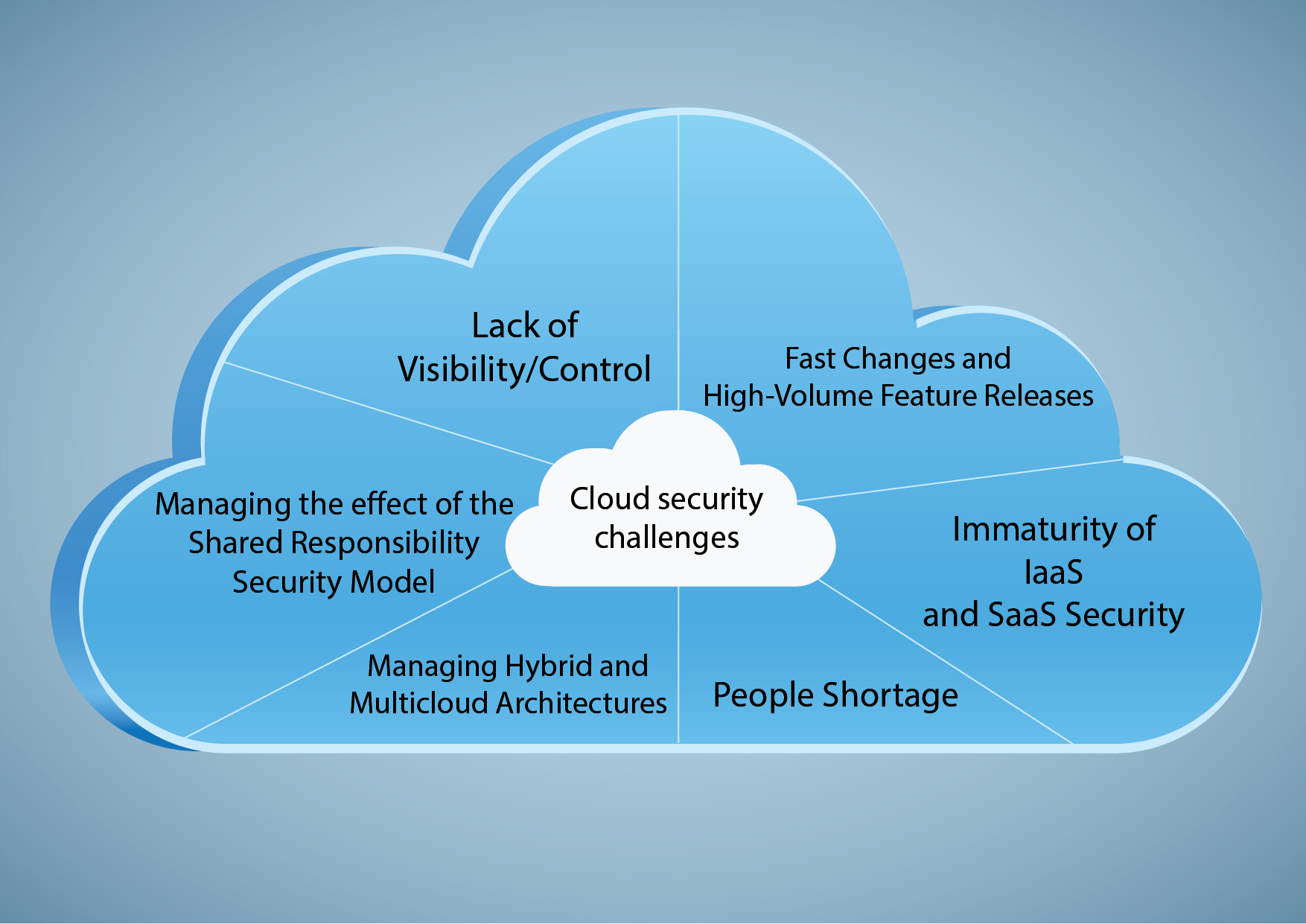
To understand how security functions in a cloud environment, one must first grasp the Shared Responsibility Model. This framework dictates that security is not the sole burden of the provider nor the user; rather, it is a partitioned effort. As of 2026, this model remains the industry standard, though the lines of demarcation shift depending on the service type being utilized.
Infrastructure as a Service (IaaS)
In an IaaS environment, such as Amazon EC2 or Azure Virtual Machines, the cloud service provider (CSP) is responsible for the "security of the cloud." This includes the physical data centers, the hardware, the virtualization layer, and the networking infrastructure. The customer, however, is responsible for "security in the cloud." This encompasses the guest operating system, middleware, runtime, data, and application-level security. If a server is left unpatched or a firewall port is left open, the responsibility lies with the customer.
Platform as a Service (PaaS)
With PaaS, the provider takes on more responsibility. They manage the underlying operating system and runtime environment. The customer remains responsible for the security of the applications they build and the data those applications process. This model allows developers to focus on code without worrying about server maintenance, but it requires diligent Identity and Access Management (IAM) to prevent unauthorized application access.
Software as a Service (SaaS)
In the SaaS model, such as Microsoft 365 or Salesforce, the provider manages almost the entire stack. The customer’s primary responsibility is data management and access control. You must ensure that only authorized users can access the platform and that those users are following corporate security policies. Even in SaaS, the customer owns the data; therefore, the customer is responsible for its classification and protection.
Core Pillars of Modern Cloud Security
Effective cloud security in 2026 rests on several interconnected pillars. Each pillar addresses a specific vulnerability point within the cloud ecosystem.
Identity and Access Management (IAM)
IAM is the first line of defense. It ensures that the right people have the right access to the right resources at the right time. Modern IAM strategies utilize Zero Trust Architecture, which operates on the principle of "never trust, always verify."
- Multi-Factor Authentication (MFA): Moving beyond simple SMS codes, 2026 standards prioritize hardware security keys and biometric verification to mitigate credential theft.
- Role-Based Access Control (RBAC): Users are granted permissions based on their specific job function, preventing "privilege creep" where users accumulate more access than they need.
- Just-In-Time (JIT) Access: This limits the duration of administrative privileges, granting elevated access only when a specific task needs to be performed and revoking it immediately after.
Data Protection and Encryption
Data is the most valuable asset in the cloud. Protecting it requires a multi-layered approach to encryption.
- Encryption at Rest: This protects data stored on disks or in databases. Providers offer managed keys via services like AWS Key Management Service (KMS) or Azure Key Vault, but many organizations now opt for "Bring Your Own Key" (BYOK) to maintain total control over their data’s "shredding" capability.
- Encryption in Transit: This secures data as it moves between the user and the cloud, or between different cloud services. Transport Layer Security (TLS) 1.3 is the current baseline, ensuring that intercepted data remains unreadable.
- Encryption in Use (Confidential Computing): A major development for 2026 is the widespread adoption of Confidential Computing. This protects data while it is being processed in memory using hardware-based Trusted Execution Environments (TEEs), preventing even the cloud provider from seeing the raw data during computation.
Network Security and Micro-segmentation
Unlike traditional data centers with a "crunchy exterior and soft interior," cloud networks must be segmented. Micro-segmentation allows security teams to divide the cloud environment into small, isolated zones. If a single workload is compromised, the attacker cannot move laterally to other parts of the system because each zone has its own independent security policy.
Emerging Threats and Defensive Strategies in 2026
The threat landscape has evolved significantly. While traditional malware still exists, cloud-native threats have become more sophisticated, often leveraging the very tools meant to manage the cloud.
AI-Driven Attacks and Automated Defense
Threat actors now use generative AI to scan for misconfigurations in cloud environments at speeds impossible for humans to match. In response, cloud security has shifted toward Cloud-Native Application Protection Platforms (CNAPP). These platforms use machine learning to establish a "baseline" of normal behavior. If an account suddenly begins downloading massive amounts of data from an unusual IP address, the system automatically triggers a lockout and alerts the security operations center (SOC).
Supply Chain and API Vulnerabilities
Modern cloud applications are rarely monolithic; they are built using APIs (Application Programming Interfaces) and third-party libraries. A vulnerability in a widely used API can expose thousands of organizations. Security in 2026 requires rigorous API Security protocols, including continuous discovery of "shadow APIs" and the implementation of strict rate limiting to prevent automated scraping or DDoS attacks.
Comparison of Security Services Across Major Providers
When selecting a cloud provider, understanding their native security offerings is essential for building a robust defense.
| Security Feature | Amazon Web Services (AWS) | Microsoft Azure | Google Cloud Platform (GCP) |
|---|---|---|---|
| Identity Management | AWS IAM / Identity Center | Microsoft Entra ID | Cloud IAM |
| Threat Detection | Amazon GuardDuty | Microsoft Defender for Cloud | Security Command Center |
| DDoS Protection | AWS Shield (Standard/Advanced) | Azure DDoS Protection | Google Cloud Armor |
| Key Management | AWS KMS / CloudHSM | Azure Key Vault | Cloud Key Management Service |
| Compliance Support | AWS Artifact | Azure Blueprints | Assured Workloads |
| WAF Capability | AWS WAF | Azure WAF | Google Cloud Armor WAF |
Compliance, Governance, and Data Sovereignty
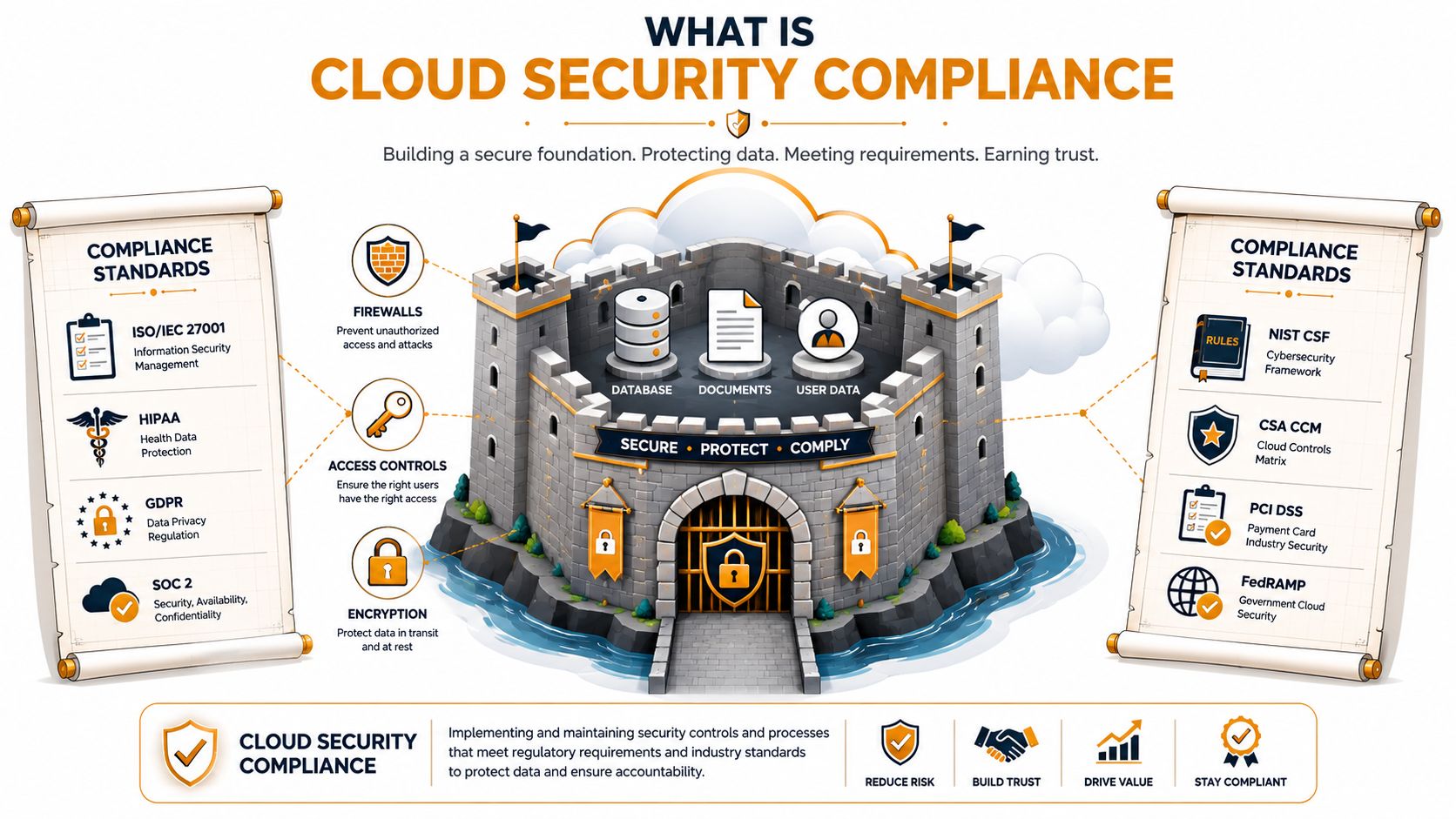
Security is not just a technical challenge; it is a legal and regulatory one. Organizations must comply with regional and industry-specific mandates.
- GDPR (General Data Protection Regulation): Still the gold standard for privacy in Europe, requiring strict controls on how personal data is handled and stored.
- HIPAA/HITECH: Essential for healthcare organizations in the US, mandating specific encryption and audit logging for patient data.
- SOC 2 Type II: An auditing procedure that ensures service providers securely manage data to protect the interests of their clients and the privacy of their clients' customers.
- Data Sovereignty: This refers to the legal requirement that data is subject to the laws of the country in which it is physically located. In 2026, many cloud providers offer "Sovereign Clouds" to ensure that sensitive government or national data never leaves a specific jurisdiction.
Implementation Steps for Securing a Cloud Environment
For organizations looking to strengthen their posture, the following steps represent the industry-standard workflow for 2026.
- Inventory and Discovery: You cannot protect what you cannot see. Use automated tools to discover all active cloud resources, including abandoned "zombie" instances that may have outdated security patches.
- Establish a Governance Framework: Define who can create resources and what security configurations are mandatory. Use "Infrastructure as Code" (IaC) to ensure that every new server or database is deployed with security settings pre-applied.
- Implement Continuous Monitoring: Move away from annual audits toward Continuous Compliance. Use Cloud Security Posture Management (CSPM) tools to monitor for misconfigurations—such as publicly accessible S3 buckets—in real-time.
- Incident Response Planning: Assume a breach will happen. Develop an incident response plan specifically for the cloud, which includes procedures for isolating compromised virtual machines and rotating cryptographic keys.
- Employee Training: Human error remains the leading cause of cloud breaches. Regular training on phishing awareness and the proper use of cloud tools is mandatory.
Common Mistakes in Cloud Security
Despite the advanced tools available, several common errors continue to plague organizations:
- Misconfigured Storage: Leaving data storage buckets open to the public internet is a frequent source of data leaks.
- Default Credentials: Using factory-set passwords or overly permissive "root" accounts for daily tasks.
- Lack of Visibility: Failing to aggregate logs from different cloud services into a single pane of glass, leading to missed alerts.
- Over-reliance on Provider Security: Assuming the cloud provider handles everything, leading to a neglect of the "customer" portion of the Shared Responsibility Model.
Frequently Asked Questions
Is the cloud more secure than on-premises data centers?
Generally, yes. Major cloud providers spend billions of dollars annually on security, employing thousands of experts and maintaining physical security standards that most individual companies cannot afford. However, the cloud introduces new risks, such as complex configurations and shared environments, which require a different set of skills to manage compared to traditional on-prem hardware.
What is the biggest security threat to cloud computing in 2026?
The biggest threat remains misconfiguration. As cloud environments become more complex with multi-cloud and hybrid-cloud setups, the likelihood of a human error—such as an improperly configured security group or an exposed API key—increases. Automated AI-driven scanning by attackers makes these errors easier to find and exploit.
How does "Confidential Computing" differ from standard encryption?
Standard encryption protects data when it is sitting on a disk (at rest) or moving across a network (in transit). However, to process data, it usually must be decrypted in the computer's memory. Confidential Computing uses hardware-based isolation to keep data encrypted even while it is being processed by the CPU, ensuring that even a compromised operating system or a malicious cloud administrator cannot see the data.
Does using multiple cloud providers (Multi-cloud) increase security?
It is a double-edged sword. Multi-cloud can increase resiliency; if one provider has a massive outage, your services can stay online via another. However, it significantly increases complexity. Managing different security protocols, IAM systems, and compliance tools across AWS, Azure, and GCP requires a highly skilled team and can lead to security gaps if not synchronized perfectly.
What is DevSecOps, and why is it important for cloud security?
DevSecOps is the practice of integrating security early in the software development lifecycle (SDLC) rather than treating it as a final check. In the cloud, where infrastructure is often defined by code, DevSecOps allows teams to run automated security tests every time code is updated. This ensures that vulnerabilities are caught and fixed before the application is ever deployed to a live environment.
Practical Recommendation
For any organization operating in the cloud in 2026, the immediate priority should be the implementation of a Zero Trust Architecture paired with a CSPM (Cloud Security Posture Management) tool. Begin by auditing your current IAM roles and enforcing MFA across every single account, without exception. Cloud security is not a "set it and forget it" project; it is a continuous process of monitoring, adjusting to new threats, and refining access controls. For those in highly regulated industries, exploring Confidential Computing options provided by your CSP should be the next technical milestone to ensure data privacy at the highest possible level.
Image Gallery
Select an image to open it in a new tab.


Declan O'Connor
Higher Education and Campus Culture Reporter
