Why Is Circumcision Common in the US? History, Health Guidelines, and Cultural Trends

Circumcision became common in the United States due to late 19th-century medicalization, mid-20th-century hospital birth routines, widespread insurance coverage, and public health policies highlighting potential health benefits. Unlike most Western nations, the U.S. integrated routine male neonatal circumcision into standard healthcare systems, reinforced by deeply embedded cultural and familial traditions.
Medical Disclaimer
This article is for informational and educational purposes only and does not constitute medical advice. Parents and individuals considering male infant circumcision should consult qualified healthcare providers, such as pediatricians, obstetricians, or urologists, to evaluate personal, medical, and ethical considerations in light of current medical evidence.
Historical Roots of Circumcision in American Medicine
To understand why male infant circumcision is widespread in the United States compared to other Western nations, one must look back to the late 19th and early 20th centuries. Prior to the 1870s, circumcision in Western society was largely restricted to Jewish and Islamic religious traditions. However, American medicine underwent a dramatic shift during the late Victorian era, transforming circumcision into a mainstream medical procedure.
- 1870s–1890s: Medicalization of Circumcision (Preventive Surgery Era)
- 1940s–1950s: Post-WWII Hospital Birth Boom & Routine Practice
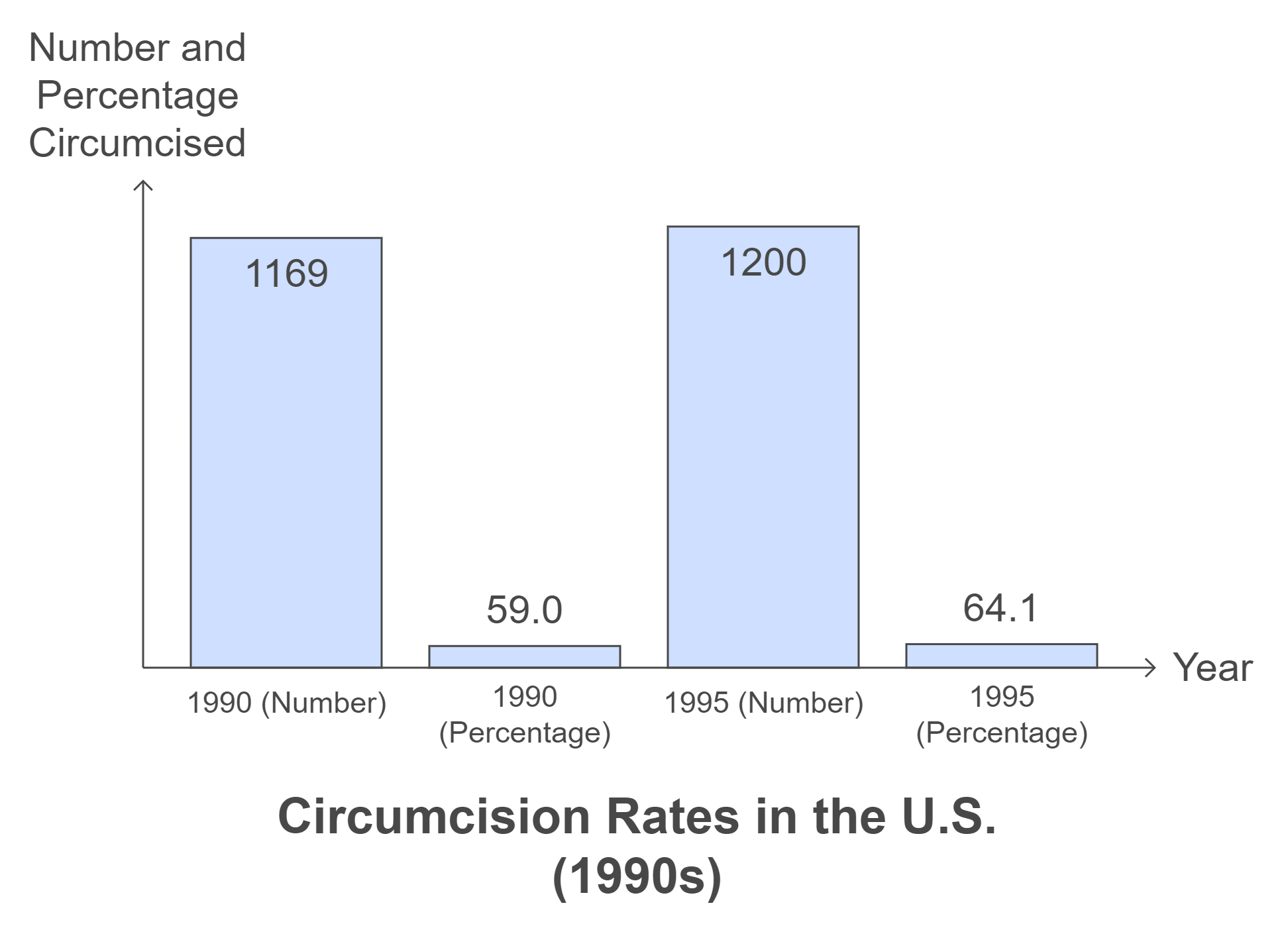
- 1970s–1990s: Critical Medical Evaluation & Initial Policy Statements
- 2010s–Present: Neutral AAP Guidelines & Gradual Shift in Parent Choice
The Late 19th-Century Medicalization
In the late 1800s, prominent American physicians began advocating for surgical removal of the foreskin as a preventive measure for a wide array of physical and psychological ailments. Dr. Lewis Sayre, a founder of the American Medical Association (AMA), published influential papers in the 1870s claiming that circumcision could cure or prevent paralysis, joint deformities, and neurological conditions by removing penile irritation.
Concurrently, figures such as Dr. John Harvey Kellogg advocated circumcision to deter masturbation, which Victorian medicine erroneously linked to physical exhaustion, mental illness, and moral decay. Because circumcision was framed as a hygienic, scientific intervention, American doctors and the upper classes adopted it as a mark of modern medical sophistication and cleanliness.
Germ Theory, Hygiene, and Preventive Surgery
The emergence of germ theory in the late 19th century further accelerated the adoption of circumcision. Before modern antibiotics, daily bathing, and clean running water were universal, doctors viewed the foreskin as a trap for smegma and harmful bacteria. Removing the foreskin was perceived as an efficient, permanent hygiene solution.
As American hospitals grew in reputation during the early 20th century, surgical interventions of all kinds gained prestige. Circumcision transitioned from a specialized procedure performed for specific medical complaints into a prophylactic surgery intended to prevent disease before it occurred.
Post-WWII Hospital Delivery Boom
The single biggest catalyst for universalizing male newborn circumcision was the transition from home births to hospital deliveries in the 1930s, 1940s, and 1950s. Following World War II, the vast majority of American mothers gave birth in hospitals. Hospital maternity wards standardized post-birth care protocols, which routinely included offering newborn male circumcision to parents before discharge.
Because obstetricians were already performing the delivery, adding a quick surgical procedure before mother and baby went home became standard operating procedure. By the 1960s, newborn circumcision rates in the U.S. climbed above 80%, embedding the practice into American childbirth culture for generations.
Medical Recommendations and Public Health Perspectives
The ongoing prevalence of circumcision in the U.S. is supported by specific public health evaluations from major American medical organizations. These assessments differ notably from those of European medical associations.
The AAP Policy Statement
The official stance of the American Academy of Pediatrics (AAP) plays a central role in shaping clinical practice and insurance coverage in the United States. In its comprehensive 2012 policy statement (which remains influential in contemporary clinical guidance), the AAP concluded that evaluation of current scientific evidence indicates that the preventive health benefits of elective infant male circumcision outweigh the risks.
The AAP identified several specific health benefits associated with male infant circumcision:
- Urinary Tract Infection (UTI) Prevention: A significant reduction in the risk of UTIs during the first year of life. While infant male UTIs are relatively rare overall, uncircumcised male infants have approximately a tenfold higher risk than circumcised male infants.
- Reduction of Sexually Transmitted Infections (STIs): Lower rates of acquiring heterosexually transmitted infections later in life, including Human Immunodeficiency Virus (HIV), Human Papillomavirus (HPV), and Herpes Simplex Virus type 2 (HSV-2).
- Prevention of Penile Conditions: Elimination of the risk for phimosis (inability to retract the foreskin), paraphimosis, and balanitis (inflammation of the glans).
- Lower Risk of Penile Cancer: A substantial reduction in the incidence of penile cancer, although penile cancer is exceptionally rare in developed nations regardless of circumcision status.
Despite noting these preventive advantages, the AAP explicitly stopped short of recommending universal routine circumcision for all male newborns. Instead, the AAP concluded that the health benefits are not great enough to warrant universal mandatory surgery, leaving the decision to parents to weigh in light of their religious, cultural, and personal preferences.
CDC Guidelines and HIV Reduction
The U.S. Centers for Disease Control and Prevention (CDC) published detailed information and guidelines regarding male circumcision, drawing heavily on clinical trials conducted in sub-Saharan Africa during the 2000s. These international randomized controlled trials demonstrated that male circumcision reduces the risk of female-to-male HIV transmission by approximately 50% to 60%.
The CDC emphasized that while circumcision provides partial protection against certain STIs, it is not a substitute for safer sex practices, such as consistent condom use. Nonetheless, inclusion of circumcision within CDC public health recommendations reinforced the medical legitimacy of the practice within the American healthcare landscape.
How US Medical Stances Differ from European Counterparts
The American medical stance contrasts sharply with that of major medical organizations across Western Europe. Medical authorities such as the Royal Dutch Medical Association (KNMG), the British Medical Association (BMA), and the Canadian Paediatric Society acknowledge the preventive biological effects of circumcision but interpret the net health utility differently.
European organizations generally emphasize that:
- Medical conditions like UTIs or phimosis can be treated effectively with non-surgical conservative measures (such as topically applied steroid creams or targeted antibiotics) if and when they arise.
- The absolute risk reduction for conditions like penile cancer or infant UTIs is small.
- Prophylactic surgery on an infant who cannot provide informed consent is morally and ethically problematic unless there is an immediate medical necessity.
Consequently, European medical systems treat non-religious neonatal circumcision as an elective, non-therapeutic procedure that should not be routinely offered or funded by national health services.
Insurance, Health Policy, and Economic Factors
Financial incentives and health insurance coverage structures in the United States have historically sustained high circumcision rates.
- Private Health Insurance & State Medicaid Coverage
- Hospital Financial & Procedural Standardization
- High Rates of In-Hospital Newborn Circumcision (US)
Hospital Systems and Birthing Protocols
In American hospitals, obstetricians or pediatricians typically perform newborn circumcision during the hospital stay following delivery. The procedure is integrated into standard post-natal care paperwork, where parents are routinely asked to consent to or opt out of the procedure alongside routine infant vaccinations and metabolic screening tests.
This procedural integration creates a default expectation for many parents. When a procedure is presented as standard hospital protocol, parents frequently interpret its availability as an endorsement by the healthcare facility.
Medicaid and Private Insurance Coverage
Insurance reimbursement plays a critical role in parental decision-making:
- Private Insurance: Most commercial health insurance plans in the United States cover newborn male circumcision as a standard preventive or maternity benefit, minimizing out-of-pocket costs for insured families.
- Medicaid Disparities: Medicaid policies vary by state. While many states provide Medicaid reimbursement for elective newborn circumcision, roughly 18 to 20 states have eliminated non-therapeutic circumcision coverage to cut public spending.
Research published in medical journals like the American Journal of Public Health demonstrated that when a state drops Medicaid coverage for non-therapeutic circumcision, hospital rates for the procedure in that state drop significantly—often by 10 to 24 percentage points. This clear correlation underscores the extent to which financial coverage drives procedure volume.
Cultural, Social, and Familial Influences
Beyond historical precedent and medical guidelines, cultural expectations maintain the practice of circumcision in American society.
"Looking Like Dad" and Peer Conformity
One of the most frequently cited reasons American parents give for choosing circumcision is paternal similarity. Mothers and fathers often desire for their son's anatomy to match that of his father or older brothers, under the belief that physical uniformity prevents potential confusion, self-consciousness, or teasing in locker rooms and shared spaces.
In communities where circumcision is the prevailing norm, parents may worry that leaving a child intact will make him an outlier among his peers. This cultural feedback loop has preserved high circumcision rates over multiple generations.
Perceptions of Hygiene and Cleanliness
In American culture, circumcision has historically been conflated with personal hygiene. Many Americans grew up believing that an uncircumcised penis requires complex care or is inherently prone to infection and odor.
While modern hygiene practices and proper health education demonstrate that caring for an intact penis requires simple washing without forced retraction during early childhood, deep-seated cultural ideas about bodily cleanliness remain powerful drivers of parent choices.
Religious Context
Religion provides an absolute foundation for circumcision among specific American populations:
- Judaism: The Brit Milah (covenant of circumcision) is performed on the eighth day of life as a foundational religious commandment.
- Islam: Circumcision (Khitan) is a widely observed religious and cultural tradition signifying purity and faith.
However, the vast majority of circumcisions performed in U.S. hospitals are non-religious and secular in nature, requested by Christian or non-religious parents simply because it is the prevailing national norm.
Comparing Medical Circumcision: US vs. International Standards
The following table summarizes key operational, financial, and policy differences regarding newborn male circumcision across different regions:
| Feature / Metric | United States | Western Europe (e.g., UK, Germany, Netherlands) | Sub-Saharan Africa (Targeted Programs) |
|---|---|---|---|
| Average Neonatal Rate | ~50% to 60% (Varies by region) | Very low (<5% non-religious) | Low in newborns; higher in adolescents/adults |
| AAP / National Stance | Benefits outweigh risks; neutral preference | Non-therapeutic surgical removal not recommended for infants | Recommended by WHO/UNAIDS for HIV risk reduction |
| Insurance Coverage | Covered by most private plans & many state Medicaids | Rarely covered by National Health Services unless medically necessary | Public health programs frequently subsidize voluntary adult procedures |
| Primary Context | In-hospital infant routine / parent choice | Medical necessity (phimosis) or religious ritual | Public health initiative targeting HIV/STI control |
| Hygiene Education | Focused on surgical care vs. intact care balance | Intact hygiene standardly taught in pediatric visits | Focus on post-surgical care and condom usage |
Current Trends and Changing Rates in the United States
Although circumcision remains widespread in the U.S., national data demonstrates a gradual decline over the past several decades.
Regional Circumcision Rates in the U.S.
- Midwest: Highest (~70-80%)
- Northeast: Moderate (~60-70%)
- South: Moderate (~60-65%)
- West: Lowest (~30-40%)
Regional Disparities across the U.S.
Circumcision rates vary dramatically based on geography:
- The Midwest: Maintains the highest infant circumcision rates in the nation, frequently exceeding 70% to 80% of newborn males.
- The Northeast and South: Report moderate to high rates, generally hovering between 60% and 70%.
- The West Coast: Displays the lowest rates in the nation, falling below 30% to 40% in states like California, Washington, and Oregon.
The lower rates in the Western U.S. stem from several factors, including state Medicaid programs defunding non-therapeutic circumcision, higher proportions of recent immigrants from Latin America and Asia (where routine circumcision is uncommon), and shifting cultural attitudes toward bodily autonomy.
Shift Toward Intact Care Education
With widespread access to medical information online, American parents increasingly research intact care prior to delivery. Pediatric advice now routinely emphasizes that caring for an uncircumcised infant penis is simple: the foreskin should not be forcibly retracted during infancy, as it naturally separates from the glans over several years.
As awareness grows that proper hygiene easily maintains intact penile health without surgical intervention, a growing segment of American parents chooses to leave their sons intact.
Guidance for Expectant Parents Making the Decision
Deciding whether to circumcise a newborn male involves weighing medical facts, personal ethics, and family tradition.
Key Medical Considerations
Parents evaluating the choice should consider the following factors:
- Preventive Health: Circumcision provides a modest reduction in the absolute risk of early UTIs and certain STIs later in life. However, these risks can also be managed through safe sex practices and standard medical care.
- Surgical Risks: Like any surgical procedure, circumcision carries minor risks, such as localized bleeding, infection, or mild cosmetic irregularities. Severe surgical complications are extremely rare when performed by trained clinicians using sterile technique and appropriate local anesthesia.
- Pain Management: Modern pediatric standards require the use of local anesthetics (such as a dorsal penile nerve block or ring block, often combined with topical cream) during the procedure to minimize discomfort.
Action Steps for Parents
- Discuss Options with Your Provider: Consult your pediatrician or obstetrician early in pregnancy to understand local hospital procedures, pain relief protocols, and clinical recommendations.
- Check Insurance Coverage: Contact your health plan provider to verify whether non-therapeutic infant circumcision is covered under your policy and confirm any associated copays or deductibles.
- Learn Intact and Post-Surgical Care: Whether you choose circumcision or decide to keep your baby intact, ensure you understand basic hygiene instructions for either decision before leaving the hospital.
Frequently Asked Questions
Is male infant circumcision mandatory in United States hospitals?
No, male infant circumcision is strictly elective in the United States. Parents must explicitly consent to the procedure before a physician will perform it. Parents retain complete legal authority to choose whether their child undergoes circumcision.
Why do European medical associations disagree with the AAP on circumcision?
European medical organizations place greater emphasis on bodily integrity, non-surgical alternatives, and absolute risk reduction rather than potential relative benefits. European health systems argue that conditions like infant UTIs or adult STIs are better addressed through non-invasive medical care, hygiene, and condoms, rather than preventive surgery on newborns.
Does health insurance in the U.S. pay for infant circumcision?
Most private commercial health plans in the United States cover newborn male circumcision as part of standard maternity and newborn benefits. However, Medicaid coverage varies by state; approximately 18 to 20 states do not cover elective, non-therapeutic circumcision under public Medicaid plans.
Are circumcision rates in the United States increasing or decreasing?
Overall circumcision rates in the United States have experienced a slow, steady decline over the past several decades, dropping from over 80% in the mid-20th century to roughly 50% to 60% nationally today. The decline is most pronounced in the Western United States.
What anesthesia is used during newborn circumcision in U.S. hospitals?
Modern U.S. medical guidelines require pain relief for infant circumcision. Clinicians typically use a local anesthetic injection, such as a dorsal penile nerve block (DPNB) or a ring block, frequently supplemented with topical anesthetic creams (like EMLA cream) and non-pharmacological comfort measures such as sucrose pacifiers.
EDITORIAL CATEGORY METADATA:
Image Gallery
Select an image to open it in a new tab.

Celine Dubois
Contemporary Living and Global Arts Columnist
