Has Anyone Fallen Off a Disney Cruise Ship? Examining Safety Records and Incidents
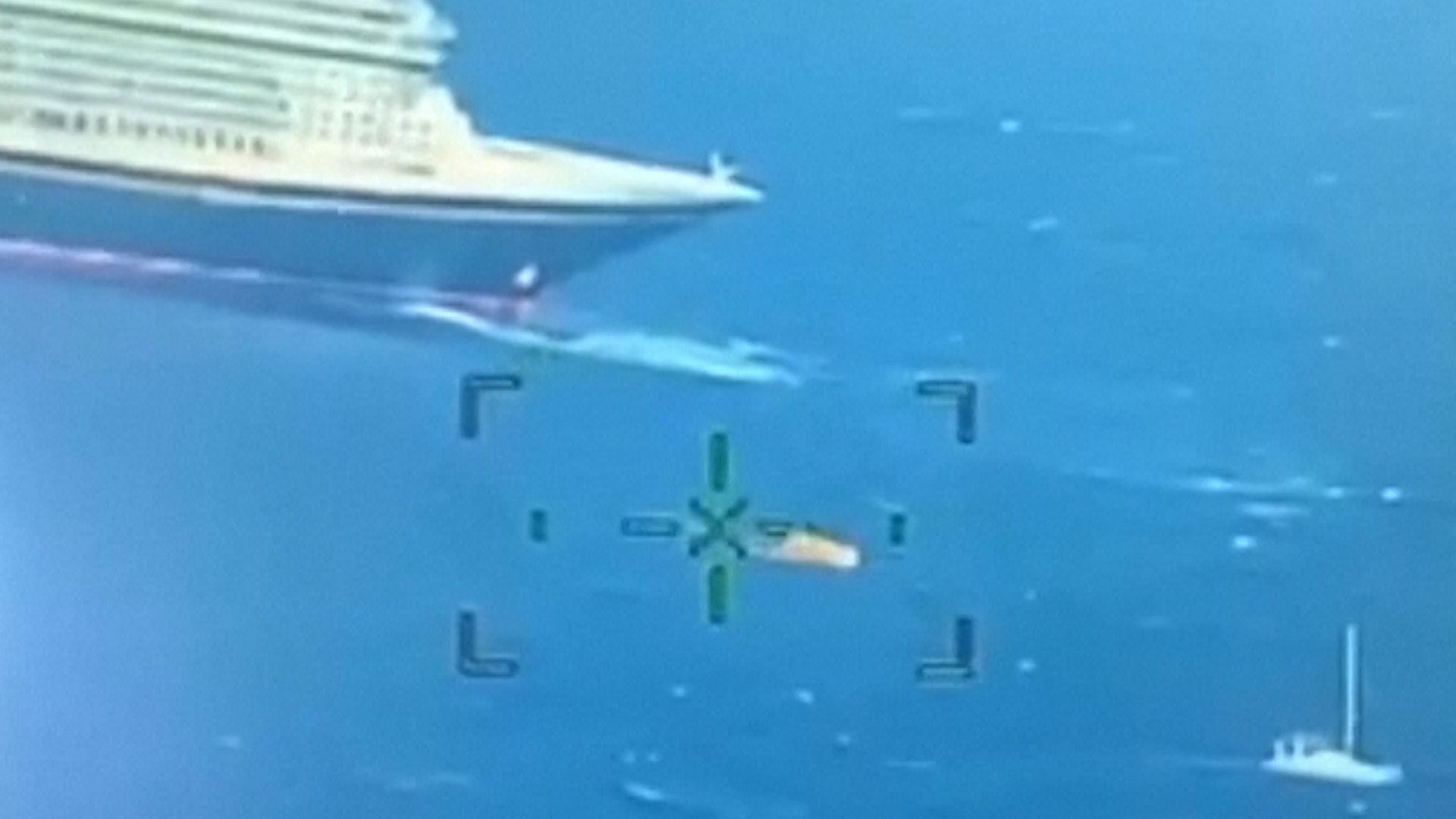
While Disney Cruise Line maintains one of the most rigorous safety records in the maritime industry, there have been a few documented "man overboard" incidents. These rare occurrences include the 2011 disappearance of a crew member and a 2015 incident where a passenger was successfully rescued after falling into the sea.
Man overboard (MOB) incidents are among the most concerning events for any cruise traveler. Despite the high-profile nature of these stories, they remain statistically rare across the entire cruise industry. Disney Cruise Line (DCL), known for its family-centric branding and meticulous attention to detail, is often perceived as a "bulletproof" environment for safety. However, the vastness of the ocean and the realities of maritime travel mean that no line is entirely immune to incidents.
As of 2026, Disney Cruise Line operates a growing fleet of ships, including the Magic, Wonder, Dream, Fantasy, Wish, Treasure, and Destiny. Throughout its nearly three decades of operation, the company has established a reputation for safety that often exceeds international requirements. Understanding the specific instances where people have gone overboard—and how the ships are designed to prevent this—is essential for any traveler concerned about cruise safety.
Notable Man Overboard Incidents on Disney Cruise Line
To answer the question directly, yes, people have gone overboard on Disney ships. However, the number of incidents is incredibly low compared to the millions of passengers Disney carries annually. Two specific cases stand out in the company’s history due to their documentation and the media attention they received.
The Disappearance of Rebecca Coriam (2011)
The most high-profile and controversial incident in Disney Cruise Line's history involves Rebecca Coriam, a 24-year-old British crew member working as a youth activities coordinator. On March 22, 2011, while the Disney Wonder was off the coast of Mexico en route to Puerto Vallarta, Coriam failed to report for her shift.
Security footage showed her on a ship telephone in a crew-only area at approximately 5:45 AM. She appeared distressed during the conversation. This was the last confirmed sighting of her. Despite an extensive search of the vessel and the surrounding waters by the U.S. Coast Guard and the Mexican Navy, she was never found. The case remains a point of significant debate, with her family frequently challenging the official investigation’s conclusion that she was likely swept overboard by a rogue wave while on a crew deck. This incident led to increased scrutiny regarding how cruise lines handle disappearances and the jurisdictional complexities of crimes at sea.
The 2015 Passenger Rescue near Cuba
In contrast to the tragic outcome of the Coriam case, the 2015 incident involving a 22-year-old male passenger is often cited as a "miracle rescue." In January 2015, the passenger fell from the Disney Magic while the ship was sailing near the Cayman Islands and Cuba.
The fall occurred in the early morning hours. Remarkably, the passenger was spotted in the water by a crew member on the Disney Fantasy, another Disney ship that happened to be following a similar itinerary and was trailing the Magic. The Disney Fantasy crew executed a rescue maneuver, deploying a lifeboat to retrieve the man, who had been in the water for approximately five hours. He survived the ordeal and was treated for dehydration and minor injuries. This incident highlighted the effectiveness of vigilant crew members and the advanced spotting capabilities of modern cruise vessels.
The Physics of Falling Off a Cruise Ship
A common misconception among first-time cruisers is that a simple trip or stumble could result in falling overboard. From an engineering and physics perspective, "accidentally" falling off a cruise ship is virtually impossible under normal circumstances.
Railing Height and Design
Under the Cruise Vessel Security and Safety Act (CVSSA) of 2010, all cruise ships visiting U.S. ports must have railings that are at least 42 inches (107 cm) high. On Disney ships, many railings are even higher, often topped with thick plexiglass or heavy metal to prevent children from climbing.
For an adult of average height, a 42-inch railing reaches the mid-torso or chest area. To go over such a railing, a person must intentionally climb it, be lifted over it, or be engaging in extremely reckless behavior (such as sitting on the edge or "planking"). Wind alone is almost never strong enough to blow a person over a railing unless they are already in a precarious, elevated position.
Balcony Safety
Disney Cruise Line is famous for its "Navigator’s Verandahs" and standard balconies. These areas are designed with high-impact plexiglass or solid steel lower halves to ensure that even the smallest children cannot slip through gaps. The doors to these balconies also feature high-level locks that are difficult for young children to reach or operate, providing an additional layer of security for families.
| Feature | Disney Cruise Line Standard | Industry Minimum (CVSSA) |
|---|---|---|
| Minimum Railing Height | 42+ inches | 42 inches |
| Balcony Door Locks | Dual-locking, high-reach handles | Required |
| CCTV Coverage | Extensive (Common areas & Decks) | Required |
| MOB Detection Tech | Infrared and Laser systems (on newer ships) | Recommended/Mandatory for new builds |
| Crew Training | Regular "Oscar" drills | Mandatory |

Technical Safety Systems and Man Overboard Detection
In 2026, the technology used to detect and respond to man-overboard situations is more advanced than ever. Disney has been a proactive participant in adopting technologies that bridge the gap between a fall occurring and the bridge being notified.
Automated Detection Systems
Older methods of detecting a fall relied almost entirely on eyewitness accounts or security footage reviewed after someone was reported missing. Modern Disney ships, particularly the newer classes like the Wish class, utilize sophisticated Man Overboard Detection Systems (MOBDS). These systems use a combination of:
- Thermal Imaging: Cameras that can detect the heat signature of a human body falling against the cooler background of the ship’s hull or the ocean.
- Radar/Laser Sensors: These sensors create an invisible perimeter around the deck’s edge. If an object of a certain size breaks that perimeter, an alarm sounds instantly on the bridge.
- AI Video Analytics: Software that can distinguish between a human falling and inanimate objects (like a towel or a piece of trash) being thrown overboard.
The "Oscar, Oscar, Oscar" Protocol
When a person is suspected of going overboard, the ship initiates a specific emergency protocol. Over the public address system, you may hear the code "Oscar, Oscar, Oscar." This signifies a man-overboard emergency.
Upon this signal:
- Marking the Position: The bridge immediately presses a button on the GPS to "mark" the exact coordinates of the incident.
- Maneuvering: The Captain may perform a "Williamson Turn," a classic naval maneuver designed to bring the ship back to the exact spot where the person fell.
- Deployment: Rescue boats (tenders) are prepped for immediate launch.
- Notification: The Coast Guard and nearby vessels are notified to assist in a search-and-rescue grid.
Why Do These Incidents Happen?
If the railings are high and the tech is advanced, why does anyone fall off? Statistical analysis of man-overboard incidents across the industry reveals three primary causes, none of which are "accidental" in the traditional sense of a trip and fall.
- Intentional Acts: A significant majority of overboard incidents are identified as intentional acts of self-harm.
- Excessive Alcohol Consumption: While Disney has a more "family-friendly" atmosphere than some "party-centric" cruise lines, alcohol is still served. High levels of intoxication can lead to impaired judgment, such as passengers attempting to climb between balconies or "show off" by standing on railings.
- Reckless Behavior: This includes stunts for social media or attempts to jump into the water while the ship is near a port.
Disney’s strict "Code of Conduct" and the presence of high-security visibility tend to discourage the latter two categories, which contributes to their lower incident rate compared to lines that cater to a younger, more nightlife-oriented demographic.
Legal and Jurisdictional Realities
When an incident occurs on a Disney ship, the legal response is complex. Disney Cruise Line is headquartered in Florida, but its ships are often flagged in the Bahamas. This means that when a person goes overboard in international waters, the primary investigating authority is often the Bahamas Maritime Authority, in conjunction with the FBI (if U.S. citizens are involved) and the U.S. Coast Guard.
The Cruise Vessel Security and Safety Act (CVSSA) has greatly improved transparency. It requires cruise lines to report all missing persons and major crimes to the FBI and to maintain a public log of such incidents. This federal law ensures that lines like Disney cannot "hide" incidents, providing passengers with an accurate picture of ship safety.
Preventing Incidents: A Guide for Families
Safety is a partnership between the cruise line and the passenger. For families traveling with children on Disney Cruise Line in 2026, following these guidelines ensures a safe vacation:
- Supervise Balcony Use: Never allow children on the verandah without an adult present. Even though the railings are high, children are creative and may move furniture to create a "step" to see over the edge.
- Keep Furniture Away from Edges: Ensure that chairs and tables stay toward the center of the balcony or room.
- Educate Children: Teach children that the ship’s railings are a "no-touch" zone. Disney’s own youth counselors often reinforce these safety messages in the Oceaneer Club.
- Know the Codes: Understanding that emergency signals (like the general alarm) require immediate return to your stateroom for a head count can save precious minutes during a real emergency.
FAQ: Common Questions About Disney Cruise Safety
Has a child ever fallen off a Disney cruise ship?
There are no public records of a child falling overboard from a Disney cruise ship. There was a highly publicized incident in 2013 involving a 4-year-old child who nearly drowned in a pool on the Disney Dream, but this occurred on the pool deck, not over the side of the vessel. Disney has since added lifeguards to all pools across their fleet.
How many people go overboard on cruise ships each year?
Across the entire industry (including all major lines), an average of 20 to 25 people go overboard annually. Given that over 30 million people cruise each year, the statistical likelihood of this happening to any individual is approximately 1 in 1.5 million. Disney's specific average is significantly lower than the industry mean.
Can a rogue wave knock you off a Disney ship?
While rogue waves are a real maritime phenomenon, they rarely impact large modern cruise ships in a way that would wash a passenger off a standard public deck. Most public decks are located high above the waterline. The "rogue wave" theory in the Rebecca Coriam case remains a point of contention because such waves are usually accompanied by significant ship damage, which was not reported in that instance.
Does Disney have cameras everywhere to see if someone falls?
Disney ships have extensive CCTV coverage in hallways, public lounges, and along the outer decks. However, they do not have cameras inside private staterooms or on private balconies (due to privacy laws). If someone falls from a balcony, it is usually captured by "perimeter" cameras that look down the length of the ship’s hull.
What should I do if I see someone fall overboard?
If you witness someone going overboard, you should immediately shout "Man Overboard!" and keep your eyes fixed on the person in the water. Do not look away to find a phone; point at the person so others can see. If there is a life ring nearby, throw it into the water. Contact a crew member or pick up any ship phone and dial the emergency number (usually 7-911 or a dedicated emergency button).
A Focus on Prevention and Readiness
The question of whether anyone has fallen off a Disney cruise ship is answered by a small handful of tragic or dramatic events over several decades. While these incidents are deeply impactful, they represent a microscopic fraction of the total passenger experience.
Disney Cruise Line remains one of the safest ways to travel. The combination of high physical barriers, advanced electronic detection systems, and rigorous crew training creates a multi-layered safety net. For the modern traveler in 2026, the focus should not be on the fear of falling, but on the responsible enjoyment of the ship’s amenities. By following basic safety protocols and respecting the power of the ocean, passengers can ensure that their Disney vacation remains magical and, most importantly, safe.
Image Gallery
Select an image to open it in a new tab.

Celine Dubois
Contemporary Living and Global Arts Columnist
