
A 403(b) hardship withdrawal allows participants to access retirement funds before age 59½ when facing an immediate and heavy financial need. To qualify, you must demonstrate an urgent financial exigency as defined by IRS regulations, and the withdrawal amount cannot exceed the total necessary to satisfy that specific financial need, including any mandatory tax withholdings and penalties.
The Role of 403(b) Plans in Retirement Planning
A 403(b) plan is a tax-advantaged retirement savings account available to employees of public schools, certain tax-exempt organizations, and ministers. Because these plans are designed to encourage long-term savings, the Internal Revenue Service (IRS) imposes significant restrictions on early access to these funds. Generally, withdrawing money before age 59½ triggers a 10% early withdrawal penalty in addition to standard income taxes.
However, the "hardship withdrawal" exists as a safety valve for participants who encounter extreme financial distress. It is important to distinguish between a hardship withdrawal and a plan loan. A loan must be repaid with interest, whereas a hardship withdrawal is a permanent distribution that cannot be "paid back" into the account later. Because a hardship distribution permanently depletes your retirement nest egg, it should be viewed as an absolute last resort.
Qualifying Financial Hardships
Under IRS guidelines, a distribution is only considered a "hardship" if it is made on account of an immediate and heavy financial need of the employee. The IRS explicitly lists specific scenarios that qualify, provided the participant lacks other reasonable resources to meet these obligations.
Commonly recognized hardships include:
- Medical Expenses: Costs for medical care described in Section 213(d) of the Internal Revenue Code for you, your spouse, or your dependents.
- Costs Relating to the Purchase of a Principal Residence: Expenses directly related to the purchase of a principal residence (excluding mortgage payments).
- Tuition and Fees: Payments for up to the next 12 months of post-secondary education for you, your spouse, children, or dependents.
- Preventing Eviction or Foreclosure: Payments necessary to prevent the eviction of the employee from their principal residence or the foreclosure on the mortgage of that residence.
- Burial or Funeral Expenses: Costs for the burial or funeral of your deceased parent, spouse, children, or dependents.
- Repair of Damage to Principal Residence: Costs related to the repair of damage to your principal residence that would qualify for the casualty deduction under Section 165 (subject to federal disaster declarations).
- Expenses for Victims of Federally Declared Disasters: Certain costs incurred as a result of a disaster declared by the Federal Emergency Management Agency (FEMA).
The "Immediate and Heavy" Requirement
The IRS mandates that the need must be both immediate and heavy. If you have other assets available—such as a personal savings account, brokerage accounts, or the ability to secure a low-interest personal loan—you may be ineligible for a 403(b) hardship withdrawal. While the "deemed necessary" rules have been simplified in recent years to remove the requirement that you must first exhaust all other available loans, you are still expected to act in good faith. Your plan administrator may require documentation, such as medical bills, eviction notices, or tuition invoices, to verify the necessity of the request.
Financial Consequences: Taxes and Penalties
A hardship withdrawal is generally subject to federal and, if applicable, state income tax. Furthermore, because you are accessing the funds before the age of 59½, you will almost certainly be subject to the 10% early withdrawal penalty.
When calculating the amount you need to withdraw, you must account for these costs. For example, if you need exactly $10,000 to cover an emergency, simply withdrawing $10,000 will leave you short after taxes and penalties are deducted. You are permitted to withdraw an amount that includes the funds necessary to pay the associated taxes and penalties, but you must be careful not to exceed the total amount of the documented hardship.
| Factor | Hardship Withdrawal | Standard 403(b) Loan |
|---|---|---|
| Repayment | No | Yes (with interest) |
| Taxable | Yes | Generally No |
| Early Penalty | 10% (if < 59½) | None (usually) |
| Permanent Loss | Yes | No |
| Eligibility | Immediate/Heavy Need | Plan provisions/Limits |
The Procedural Workflow for Participants
If you determine that a hardship withdrawal is your only viable path, follow these steps to initiate the process:
- Consult Your Summary Plan Description (SPD): Your employer’s 403(b) plan document dictates whether they even offer hardship withdrawals. Some employers choose not to include this provision.
- Contact Your Plan Administrator: Reach out to the human resources department or the specific financial institution (e.g., Fidelity, TIAA, Vanguard) managing your 403(b). They will provide the required application forms.
- Gather Documentation: Secure all evidence of the hardship. This includes invoices, legal notices, or death certificates. The plan administrator has a fiduciary duty to ensure the request is legitimate.
- Submit and Verify: Once the application is submitted, the administrator will review it. Be prepared for a processing period that may range from a few days to several weeks.
- Review the Distribution: Once approved, the funds will be sent to you. Check your tax withholding elections carefully. Many plans automatically withhold a portion for federal taxes, but you may need to adjust this to ensure you do not face a large tax bill in April of the following year.
Potential Pitfalls and Mistakes
Many participants make the mistake of viewing the hardship withdrawal as a simple "ATM" for their retirement account. One of the most significant, yet often overlooked, risks is the long-term impact of compound interest. By taking $10,000 out of your account today, you are not just losing $10,000; you are losing the potential growth that money would have achieved over the next 10, 20, or 30 years.
Another common mistake is failing to account for state tax consequences. While federal rules are consistent, state laws regarding retirement distributions vary wildly. Some states may exempt certain distributions, while others may treat them as full taxable income. Always consult with a qualified tax professional before finalizing a withdrawal.
Alternatives to Consider
Before committing to a hardship withdrawal, explore every alternative:
- 403(b) Plan Loan: If your plan allows it, a loan is usually a superior option because you are paying the interest back to yourself, and it does not trigger taxes or penalties.
- Emergency Fund: Tapping into a high-yield savings account or money market account should always be your first line of defense.
- Negotiating Payment Plans: For medical bills or educational expenses, creditors are often willing to work out a monthly payment plan that avoids a lump-sum requirement.
- Debt Consolidation or Refinancing: If the hardship is related to high-interest debt, refinancing that debt may be cheaper than the tax cost of an early withdrawal.
Frequently Asked Questions
Does a hardship withdrawal count toward my annual 403(b) contribution limit? No. A hardship withdrawal is a distribution of money already in the account; it is not a contribution. However, your plan may temporarily suspend your ability to make new contributions following a hardship withdrawal, depending on the specific plan rules and recent regulatory updates.
Can I take a hardship withdrawal for any type of debt? No. The IRS strictly limits hardship withdrawals to the specific categories of "immediate and heavy" financial needs mentioned earlier. You cannot use a hardship withdrawal to pay off credit card debt, personal loans, or to fund a business venture.
Is it possible to appeal if my hardship request is denied? Yes. If you believe your request meets the criteria set forth in the Internal Revenue Code and your plan's SPD, you have the right to appeal the administrator's decision. Review the written denial notice carefully, as it should explain why your documentation was insufficient and what steps you can take to provide more evidence.
What happens to my 403(b) balance if I take a hardship withdrawal? Your account balance will be permanently reduced by the amount of the withdrawal plus any applicable fees. This reduction decreases the principal available for investment growth, which could have a significant negative impact on your future retirement income.
Do I need to inform the IRS about my hardship withdrawal? Yes. You will receive a Form 1099-R from your plan administrator reflecting the distribution. You must report this distribution on your federal income tax return. If you are under 59½, you will also need to use Form 5329 to calculate and pay the 10% early withdrawal penalty unless you qualify for a specific exception.
Final Next Action
If you are currently facing a financial crisis, start by obtaining a copy of your 403(b) Summary Plan Description from your employer. Before filling out any forms, schedule a brief consultation with a financial advisor or a tax accountant. They can help you calculate the exact amount you need to withdraw to cover your costs while minimizing the devastating impact of taxes and penalties on your long-term retirement security. If you determine that a withdrawal is necessary, ensure all your documentation is organized and ready before submission to prevent delays in accessing your funds.
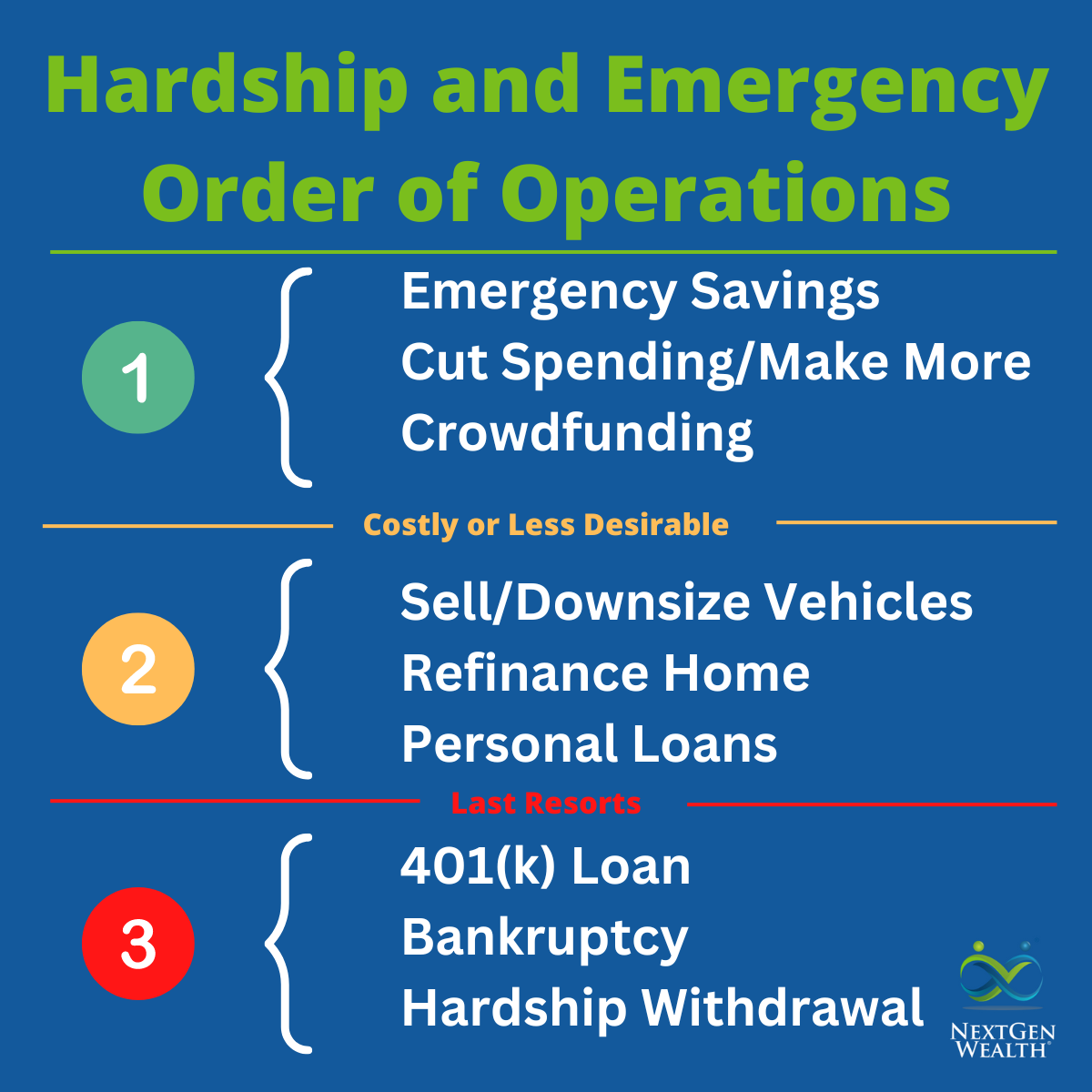
Image Gallery
Select an image to open it in a new tab.
Declan O'Connor
Higher Education and Campus Culture Reporter
