Why Spontaneous Recovery Matters in Psychology: Understanding the Resilience of Learned Behavior
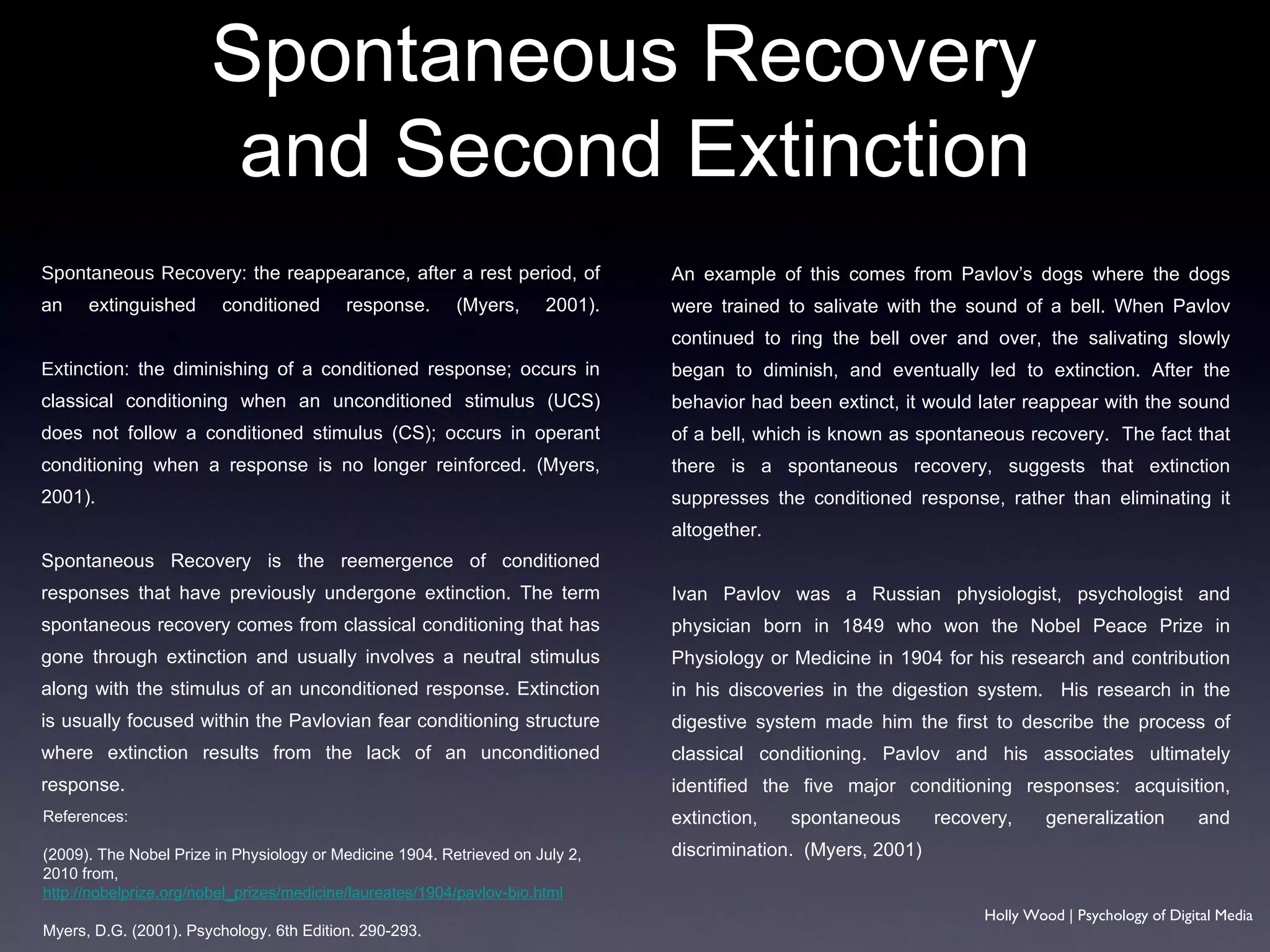
Spontaneous recovery is the sudden reappearance of a previously extinguished conditioned response after a period of rest. It matters in psychology because it demonstrates that learned associations are never truly erased; instead, they are inhibited by new learning. This phenomenon is critical for understanding addiction relapse, phobia recurrence, and the long-term efficacy of therapeutic interventions.
The Foundational Concept of Spontaneous Recovery
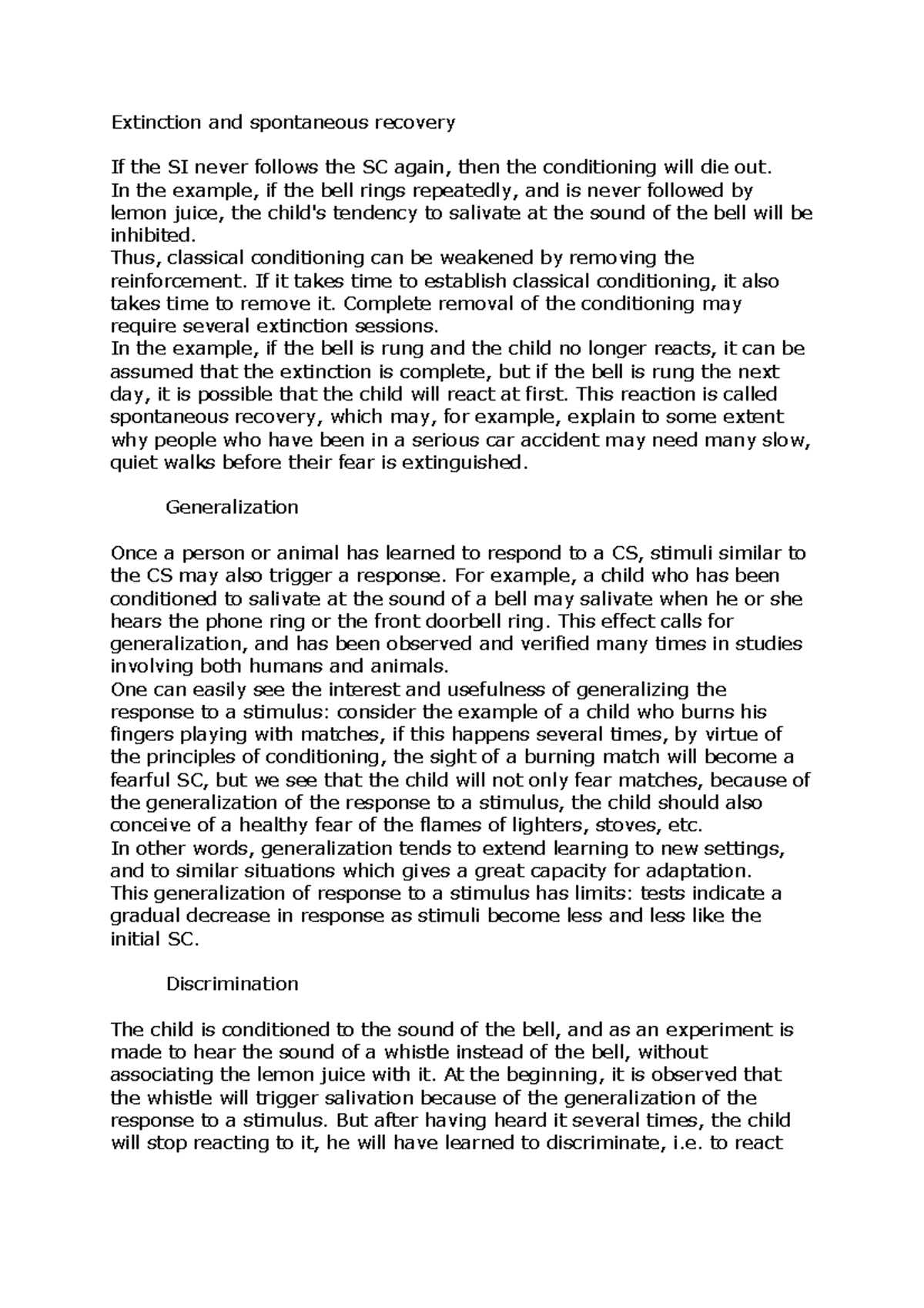
To understand why spontaneous recovery is a cornerstone of behavioral science in 2026, one must first look at the mechanics of classical and operant conditioning. The phenomenon was first documented by Ivan Pavlov during his pioneering work with canine subjects. Pavlov observed that after a conditioned response (salivating at the sound of a bell) was extinguished by repeatedly presenting the bell without food, the response would suddenly return after a "rest period" where the bell was not rung at all.
This discovery upended the early 20th-century assumption that learning was a linear process of acquisition and loss. In modern psychology, spontaneous recovery serves as the primary evidence that the brain does not "overwrite" old files. Instead, it creates new, competing files. When an individual undergoes extinction—the process of weakening a learned association—they are not unlearning the original bond. They are learning a second, inhibitory rule that says, "In this specific context, the old rule no longer applies."
The Distinction Between Extinction and Forgetting
A common misconception is that extinction is synonymous with forgetting. However, spontaneous recovery proves these are distinct cognitive processes. Forgetting is the passive decay of a memory trace over time. In contrast, extinction is an active learning process.
When a behavior is extinguished, the subject learns that a previously reliable predictor (the conditioned stimulus) no longer leads to the expected outcome (the unconditioned stimulus). Because this is "new learning," it is often more fragile than the original "old learning." Spontaneous recovery occurs because the original, more robust memory remains intact beneath the surface. As time passes since the last extinction session, the inhibitory strength of the new learning wanes, allowing the original association to break through.
The Role of Context in Behavioral Resilience
One reason spontaneous recovery is so persistent is the role of context. In 2026, neurobehavioral research continues to emphasize that extinction is highly context-dependent. If a patient overcomes a fear of spiders in a therapist's office (Context A), that learning is often tied to that environment. When they return home (Context B), or simply after enough time has passed (Temporal Context), the brain defaults to the original fear response.
Why Spontaneous Recovery Matters in Clinical Practice
The clinical implications of spontaneous recovery are profound, particularly in the treatment of anxiety disorders, post-traumatic stress disorder (PTSD), and substance use disorders. It provides a scientific explanation for why progress in therapy is rarely a straight line and why "relapse" is a natural biological occurrence rather than a failure of will.
Addiction and the "Cue Reactivity" Problem
In the field of addiction, spontaneous recovery is a primary driver of relapse. A person in recovery may spend months in a rehabilitation facility where they successfully extinguish the urge to use substances in response to specific triggers. However, months later, a random encounter with a "cue"—such as a specific song, a street corner, or even a particular emotional state—can trigger a powerful, spontaneous return of the craving.
Psychologists use the concept of spontaneous recovery to prepare patients for these events. By understanding that the brain retains the "addiction circuitry" even after successful abstinence, clinicians can focus on "extinction enhancement" strategies. These involve teaching patients that the reappearance of an urge is not a sign that they have failed, but a predictable neurological event that requires the re-application of coping mechanisms.
Exposure Therapy and the Return of Fear
Exposure therapy is the gold-standard treatment for phobias and PTSD. It relies on extinction: exposing the patient to the feared object or memory until the distress decreases. However, the "return of fear" (the clinical term for spontaneous recovery in this context) remains a significant challenge.
Clinicians must structure therapy to account for the eventual return of these responses. This includes:
- Varied Exposure: Conducting therapy in multiple settings to generalize the new inhibitory learning.
- Occasional Reinforcement of Extinction: Schedule "booster" sessions to strengthen the inhibitory memory.
- Mental Rehearsal: Helping the patient visualize the trigger in different environments to bridge the gap between the clinic and the real world.
The Neurobiology of Spontaneous Recovery
The biological mechanisms of spontaneous recovery involve a complex interplay between different regions of the brain, primarily the amygdala, the hippocampus, and the medial prefrontal cortex (mPFC).
In 2026, we understand that the amygdala is where the original "fear memory" or "reward memory" is stored. During extinction, the mPFC acts as a "brake," sending inhibitory signals to the amygdala to suppress the response. Spontaneous recovery happens when the mPFC fails to exert this inhibitory control. This failure can be caused by the passage of time, high stress, or a change in environment.
Recent studies published in journals like Nature Neuroscience have highlighted that certain neurotransmitters, such as glutamate and GABA, play a pivotal role in the "strength" of the extinction memory. If the GABAergic inhibition from the mPFC to the amygdala is weak, spontaneous recovery is more likely to be intense and frequent.
Comparing Learning Phases in Behavioral Psychology
The following table outlines the differences between the phases of learning that lead to and result from spontaneous recovery.
| Phase | Description | Key Characteristic | Stability |
|---|---|---|---|
| Acquisition | The initial stage of learning where a response is first established. | A neutral stimulus becomes a conditioned stimulus. | High; the "strongest" memory. |
| Extinction | The gradual weakening and eventual disappearance of the conditioned response. | Occurs when the stimulus is presented without the unconditioned trigger. | Moderate; requires constant reinforcement. |
| Rest Period | A timeframe where neither the stimulus nor the reward/punishment is present. | No active learning or unlearning occurs. | Variable; allows original memory to "recover." |
| Spontaneous Recovery | The sudden return of the conditioned response after a rest period. | Demonstrates the persistence of the original association. | Low to Moderate; usually weaker than acquisition. |
| Reconditioning | Re-teaching the association after extinction or recovery. | Learning occurs much faster than the initial acquisition. | High; builds on existing neural pathways. |
Practical Factors Influencing the Strength of Recovery
Not all spontaneous recovery is equal. Several factors determine how strongly a behavior will return after it has been supposedly extinguished.
- Duration of the Rest Period: Generally, the longer the interval between the extinction and the re-testing, the stronger the spontaneous recovery. A short break may result in a faint response, while a year-long hiatus may result in a response nearly as strong as the original.
- Strength of Original Learning: A response that was learned through intense emotional experiences (like a traumatic car accident) is much more likely to undergo spontaneous recovery than a mild habit (like checking a specific app at a certain time).
- The Number of Extinction Trials: The more extinction sessions a person undergoes, the weaker the subsequent spontaneous recovery will be. This is why "persistence" is the most cited advice in behavioral modification.
- Biological State: Factors like sleep deprivation, chronic stress, and nutritional deficits can weaken the prefrontal cortex's ability to inhibit old memories, making spontaneous recovery more likely.
Why Spontaneous Recovery is Vital for Education and Parenting
The importance of this concept extends beyond the clinic and into daily life. For educators and parents, understanding spontaneous recovery prevents frustration during the behavioral modification process.
When a teacher works to extinguish a child's disruptive behavior in the classroom, the behavior might disappear for two weeks, only to return unexpectedly on a Monday morning. Without the context of spontaneous recovery, the teacher might assume the intervention failed. With this knowledge, they recognize it as a normal part of the learning cycle. The "Monday morning" return is simply the brain testing the old rule after a weekend "rest period." The correct response is to remain consistent with the extinction protocol, which eventually leads to a more permanent suppression of the behavior.
Common Mistakes in Managing Spontaneous Recovery
Understanding why spontaneous recovery happens is only half the battle; the other half is avoiding common pitfalls that accidentally reinforce the very behavior one is trying to stop.
- Accidental Reinforcement: When a behavior spontaneously recovers, it is often frustrating. If a person "gives in" to the recovered urge (e.g., smoking one cigarette after months of quitting), they are not just having a lapse; they are reconditioning the behavior. Because the neural pathways are already there, reconditioning happens much faster than initial learning.
- Labeling it as "Failure": When patients view spontaneous recovery as a total loss of progress, it leads to the "abstinence violation effect," where the individual gives up entirely.
- Neglecting Generalization: Only practicing new habits in one safe environment makes them highly susceptible to spontaneous recovery once the person leaves that environment.
FAQs About Spontaneous Recovery
Is spontaneous recovery the same as a relapse?
While they are related, they are not identical. Spontaneous recovery is the neurological event of a response returning. A relapse is the behavioral outcome of acting on that recovery. One can experience spontaneous recovery (a sudden urge to smoke) without relapsing (not actually smoking).
How long does spontaneous recovery last?
The recovered response is typically short-lived if it is not reinforced. If the stimulus is presented and no reward or punishment follows, the response will undergo extinction again, usually faster than the first time.
Can spontaneous recovery be prevented entirely?
It is difficult to prevent entirely because it is a fundamental feature of how the brain stores information. However, its intensity can be minimized through "over-extinction" (continuing extinction trials long after the behavior has disappeared) and practicing in diverse environments.
Why does Pavlov's dog still matter in 2026?
Pavlov’s principles are the "physics" of psychology. Even with modern neuroimaging and advanced pharmaceuticals, the basic laws of association, extinction, and spontaneous recovery remain the primary framework for understanding how we learn and change habits.
Does spontaneous recovery apply to positive habits too?
Yes. If you once had a strong habit of exercising every morning and then stopped for a long time, you might find that after a brief "spark" of motivation, the old routine "spontaneously" feels easier to perform than a brand-new habit would.
Strategic Recommendations for Behavioral Change
To effectively manage spontaneous recovery, whether in a clinical setting or for personal growth, consider the following actions:
- Anticipate the "Relapse Curve": Expect that old habits or fears will return after a period of success. Plan your response before it happens so you are not caught off guard.
- Focus on Contextual Diversity: If you are trying to break a habit, practice your "new" behavior in as many different places and emotional states as possible. This makes the inhibitory learning more "portable."
- Utilize "Inhibitory Cues": Create new triggers that remind you of your progress. For example, wearing a specific bracelet can serve as a physical cue for the "new" learning, helping the prefrontal cortex suppress the "old" recovery.
- Maintain Consistency: If a behavior returns, do not react with the old reinforcement. Immediately return to the extinction protocol to signal to the brain that the old rule is still invalid.
Image Gallery
Select an image to open it in a new tab.


Akira Tanaka
International Academic Trends Correspondent
