Signal-to-Noise Ratio Explained: Understanding the Core Metric of Data and Communication Quality

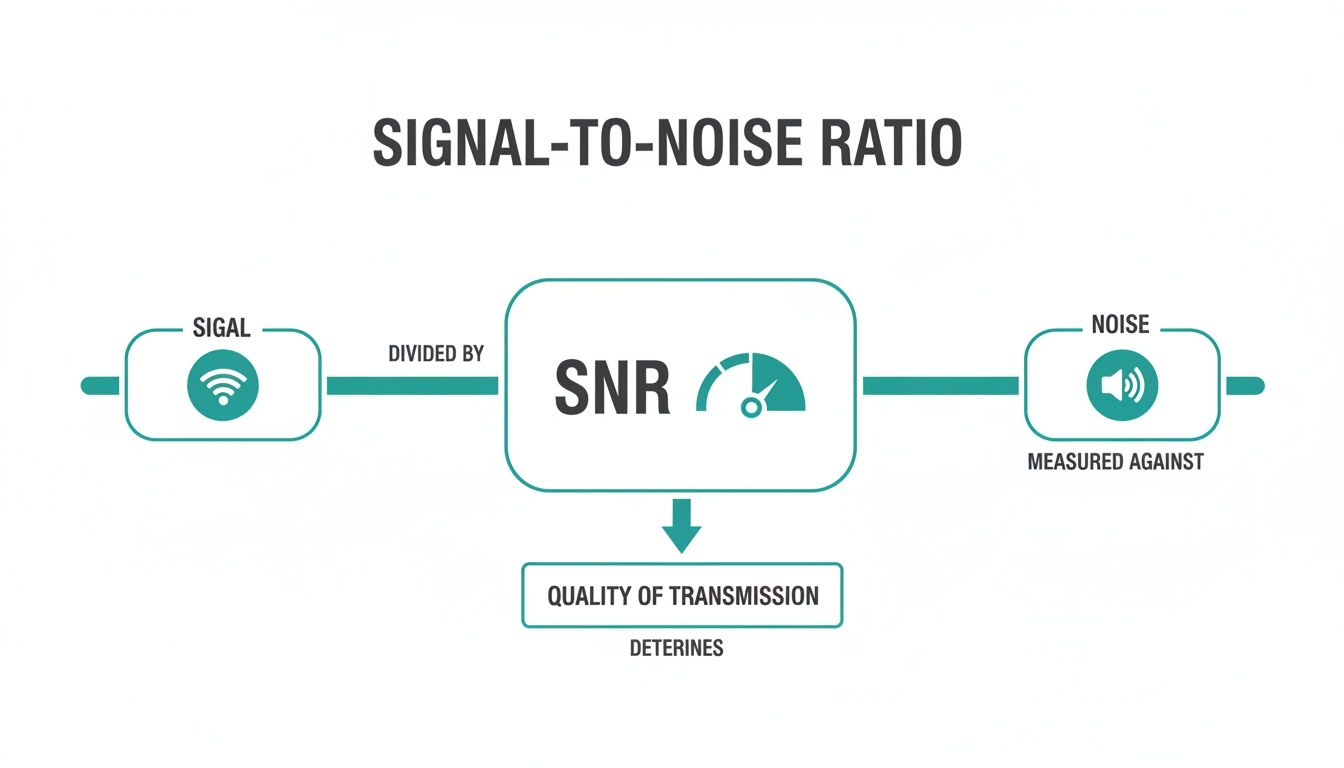
The signal-to-noise ratio is a foundational metric used across engineering, science, and data processing to quantify how much a desired information-carrying signal stands out against background interference, random fluctuations, or corruption. By comparing the power of the true signal to the power of the background noise, this ratio determines the clarity, reliability, and precision of a transmission or measurement system.
Introduction to Signal-to-Noise Ratio (SNR)
In any environment where information is measured, transmitted, or processed, perfection is unattainable. Every electronic circuit, optical fiber, wireless channel, and scientific instrument suffers from random physical disruptions. To evaluate how well a system performs despite these disruptions, engineers and scientists rely on the signal-to-noise ratio (SNR).
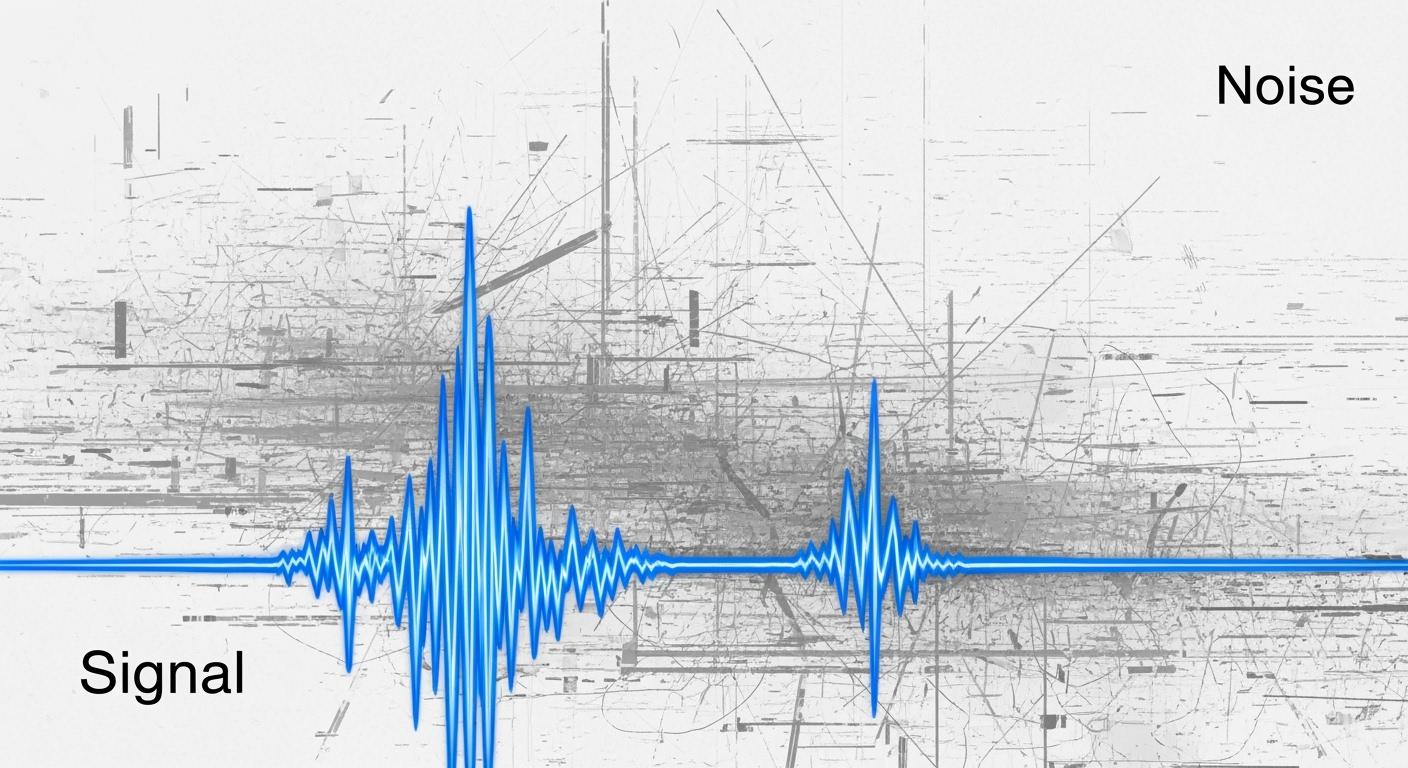
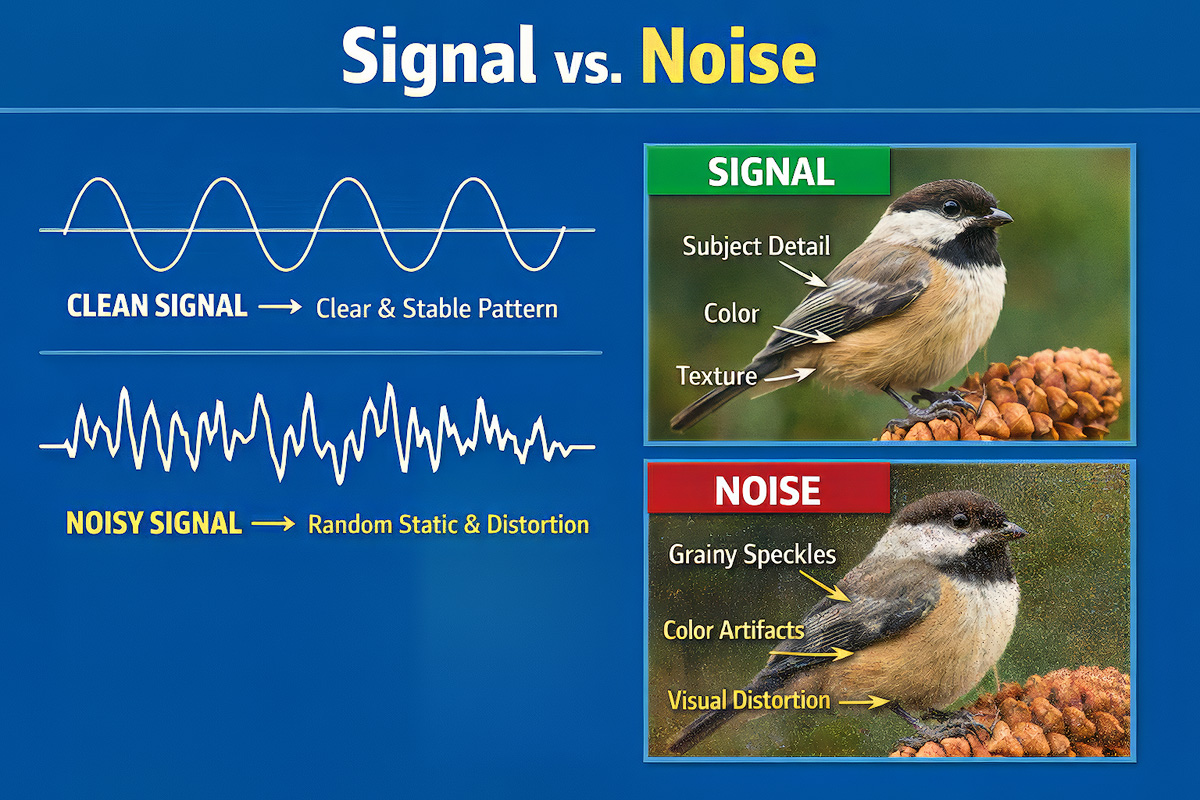
At its core, SNR measures the relative strength of the intended, meaningful information (the signal) compared to the unwanted, random background interference (the noise). A higher SNR means the signal is loud, clear, and distinct, making it easy for a receiver, human observer, or analytical algorithm to interpret. A low SNR indicates that the information is buried beneath a blanket of random fluctuations, leading to errors, distortion, and loss of data integrity.
Understanding SNR is essential across an extraordinary breadth of disciplines. Whether you are troubleshooting a patchy Wi-Fi network, recording high-fidelity audio in a professional studio, calibrating a sensitive medical imaging scanner, or training a machine learning model on real-world datasets, SNR serves as the ultimate benchmark for data quality.
Defining the Core Concepts: Signal and Noise
To truly understand the signal-to-noise ratio, one must first deconstruct its two primary components: the signal and the noise. While these terms sound intuitive, their precise definitions dictate how engineers design, test, and optimize systems.
What is a Signal?
In technical terms, a signal is any time-varying or spatial quantity that conveys information. Signals can be analog, such as a continuous electrical wave representing a human voice over an old telephone line, or digital, consisting of discrete binary pulses of zeros and ones traveling across a computer bus.
- Intended Information: The signal represents the data you actually care about—the melody of a guitar, the pixel values of a digital photograph, or the temperature readings from a deep-sea probe.
- Dynamic Nature: Signals vary in amplitude, frequency, and phase over time. Their power is measured against a baseline to determine how much energy they carry.
What is Noise?
Noise is any unwanted, unpredictable disturbance that superimposes itself onto the signal. Unlike the signal, noise contains no useful information and is typically random in nature.
- Sources of Noise: Noise can originate from external sources—such as electromagnetic interference from power lines, atmospheric static, or cosmic radiation—or internal sources, such as thermal agitation of electrons inside resistors (thermal noise or Johnson-Nyquist noise) and shot noise in semiconductor junctions.
- Unpredictability: Because noise is fundamentally stochastic, it cannot be predicted or cancelled out by simple subtraction. It requires specialized filtering, shielding, or amplification strategies to manage.

Mathematical Formulation and Measurement Units
To utilize SNR effectively, professionals must calculate it using precise mathematical models. While the concept is intuitive, the math involves power ratios and logarithmic scales due to the vast range of signal strengths encountered in real-world applications.
The Basic Power Ratio
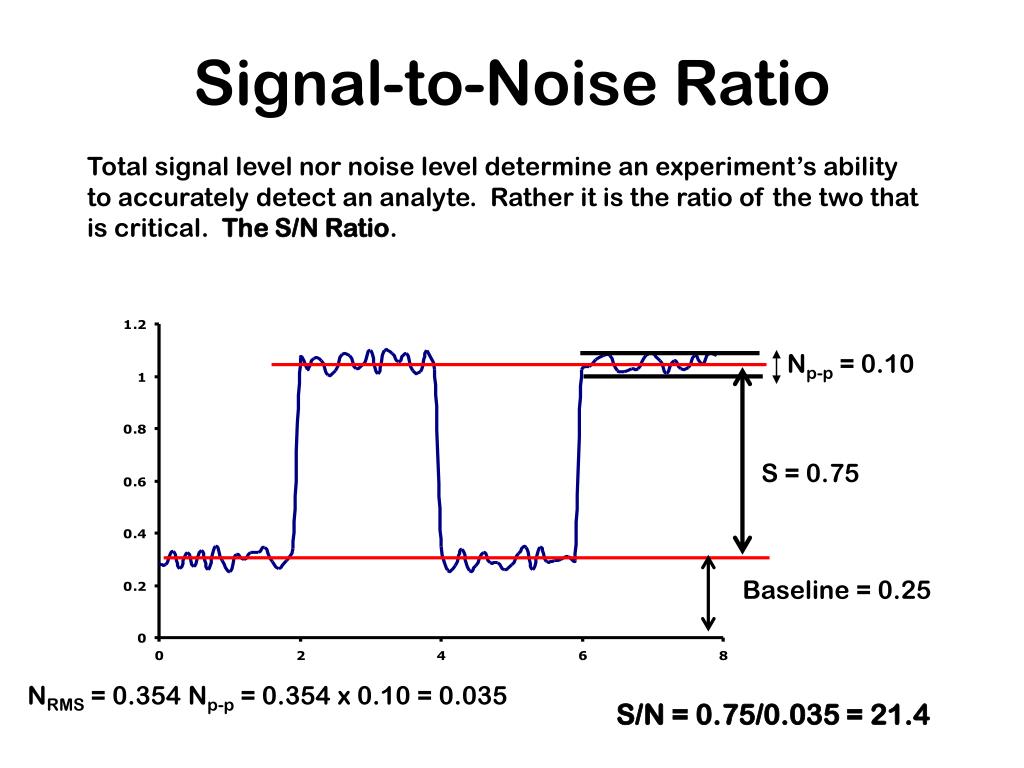
Mathematically, SNR is defined as the ratio of the signal power ($P_{\text{signal}}$) to the noise power ($P_{\text{noise}}$):
$$\text{SNR} = \frac{P_{\text{signal}}}{P_{\text{noise}}}$$
Because power is proportional to the square of the amplitude (voltage or current) in many electrical systems, SNR can also be expressed in terms of root-mean-square (RMS) amplitudes ($A$):
$$\text{SNR} = \left( \frac{A_{\text{signal}}}{A_{\text{noise}}} \right)^2$$
The Decibel (dB) Scale
Because the ratio between the strongest and weakest signals a system can handle is often billions to one, expressing SNR as a raw linear number is unwieldy. Instead, engineers use the decibel (dB) scale, a logarithmic measurement that compresses wide ranges into manageable numbers.
The formula for SNR in decibels is:
$$\text{SNR}{\text{dB}} = 10 \log{10} \left( \frac{P_{\text{signal}}}{P_{\text{noise}}} \right)$$
Alternatively, when using voltage amplitudes:
$$\text{SNR}{\text{dB}} = 20 \log{10} \left( \frac{A_{\text{signal}}}{A_{\text{noise}}} \right)$$
Decibel Interpretation Reference
- 0 dB: Signal power equals noise power ($1:1$ ratio). The signal is entirely masked by the noise.
- 10 dB: Signal power is 10 times greater than noise power. The signal is discernible, but imperfections are noticeable.
- 20 dB: Signal power is 100 times greater. Moderate quality, acceptable for voice communication.
- 60 dB: Signal power is one million times greater. High fidelity, standard for quality audio equipment.
- 100 dB+: Exceptional clarity, found in high-end laboratory instruments and professional recording gear.
SNR Across Different Industries and Applications
The principles of signal-to-noise ratio apply across vastly different technological domains. While the underlying physics change, the goal remains identical: maximizing the useful information while minimizing interference.
| Industry / Field | What is the Signal? | What is the Noise? | Typical Goals / Thresholds |
|---|---|---|---|
| Audio Engineering | Music, vocals, speech | Hiss, hum, electrical interference | Maintain $>60\text{ dB}$ for consumer audio; $>90\text{ dB}$ for studio production. |
| Wireless Communications | Radio frequency data packets | Thermal noise, multipath fading, interference | Maintain an SNR above the receiver's sensitivity threshold to prevent dropped packets. |
| Medical Imaging (MRI/CT) | Anatomical tissue density data | Electronic scanner noise, patient movement | Maximize SNR to reduce scan times and avoid misdiagnosis. |
| Data Science & Machine Learning | True underlying patterns in datasets | Outliers, collection errors, irrelevant variables | Feature engineering and regularization to improve generalization. |
Audio and Acoustics
In sound engineering and music production, SNR dictates the clarity of a recording. A high SNR ensures that quiet musical passages are heard without a distracting background "tape hiss" or electrical hum. Conversely, low SNR results in muddy mixes where subtle instruments are drowned out by equipment noise.
Telecommunications and Networking
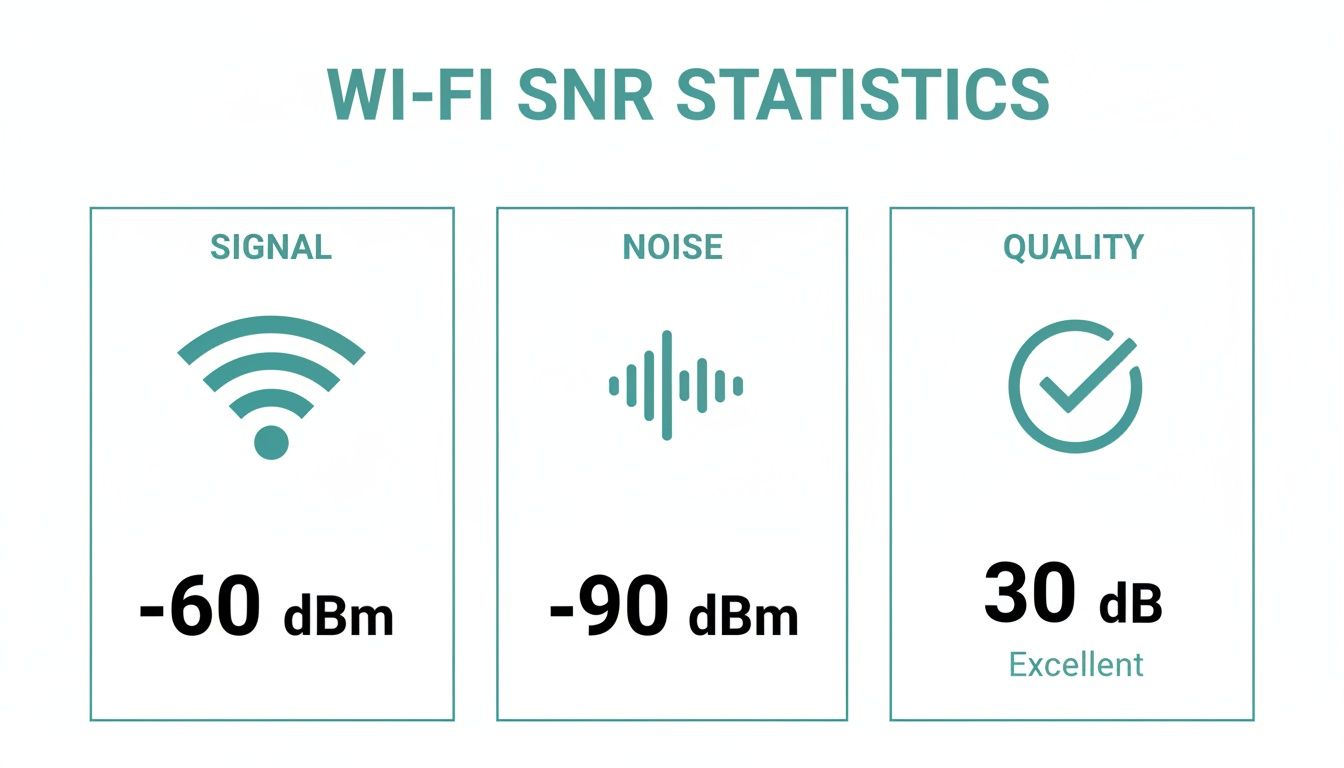
In Wi-Fi routers, cellular towers, and fiber-optic cables, SNR dictates data throughput and connection stability. When a smartphone is far from a cell tower, the signal attenuates while background noise remains constant, causing the SNR to drop. To compensate, the network automatically switches to a more robust, slower modulation scheme (such as shifting from 256-QAM to QPSK), reducing download speeds to maintain a reliable connection.
Scientific Instrumentation and Medical Imaging
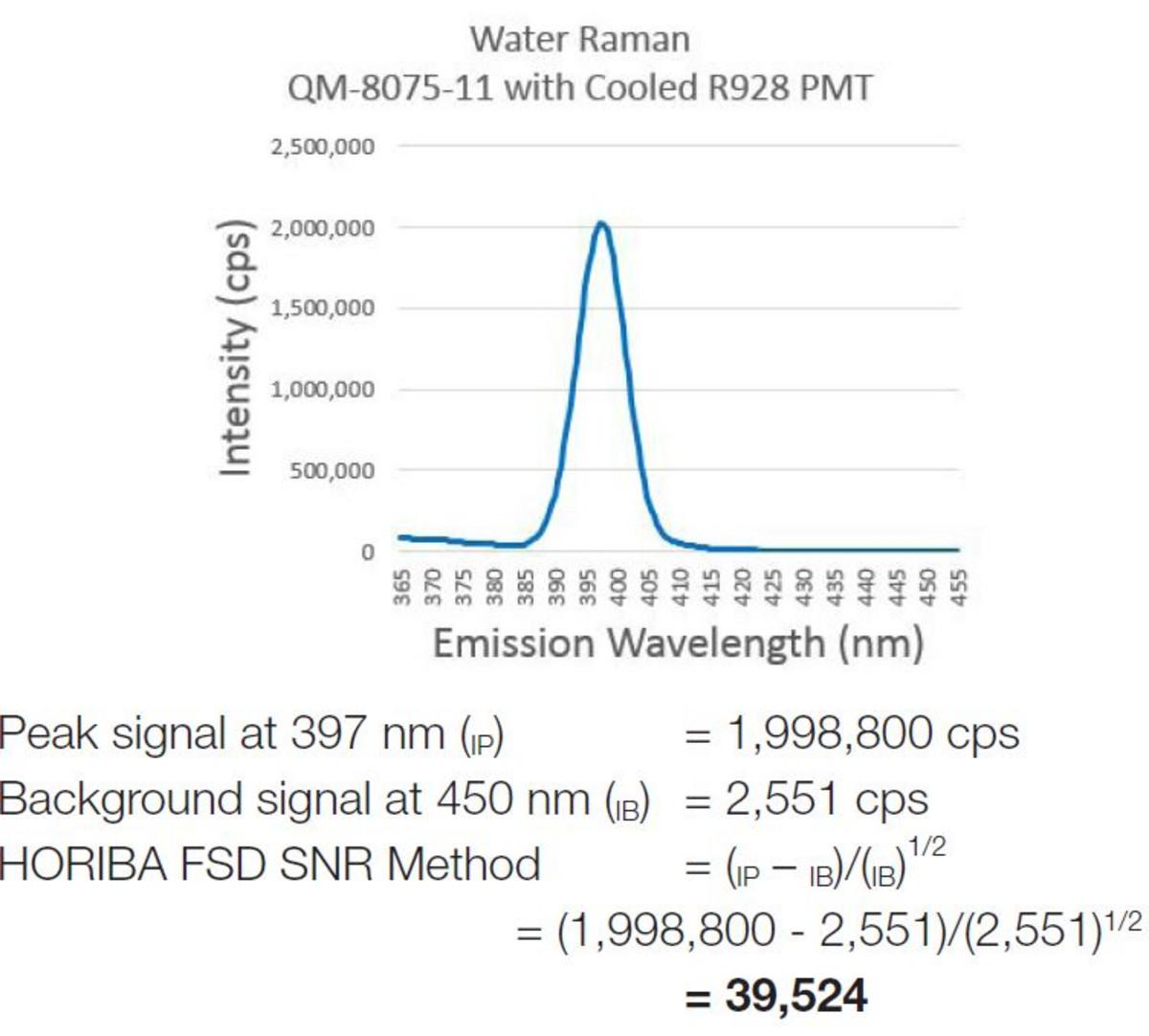
In fields like astronomy and magnetic resonance imaging (MRI), sensors capture faint signals from distant stars or internal organs. Improving SNR often requires physical intervention, such as cooling sensors with liquid nitrogen to reduce thermal electron agitation or averaging multiple scans together to cancel out random noise spikes.
Practical Strategies for Improving Signal-to-Noise Ratio
When a system suffers from poor data quality, engineers and technicians employ hardware and software strategies to raise the SNR. These methods generally fall into two categories: strengthening the signal or suppressing the noise.
- Hardware Approaches
- Increase transmitter power
- Use shielded cabling
- Install low-noise amplifiers (LNAs)
- Optimize grounding and layout
- Software & Digital Approaches
- Digital filtering (low-pass, high-pass)
- Signal averaging (stacking multiple frames)
- Advanced machine learning algorithms
- Error-correction coding
1. Hardware and Physical Optimization
- Shielding and Grounding: Using coaxial cables or twisted-pair wiring with grounded metallic braid prevents external electromagnetic interference from coupling into the conductors.
- Low-Noise Amplifiers (LNAs): Placing a specialized, high-gain, low-noise amplifier as close to the antenna or sensor as possible boosts the signal before system noise can corrupt it.
- Component Cooling: Lowering the physical temperature of sensitive electronics reduces the random thermal motion of electrons, directly lowering thermal noise floor levels.
2. Software and Digital Processing
- Digital Filtering: Applying mathematical filters (such as low-pass, high-pass, or band-pass filters) removes frequency bands where noise is concentrated while leaving the signal frequencies untouched.
- Signal Averaging: If a signal is repetitive, capturing multiple samples and averaging them together causes the random noise (which averages out toward zero) to cancel itself out, while the consistent signal reinforces itself.
- Error-Correction Coding: In digital data transmission, adding redundant parity bits allows the receiver to detect and mathematically correct bit flips caused by low SNR conditions.
Common Pitfalls and Misconceptions
When working with SNR, technicians and analysts frequently encounter common misunderstandings that can lead to flawed system designs.
- Assuming More Amplification Always Helps: Simply turning up the volume knob or using a generic amplifier boosts both the signal and the noise simultaneously, leaving the SNR completely unchanged. To improve SNR, amplification must occur before the noise is introduced, or filtering must separate the two.
- Confusing SNR with Signal Strength: A signal can have extremely high absolute power (high signal strength) yet still have a terrible SNR if the background noise is equally massive (such as shouting next to a jet engine).
- Neglecting Bandwidth: Noise power is directly proportional to system bandwidth. A wider frequency band lets in more total noise, which inherently degrades the SNR unless the signal power increases proportionally.
Troubleshooting Low SNR in Real-World Systems
When diagnosing performance degradation in a technical setup, systematically isolating the source of poor SNR is critical. Follow this step-by-step diagnostic workflow:
- Identify the Symptom: Determine whether the issue manifests as audio distortion, dropped data packets, fuzzy images, or inaccurate sensor readings.
- Measure the Baseline: Use diagnostic tools (such as spectrum analyzers, packet sniffers, or built-in software diagnostics) to quantify the current signal level and noise floor.
- Inspect Physical Connections: Check for loose connectors, corroded pins, unshielded cable runs passing near high-voltage power lines, and improper grounding.
- Isolate Subsystems: Disconnect upstream components one by one to locate where the noise is entering the signal chain.
- Apply Targeted Mitigation: Replace damaged cables, add physical shielding, re-route lines away from interference sources, or implement digital filtering to restore acceptable performance.
Conclusion
The signal-to-noise ratio remains the definitive benchmark for evaluating how successfully information is preserved across a noisy universe. By understanding the mathematical foundations of signal power versus noise power, recognizing the constraints imposed by different operational environments, and applying targeted hardware and software optimization techniques, engineers and data professionals can ensure high-fidelity transmission, accurate measurement, and reliable system performance.
Image Gallery
Select an image to open it in a new tab.


Simon Caldwell
Enterprise Technology and Systems Editor
