Comprehensive Guide to Cloud Security: Layered Controls and the Shared Responsibility Model in 2026
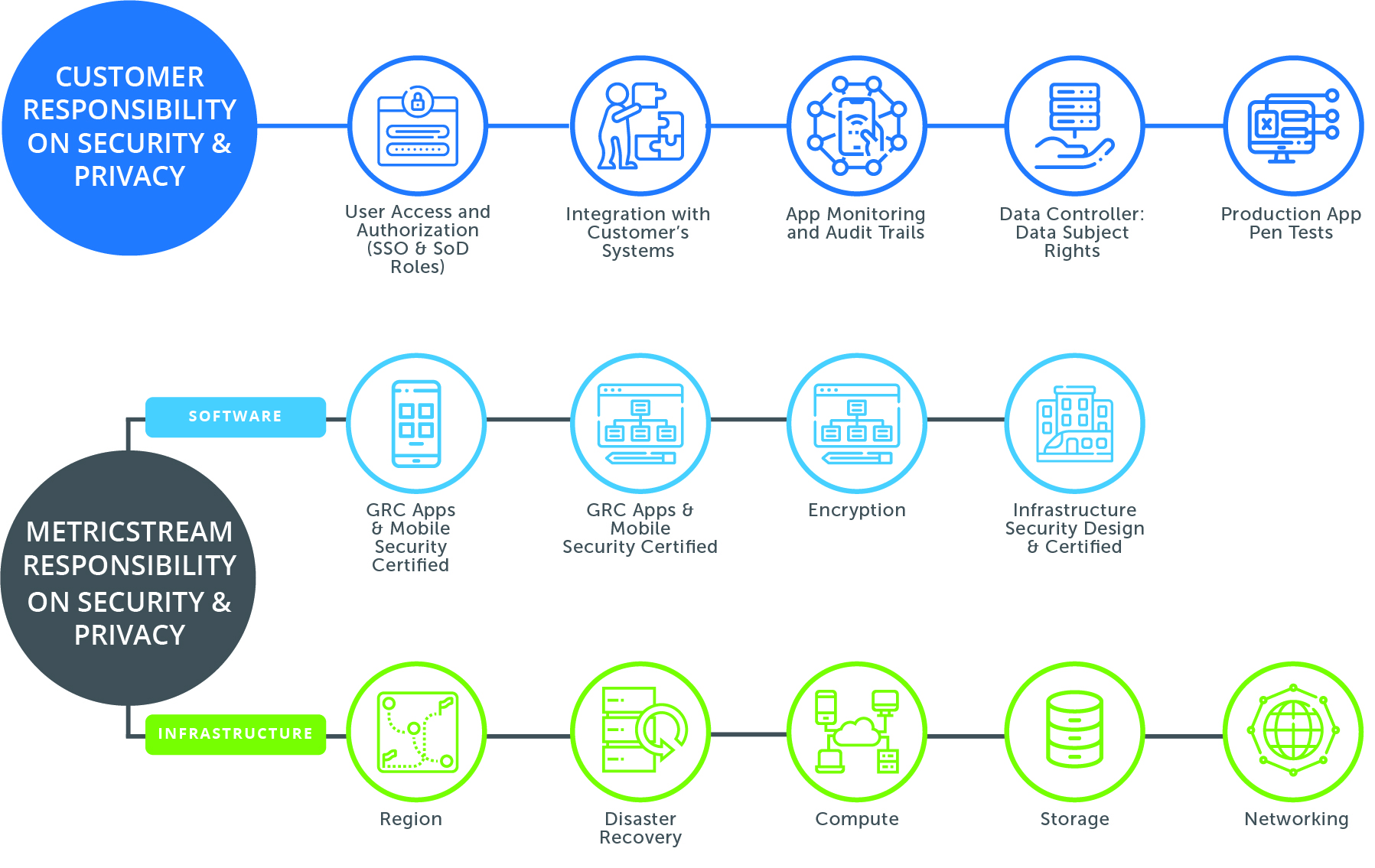
Security in the cloud is defined by a collaborative framework where the service provider secures the underlying infrastructure while the customer protects their specific data, configurations, and identities. This "shared responsibility" is fortified by layered controls—a defense-in-depth strategy ensuring that if one security measure fails, multiple redundant safeguards remain to protect critical assets.
In 2026, the migration to cloud-native environments is no longer a strategic choice but a foundational reality for global enterprises. However, as organizations adopt increasingly complex multicloud and hybrid architectures, the distinction between what the provider protects and what the user must secure has become the most critical pivot point for cyber resilience. Understanding that security is not a "set-and-forget" feature provided by a vendor, but a continuous operational requirement, is essential for any modern organization.
The Foundation: The Shared Responsibility Model
The Shared Responsibility Model is the industry-standard framework that delineates the security obligations of Cloud Service Providers (CSPs) and their customers. While CSPs like Amazon Web Services (AWS), Microsoft Azure, and Google Cloud Platform (GCP) go to great lengths to secure the "security of the cloud," the customer remains responsible for "security in the cloud."
Infrastructure as a Service (IaaS)
In an IaaS model, the customer has the highest level of control and, consequently, the greatest responsibility. The provider manages the physical data centers, cooling, power, and the virtualization layer (the hypervisor). The customer is responsible for the operating system, middleware, runtime, data, and applications. This includes critical tasks such as kernel patching, managing firewalls within the virtual network, and securing any software installed on the virtual machines.
Platform as a Service (PaaS)
In PaaS environments, the responsibility shifts further toward the provider. The CSP manages the operating system and the execution environment. The customer’s focus narrows to securing the applications they develop and the data those applications process. However, a common mistake in 2026 remains the assumption that PaaS is "automatically secure." Customers must still configure access tokens, API permissions, and data encryption settings correctly.
Software as a Service (SaaS)
For SaaS products, the provider handles almost the entire stack, including the application code and underlying infrastructure. The customer’s primary responsibilities are restricted to data governance, identity management (who can log in), and the security of the devices used to access the service. Despite the reduced technical burden, identity remains the most targeted attack vector in SaaS breaches.
Understanding Layered Controls: The "Defense in Depth" Strategy
Layered controls, often referred to as Defense in Depth, is a security strategy that implements multiple independent layers of security to protect data. In 2026, with the rise of sophisticated AI-driven threats, relying on a single firewall or encryption protocol is insufficient.
1. The Physical Layer
This is the base of the pyramid and is almost entirely the responsibility of the CSP. It involves the physical security of data centers—biometric access, 24/7 surveillance, hardware decommissioning protocols, and disaster recovery sites. Organizations should verify these controls by reviewing the provider’s SOC 2 Type II or ISO 27001 audit reports.
2. The Network Layer
Network security in the cloud has evolved from traditional perimeters to identity-aware micro-segmentation. Layered network controls include:
- Virtual Private Clouds (VPC): Logically isolated sections of the cloud.
- Web Application Firewalls (WAF): Protecting against SQL injection and Cross-Site Scripting (XSS).
- DDoS Protection: Leveraging the provider’s massive scale to absorb volumetric attacks.
- Micro-segmentation: Limiting lateral movement by restricting communication between individual workloads.
3. The Identity and Access Management (IAM) Layer
In a cloud-first world, identity is the new perimeter. Layered controls here involve the principle of Least Privilege (PoLP). This means users and services receive only the minimum permissions necessary to perform their tasks. In 2026, this is bolstered by Multi-Factor Authentication (MFA) and Just-In-Time (JIT) access, which grants elevated permissions only for a specific duration and purpose.
4. The Workload and Application Layer
This layer focuses on the security of containers, serverless functions, and virtual machines. Security teams utilize Cloud Workload Protection Platforms (CWPP) to monitor for vulnerabilities and runtime threats. In 2026, "shifting left"—integrating security testing directly into the DevOps CI/CD pipeline—is a mandatory layered control to catch misconfigurations before they reach production.
5. The Data Layer
Data is the ultimate target of most cyberattacks. Layered controls at this level include:
- Encryption at Rest: Ensuring data is unreadable if physical disks are stolen or accessed via unauthorized snapshots.
- Encryption in Transit: Using TLS 1.3 or higher to protect data moving between the user and the cloud or between cloud services.
- Data Loss Prevention (DLP): Tools that scan for sensitive information (like PII or credit card numbers) to prevent accidental or malicious egress.
Comparative Responsibility Matrix
The following table outlines how responsibilities shift based on the cloud service model as of 2026.
| Security Component | On-Premises | IaaS | PaaS | SaaS |
|---|---|---|---|---|
| Physical Facilities | Customer | Provider | Provider | Provider |
| Physical Infrastructure | Customer | Provider | Provider | Provider |
| Virtualization Layer | Customer | Provider | Provider | Provider |
| Operating System | Customer | Customer | Provider | Provider |
| Network Controls | Customer | Customer | Shared | Provider |
| Application Logic | Customer | Customer | Customer | Provider |
| Identity & Directory | Customer | Customer | Customer | Shared |
| Data & Governance | Customer | Customer | Customer | Customer |
The Role of Zero Trust Architecture in 2026
The concept of "layered controls" has effectively merged with the NIST Zero Trust Architecture (ZTA). In a Zero Trust environment, the system assumes that the network is compromised and verifies every request as if it originates from an open network.
Zero Trust enhances layered security by requiring:
- Continuous Verification: Checking identity, device health, and context for every single access request.
- Blast Radius Limitation: Using micro-segmentation to ensure that a compromise of one account does not lead to a total environment breach.
- Automated Response: Using AI-driven Security Orchestration, Automation, and Response (SOAR) tools to lock down accounts or isolate instances the moment an anomaly is detected.
Common Misconfigurations and How to Avoid Them
Despite the robustness of modern cloud platforms, human error remains the leading cause of security incidents. Misconfigurations are the primary "hole" in a layered defense strategy.
- Publicly Accessible S3 Buckets/Storage: Failing to restrict access to storage objects is a classic error. In 2026, most providers have "Block Public Access" enabled by default, but manual overrides for development purposes often lead to exposures.
- Over-permissioned IAM Roles: Granting "AdministratorAccess" to a service that only needs to read one database table violates the principle of least privilege and provides an easy path for attackers.
- Unpatched "Shadow IT": When departments spin up cloud resources outside the visibility of the central IT security team, those resources often lack layered controls and become the weakest link.
- Neglecting Logging and Monitoring: Layered controls are useless if you don't know they are being triggered. Continuous monitoring via Cloud Security Posture Management (CSPM) tools is required to maintain visibility across multicloud environments.
Implementing a Layered Security Roadmap
To successfully implement security that looks like layered controls and shared responsibility, organizations should follow a structured approach.
Assessment and Inventory
You cannot secure what you cannot see. Use automated discovery tools to map every asset in your cloud environment. Categorize these assets by the data they handle and the service model (IaaS, PaaS, SaaS) they utilize.
Defining the Perimeter
Define your virtual boundaries. This involves setting up VPCs, configuring subnets, and implementing strict security group rules. In 2026, this also includes defining "Identity Perimeters" using tools like AWS Organizations or Azure Management Groups to restrict where identities can be used.
Establishing Identity Sovereignty
Implement a centralized Identity Provider (IdP) that supports Single Sign-On (SSO) and robust MFA. Transition from static credentials (like long-lived access keys) to temporary, role-based credentials.
Continuous Compliance and Auditing
Cloud security is dynamic. Use CSPM tools to automatically compare your current configuration against industry benchmarks like the CIS Critical Security Controls. These tools provide real-time alerts when a layered control (like encryption) is disabled.
FAQs
Who is ultimately responsible if a data breach occurs in the cloud?
The legal and financial responsibility for data protection almost always rests with the customer (the data owner). While a CSP is responsible for infrastructure failures, if a breach occurs because of a misconfigured database, a weak password, or an unpatched application, the customer is held accountable under regulations like GDPR or the California Privacy Rights Act (CPRA).
How do layered controls differ from traditional security?
Traditional security often relied on a "castle and moat" strategy, where once a user was inside the network, they were trusted. Layered controls assume the perimeter is porous. Even if an attacker crosses the "moat" (the firewall), they still face additional "walls" (encryption, MFA, micro-segmentation, and endpoint detection).
Is the Shared Responsibility Model the same for all cloud providers?
The core principles are identical across AWS, Azure, and Google Cloud, but the specific terminology and toolsets differ. For example, AWS uses "Security Groups," while Azure uses "Network Security Groups." Each provider publishes its own version of the shared responsibility matrix, which should be reviewed during the procurement process.
Does using a SaaS provider eliminate my security workload?
No. While it significantly reduces the technical overhead of managing servers, you are still responsible for managing user access, ensuring your employees use strong MFA, and monitoring what data is being uploaded to the service. You are also responsible for the "offboarding" process to ensure former employees lose access immediately.
What is the most important layer in cloud security?
In 2026, Identity and Access Management (IAM) is considered the most critical layer. Because the physical and network perimeters are increasingly abstract in the cloud, the ability to verify "who" is requesting "what" is the most effective way to prevent unauthorized access.
Next Steps for Organizations
To move forward, organizations should conduct a gap analysis of their current cloud deployments against the Shared Responsibility Model. Ensure that for every IaaS or PaaS instance, there is a clear owner responsible for patching and configuration. Additionally, invest in Cloud Security Posture Management (CSPM) to provide a "single pane of glass" view of your layered controls. By aligning your internal policies with the provider’s infrastructure security, you create a cohesive, resilient defense that minimizes risk in an increasingly complex digital landscape.
Image Gallery
Select an image to open it in a new tab.
Vivian Cho
Executive IT and Emerging Technologies Reporter
