Mockingbird: A Portrait of Harper Lee - An In-Depth Look at the Life of a Literary Icon

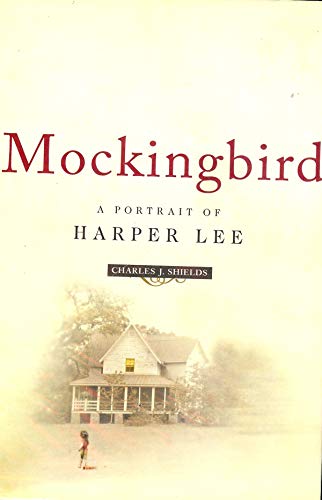
Mockingbird: A Portrait of Harper Lee by Charles J. Shields is the first comprehensive biography of the reclusive author Nelle Harper Lee. It explores her upbringing in Alabama, her pivotal role in Truman Capote's In Cold Blood, and the massive cultural impact of her Pulitzer Prize-winning novel, To Kill a Mockingbird.
As we look back from the perspective of 2026, Shields' work remains the definitive account of Lee's life, especially following the 2016 revised edition that incorporated the late-life publication of Go Set a Watchman. This biography does more than recount dates; it provides a psychological and sociological framework for understanding how a tomboy from a small Southern town became the author of one of the most beloved books in the English language and why she chose to spend the subsequent half-century in relative silence.
Charles J. Shields: Chronicling the Reclusive
Writing a biography of Harper Lee presented a unique set of challenges for Charles J. Shields. Lee was famously private, having granted her last major interview in the mid-1960s. When Shields began his research in the early 2000s, he did so without the cooperation of Lee herself, who remained steadfast in her refusal to participate in any project detailing her personal life. This "unauthorized" status forced Shields to adopt a more investigative approach, relying on hundreds of interviews with Lee’s friends, neighbors, and former classmates, as well as an exhaustive review of archival materials.
Shields succeeded by identifying the people who knew "Nelle" (the name she used personally) rather than "Harper Lee" (the public persona). By gathering these disparate voices, Shields reconstructed a narrative that Lee had spent decades trying to keep out of the public eye. His work is characterized by a balance of deep respect for her talent and a necessary journalistic distance, allowing him to explore the complexities of her character—including her sharp wit, her occasional prickliness, and her fierce loyalty to her family and her roots.
The Early Years: Monroeville and the Roots of Maycomb
A significant portion of Mockingbird: A Portrait of Harper Lee is dedicated to the author’s childhood in Monroeville, Alabama. Shields meticulously demonstrates how the real-life geography and social hierarchy of Monroeville served as the blueprint for the fictional Maycomb. The biography traces Lee’s lineage, focusing on her father, Amasa Coleman (A.C.) Lee. Shields provides historical context for A.C. Lee’s career as a lawyer and legislator, illustrating how his moral compass and professional experiences provided the raw material for the character of Atticus Finch.
The biography paints a vivid picture of Nelle as a "tomboy" who resisted the traditional gender roles of the 1930s South. Shields explores her relationship with her mother, Frances Cunningham Finch Lee, who suffered from what was likely bipolar disorder. This family dynamic, often overlooked in surface-level discussions of Lee’s life, is framed by Shields as a contributing factor to her early retreat into books and her close bond with her father and her sister, Alice Lee. By understanding these formative years, readers gain insight into the themes of social outcasts and moral integrity that permeate her writing.
The Kansas Partnership: Lee, Capote, and 'In Cold Blood'
One of the most compelling segments of Shields’ biography is the detailed account of Harper Lee’s involvement in the creation of Truman Capote’s In Cold Blood. Growing up as next-door neighbors, Lee and Capote were childhood confidants. In 1959, just before the publication of To Kill a Mockingbird, Lee accompanied Capote to Holcomb, Kansas, to investigate the Clutter family murders.
Shields argues convincingly that Lee’s role in Kansas was far more significant than that of a mere "research assistant." Her ability to connect with the local townspeople—who were initially suspicious of the flamboyant Capote—was essential to gathering the testimonies that formed the backbone of Capote's "non-fiction novel." Shields details how Lee’s meticulous notes and psychological insights were integrated into Capote’s work. This section of the biography also highlights the eventual strain on their friendship, as Capote’s burgeoning ego and failure to properly credit Lee’s contributions created a rift that never fully healed. This historical context is vital for understanding Lee's skepticism regarding the literary limelight and the betrayals that can accompany it.
The 'Mockingbird' Phenomenon: From Manuscript to Classic
The process of bringing To Kill a Mockingbird to print is a masterclass in editorial persistence, and Shields documents this journey with technical precision. He details the relationship between Lee and her editor, Tay Hohoff. The original manuscript was not the polished narrative we know today; it was a series of vignettes that required years of rewriting and restructuring.
Shields describes the "Atticus" of the early drafts and how the focus shifted toward the perspective of Scout. The biography tracks the book’s meteoric rise following its publication in 1960, including the rapid acquisition of film rights and the subsequent 1962 movie starring Gregory Peck. Shields analyzes how the book resonated with the burgeoning Civil Rights Movement, even as Lee herself remained largely apolitical in public. The biography provides a clear-eyed look at the financial and social shifts that occurred when an obscure Alabamian became a global celebrity overnight, providing the "How" behind her eventual decision to stop publishing.
The Burden of Success and the Silent Years
A central question addressed in Mockingbird: A Portrait of Harper Lee is why Lee never published another novel for 55 years. Shields explores several contributing factors, including the "paralysis of perfection." The staggering success of her debut created an impossible standard for any follow-up work. Shields documents Lee’s various attempts at a second novel, including a non-fiction true crime project titled The Reverend, which she eventually abandoned.
The biography also examines Lee’s life in New York City and Monroeville, where she split her time. Shields describes a woman who valued her privacy above all else, spending her days feeding ducks, visiting the local laundromat, and avoiding the "literary set." This section of the book is particularly valuable for its portrayal of Lee as a person who rejected the trappings of modern celebrity, choosing instead a life of quiet routine and intellectual independence. Shields dispels some of the more hyperbolic myths of her "hermit-like" existence, showing instead a woman who was very active in her private social circle but had no interest in the public eye.
Revision and 'Go Set a Watchman': Updating the Portrait
The 2016 revised edition of the biography is essential for contemporary readers as it incorporates the discovery and 2015 publication of Go Set a Watchman. Shields provides an objective overview of the controversy surrounding the manuscript’s release. He examines the timing of the publication—shortly after the death of Alice Lee, who had been Nelle’s primary protector and legal counsel—and the questions of elder abuse and competency that surfaced.
More importantly, Shields analyzes Go Set a Watchman as a literary artifact. He explains how the manuscript was actually the original draft of To Kill a Mockingbird and how its depiction of an older, more complicated Atticus Finch provides a necessary, if jarring, contrast to the saintly figure in the later book. This update allows Shields to close the loop on Lee’s career, moving from the hopeful idealism of the 1960s to the more cynical and realistic racial tensions depicted in the Watchman manuscript.
Critical Reception and Literary Legacy
Shields' biography has been praised for its thoroughness and its ability to humanize a figure who had become more of a legend than a person. Critics noted that while Shields was unable to interview Lee, his "mosaic" approach—piecing together her life through secondary sources—was highly effective. The book is often compared to other literary biographies for its ability to place the author’s work within the cultural and historical context of the American South.
In the years leading up to 2026, the biography has served as a foundational text for scholars and students alike. It remains a primary resource for anyone seeking to understand the intersection of Southern history, American literature, and the psychology of fame. Shields does not shy away from Lee’s complexities, and in doing so, he ensures that her legacy is defined by more than just a single book, but by a lifetime of navigating the tensions between private integrity and public expectation.
Comparison of Harper Lee's Published Works and Biographic Context
The following table outlines the key milestones in Lee's career as documented by Shields, illustrating the long gaps and the eventually revealed origins of her work.
| Feature | To Kill a Mockingbird (1960) | Go Set a Watchman (2015) | Mockingbird: A Portrait (Bio) |
|---|---|---|---|
| Perspective | Child (Scout) | Adult (Jean Louise) | Biographical Analysis |
| Primary Theme | Moral growth and racial injustice | Racial disillusionment and heritage | The author's reclusive life |
| Publication Status | Immediate global success | Controversial posthumous-adjacent release | Unauthorized but comprehensive |
| Setting | Maycomb, 1930s | Maycomb, 1950s | Monroeville and New York |
| Draft Origin | Revised from earlier drafts | The original 1950s manuscript | Researched via 600+ interviews |
| Key Male Figure | Atticus (Heroic Father) | Atticus (Flawed Segregationist) | A.C. Lee (Real-life Inspiration) |
Frequently Asked Questions
Did Harper Lee ever authorize Charles J. Shields' biography?
No, Harper Lee did not authorize the biography. She famously stated, "I will not contribute to it in any way," following her long-standing policy of not participating in press or biographical projects. However, Shields spent years interviewing over 600 people who knew her, providing a detailed and accurate account despite her lack of direct involvement.
How does the 2016 version of the biography differ from the original 2006 version?
The 2016 version, often subtitled "From Scout to Go Set a Watchman," includes significant new material regarding the publication of Lee's "lost" novel. It addresses the controversy surrounding its release, Lee’s health in her final years, and how Go Set a Watchman changed the public's understanding of both Atticus Finch and Lee's development as a writer.
What does Shields reveal about the relationship between Lee and Truman Capote?
Shields provides extensive evidence of their deep childhood bond and their professional collaboration on In Cold Blood. He details how Lee acted as a "social bridge" for Capote in Kansas and explores the bitterness that arose when Capote failed to acknowledge her vital contributions in his book's dedication or interviews.
Does the book explain why Harper Lee never wrote another novel?
Yes, Shields explores several reasons, including the immense pressure to follow up a masterpiece, her perfectionist tendencies, and her discomfort with fame. He also documents her failed attempts at a second novel and a non-fiction book, suggesting that she ultimately found more peace in her private life than in her professional one.
Is the biography critical of Harper Lee?
Shields maintains a balanced tone. While he clearly admires her literary achievement, he does not shy away from describing her as a difficult or stubborn individual at times. He treats her as a human being with flaws rather than a untouchable icon, which adds to the book's credibility.
Practical Recommendation for Readers
For those looking to understand the woman behind the legend, Mockingbird: A Portrait of Harper Lee is the essential starting point. To get the most out of the experience, readers should:
- Read the 2016 Revised Edition: Ensure you are reading the updated version to get the full story of Go Set a Watchman.
- Pair with 'In Cold Blood': Reading Shields’ account of the Kansas trip alongside Capote’s novel provides a fascinating look at how Lee’s observations shaped that classic work.
- Cross-Reference with the Novels: Use the biography’s details about Monroeville to identify the real-life inspirations for the characters and locations in To Kill a Mockingbird.
This biography remains a vital piece of literary history, offering a rare window into a life that was intentionally shrouded in mystery.
Image Gallery
Select an image to open it in a new tab.

Omar Farooq
EdTech Innovation and Virtual Pedagogy Journalist
