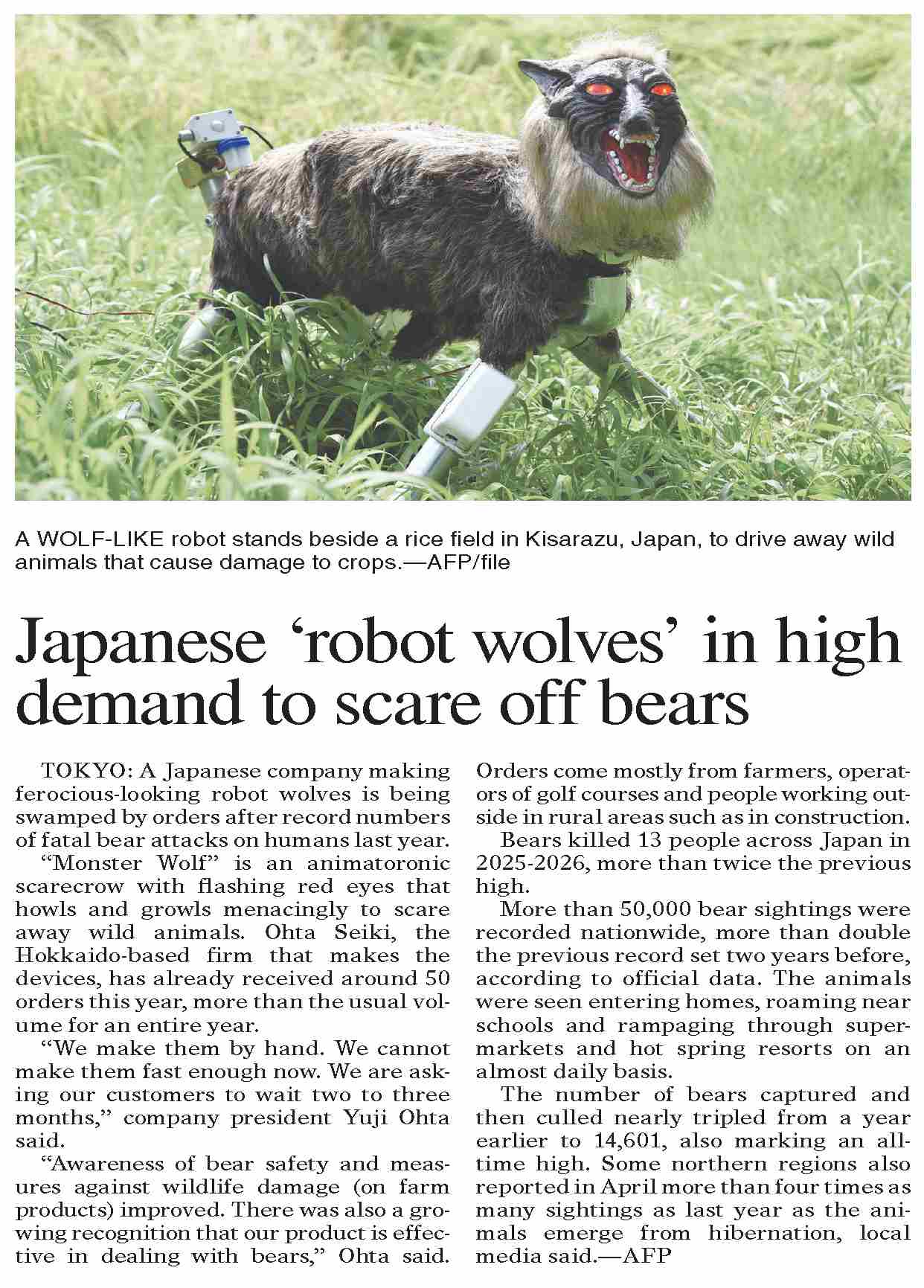
The rise of robotic wolves in Japan represents a high-tech solution to the escalating human-wildlife conflict involving wild boar and deer. These autonomous, sensor-activated scarecrows—known as the "Super Monster Wolf"—employ infrared motion detection, flashing LED eyes, and high-decibel synthetic howling to deter agricultural pests, offering farmers a sustainable alternative to traditional lethal trapping or physical fencing.
The Genesis of the Super Monster Wolf
The proliferation of robotic wolves across rural Japanese prefectures is not a whim of technological spectacle but a direct response to a pragmatic crisis. As Japan’s rural population ages and urban migration accelerates, the abandonment of agricultural land has created an ecological vacuum. This scrubland serves as an ideal habitat for wild boars and deer, populations of which have surged due to the decline in traditional hunting and land management.
For decades, Japanese farmers relied on standard wire fencing, chemical repellents, and culling programs. However, these methods proved increasingly inadequate against the adaptability of local fauna. The concept of the "Super Monster Wolf" originated from a collaboration between Ohta Seiki, a precision machine manufacturer, and the Tokyo University of Agriculture. The objective was to create a device that could mimic the presence of an apex predator, triggering a hardwired evolutionary avoidance response in prey animals without the need for biological intervention or dangerous chemical usage.
The first prototypes were tested nearly a decade ago, but the technology matured as micro-sensor sensitivity and solar power efficiency improved. By 2026, these robotic deterrents have become a fixture in both commercial farming operations and residential areas bordering forest lines, signaling a shift toward automated, non-lethal wildlife management.
Technical Specifications and Operational Mechanics
Understanding why the Super Monster Wolf is effective requires examining its core engineering. Unlike static scarecrows that birds or mammals quickly learn to ignore, these units are designed to introduce unpredictability into the environment.
Sensor Integration
At the heart of the unit is a passive infrared (PIR) sensor. This sensor is calibrated to detect the thermal signature of a medium-to-large animal entering a specific perimeter. By focusing on thermal movement rather than just optical motion, the device reduces false triggers caused by wind-blown foliage or falling leaves.
The Behavioral Deterrent System
When a target is detected, the robot executes a pre-programmed sequence intended to simulate an aggressive, living threat:
- Acoustic Output: The device emits a range of sounds, including synthesized wolf howls, human voices, and gunshots, reaching volumes that can be heard over significant distances.
- Visual Stimuli: The eyes of the wolf are equipped with high-intensity red LEDs. When the system activates, these lights pulse, creating a visual fixation point that mimics the predatory focus of a biological wolf.
- Movement Mechanisms: Certain models include articulating head and neck joints, allowing the wolf to track movement within its field of vision, which significantly reinforces the illusion of an active predator.
Power and Deployment
Given their placement in remote agricultural zones, grid connectivity is rarely an option. Most units are powered by an integrated solar panel that charges a lithium-ion battery array. This enables the device to function autonomously throughout the night, which is precisely when most nocturnal crop-raiding occurs.

Comparative Overview: Traditional vs. Robotic Deterrence
To evaluate the rise of these robots, one must compare their efficacy against conventional methods that have been the standard in Japanese agriculture for generations.
| Feature | Physical Fencing | Lethal Culling | Super Monster Wolf |
|---|---|---|---|
| Setup Cost | Moderate | Low | High (Initial) |
| Maintenance | High (Repairs) | High (Logistical) | Low (Periodic) |
| Environmental Impact | High (Fragmentation) | High (Population loss) | Negligible |
| Adaptability | None | Limited | High (Behavioral) |
| Durability | Vulnerable to rust | N/A | Weatherproof/Rugged |
The robotic wolf excels in scenarios where physical fences are impractical due to topography. In mountainous regions or terraced fields, installing and maintaining a robust, boar-proof fence is often cost-prohibitive. The wolf provides a mobile, scalable solution that can be moved as crop cycles shift or as the migratory patterns of the wild boars change.
The Psychological Impact on Local Wildlife
The primary concern among biologists regarding the deployment of robotic wolves is habituation. Animals, particularly intelligent species like wild boars and deer, are known for their ability to habituate to neutral or non-threatening stimuli. If a robot plays the same sound in the exact same pattern, the animals may eventually realize the "wolf" poses no physical danger.
To counter this, manufacturers have integrated variable response patterns. Modern iterations of the wolf utilize randomized sound sequences and intervals. By ensuring that the device does not follow a predictable loop, the psychological pressure on the intruder remains high. The boar cannot rely on a learning process to ignore the stimulus because the stimulus changes from night to night.
Furthermore, the robotic wolf is designed to be a component of an "integrated pest management" (IPM) strategy. Experts suggest that the robot is most effective when used in conjunction with other deterrents, rather than as a standalone cure-all. When used as part of a larger ecosystem of protective measures, the wolf maintains its status as an "apex threat" in the perception of the local wildlife.
Requirements and Implementation for Property Owners
For those considering the deployment of a robotic wolf, several logistical requirements must be met to ensure the device performs as intended.
- Site Survey: Before acquisition, property owners should conduct a night-time audit of the perimeter. Identifying the primary ingress points for wild animals is crucial. The wolf’s effective range is limited by the line of sight; obstacles like dense shrubbery can block the PIR sensors.
- Strategic Placement: The wolf should be mounted on a sturdy, elevated base to keep it clear of high grass and to optimize the angle of the infrared sensors. Placing the unit at the edge of a forest clearing provides the longest detection lead time.
- Solar Orientation: Because the system relies on solar charging, the mounting site must receive consistent, unobstructed sunlight. In deep valleys, the unit may require a secondary, wired power source or an auxiliary battery pack.
- Weatherproofing: While the housing is typically rated for outdoor use, extreme Japanese weather conditions—such as heavy snowfall or typhoons—may require periodic maintenance and cleaning of the solar panels to ensure consistent functionality.
Challenges and Limitations
Despite the enthusiasm surrounding the rise of these robots, they are not a panacea. The financial barrier to entry remains significant for small-scale farmers. While government subsidies exist in some prefectures to assist with the purchase of "smart agriculture" equipment, many individual farmers find the upfront cost of a high-end robot prohibitive compared to simple traps.
There is also the issue of noise pollution. The high-volume howling and gunshot simulations, while effective against pests, can be a nuisance to nearby human residents. Complaints regarding "robotic howling" in rural residential zones have forced some users to dampen the audio output or adjust the trigger sensitivity, which can inadvertently lower the deterrent’s effectiveness against more skittish animals.
Finally, the technology is limited by the inherent intelligence of the pests. In areas where the animal population is particularly desperate due to food shortages, the robots have been reported to be less effective. Hungry animals are often willing to endure the risk of a "predator" to access high-value crops, proving that even the most advanced robotics cannot override basic survival biology.
The Future of Automated Wildlife Management
As we look toward the latter half of the 2020s, the evolution of the robotic wolf is likely to trend toward greater connectivity. We are already seeing the integration of IoT (Internet of Things) capabilities, allowing farmers to monitor their devices via smartphone applications. This connectivity allows for real-time notifications when a sensor is triggered, providing the farmer with data on when and where pests are most active.
This data-driven approach is the next frontier. By mapping the activation times of these wolves, local municipalities can better understand migration corridors and adjust their culling or management strategies with greater precision. Rather than a standalone tool, the robotic wolf is becoming a data-collection node in a wider digital agricultural network.
The rise of Japan's robot wolves serves as a case study for the intersection of traditional agricultural needs and modern robotics. By successfully mimicking the appearance and auditory signals of an apex predator, these devices have reclaimed fields that were once considered lost to nature. As the technology becomes more affordable and reliable, its application may expand beyond Japan, offering a blueprint for human-wildlife co-existence in other parts of the world grappling with similar pest management challenges.
Frequently Asked Questions
Do robot wolves actually hurt the animals?
No, the robotic wolves are strictly non-lethal deterrents. They rely on sensory input—light, sound, and simulated movement—to scare animals away. There is no physical contact or aggressive mechanism intended to injure or capture wildlife.
How do I know if a robot wolf is suitable for my property?
If you are dealing with wild boars or deer causing consistent crop damage, a robot wolf may be effective. However, consider the density of the brush, the distance to residential neighbors, and your ability to place the unit where it has a clear line of sight. It is most effective when part of a multi-layered protection plan.
Can the animals eventually get used to the robot?
Habituation is a risk, but it is mitigated by randomization. Modern robots do not play the same sound on a loop; they use randomized acoustic patterns and movement to prevent animals from learning the routine. Constant monitoring is recommended to ensure the deterrent remains effective.
What maintenance is required?
Maintenance is relatively minimal but essential. It involves cleaning the solar panels to ensure consistent charging, checking the mechanical joints for debris or rust, and testing the audio output periodically to ensure the sound system remains operational.
Are there legal restrictions on using them?
In most parts of Japan, using these devices is encouraged as a humane alternative to lethal trapping. However, always check local noise ordinances, especially if your property is near a residential area, as the high-volume audio could be subject to municipal noise regulations.
Recommendation for Implementation: Before investing in a robotic wolf, monitor your property for at least two weeks using motion-activated trail cameras. This will help you identify the specific paths animals take, allowing you to position your robot in a location that maximizes its field of detection. If you live near residential neighbors, opt for a model that allows you to adjust the volume of the deterrent sounds to maintain local harmony while still protecting your crops.
Image Gallery
Select an image to open it in a new tab.
Akira Tanaka
International Academic Trends Correspondent
