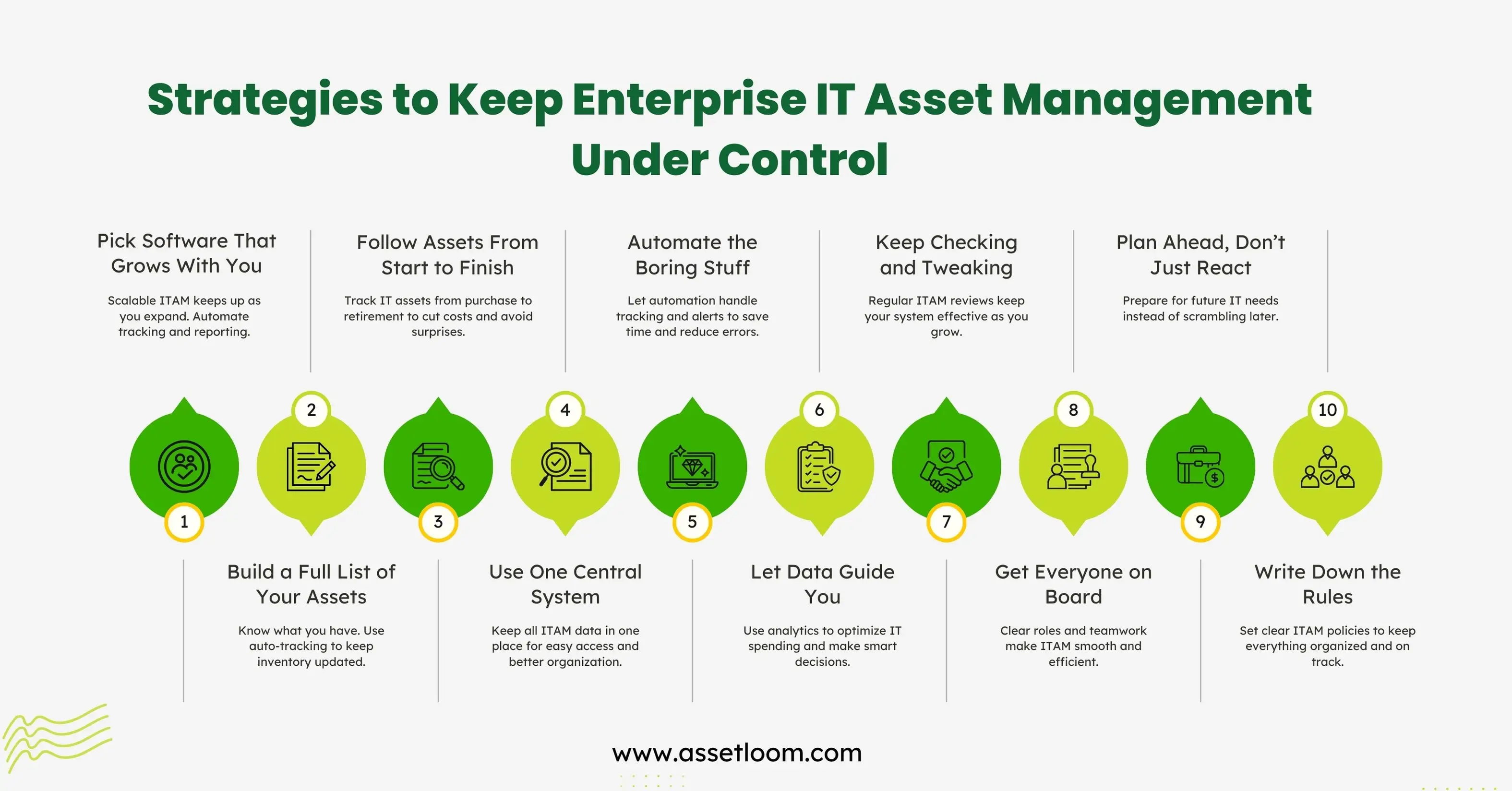
IT asset management in the modern enterprise is the strategic practice of tracking, managing, and optimizing an organization’s entire technology footprint—including hardware, software, cloud services, and edge devices—throughout their entire lifecycle. By integrating automated discovery with financial and security data, ITAM enables businesses to minimize waste, ensure regulatory compliance, and mitigate cybersecurity risks in increasingly complex, hybrid work environments.
The concept of IT Asset Management (ITAM) has undergone a radical transformation. What was once a back-office function focused on recording serial numbers in spreadsheets has evolved into a cornerstone of digital governance. As we navigate the landscape of 2026, the "enterprise" is no longer defined by the walls of an office. It is a distributed network of cloud instances, mobile devices, remote workstations, and Internet of Things (IoT) sensors. Managing these assets effectively is the difference between a resilient, cost-effective operation and one plagued by security vulnerabilities and runaway expenditures.
The Evolution of ITAM: From Inventory to Strategic Intelligence
Historically, ITAM was reactive. Organizations would perform annual audits to count laptops and verify software licenses to avoid penalties from vendors like Microsoft or Oracle. While compliance remains vital, the modern approach is proactive and continuous.
In the current environment, the definition of an "asset" has expanded. It now includes ephemeral assets like containers and microservices, as well as the specialized hardware required for high-density AI processing. Modern ITAM leverages Continuous Asset Visibility, using automated tools that scan the network in real-time. This shift is necessary because an asset that is unmanaged is an asset that cannot be secured.
Strategic ITAM now intersects with several other corporate disciplines:
- FinOps: Managing the variable costs of cloud computing.
- SecOps: Identifying "shadow IT" and ensuring every device has the latest security patches.
- Sustainability (ESG): Tracking the carbon footprint and lifecycle of physical hardware to meet environmental goals.
The Four Pillars of IT Asset Management in 2026
To manage a modern enterprise, leaders must break down ITAM into four distinct but interconnected pillars. Each requires specific tools, workflows, and expertise.
1. Hardware Asset Management (HAM)
Hardware management involves the physical components of IT, from data center servers to the smartphones issued to field employees. In 2026, HAM is heavily focused on the circular economy. Organizations are no longer just buying and discarding; they are tracking the "cradle-to-grave" journey of hardware to maximize residual value and ensure data destruction compliance during decommissioning.
Key considerations for HAM include:
- Predictive Maintenance: Using telemetry data to replace components before they fail, reducing downtime.
- Geographic Tracking: Monitoring the location of assets in a globalized, remote workforce to ensure tax and import/export compliance.
- Asset Recovery: Establishing robust processes for retrieving equipment from departing employees to prevent "zombie assets" from accumulating.
2. Software Asset Management (SAM)
SAM has shifted from managing perpetual licenses to managing complex subscription models and consumption-based agreements. The goal is to eliminate shelfware—software that is paid for but never used.
Modern SAM requires a deep understanding of vendor contracts and automated usage tracking. If an employee has a high-tier license for a design suite but only uses it to view files, a modern ITAM system should automatically flag that user for a downgrade to a cheaper, read-only license.
3. Cloud and SaaS Management
This is perhaps the fastest-growing area of ITAM. SaaS sprawl is a significant challenge, with the average large enterprise utilizing hundreds of different applications, many of which are purchased by individual departments without IT’s knowledge.
Cloud Asset Management (CAM) focuses on visibility into AWS, Azure, and Google Cloud environments. It ensures that "orphaned" resources—like a cloud storage bucket or a virtual machine left running after a project ends—are identified and terminated. This pillar is where ITAM meets FinOps, focusing on rightsizing resources to match actual demand.
4. Data and Information Assets
While often managed by data governance teams, ITAM provides the infrastructure context for data. Knowing which server holds sensitive customer information or which cloud database is subject to GDPR (General Data Protection Regulation) is essential. In 2026, the integration of data classification with asset management is a prerequisite for effective risk management.
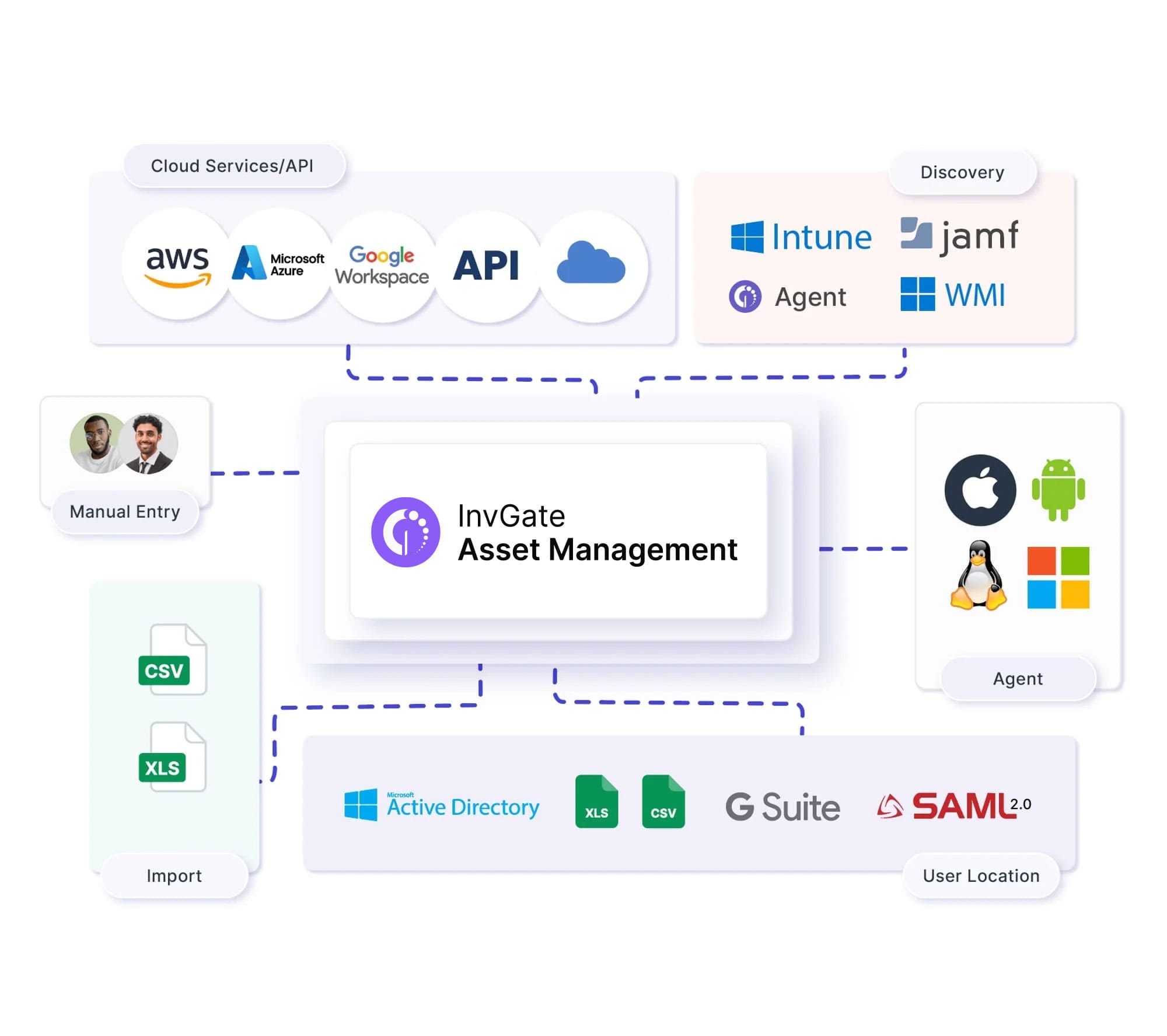
Strategic Drivers for Modern ITAM Implementation
Why are enterprises investing heavily in ITAM systems today? The drivers are more urgent than simple cost-saving.
Zero Trust Architecture
The "Zero Trust" security model operates on the principle of "never trust, always verify." You cannot verify a device if you do not know it exists. ITAM provides the Source of Truth for security teams. Before a device is granted access to the network, the security system queries the ITAM database: Is this a corporate-approved device? Is it running current firmware? Is its owner still an active employee? If the ITAM data is inaccurate, the security perimeter fails.
Global Supply Chain Volatility
Recent years have shown that hardware availability can be unpredictable. Modern ITAM allows organizations to plan for "refresh cycles" with precision. By knowing exactly when a fleet of laptops will reach the end of their useful life, procurement teams can place orders months in advance, avoiding the premium costs of emergency buying during shortages.
ESG and Regulatory Compliance
Governments globally have tightened regulations regarding electronic waste (e-waste) and carbon reporting. Organizations are now required to report on the "Scope 3" emissions associated with their IT supply chain. ITAM systems in 2026 are equipped to track the energy efficiency of assets and provide the documentation needed for environmental audits.
Comparing Legacy vs. Modern ITAM Approaches
The following table highlights the fundamental shifts in how IT assets are managed in a modern enterprise compared to traditional methods.
| Feature | Legacy ITAM (Pre-2020) | Modern ITAM (2026) |
|---|---|---|
| Inventory Method | Manual spreadsheets and periodic "wall-to-wall" audits. | Automated, API-driven continuous discovery. |
| Primary Goal | Software license audit defense. | Optimization, security, and agility. |
| Asset Scope | Laptops, desktops, and on-premise servers. | Cloud, SaaS, IoT, containers, and remote devices. |
| Update Frequency | Monthly or Quarterly. | Real-time or Near-real-time. |
| Ownership | Siloed within the IT department. | Cross-functional (IT, Finance, Security, HR). |
| Disposal | Focus on physical shredding/recycling. | Focus on data sanitization and circular economy. |
The ITAM Lifecycle: A Roadmap for Success
Effective ITAM is a circular process, not a linear one. Following a standardized lifecycle ensures that no asset falls through the cracks.
Phase 1: Strategy and Planning
Before purchasing, the enterprise must define the requirement. Does the business need a physical server, or can the workload be handled by a serverless function? Planning involves setting the standards for what hardware and software are "supported" within the organization to prevent a fragmented environment that is impossible to manage.
Phase 2: Acquisition and Procurement
Modern procurement involves more than just cutting a check. It includes capturing the metadata of the asset at the point of purchase. For a laptop, this includes the warranty terms, lease end-date, and energy rating. For software, it involves recording the entitlement details into the SAM tool immediately.
Phase 3: Deployment and Integration
When an asset is deployed, it must be tagged (physically or digitally). In 2026, Auto-enrollment is standard. As soon as an employee boots up a new device, it connects to a Mobile Device Management (MDM) system that registers it in the ITAM database, pushes necessary software, and applies security policies without human intervention.
Phase 4: Operations and Maintenance
This is the longest phase of the lifecycle. It involves tracking moves, adds, and changes (MACs). Modern ITAM uses AI to monitor the "health" of the asset. If a group of laptops shows a high rate of battery degradation, the ITAM system can trigger a proactive replacement program before users begin experiencing failures.
Phase 5: Retirement and Disposal
When an asset reaches the end of its life, it must be retired securely. This involves:
- Data Sanitization: Ensuring all data is wiped according to NIST 800-88 standards.
- License Reclamation: Harvesting software licenses from retired hardware to be reused elsewhere.
- Financial Closeout: Updating the fixed-asset register for depreciation and tax purposes.
- Responsible Disposal: Obtaining certificates of destruction or recycling to meet ESG requirements.
Common Challenges and How to Overcome Them
Despite the advanced tools available in 2026, enterprises still face hurdles in ITAM execution.
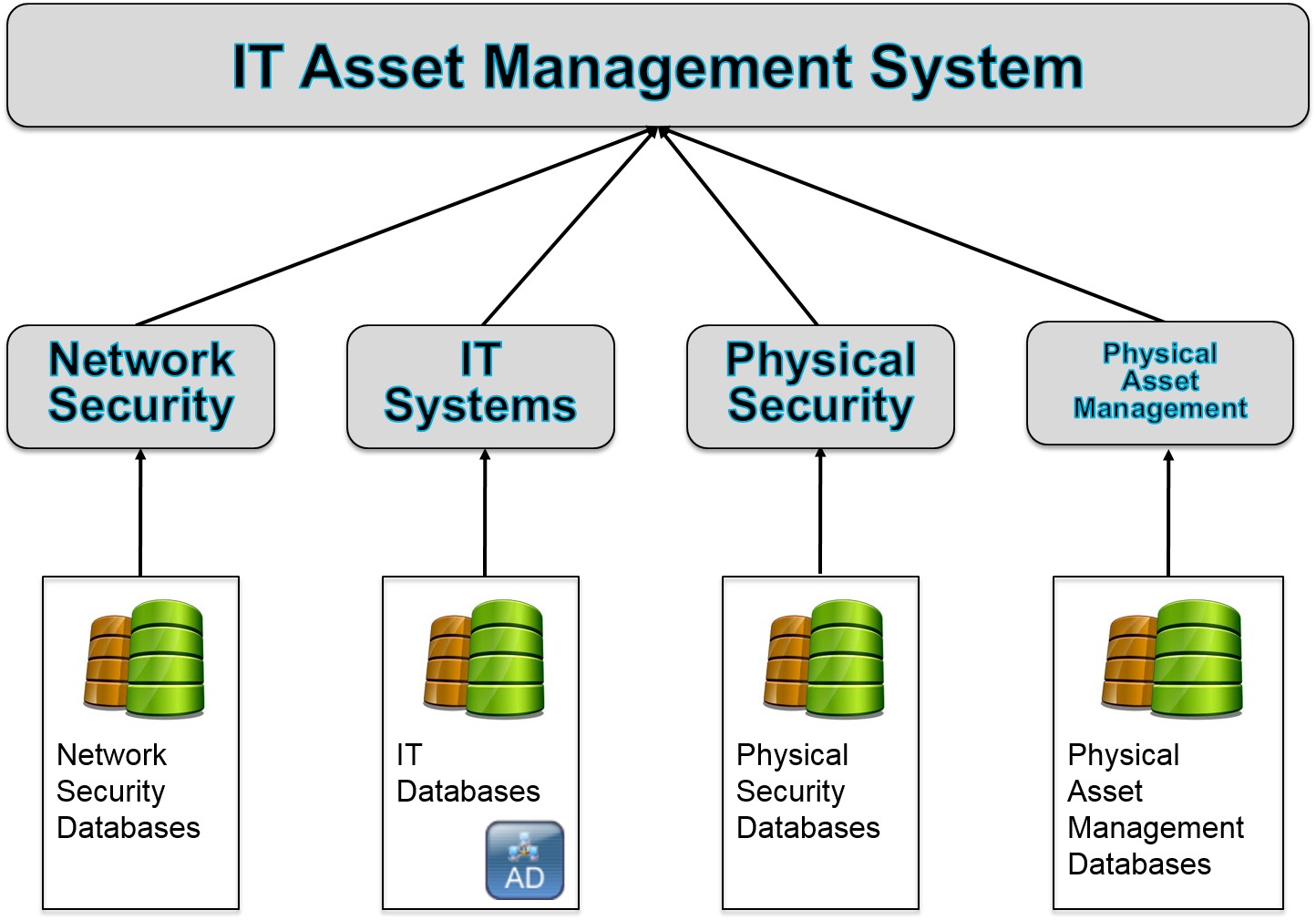
Problem: Data Silos Often, the procurement team has one list of assets, the security team has another, and the IT operations team has a third. This leads to conflicting information.
- Solution: Implement a Configuration Management Database (CMDB) that acts as a single version of truth, fed by various discovery tools and integrated with financial systems.
Problem: Shadow IT Employees frequently sign up for SaaS tools using corporate credit cards without going through official channels.
- Solution: Use Cloud Access Security Brokers (CASB) and financial integration tools that scan expense reports for keywords related to software vendors. This brings "hidden" assets into the light.
Problem: Lack of Executive Buy-in ITAM is often seen as a cost center rather than a value driver.
- Solution: Reframe ITAM in terms of risk and ROI. Demonstrate how ITAM prevented a $1M audit fine or how it identified $500,000 in unused cloud spend that was redirected to innovation projects.
Metrics for Success: Measuring ITAM Performance
To prove the value of an ITAM program, organizations should track specific Key Performance Indicators (KPIs):
- Utilization Rate: The percentage of purchased software licenses actually being used. A target should be >80%.
- Discovery Accuracy: The variance between what is in the ITAM database and what is found during an automated network scan.
- Time to Reclaim: How long it takes to recover assets from an offboarded employee.
- Compliance Margin: The financial exposure risk identified during internal mock audits.
Frequently Asked Questions
What is the difference between ITAM and ITIL?
ITIL (Information Technology Infrastructure Library) is a broad framework for IT Service Management (ITSM). ITAM is a specific discipline within that framework. While ITIL focuses on the processes for delivering services (like help desk and change management), ITAM focuses specifically on the management of the assets that enable those services. They are complementary; for example, an ITIL incident report about a broken laptop will query the ITAM database to see if that laptop is still under warranty.
Does my organization need a dedicated ITAM manager?
In a modern enterprise with more than 500 employees, a dedicated ITAM role is highly recommended. The complexity of cloud contracts and the security risks of unmanaged devices require specialized knowledge. For smaller organizations, ITAM responsibilities may be shared, but the function must be clearly defined in someone’s job description to avoid neglect.
How does AI impact IT asset management?
By 2026, AI has become integral to ITAM. It is used for Natural Language Processing (NLP) to read and interpret complex software contracts, identifying hidden costs or unfavorable terms. AI also powers predictive analytics to forecast future asset needs and automates the classification of unknown devices discovered on the network, significantly reducing the manual workload of IT staff.
Is ITAM only for hardware and software?
No. In the modern enterprise, ITAM also covers "soft assets" such as domain names, SSL certificates, and even specialized data sets used for training machine learning models. Any digital or physical resource that has a cost, a lifecycle, and a risk profile should be managed within the ITAM framework.
How do I start an ITAM program if we currently have nothing?
The best approach is to start with a "Discovery Phase." Use an automated tool to find out what is actually on your network. Compare this to your known purchasing records. This "gap analysis" usually provides enough evidence of waste or risk to justify the investment in a formal ITAM program. Focus first on high-cost or high-risk areas, such as SaaS subscriptions or mobile devices.
Next Steps for Enterprise Leaders
To modernize your IT asset management, begin by auditing your current visibility. If you cannot produce a list of all devices and cloud instances connected to your network within ten minutes, your organization is at risk.
The next step is to integrate your ITAM tool with your HR and Finance systems. This ensures that when an employee joins or leaves, or when an invoice is paid, the asset database is updated automatically. Finally, establish a cross-functional ITAM Steering Committee involving stakeholders from Security, Finance, and Legal to ensure that the program serves the entire business, not just the IT department. By treating ITAM as a continuous strategic initiative, the modern enterprise can turn its technology stack from a source of chaos into a streamlined engine for growth.
Image Gallery
Select an image to open it in a new tab.



Vivian Cho
Executive IT and Emerging Technologies Reporter
