Pennsylvania Employer's Report of Occupational Injury or Disease: A Compliance Guide
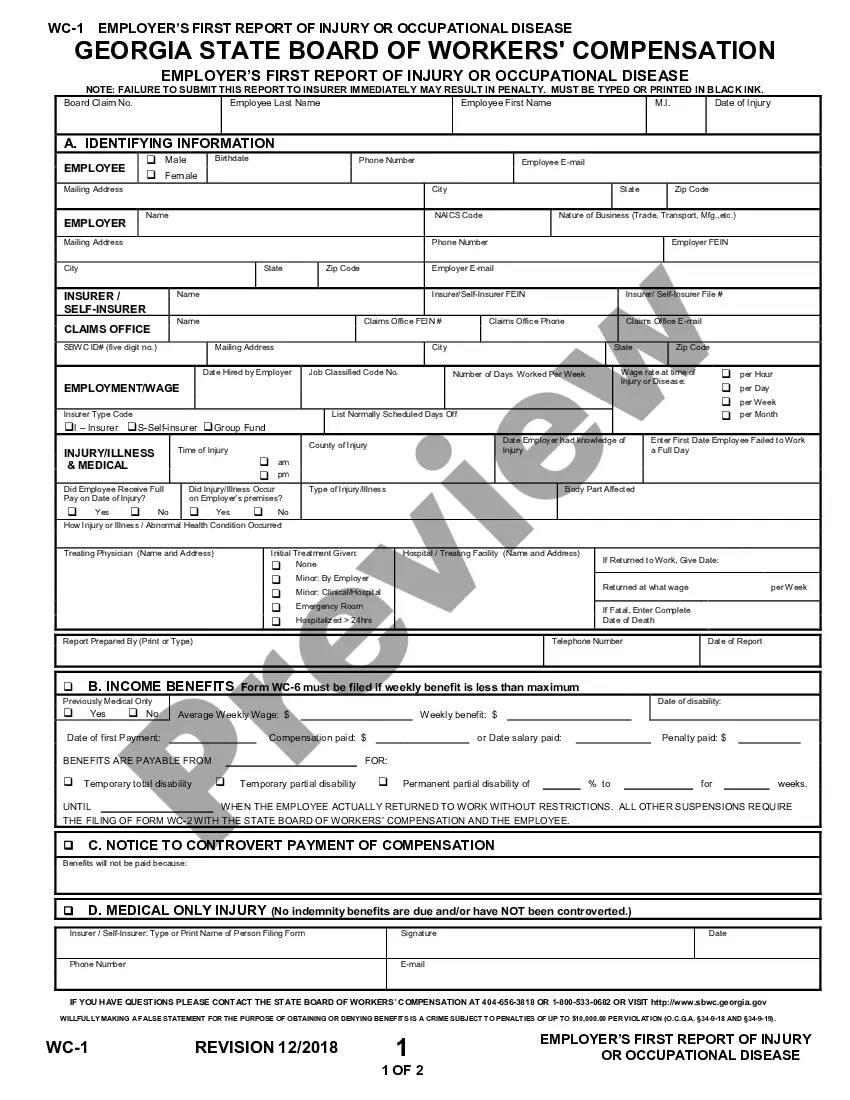
The Pennsylvania Employer's Report of Occupational Injury or Disease, commonly referred to as Form LIBC-444, is a mandatory filing used by employers to notify the Bureau of Workers' Compensation of work-related injuries or illnesses. Employers must submit this report electronically via the Workers' Compensation Automation and Integration System (WCAIS) within specific statutory deadlines—7 days for injuries resulting in disability lasting more than one day, or 48 hours in the event of a fatality.
Understanding the LIBC-444 Form and Its Legal Basis
In the Pennsylvania workers' compensation system of 2026, the Employer's Report of Occupational Injury or Disease (Form LIBC-444) remains the foundational document for the entire claims process. Governed by the Pennsylvania Workers' Compensation Act, this document serves as the official "First Report of Injury" (FROI). Its primary purpose is not to determine fault or admit liability, but to ensure that the Commonwealth has a record of the incident and that the injured worker’s rights are protected.
Section 438 of the Act mandates that every employer keep a record of all injuries fatal or otherwise, received by its employees in the course of their employment. The filing of the LIBC-444 is the mechanism by which this record is transmitted to the Bureau. It is important to distinguish this from the employee's notice to the employer. While an employee has a statutory obligation to report an injury to their supervisor, the LIBC-444 is the employer’s specific regulatory obligation to the state.
The Bureau of Workers' Compensation uses the data collected from these reports to monitor safety trends, ensure that insurance carriers are responding to claims within the required 21-day window, and maintain statistical oversight of workplace hazards across various industries in Pennsylvania.
Mandatory Reporting Thresholds and Deadlines
Timeliness is the most critical factor when handling the Pennsylvania Employer's Report of Occupational Injury or Disease. The Bureau of Workers' Compensation enforces strict deadlines, and failure to adhere to them can lead to administrative fines and increased scrutiny from state auditors.
The 48-Hour Rule for Fatalities
In the tragic event of a workplace fatality, the reporting window is extremely narrow. Employers are required to report any death resulting from a work-related injury or disease within 48 hours. This expedited timeline allows the Bureau and, in some cases, other agencies like OSHA or the Pennsylvania Department of Labor and Industry, to initiate immediate investigations if necessary.
The 7-Day Rule for Non-Fatal Injuries
For non-fatal injuries, the requirement to file the LIBC-444 is triggered if the injury results in a "disability" that lasts more than the remainder of the day, turn, or shift on which the injury occurred. If an employee misses more than one full day of work, the employer must file the report within 7 days of the date the disability began.
Minor Injuries and "Medical Only" Claims
If an injury is minor and the employee does not lose any time from work (other than the time spent seeking initial medical treatment), the employer is still required to keep an internal record, but the immediate filing of an LIBC-444 may not be required by the Bureau unless specifically requested. However, many insurance carriers recommend filing a "Medical Only" report regardless of lost time to establish a paper trail in case the injury worsens later.
Step-by-Step Filing Process via WCAIS
As of 2026, all Pennsylvania workers' compensation filings are processed through the Workers' Compensation Automation and Integration System (WCAIS). Paper filings are generally no longer accepted except in very narrow hardship circumstances.
- Access the Portal: Employers or their designated Third-Party Administrators (TPAs) must log into the WCAIS system using their established credentials. New businesses must register for an account and link their Federal Employer Identification Number (FEIN).
- Select the Form: Navigate to the "Claims" section and select "Submit a First Report of Injury." This initiates the electronic equivalent of the LIBC-444.
- Employee Identification: Enter the injured worker's Social Security Number, full legal name, and contact information. Accuracy here is vital to prevent duplicate claim files.
- Incident Details: Provide the date and time of the injury, the specific location (which may differ from the employer's headquarters), and a concise description of how the injury occurred.
- Nature of Injury: Use the standardized coding system within WCAIS to identify the body part affected and the type of injury (e.g., "Laceration to the right index finger" or "Lumbar strain").
- Employment and Wage Data: Input the employee's date of hire, job title, and their Average Weekly Wage (AWW). While the AWW is often finalized later, an initial estimate is required.
- Submission and Confirmation: Once submitted, the system generates a Claim Number. This number is essential for all future correspondence with the insurance carrier and the Bureau.
| Injury Category | Reporting Deadline | Mandatory Filing Form | Required Recipient |
|---|---|---|---|
| Fatality | Within 48 Hours | LIBC-444 (FROI) | PA Bureau of WC & Insurer |
| Lost Time (>1 Day) | Within 7 Days | LIBC-444 (FROI) | PA Bureau of WC & Insurer |
| Medical Only (No Lost Time) | Internal Record / Optional | LIBC-444 (FROI) | Insurer (Bureau Optional) |
| Occupational Disease | 7 Days from Discovery | LIBC-444 (FROI) | PA Bureau of WC & Insurer |
Critical Data Fields and Accuracy Requirements
Accuracy in the LIBC-444 is not just about compliance; it is a defensive measure for the employer. Inaccurate information can lead to the wrongful acceptance of a claim or complicate a legitimate defense later.
Description of Occurrence
The description should be factual and objective. Avoid speculative language like "The employee claims they fell." Instead, use descriptive terms: "Employee reported slipping on a wet surface in the warehouse." Be specific about the equipment involved and the task being performed at the time of the incident.
Statement of Wages
The Average Weekly Wage (AWW) is the basis for all disability payments. Under the Pennsylvania Act, this is calculated based on the employee's earnings in the four quarters preceding the injury. While the LIBC-444 asks for this data, errors here are common. It is advisable for HR departments to verify these figures against payroll records before submission to avoid future litigation over underpayment or overpayment.
Classification of Occupational Disease
Reporting an "Occupational Disease" differs slightly from a traumatic injury. These are conditions that develop over time due to exposure to workplace hazards (e.g., silicosis, carpal tunnel syndrome, or chemical-induced dermatitis). For these reports, the "Date of Injury" is usually the date the employee was first diagnosed or the date they first became disabled due to the condition.
The Intersection of LIBC-444 and Federal OSHA Reporting
Employers often confuse the PA Bureau of Workers' Compensation requirements with the federal Occupational Safety and Health Administration (OSHA) requirements. While there is overlap, they are distinct obligations.
The LIBC-444 is a Pennsylvania state requirement for insurance and regulatory purposes. OSHA requirements (such as the OSHA 300 Log and the Form 301 Incident Report) are federal requirements for workplace safety monitoring. In many cases, a correctly completed LIBC-444 contains all the information needed to complete an OSHA 301 form. However, filing the LIBC-444 with the state does not automatically satisfy OSHA reporting requirements. Employers must ensure they are updating their OSHA logs independently, especially for recordable injuries that involve medical treatment beyond first aid, days away from work, or restricted work activity.
Employer Rights and Non-Admission of Liability
A common concern among Pennsylvania employers is that filing the LIBC-444 constitutes an admission that the injury is work-related and compensable. Legally, this is not the case.
The LIBC-444 is a reporting document, not a charging document. By filing the report, the employer is simply notifying the state that an incident occurred. The employer and their insurance carrier still have 21 days from the date of notice to investigate the claim. During this period, they can:
- Issue a Notice of Compensation Payable (NCP): Accepting the claim.
- Issue a Notice of Temporary Compensation Payable (NTCP): Paying the claim for up to 90 days while continuing the investigation.
- Issue a Notice of Workers' Compensation Denial (NCD): Rejecting the claim if the investigation reveals the injury was not work-related.
Failure to file the LIBC-444 because the employer "doesn't believe" the employee is actually hurt is a violation of the Act. The correct procedure is to file the report and then issue a denial through the proper channels.
Common Filing Mistakes and How to Avoid Them
Even experienced HR professionals can encounter pitfalls when managing the PA Employer's Report of Occupational Injury or Disease. Avoiding these common errors can prevent administrative headaches.
- Waiting for a Medical Report: Many employers wait for a doctor's note before filing the LIBC-444. This often results in missing the 7-day deadline. File the report based on the information available; it can be amended later if medical evidence contradicts the initial report.
- Inaccurate FEIN or Policy Numbers: WCAIS relies on Federal Employer Identification Numbers and insurance policy numbers to route claims. An error here can lead to the claim being "lost" in the system, resulting in late payment penalties.
- Failure to Provide the "Statement of Rights": Along with the LIBC-444 process, Pennsylvania law requires employers to provide injured workers with a "Notice of Rights and Duties" (Form LIBC-501). Failing to do so can extend the timeframe in which an employee can challenge certain aspects of the claim.
- Vague Descriptions: Writing "Hurt back" is insufficient. A better description is "Employee reported lower back pain while lifting a 50lb crate of inventory."
Consequences of Non-Compliance
The Bureau of Workers' Compensation has the authority to assess penalties for late filings. These penalties are often a percentage of the compensation due to the worker, but the Bureau can also impose administrative fines of up to several thousand dollars for willful or repeated failures to report injuries. Furthermore, late reporting is often viewed unfavorably by Workers' Compensation Judges (WCJs) if the claim eventually goes to litigation.
Record Keeping and Post-Filing Responsibilities
Once the LIBC-444 is submitted and a claim number is issued, the employer's job is not finished. In 2026, document retention remains a key component of a robust risk management strategy.
Employers should maintain a copy of the submitted LIBC-444 and the WCAIS confirmation page in a secure file, separate from the employee's general personnel file to comply with medical privacy standards (HIPAA/ADA). These records should be kept for at least three years after the date of injury, though many legal experts recommend keeping them for the duration of the employee's tenure plus seven years.
Additionally, the employer must maintain communication with the insurance carrier. If the employee returns to work (with or without restrictions), a Supplemental Report of Injury (Form LIBC-445) or a Notification of Suspension or Modification (LIBC-751) may be required to update the status of the claim and stop or adjust indemnity payments.
Frequently Asked Questions
Does filing the LIBC-444 mean my insurance rates will automatically go up? Not necessarily. While a reported claim is a factor in your "experience modification factor" (mod rate), the LIBC-444 itself is a reporting requirement. The impact on your premiums depends on the total cost of the claim (medical and indemnity) and your overall claims history compared to other businesses in your industry.
What if the employee refuses to provide their Social Security Number? The Bureau requires a unique identifier for the WCAIS system. If an employee refuses to provide their SSN, the employer should contact the Bureau of Workers' Compensation for guidance. In most cases, the employer should still file the report with as much information as possible to prove they attempted to comply with the deadline.
Can I file the LIBC-444 on behalf of a subcontractor? Generally, no. Subcontractors are responsible for their own workers' compensation insurance and reporting. However, under the "Statutory Employer" doctrine in Pennsylvania, a general contractor could be held liable for a subcontractor's employee if the subcontractor is uninsured. In that specific scenario, legal counsel should be consulted regarding reporting obligations.
Is there a penalty if I report an injury late because the employee didn't tell me about it? The clock for the employer’s 7-day reporting deadline starts when the employer has "knowledge" of the injury. If an employee waits two weeks to report a back strain, the employer is not penalized for the delay prior to that report. However, once the employee provides notice, the 7-day window begins immediately.
Can I use the LIBC-444 to report COVID-19 or other communicable diseases? Yes, if the disease was contracted in the course and scope of employment (which is often a high bar for the employee to prove), it should be reported as an "Occupational Disease" on the LIBC-444. This is common for healthcare workers or first responders.
Final Recommendations for Employers
To ensure full compliance with the Pennsylvania Employer's Report of Occupational Injury or Disease requirements, businesses should implement a formalized injury-reporting protocol. This includes training all supervisors to immediately notify HR or the safety officer the moment an injury is reported, regardless of how minor it seems.
By prioritizing the timely and accurate submission of Form LIBC-444 via the WCAIS portal, Pennsylvania employers can avoid unnecessary fines, maintain positive relationships with their insurance carriers, and ensure a more efficient resolution to workers' compensation claims.
Image Gallery
Select an image to open it in a new tab.
Declan O'Connor
Higher Education and Campus Culture Reporter
