US Solar Power Overview and Key Considerations

United States solar power encompasses utility-scale, commercial, and residential photovoltaic systems, driven by federal tax credits, falling hardware costs, and evolving state-level net metering policies. Transitioning to solar energy requires navigating complex regulatory frameworks, evaluating financing options, and understanding interconnection requirements with local electric grids.
Evolution and Current Landscape of US Solar Energy
The United States solar power market has undergone a dramatic transformation over the past two decades. What began as a niche market supported by heavy state-level mandates has matured into a dominant force in the national electricity generation mix. Driven by declining photovoltaic (PV) module manufacturing costs, steady improvements in panel efficiency, and supportive federal legislation, solar power installations now span millions of residential rooftops, sprawling commercial warehouses, and vast utility-scale solar farms across the desert Southwest and beyond.
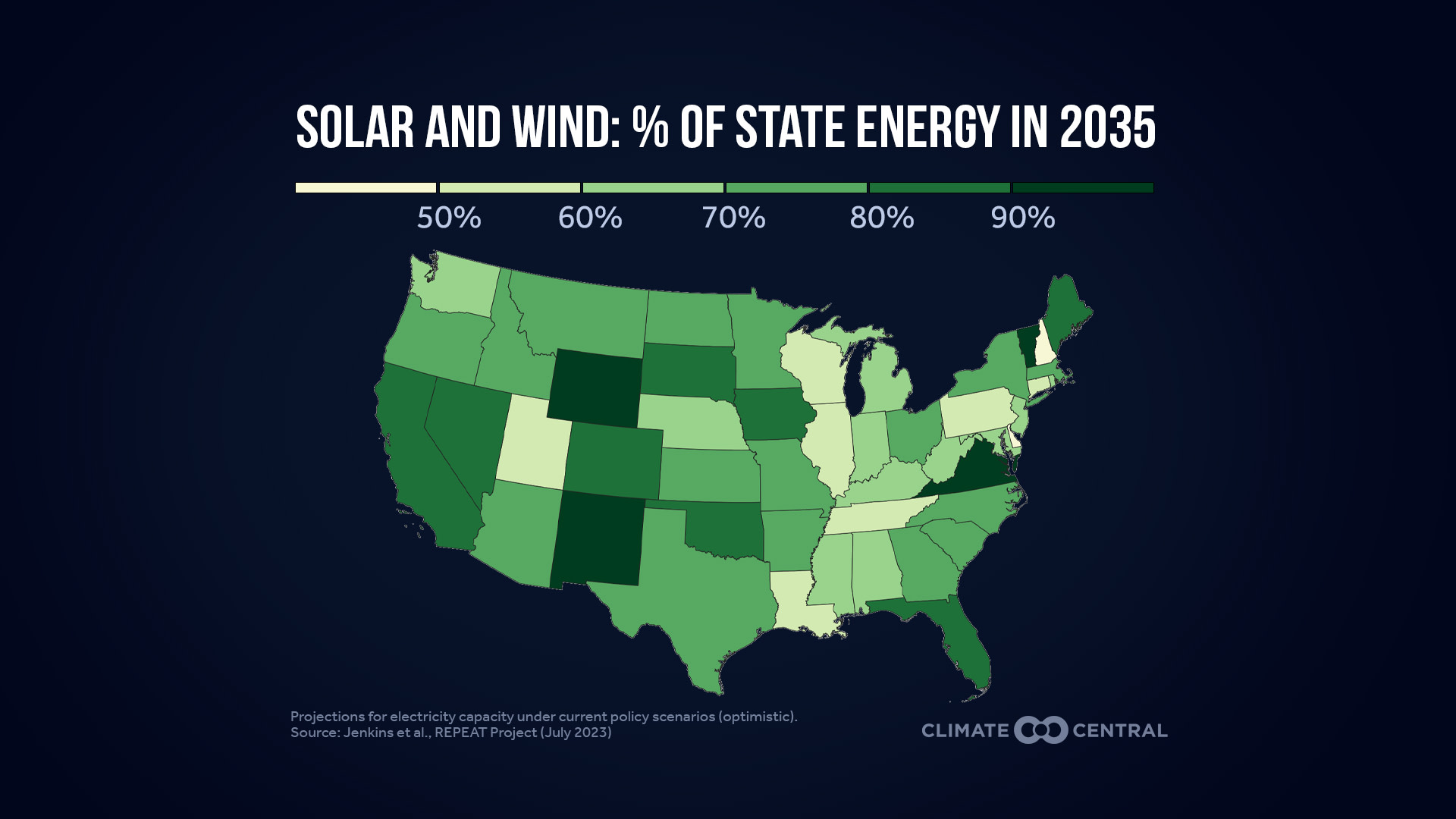
This expansion is not uniform. Geography, state energy policies, local solar irradiance, and utility rate structures create vastly different landscapes for solar adoption. States like California, Texas, Florida, and North Carolina lead the nation in cumulative installed capacity, each utilizing distinct market drivers. Texas relies on an open, deregulated energy market and abundant land for utility-scale deployment, whereas California has historically driven adoption through aggressive residential mandates, net metering structures, and ambitious decarbonization targets.
Understanding the modern US solar sector requires categorizing deployments into three distinct segments:
- Residential Solar: Rooftop or ground-mounted systems installed on single-family homes, typically ranging from 5 kilowatts (kW) to 20 kW, designed primarily to offset a household's electricity consumption.
- Commercial and Industrial (C&I) Solar: Systems mounted on commercial roofs, parking structures, or local ground plots, servicing businesses, schools, hospitals, and municipal buildings.
- Utility-Scale Solar: Mega-watt and gigawatt-scale solar generation facilities that feed electricity directly into the transmission grid, comparable in output to traditional fossil fuel or nuclear power plants.
Economic Framework and Federal Incentives
The financial viability of US solar power projects heavily relies on a combination of federal tax policy, state-level incentives, and wholesale or retail electricity markets. The most significant federal instrument is the Residential Clean Energy Credit (formerly known as the Investment Tax Credit or ITC), which allows taxpayers to claim a percentage of the total installation cost as a credit against their federal income taxes.
Under current federal guidelines, the credit provides a substantial financial offset for qualified property. Commercial entities have access to a parallel version of the Investment Tax Credit or, alternatively, can leverage the Production Tax Credit (PTC) based on the number of kilowatt-hours generated over a 10-year period. Additionally, the federal framework includes provisions for domestic content bonuses and energy communities, which offer additional percentage incentives for projects utilizing domestically manufactured steel, iron, and components, or those sited in historically energy-dependent communities.
Beyond federal tax policy, state-specific incentives dictate localized economics:
- Solar Renewable Energy Certificates (SRECs): In states with Renewable Portfolio Standards (RPS), solar owners earn SRECs for every megawatt-hour of electricity produced, which they can sell to utilities needing to meet clean energy mandates.
- Rebates and Grants: Certain state agencies, municipal utilities, and rural development programs offer upfront cash rebates or low-interest loan programs to reduce the barrier of initial capital expenditure.
- Property Tax Exemptions: Many states exempt the added property value of a solar installation from property tax assessments, ensuring homeowners and businesses are not penalized with higher municipal taxes for upgrading their properties.
Financing Models: Purchase Versus Leasing
Choosing how to finance a solar installation is one of the most critical decisions property owners face. The primary models—cash purchase, solar loans, and third-party ownership (TPO) structures such as leases and power purchase agreements (PPAs)—each carry distinct financial implications, risk profiles, and long-term savings potentials.
| Financing Model | Upfront Cost | Ownership | Maintenance Responsibility | Long-Term Financial Return |
|---|---|---|---|---|
| Cash Purchase | High | Customer | Customer (or manufacturer warranty) | Maximum lifetime savings |
| Solar Loan | Low to Zero | Customer | Customer | High (reduced by loan interest) |
| Solar Lease / PPA | Zero | Third-Party Provider | Provider | Moderate (predictable, lower immediate savings) |
Purchasing a system outright via cash yields the highest return on investment (ROI) over the system's 25-to-30-year lifespan because the owner avoids financing fees and immediately captures all electricity bill offsets and tax credits. Solar loans provide an alternative for those who wish to own the system without deploying large upfront capital, though interest rates and loan origination fees affect the overall payback period.
Third-party ownership structures remove maintenance and warranty burdens from the consumer, as the solar provider retains legal ownership of the equipment. However, these models forfeit eligibility for federal tax credits directly to the provider (though companies often bake these savings into lower monthly rates) and can occasionally complicate home sales if the buyer is unwilling to assume an existing lease or PPA contract.
Grid Interconnection and Net Metering Policies
Connecting a solar power system to the local electrical grid requires navigating a formal interconnection process administered by the local electric utility or regional transmission organization (RTO). The utility must review engineering diagrams, verify safety compliance, and approve the inverter settings to ensure the system will not backfeed electricity onto the grid during an outage, which poses a severe hazard to utility linemen.
Net metering—and its modern regulatory successor, net billing—governs how utilities compensate solar owners for excess electricity exported back to the grid. Under traditional net metering, customers receive a 1:1 credit on their utility bills for every kilowatt-hour of surplus solar energy sent to the grid, effectively spinning the electricity meter backward.
However, regulatory bodies and utilities across the US have increasingly reformed these policies to address shifting grid dynamics. Many jurisdictions have transitioned to net billing tariffs, where exported energy is credited at a rate closer to the utility's avoided cost rather than the full retail electricity rate. This shift extends the financial payback period for residential solar installations and elevates the economic value of pairing solar panels with home battery storage systems, allowing users to store excess daytime generation for nighttime consumption rather than exporting it to the grid at lower rates.
Key Technical Considerations and Site Assessment
Before deploying a solar energy system, a thorough site assessment must be conducted to evaluate generation potential. Solar panel output depends directly on geographic location, solar irradiance, tilt angle, azimuth (orientation), and environmental obstructions.
- Shading Analysis: Nearby trees, chimneys, neighboring buildings, and utility poles cast shadows that drastically reduce photovoltaic production. Installers use specialized tools like solar pathfinders to map the horizon and calculate annual shading losses.
- Roof Condition and Orientation: In the Northern Hemisphere, south-facing roofs provide optimal generation, though east- and west-facing arrays remain viable with slightly diminished output. Roof structural integrity must also be verified; roofs nearing the end of their lifespan should be replaced prior to solar installation, as removing and reinstalling panels for a future roof replacement incurs substantial labor costs.
- Inverter Technology: Homeowners and commercial developers must choose between string inverters, which manage panels connected in series, and microinverters or power optimizers (Module-Level Power Electronics, or MLPE), which optimize each panel individually. MLPE systems generally perform better on complex roofs with partial shading.
Common Challenges and Mitigation Strategies
While US solar power offers immense long-term benefits, stakeholders frequently encounter operational, administrative, and market challenges that require careful planning to mitigate.
Permitting delays represent a common hurdle. Local municipal building departments enforce varying codes, electrical standards, and structural guidelines. Obtaining permits can range from days to months depending on the jurisdiction. Utilizing standardized digital permitting platforms helps streamline municipal approvals.
Supply chain fluctuations and trade policies also impact the domestic solar market. Tariffs on imported photovoltaic cells and modules, alongside trade enforcement mechanisms like the Uyghur Forced Labor Prevention Act (UFLPA), can introduce supply bottlenecks and price volatility. Policymakers and manufacturers continue to invest in domestic manufacturing capacity to stabilize supply lines.
Finally, consumer protection is paramount. The rapid expansion of the residential solar market has attracted predatory sales practices from a minority of contractors. Consumers are strongly advised to vet multiple contractors, verify licensing and insurance credentials, carefully read all contract terms regarding production guarantees, and review independent consumer protection resources provided by organizations like the Solar Energy Industries Association (SEIA).
Frequently Asked Questions
How long does it take for a residential solar system to pay for itself?
The payback period typically ranges from 6 to 10 years, depending on local electricity rates, upfront system costs, available incentives, and net metering policies. Once the system pays for itself, the remaining electricity generated over the life of the panels is essentially free.
Do solar panels work during a power outage?
Standard grid-tied solar systems automatically shut down during a grid outage for safety reasons to prevent sending live electricity into downed power lines. To maintain power during an outage, solar systems must be paired with a dedicated battery storage system and an appropriate transfer switch or islanding technology.
What maintenance do solar panels require?
Photovoltaic systems have no moving parts, resulting in very low ongoing maintenance requirements. In arid or dusty environments, periodic washing with water may be necessary to remove debris and pollen buildup that can obstruct sunlight. Most reputable panels come with 25-year performance warranties guaranteeing at least 80 percent generation capacity at the end of the term.
Are home values increased by installing solar panels?
Numerous real estate studies indicate that homes equipped with owned solar systems command higher resale values and sell faster than comparable non-solar homes. However, leased systems or systems tied to unpaid PPAs can introduce complications during real estate transactions if the buyer declines to assume the contract.
What happens to solar panels at the end of their operational life?
Modern photovoltaic panels are designed to operate for 30 years or more. As the early waves of commercial and residential installations approach retirement age, the US solar industry is actively expanding recycling infrastructure to recover valuable materials such as silver, silicon, copper, and aluminum, minimizing electronic waste accumulation.
Next Steps for Prospective Solar Adopters
Evaluating US solar power requires a measured, methodical approach. Property owners and project developers should begin by analyzing utility bills to establish baseline energy consumption, obtaining multiple competitive quotes from certified installers, and verifying local interconnection rules. Consulting official resources provided by the US Department of Energy's Solar Energy Technologies Office or state energy offices ensures that decisions are guided by accurate, up-to-date regulatory and technical standards.
Image Gallery
Select an image to open it in a new tab.



Simon Caldwell
Enterprise Technology and Systems Editor
