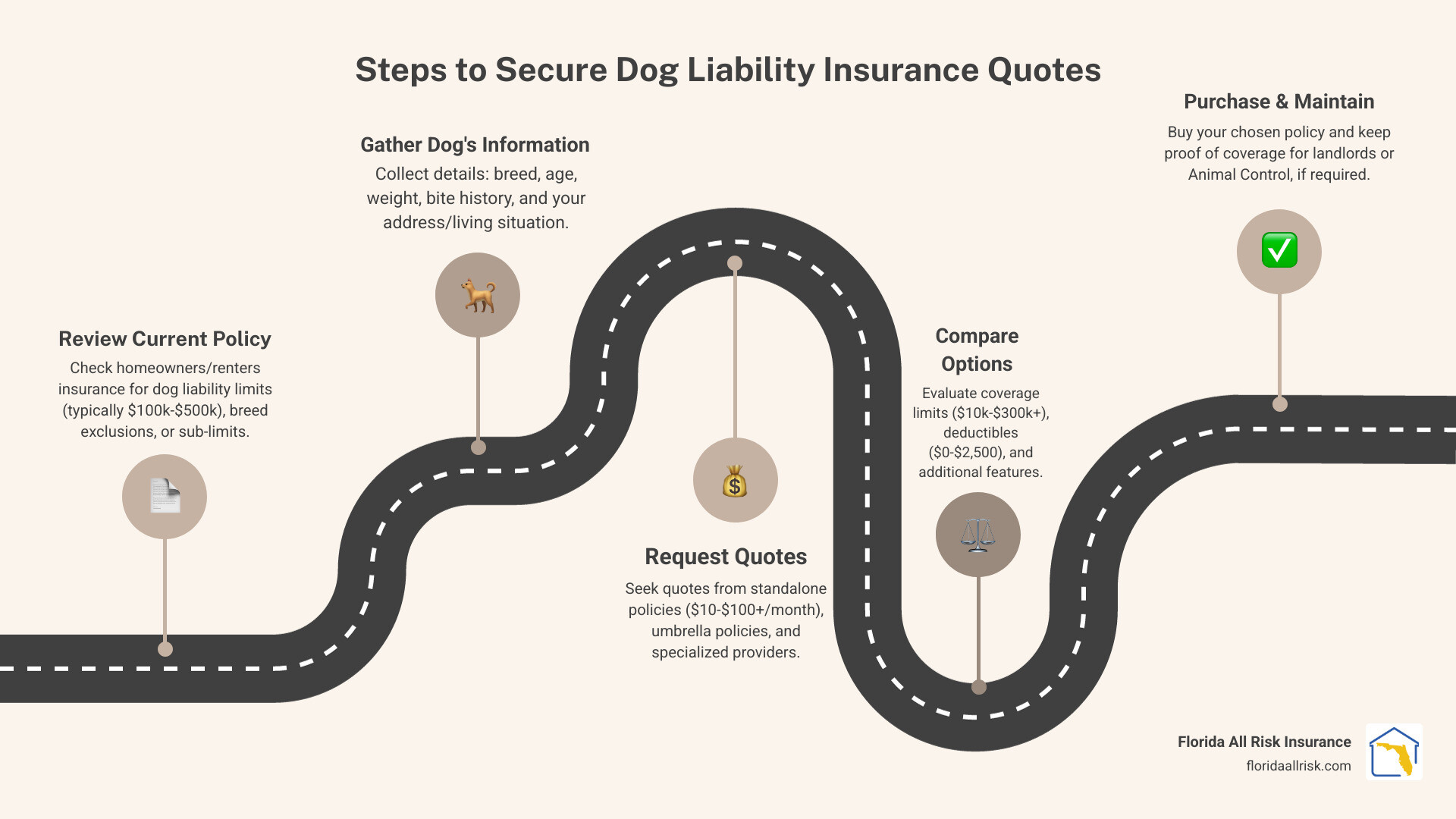
The insurance liability quote process is a systematic data-gathering procedure used by insurers to assess the risk profile of an individual or business and determine the corresponding premium required to provide coverage against legal claims. It balances historical data, actuarial modeling, and specific policyholder disclosures to establish the financial cost of protecting against third-party lawsuits, property damage, or bodily injury claims.
The Purpose of a Liability Quote
Liability insurance serves as a financial safety net against claims that you are legally responsible for damage or injury to others. Because these claims can involve substantial litigation costs and compensatory damages, insurers must calculate the probability of a claim occurring and the likely financial magnitude of that claim. The quote process is the mechanism for this calculation. It is not merely a price tag; it is an underwriting decision based on risk tolerance and statistical forecasting.
When you request a quote, you are essentially providing the raw data that allows the insurance company to run its actuarial engines. The resulting premium reflects the insurer’s assessment of your risk, operational stability, and industry-specific hazards. Understanding this process empowers applicants to present their risk profile accurately, which can lead to more favorable terms and prevent complications during the claim process later.
Phase 1: Information Gathering and Disclosure
The quote process begins with a rigorous request for information. Depending on the nature of the entity (personal vs. commercial), the required documentation varies, but the objective remains consistent: to build a risk profile.
For businesses, this often includes:
- Operational History: Years in business, previous claims history (often known as a "loss run report"), and current revenue projections.
- Risk Mitigation Efforts: Documentation of safety protocols, security systems, employee training programs, and quality control measures.
- Contractual Obligations: Leases, service contracts, or professional certifications that may dictate the required limits of liability.
For individuals, such as those seeking personal umbrella or professional liability policies, the focus shifts to personal assets, driving records, property maintenance, and professional licensing status.
Accuracy is paramount during this phase. Material misrepresentation—providing false information or failing to disclose known risks—can result in the denial of a future claim, the cancellation of a policy, or even allegations of insurance fraud.
Phase 2: Underwriting and Risk Assessment
Once the data is submitted, it enters the underwriting phase. Underwriters at the insurance company evaluate the information against internal risk appetite guidelines.
This phase utilizes several key metrics:
- Experience Modification: How your past claims history predicts your future performance. Frequent, small claims often indicate systemic operational failures, which are viewed more negatively by underwriters than a single large, anomalous claim.
- Industry Codes (NAICS/SIC): In commercial insurance, the nature of your business is classified into specific codes. High-risk industries, such as construction or medical services, naturally attract higher liability premiums than low-risk industries, such as administrative consulting.
- Jurisdictional Risk: Where you operate matters. Some jurisdictions have more litigious environments or specific legal precedents that increase the cost of defense and potential settlements.
The underwriting department may request additional information if the initial application flags potential concerns. This is a common part of the "dialogue" during the quote process and should not be viewed as a rejection. It is an opportunity to clarify risk controls and explain unique circumstances that might not be captured in a standard application form.
Phase 3: The Pricing Mechanism
The quote itself is calculated by applying a rate to the "exposure base." The exposure base is the metric that most accurately reflects the potential for a claim to occur. For instance, a manufacturer’s exposure might be based on annual revenue or the number of units produced, while a professional service firm’s exposure might be based on the number of employees or total payroll.
Insurers apply a "base rate" to this exposure and then adjust it based on credits (for good safety records or risk management practices) and debits (for negative history or high-risk business activities). By 2026, many insurers are utilizing automated digital platforms that ingest this data to provide near-instant quotes, though complex commercial accounts still typically require human oversight from an underwriter.
Table 1: Comparison of Liability Quote Requirements
| Requirement Type | Commercial Liability | Personal Liability/Umbrella |
|---|---|---|
| Exposure Metric | Gross Revenue / Payroll | Asset Value / Net Worth |
| History Review | Loss Runs (3–5 years) | Claims History Report (CLUE) |
| Primary Risk Factors | Industry/Operations/Safety | Assets/Lifestyle/Risk Exposure |
| Compliance Docs | Safety Manuals/Certifications | Credit Score/Driving Record |
| Underwriting Time | 1–10 Business Days | Near-Instant to 48 Hours |
Common Mistakes During the Quote Process
One of the most frequent errors applicants make is providing "guesstimates" regarding revenue or operations. Underwriting is based on precision. If you underestimate your revenue significantly, the policy may be subject to an audit later, leading to a large "earned premium" bill after the policy period has already ended.
Another error is ignoring the role of risk management. Applicants often treat the quote process as a purely administrative task of filling out forms. However, providing detailed descriptions of how you mitigate risk—such as stating that you have upgraded to an automated fire suppression system or that you implement mandatory biennial safety training—can directly influence an underwriter to apply "credits" to your final premium.
Navigating Deductibles and Limits
Part of the quote process involves selecting the right coverage limits and deductibles. A "limit" is the maximum amount the insurer will pay for a covered loss. A "deductible" is the amount you are responsible for paying before the insurance coverage kicks in.
Selecting higher deductibles generally reduces the annual premium, but it increases your out-of-pocket exposure during a loss. When comparing quotes, it is vital to ensure you are comparing "apples to apples"—meaning the limits and deductibles are identical across all quotes received. Otherwise, a cheaper premium might simply reflect a lower level of protection, leaving you financially vulnerable.
Frequently Asked Questions
1. Does every insurance company use the same criteria for a liability quote? No. While most insurers rely on industry-standard actuarial data, each company has a unique "risk appetite." One company may specialize in insuring construction firms and therefore have deep expertise and competitive pricing, while another may avoid that industry entirely. Always seek quotes from multiple carriers that specialize in your specific risk profile.
2. What should I do if I am declined for a quote? A decline is often a signal that your current risk profile does not align with that specific insurer's guidelines. Ask for the specific reason for the declination. It may be due to a lack of safety documentation or a history of losses that require a specialty "surplus lines" insurer. Understanding the reason allows you to either improve your risk profile or seek out a more appropriate carrier.
3. Will my premium increase every year? Not necessarily, but it is common. Liability premiums are influenced by inflation, changes in legal landscapes, and your own loss history. If your business operations expand, your exposure base increases, which naturally leads to a higher premium. Conversely, if you implement new safety protocols, you may be able to negotiate a lower rate upon renewal.
4. Why do insurers require a "Loss Run" report? A loss run report is a formal document provided by your current or previous insurer that lists all claims made against your policy over a specific period. It is the primary proof of your past performance. Underwriters use this to determine if you are a "frequent flyer" regarding claims or if your history is clean.
5. How long is a liability quote valid? Quotes are typically valid for 30 to 60 days. Because market conditions and underwriting guidelines can shift rapidly, quotes have expiration dates. If you wait too long to accept a quote, the insurer may require a fresh application to ensure the information provided remains accurate.
Strategic Next Actions
To successfully manage the liability quote process, begin by centralizing your documentation at least 60 days before your current policy expires. Compile three to five years of historical loss reports, detailed operational descriptions, and evidence of any risk-mitigation certifications.
Work with an independent agent or broker who has access to multiple carriers. An experienced broker acts as an advocate, helping you frame your risk profile to underwriters in a way that highlights your stability and adherence to safety standards. By treating the quote process as a proactive management task rather than a passive purchase, you ensure that you receive the most accurate pricing and, more importantly, the most appropriate level of protection for your specific needs.
Image Gallery
Select an image to open it in a new tab.
Celine Dubois
Contemporary Living and Global Arts Columnist
