Rudy Boesch: The Legacy of a Survivor Veteran and Naval Legend
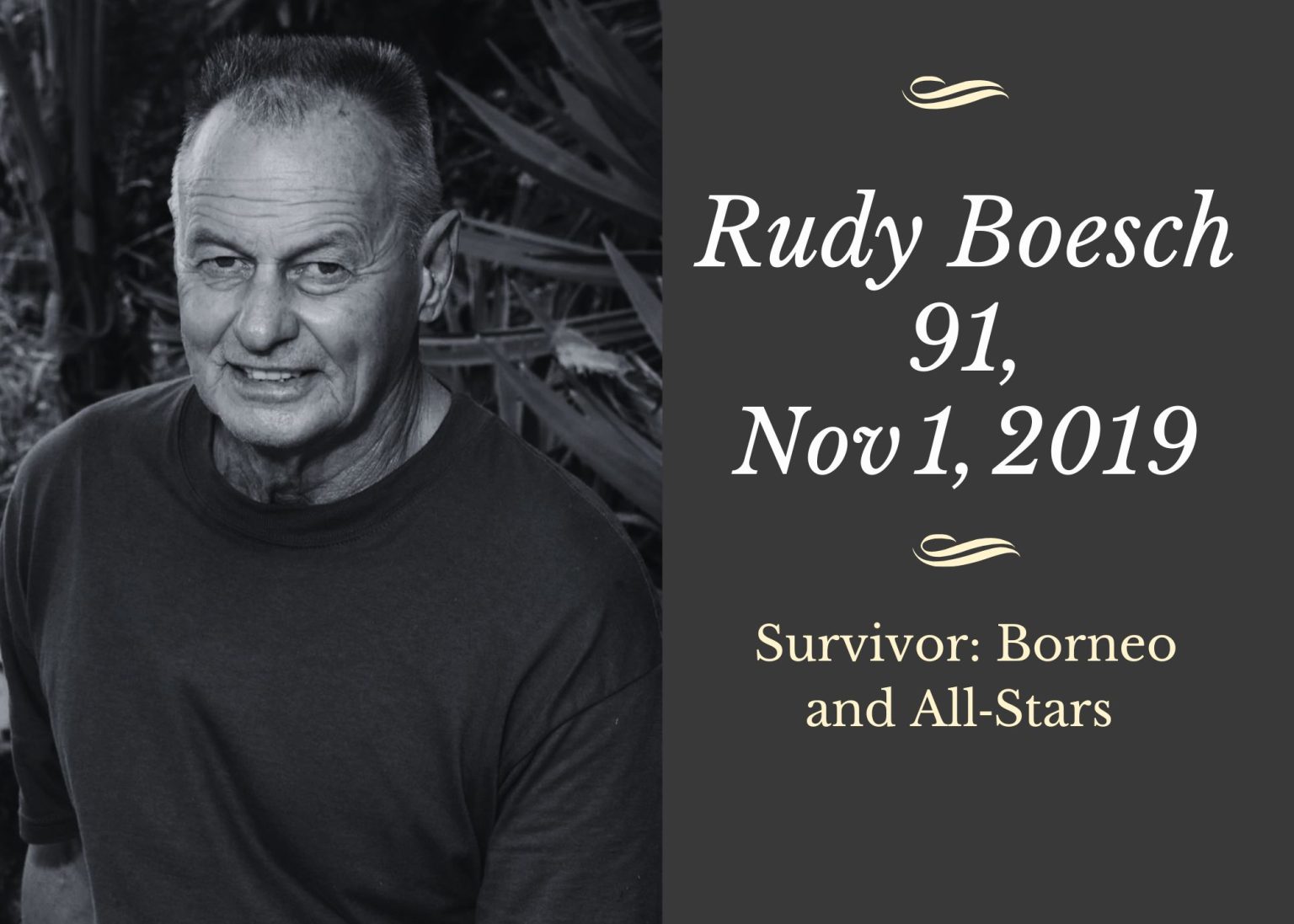
Rudy Boesch was a legendary United States Navy SEAL who gained widespread cultural recognition as a foundational contestant on the CBS reality competition series Survivor. Known for his extraordinary physical resilience, no-nonsense military demeanor, and unwavering integrity, Boesch became a symbol of the "greatest generation," bridging the gap between elite military special operations and mainstream American entertainment at the dawn of the reality television era.
The Early Years and Military Service
Long before he stood on the beaches of Borneo as a television personality, Rudy Boesch led a life defined by extraordinary service. Born on January 20, 1928, in Rochester, New York, Boesch enlisted in the United States Navy in 1944 at the age of 16, requiring his parents' permission to join during the height of World War II. This early commitment to the military set the trajectory for a career that spanned nearly four and a half decades.
Boesch was among the earliest members of the Navy’s elite Underwater Demolition Teams (UDT), which served as the precursor to the modern United States Navy SEALs. When the SEAL teams were officially commissioned in 1962, Boesch was one of the inaugural members, bringing with him the rigorous discipline and tactical expertise he had honed over the previous two decades.
His career included two combat deployments to Vietnam, where he earned the Bronze Star for his actions during intense operations. Throughout his service, Boesch was recognized for his physical conditioning—a trait that remained his hallmark throughout his life. He eventually served as the senior enlisted advisor to the commander of the Naval Special Warfare Group 2, retiring in 1990 as a Master Chief Petty Officer. His legacy within the special operations community is that of a "bullfrog"—the title given to the longest-serving active-duty Navy SEAL, a distinction he held for several years.
The Survivor Phenomenon
In 2000, when CBS launched Survivor: Borneo, the reality television landscape was entirely unproven. The producers sought a cast that represented a wide cross-section of American life. At 72 years old, Rudy Boesch was cast as the oldest competitor in the history of the show at that time. While many viewers expected the elderly veteran to be the first person voted off due to the grueling physical demands of the game, Boesch defied every expectation.
The Tactical Approach to Competition
Boesch’s gameplay was heavily influenced by his military background. He viewed the Survivor experience not as a social experiment, but as a mission. His approach was defined by:
- Routine and Efficiency: Boesch was consistently seen maintaining the camp, cleaning fish, and ensuring that the survival logistics were handled with precision.
- Loyalty and Alliances: Despite his gruff exterior, he formed a deep, unexpected alliance with eventual winner Richard Hatch. This partnership became one of the most significant storylines in reality television history, as it demonstrated that a rigid military veteran could adapt to the complex social dynamics of a strategic game.
- Physical Resilience: Throughout the 39 days of competition, Boesch remained one of the strongest competitors in challenges, consistently outperforming contestants decades his junior.
His performance ultimately earned him a third-place finish. He became a fan favorite, known for his signature catchphrase "I don't know, but it’s not for me" (in response to questions about his personal feelings toward his competitors), which reflected his blunt, honest, and often humorous perspective on the drama unfolding around him.

Comparison of Survivor Appearances
| Season | Year | Placement | Notable Impact |
|---|---|---|---|
| Survivor: Borneo | 2000 | 3rd | Defined the archetype of the "strong veteran" contestant. |
| Survivor: All-Stars | 2004 | 17th | Demonstrated the difficulty of returning to an evolved game. |
Cultural Significance and Post-Survivor Life
Rudy Boesch’s appearance on Survivor shifted the public perception of both military veterans and reality television stars. By showcasing his work ethic and integrity, he provided a relatable, honorable figure for a national audience that was just beginning to grapple with the voyeuristic nature of the genre.
After his initial fame, Boesch remained a public figure, often participating in Survivor reunions and special events. He was inducted into the Navy SEAL Hall of Fame, a recognition that cemented his standing as a hero in the special operations community long after his departure from the public eye.
In his later years, Boesch lived a relatively quiet life in Virginia Beach, Virginia. He continued to advocate for veteran-related causes and maintained his connection to his former teammates. His passing on November 1, 2019, at the age of 91, was met with tributes from across the military, the entertainment industry, and the millions of fans who had watched him navigate the island of Pulau Tiga nearly two decades prior.
Lessons in Leadership and Discipline
The study of Rudy Boesch’s life offers profound lessons for those interested in leadership and psychological fortitude. His ability to maintain composure under pressure—whether in a combat zone or a reality show council—was rooted in several core tenets:
- Preparation: Boesch believed that mental readiness was as important as physical fitness. He famously maintained a strict regimen of exercise even while suffering from the malnutrition and fatigue inherent to the Survivor environment.
- Adaptability: One of the most misunderstood aspects of Boesch’s personality was his rigid exterior. While he appeared inflexible, he was remarkably adaptable in his social strategies, proving that someone of his background could work effectively with people from entirely different walks of life.
- Integrity: Whether in the UDT or on television, Boesch rarely wavered from his personal code. He did not engage in the deceit that became common in later iterations of Survivor, choosing instead to rely on his merit and his established word.
Frequently Asked Questions
Was Rudy Boesch actually the oldest person to ever play Survivor?
No. While he was the oldest contestant during his original appearance in 2000, subsequent seasons of Survivor have featured older participants. However, he remains one of the most successful older competitors in the show’s history, reaching the final three in the inaugural season.
How did the Navy SEAL community view his participation in reality TV?
Initially, there was curiosity regarding how a decorated veteran would handle the trivial nature of a game show. Ultimately, the SEAL community largely viewed his participation positively, as he represented the discipline, honor, and resilience associated with the unit. He famously conducted himself with the same level of dignity on the island that he maintained in his military career.
Did Rudy Boesch win any of the challenges on Survivor?
Yes. During Survivor: Borneo, Boesch participated in numerous reward and immunity challenges. His physical strength, particularly in endurance-based challenges, was a major asset to his tribe, and his personal successes in these events helped him remain in the game until the very end.
What is the "Bullfrog" title mentioned in his biography?
The "Bullfrog" is an unofficial, honorary title bestowed upon the longest-serving, active-duty Navy SEAL. It is a prestigious distinction that highlights a career defined by longevity and dedication to the special operations community. Boesch held this title in the late 1980s.
How did his military experience influence his Survivor strategy?
His military experience instilled a focus on logistical survival—collecting firewood, maintaining camp, and conserving energy—which helped his tribe maintain stability. Furthermore, his habit of clear, direct communication prevented the kinds of misunderstandings that often led to the elimination of other, less focused contestants.
Remembering a Legacy
Rudy Boesch remains an essential figure in American pop culture and military history. For those who view his career through the lens of military service, he stands as a testament to the evolution of the U.S. Navy’s special operations capabilities. For those who know him through Survivor, he remains the prototype for the "old guard"—a man who proved that age is merely a number when matched with an indomitable spirit and a lifetime of rigorous preparation. His life serves as a practical reminder of the value of consistency, honesty, and mental toughness in every arena of life, whether that is a high-stakes combat environment or a competitive social game.
Image Gallery
Select an image to open it in a new tab.

Simon Caldwell
Enterprise Technology and Systems Editor
