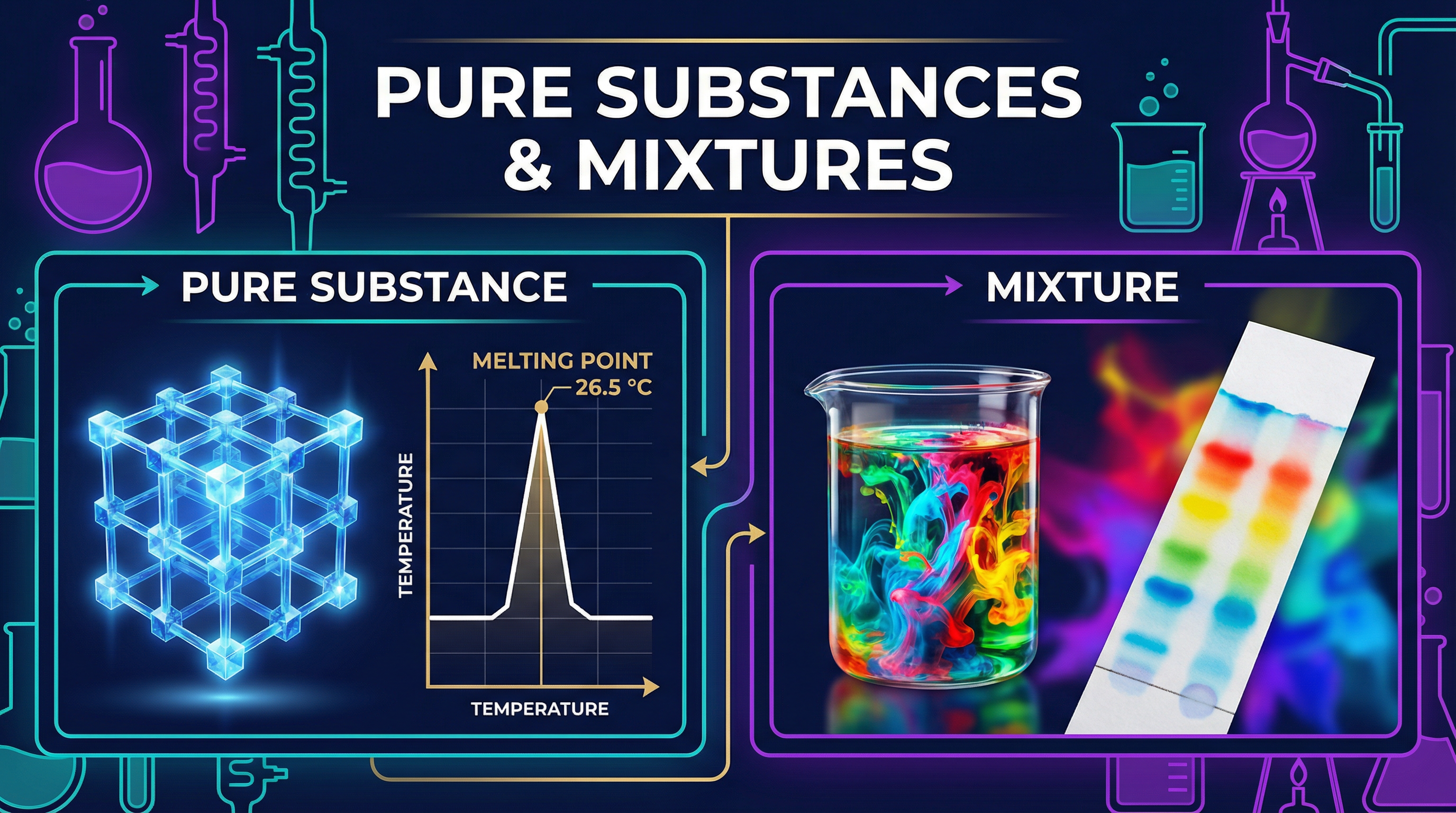
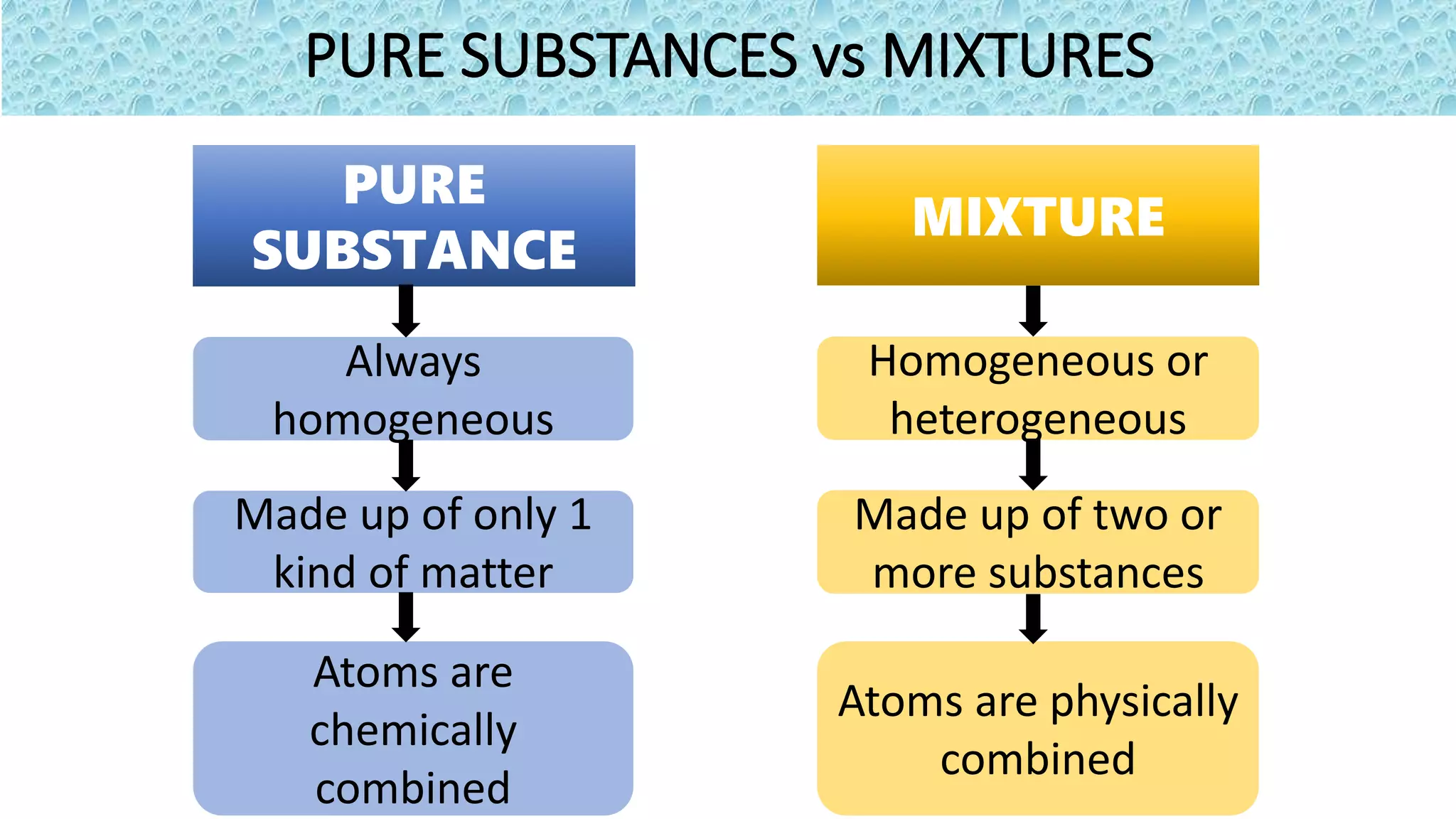
A pure substance consists of a single type of matter with a fixed, uniform chemical composition and distinct physical properties, whereas a mixture is a physical combination of two or more distinct substances where each component retains its individual chemical identity and properties.
The distinction between pure substances and mixtures forms the foundational bedrock of chemistry and materials science. Whether you are purifying compounds in a laboratory, refining crude oil into usable fuels, or simply dissolving salt in water for cooking, every object and material in the physical universe falls into one of these two fundamental categories. Grasping how pure substances differ from mixtures allows scientists, engineers, students, and curious individuals to predict how materials will behave, react, and change under various physical and chemical conditions.
Defining the Core Concepts of Matter
To understand the boundaries separating pure substances from mixtures, we must first examine how matter is classified at a microscopic and macroscopic level. Matter is anything that has mass and occupies space. In chemistry, matter is systematically categorized based on its composition and how easily its components can be separated by physical means.
A pure substance cannot be separated into other materials by physical methods such as filtration, distillation, or centrifugation. These substances have a constant and unchanging chemical composition throughout any given sample. On the other hand, a mixture brings together multiple pure substances without causing a chemical reaction between them. Because the binding forces are purely physical, the individual components of a mixture retain their original chemical properties and can generally be separated using physical techniques that exploit differences in boiling point, solubility, particle size, or magnetism.
Characteristics of Pure Substances
Pure substances are uniform and definite in every regard. When examining a pure substance under identical conditions of temperature and pressure, its density, melting point, and boiling point remain strictly constant. If a sample exhibits variable melting points or inconsistent density across different sections, it is not a pure substance.
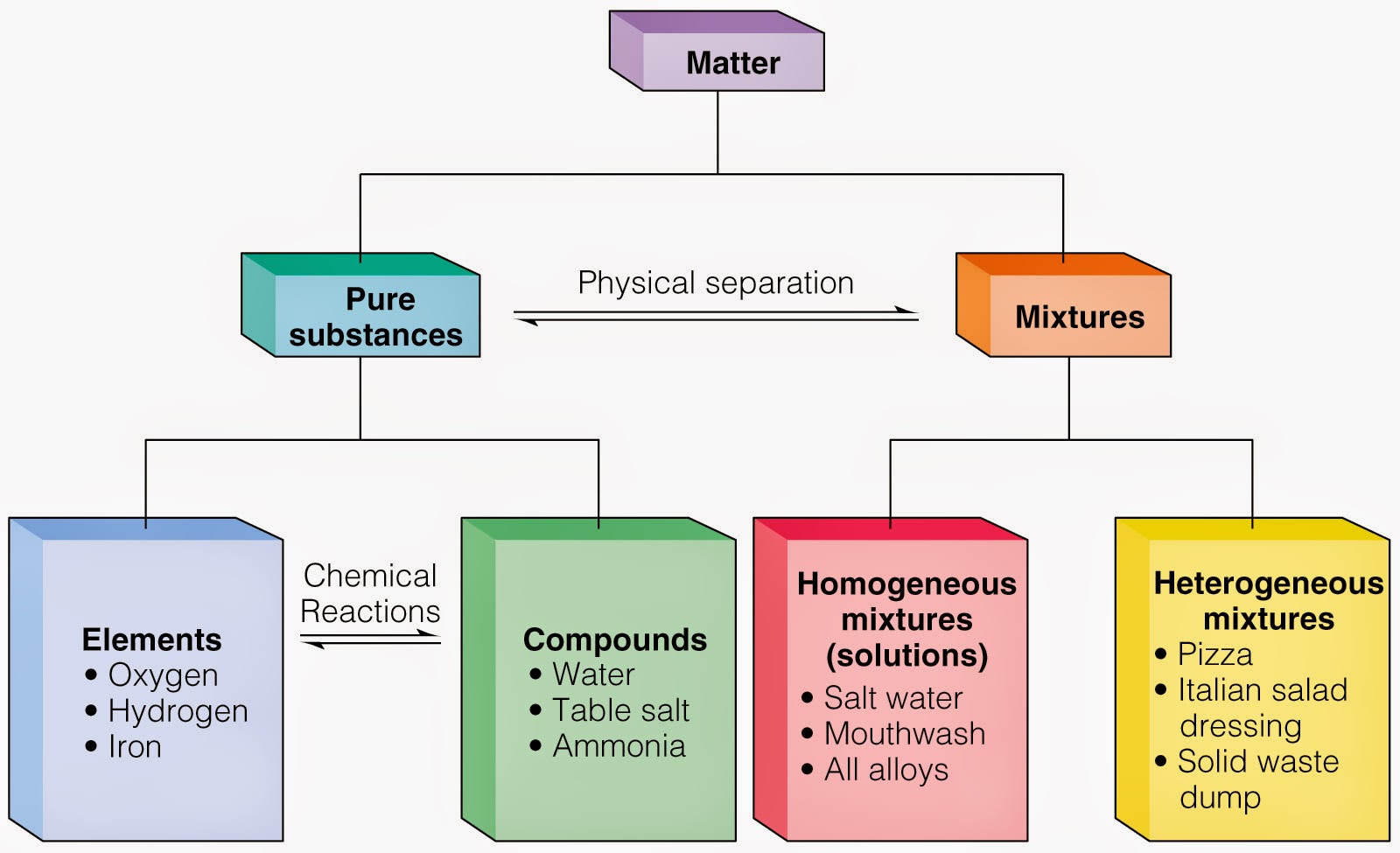
Pure substances are further divided into two distinct categories: elements and compounds. Recognizing the structural differences between these two groups is essential for chemical analysis.
Elements: The Fundamental Building Blocks
An element is a pure substance consisting entirely of atoms that all share the same number of protons in their atomic nuclei. Elements represent the simplest chemical forms of matter and cannot be broken down into simpler substances by ordinary chemical or physical means.
- Atomic Elements: Elements such as helium (He), neon (Ne), and argon (Ar) exist naturally as discrete, unbonded individual atoms.
- Molecular Elements: Elements such as oxygen ($\text{O}_2$), nitrogen ($\text{N}_2$), and chlorine ($\text{Cl}_2$) consist of two or more atoms of the same element chemically bonded together.
Every known element is organized in the Periodic Table of Elements, which groups them according to their recurring chemical properties. Examples include gold ($\text{Au}$), iron ($\text{Fe}$), carbon ($\text{C}$), and hydrogen ($\text{H}$).
Compounds: Chemical Combinations of Elements
A compound is a pure substance formed when two or more different elements are chemically bonded together in a fixed, definite proportion by mass. For instance, water ($\text{H}_2\text{O}$) is always composed of two hydrogen atoms bonded to one oxygen atom. If the ratio changes, the substance is no longer water; it becomes something else, such as hydrogen peroxide ($\text{H}_2\text{O}_2$).
Compounds possess physical and chemical properties entirely distinct from the uncombined elements that comprise them. Sodium ($\text{Na}$) is a highly reactive, soft metal that explodes upon contact with water, and chlorine ($\text{Cl}_2$) is a toxic green gas. Yet, when chemically combined, they form sodium chloride ($\text{NaCl}$)—common table salt—which is safe to consume and possesses entirely new characteristics.

Characteristics of Mixtures
Unlike pure substances, mixtures do not have a fixed composition. The proportions of the substances making up a mixture can be varied infinitely within a given range. For example, you can dissolve a single teaspoon of sugar into a glass of water, or you can add five teaspoons; both solutions remain sugar-water mixtures, though their sweetness and concentration differ.
Because the components of a mixture are only physically intermingled, no chemical bonds form between them. Each component maintains its unique chemical identity. Mixtures are classified into two primary types based on how uniformly their components distribute throughout the sample.
Homogeneous Mixtures (Solutions)
A homogeneous mixture has a uniform composition and appearance throughout its entire volume. Every sample taken from a homogeneous mixture will display the exact same ratio of components.
- Solutions: Often used interchangeably with liquid homogeneous mixtures, solutions consist of a solute dissolved in a solvent. Saltwater and sugar water are classic examples.
- Alloys: Solid homogeneous mixtures made by combining a metal with other elements (often other metals or carbon). Brass is a homogeneous mixture of copper and zinc; steel is an alloy of iron and carbon.
- Gaseous Mixtures: The air we breathe is a homogeneous mixture primarily composed of nitrogen, oxygen, argon, and trace amounts of other gases.
Heterogeneous Mixtures
A heterogeneous mixture does not possess a uniform composition. The distinct components remain visibly separate, and different samples taken from the same container will likely have different proportions of those components.
- Suspensions: Mixtures containing larger solid particles that are dispersed throughout a liquid or gas but are heavy enough to settle out over time if left undisturbed. Muddy water or liquid medicines that instruct you to "shake well before use" are typical suspensions.
- Colloids: Mixtures containing intermediate-sized particles that remain suspended throughout the fluid medium without settling out. Milk, fog, and smoke are colloids. They often exhibit the Tyndall effect, scattering light as it passes through them.
- Mechanical Mixtures: Coarse mixtures where individual components are easily spotted by the naked eye, such as a bowl of trail mix, granite rock, or sand mixed with iron filings.
Comparing Pure Substances and Mixtures
To clearly differentiate between these categories of matter, let us examine their structural, physical, and behavioral differences side by side.
| Feature | Pure Substance | Mixture |
|---|---|---|
| Composition | Fixed, definite chemical composition. | Variable composition; proportions can change freely. |
| Component Identity | Elements or compounds are chemically bonded. | Components retain their individual chemical properties. |
| Separation Methods | Cannot be separated by physical means; requires chemical reactions. | Can be separated using physical methods (filtration, distillation, magnetism). |
| Physical Properties | Sharp, constant melting and boiling points. | Melting and boiling occur over a temperature range, depending on concentration. |
| Uniformity | Uniform (homogeneous) throughout. | Can be uniform (homogeneous) or non-uniform (heterogeneous). |
Methods Used to Separate Mixtures
Because mixtures are physically combined, laboratory technicians and industrial processors rely on physical properties to separate their components without altering their chemical structures.
Filtration
Filtration is used to separate heterogeneous mixtures composed of solid particles suspended in a liquid or gas. The mixture passes through a porous barrier, such as filter paper. The liquid (filtrate) passes through, while the larger solid particles (residue) are trapped.
Distillation
Distillation exploits differences in boiling points to separate components in a liquid homogeneous mixture. The mixture is heated until the component with the lowest boiling point vaporizes. The vapor is then cooled in a condenser, turning back into a liquid that is collected separately. This process is widely used to purify water or refine crude oil.
Chromatography
Chromatography separates components based on their different affinities for a stationary phase (such as paper or a gel) and a mobile phase (a solvent that travels through the stationary phase). As the solvent moves, different components travel at varying speeds, separating them clearly along the medium.
Magnetism
If a mixture contains magnetic materials, such as iron filings mixed with sulfur powder or sand, passing a magnet over the mixture will cleanly pull the magnetic components away from the non-magnetic substances.
Common Misconceptions in Classifying Matter
Navigating the boundaries of matter often leads to conceptual traps. Recognizing these common misconceptions helps clarify chemical classifications:
- "Natural" Does Not Mean "Pure": In everyday language, people often use "pure" to mean natural, wholesome, or unadulterated (e.g., "pure orange juice"). In chemistry, orange juice is a complex heterogeneous mixture of water, citric acid, sugars, pulp, and vitamins. It is decidedly not a pure substance.
- Clear Liquids Can Be Mixtures: Just because a liquid is transparent and uniform does not make it a pure substance. Tap water, vinegar, and soft drinks are clear, homogeneous mixtures (solutions), not pure chemical compounds.
- Air is Not an Element: Ancient philosophies often listed air as a fundamental element. Modern science proves that air is a complex gaseous mixture of nitrogen, oxygen, argon, carbon dioxide, and trace gases.
Practical Applications in Science and Industry
The ability to distinguish between pure substances and mixtures governs modern industrial production, pharmaceutical manufacturing, and environmental protection.
In pharmacology, active pharmaceutical ingredients (APIs) must be isolated as ultra-pure substances. If a medicine contains unintended chemical impurities or unseparated reaction mixtures, it can cause severe adverse side effects or fail to treat the target condition.
In environmental engineering, testing municipal water supplies requires analyzing both dissolved minerals (homogeneous mixtures) and suspended particulate matter (heterogeneous suspensions). Water treatment plants use coagulation, sedimentation, filtration, and chemical disinfection to transform contaminated natural water mixtures into safe, potable resources.
Summary and Next Actions
The dividing line between pure substances and mixtures hinges on chemical bonding and compositional consistency. Pure substances—elements and compounds—possess fixed ratios and constant physical properties, whereas mixtures bring together multiple substances physically, allowing variable proportions and physical separation.
When analyzing an unknown material, start by testing its physical uniformity and checking whether its melting and boiling points occur at exact temperatures or across a variable range. To deepen your understanding, practice classifying everyday household items—such as milk, steel, table salt, air, and granite—into elements, compounds, homogeneous mixtures, or heterogeneous mixtures.
Image Gallery
Select an image to open it in a new tab.




Simon Caldwell
Enterprise Technology and Systems Editor
