
Life insurance companies do not keep every dollar of collected premiums sitting idle in cash drawers or bank vaults. Instead, they must maintain highly regulated reserves of liquid assets and secure investments to ensure they can fulfill future death claims, manage policy loans, and cover operational expenses over decades.
The Financial Architecture of Life Insurance Reserves
To understand whether life insurance companies need premiums on hand, one must first look at the unique business model of the insurance industry. Unlike traditional retail businesses that exchange a product for immediate payment and profit, life insurance companies operate on a delayed revenue and payout timeline. Policyholders pay periodic premiums—monthly, quarterly, or annually—years or even decades before a claim is ever filed.
This creates a massive pool of capital known as insurance reserves. Regulators, such as state insurance commissioners in the United States and international bodies like the International Association of Insurance Supervisors (IAIS), strictly mandate that insurers maintain sufficient assets on hand to cover future liabilities. However, "on hand" does not mean literal cash. It means holding a balanced portfolio of highly liquid, low-risk financial instruments that can be converted into cash rapidly when a policyholder passes away or surrenders a policy.
Insurance accounting separates these funds into statutory reserves and tax reserves. Statutory accounting principles (SAP) prioritize solvency over profitability, forcing insurers to adopt conservative assumptions regarding mortality rates and investment returns. If an insurance company fails to hold adequate reserves relative to its active policy face values, regulators can step in, restrict new business sales, or initiate rehabilitation proceedings.
How Premiums Are Collected and Deployed
When a premium payment clears, it flows into the insurance company’s general account. This capital is immediately categorized and allocated based on actuarial projections. The journey of a premium dollar involves several distinct stages of management, compliance, and investment.
- Policyholder Pays Premium
- General Account & Initial Allocation
- Operational Expenses & Commissions
- Statutory Solvency Reserves (Liquid Assets)
- Long-Term Investment Portfolio (Bonds, Mortgages, Real Estate)
The allocation breakdown generally follows a strict operational hierarchy:
- Expense and Acquisition Costs: A portion of initial premiums covers agent commissions, underwriting expenses, administrative overhead, and policy issuance costs.
- Solvency and Liquidity Reserves: A significant percentage is set aside in cash equivalents or short-term government securities to meet daily payout requirements, cash value withdrawals, and policy loans.
- Long-Term Investment Capital: The surplus funds are channeled into diversified, yield-generating portfolios designed to compound over time, outpace inflation, and match the long-term liabilities of the insurance book.
Because life insurance contracts are long-term promises—often spanning 30, 50, or more years—insurers rely on the law of large numbers. Not all policyholders will file claims simultaneously. Therefore, keeping 100% of all collected premiums in cash would be financially inefficient and counterproductive, as inflation would erode the purchasing power of those funds.

Regulatory Frameworks and Solvency Requirements
Insurance is one of the most heavily regulated industries in the world. State and federal regulatory bodies enforce rigorous capital adequacy requirements to answer the core question of solvency: Does the company have enough resources to pay claims under adverse economic scenarios?
In the United States, the National Association of Insurance Commissioners (NAIC) utilizes Risk-Based Capital (RBC) formulas to evaluate whether an insurance company holds adequate capital relative to its overall risk profile. The RBC framework evaluates four major categories of risk:
- Asset Risk: The risk of default on investments or drops in asset market value.
- Insurance Risk: The risk that underwriting assumptions regarding mortality and morbidity are inaccurate.
- Interest Rate Risk: The exposure to changing interest rates that affect fixed-income portfolios and policyholder behavior (such as mass surrenders).
- Business Risk: General operational and administrative hazards.
If an insurer’s capital dips below specific statutory thresholds, regulatory intervention is triggered. These thresholds range from authorized control levels (where regulators may monitor operations) to mandatory control levels (where regulators can take over the company). Consequently, insurance companies maintain robust capitalization well above statutory minimums, ensuring they always have sufficient liquidity on hand or accessible within days.
Asset-Liability Matching (ALM)
A fundamental concept in life insurance finance is Asset-Liability Matching (ALM). Life insurance liabilities have a long duration, meaning payouts occur far in the future. To manage this safely, insurers match the duration and cash flow of their asset portfolio with the expected duration of their policy liabilities.
If an insurer sells a 30-year term life policy or a permanent whole life policy, it cannot invest those premiums exclusively in overnight cash or ultra-short-term instruments, nor can it lock everything into 50-year ultra-long bonds without considering liquidity. Instead, actuaries build a laddered portfolio of fixed-income securities.
- High-Grade Corporate Bonds: Usually form the backbone of an insurer’s investment portfolio, providing predictable coupon payments.
- U.S. Treasury and Government Securities: Offer maximum safety and immediate liquidity if large-scale cash outflows occur.
- Commercial Mortgages and Real Estate: Provide higher yields to support the guaranteed interest rates credited to permanent life insurance policies.
By maintaining this structured mix, insurance companies ensure that incoming premium cash flows, maturing bond coupons, and principal repayments align precisely with expected death benefit payouts and policyholder cash value demands.
Cash Value Policies vs. Term Insurance Reserves
The type of life insurance product significantly impacts how much capital an insurer must keep immediately accessible. The two primary categories—term life insurance and permanent life insurance—impose very different reserve and liquidity demands.
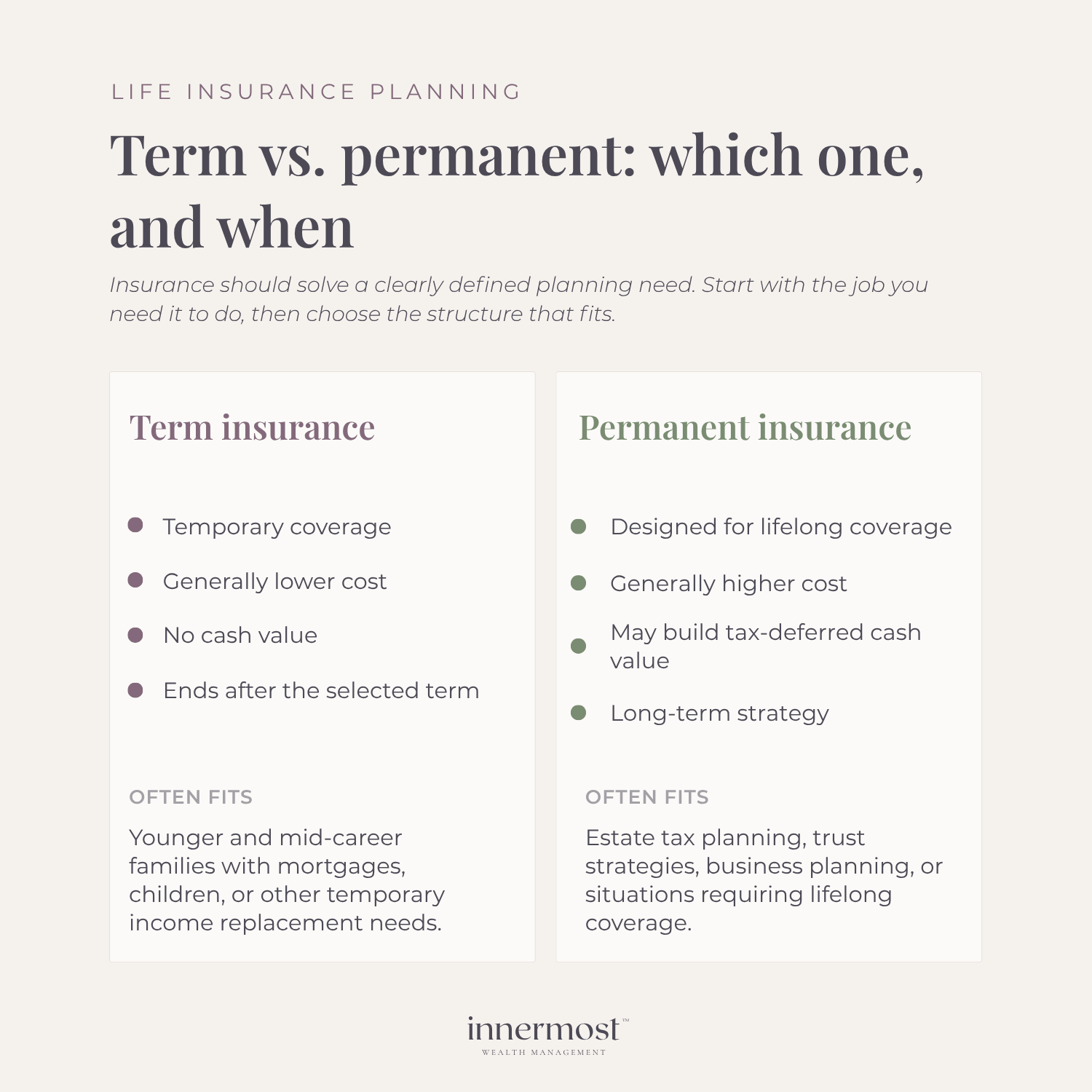
| Feature | Term Life Insurance | Permanent Life Insurance (Whole/Universal) |
|---|---|---|
| Duration | Fixed period (10, 20, 30 years) | Lifelong coverage |
| Cash Value Component | None | Yes, accumulates over time |
| Reserve Requirement | Lower; primarily covers mortality risk | Higher; covers mortality plus cash value growth |
| Liquidity Demand | Low to moderate; predictable claim curves | Moderate to high; frequent policy loans and surrenders |
With term life insurance, the risk is strictly mortality. If the insured person dies within the term, the death benefit is paid; if they outlive the term, the contract expires, and the insurer retains the collected premiums. Reserves for term insurance are relatively straightforward and designed primarily to cover fluctuations in mortality rates.
With permanent life insurance (such as whole life, universal life, or variable life), a portion of every premium goes into a tax-advantaged cash value account. This cash value grows over time at a guaranteed or variable rate. Because policyholders have the legal right to surrender their policies for their cash surrender value or take out policy loans against them, insurers must maintain a higher degree of liquidity. The insurer must always be ready to disburse cash value funds on demand, even though historical data allows them to predict aggregate withdrawal patterns accurately.
Reinsurance: Sharing the Risk and Capital Burden
Insurance companies do not shoulder all financial risks entirely on their own. When an insurer writes policies with massive face values or experiences concentrated exposure in specific demographics, it often utilizes reinsurance.
Reinsurance is essentially insurance for insurance companies. An insurer cedes a portion of its risk and corresponding premium revenue to a reinsurance firm. In exchange, the reinsurer agrees to pay a proportional share of any future claims.
This mechanism directly affects how much cash and capital an insurance company needs on hand. By transferring tail-risk—the risk of catastrophic, unexpected spikes in mortality, such as major pandemics or disasters—to reinsurers, primary life insurers reduce their statutory reserve requirements. This frees up capital, allowing them to operate more efficiently while guaranteeing that policyholder claims remain secure under all circumstances.
What Happens If an Insurer Faces Liquidity Stress?
Even with rigorous regulation, asset-liability matching, and reinsurance, macroeconomic shocks or sudden spikes in mortality can test an insurer’s liquidity. If an unusual wave of policy surrenders or death claims occurs simultaneously, how do insurance companies manage without immediate cash on hand?
- Liquidation of Short-Term Assets: Insurers hold tiers of highly liquid instruments, such as commercial paper and short-term treasuries, that can be liquidated within hours without realizing capital losses.
- Borrowing Facilities: Established insurance companies maintain lines of credit with major commercial banks and have access to Federal Home Loan Bank (FHLB) advances, providing immediate cash liquidity.
- Guaranty Associations: If an insurance company ultimately becomes insolvent despite regulatory safeguards, state-level Life and Health Insurance Guaranty Associations step in. Regulated across all U.S. states, these associations protect policyholders up to statutory limits (typically $300,000 in death benefits and $100,000 in cash surrender values per individual, though limits vary by state) by transferring policies to solvent carriers or paying valid claims directly.
Frequently Asked Questions
Do life insurance companies keep all collected premiums in cash?
No. Keeping all premiums in cash would cause the money to lose value over time due to inflation. Instead, insurers keep a small portion in liquid cash equivalents for daily operations and claims, while investing the vast majority in secure, income-generating assets like bonds, mortgages, and government securities.
How do insurance companies ensure they can pay future death benefits?
Insurers rely on strict actuarial science, statutory reserve requirements enforced by state regulators, asset-liability matching, and reinsurance. These mechanisms ensure that long-term assets grow in tandem with long-term liabilities to guarantee future payouts.
What is the difference between statutory reserves and general assets?
Statutory reserves are the liabilities calculated using conservative regulatory formulas that represent the minimum amount an insurer must set aside to meet future obligations. General assets refer to the total pool of investments, properties, and cash owned by the insurance company backing those reserves.
Can a life insurance company run out of money?
While rare due to stringent regulatory oversight and risk-management protocols, insurers can face financial distress. If an insurer fails, state guaranty associations protect policyholders up to statutory limits, ensuring that valid claims and protected cash values are paid.
Why do permanent life insurance policies require more liquidity than term policies?
Permanent life insurance policies accumulate a cash value that policyholders can withdraw, borrow against, or surrender for cash at any time. This creates an ongoing demand for immediate liquidity that term insurance, which lacks a cash value component, does not experience.
Conclusion
Life insurance companies do not need stacks of physical cash or idle premiums on hand to remain secure. Instead, their financial stability rests on sophisticated regulatory frameworks, conservative actuarial modeling, prudent asset-liability matching, and diversified investment portfolios. By balancing liquidity needs with long-term yield generation, insurers ensure they can honor every death benefit and policy obligation, providing financial security to policyholders decades down the line.
Image Gallery
Select an image to open it in a new tab.



Omar Farooq
EdTech Innovation and Virtual Pedagogy Journalist
