
Determining the most destructive hurricane in history depends on whether destruction is measured by the loss of human life or total economic damage. The Great Hurricane of 1780 remains the deadliest on record, claiming approximately 22,000 lives in the Caribbean. However, in terms of financial cost, Hurricane Katrina (2005) and Hurricane Ian (2022) are the most destructive, with Katrina’s inflation-adjusted damages exceeding $190 billion by 2026.
Defining the "most destructive" storm requires a multi-faceted analysis of meteorological intensity, societal vulnerability, and economic impact. A storm that strikes a sparsely populated coastline may be meteorologically superior but far less "destructive" than a weaker storm hitting a major metropolitan hub. To understand the true scale of these natural disasters, we must examine the historical context of mortality, the skyrocketing costs of modern property damage, and the atmospheric conditions that created these monsters.
Defining Destruction: Mortality vs. Economic Impact
When historians and meteorologists discuss destruction, they generally categorize it into three distinct metrics: mortality, economic loss, and meteorological intensity.
The Mortality Metric
Before the advent of satellite imagery, advanced computer modeling, and sophisticated evacuation protocols, hurricanes were significantly more lethal. A storm with a high "destruction" rating in the 18th or 19th century is almost always defined by its death toll. Coastal populations had little to no warning, and infrastructure offered minimal protection against storm surges.
The Economic Metric
In the modern era, particularly in the 21st century, destruction is often quantified by the "cost to rebuild." Because of the massive increase in coastal real estate value and the density of infrastructure in places like Florida, Texas, and the Gulf Coast, modern hurricanes frequently set records for financial damage even when the loss of life is relatively low compared to historical events.
The Intensity Metric
Meteorologists also look at barometric pressure and sustained wind speeds. While a high-intensity storm (like Hurricane Wilma or Hurricane Patricia) is physically more powerful, it is only considered the "most destructive" if that power intersects with human civilization.
The Deadliest: The Great Hurricane of 1780
The Great Hurricane of 1780 is widely cited by the National Oceanic and Atmospheric Administration (NOAA) as the deadliest Atlantic hurricane in recorded history. Occurring between October 10 and 16, 1780, it tore through the Lesser Antilles, specifically hitting Barbados, Martinique, and St. Eustatius.
Historical Context and Impact
The storm occurred during the American Revolutionary War, a time when the Caribbean was crowded with British and French naval fleets. This significantly contributed to the death toll, as thousands of sailors were lost at sea. Reports from the time indicate that the storm was so intense it stripped the bark off trees—a phenomenon that only occurs with winds exceeding 200 mph (320 km/h), suggesting it was a Category 5 storm by modern standards.
In Barbados, nearly every building was leveled. In Martinique, the storm surge was estimated to have reached 25 feet, drowning thousands. The estimated death toll of 22,000 remains unsurpassed in the Atlantic basin.
The Costliest: Hurricane Katrina (2005)
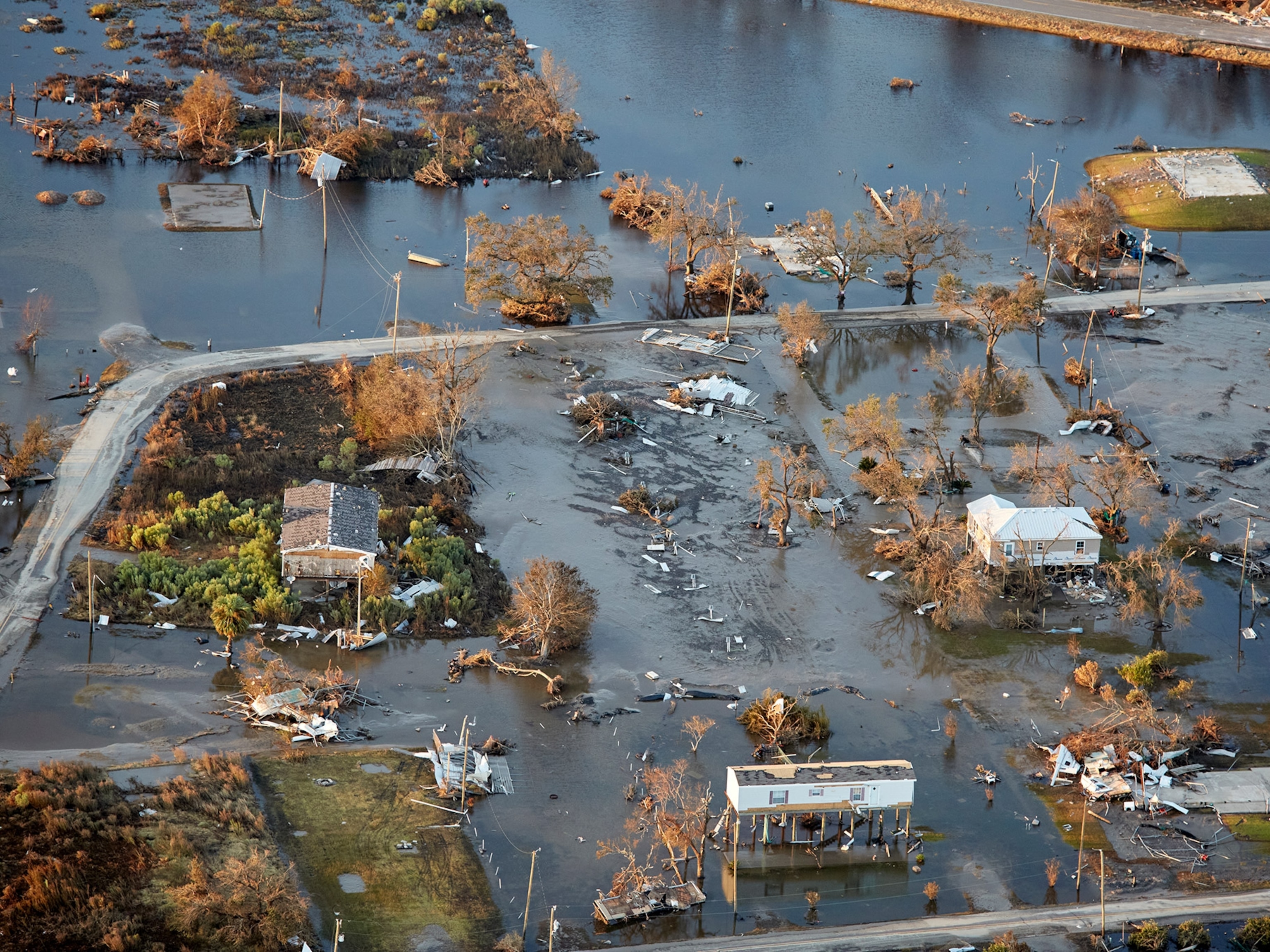
When measured by financial ruin, Hurricane Katrina remains the benchmark for destruction. Striking the Gulf Coast in August 2005, Katrina was not just a natural disaster; it was a catastrophic failure of man-made infrastructure.
The Levee Failure
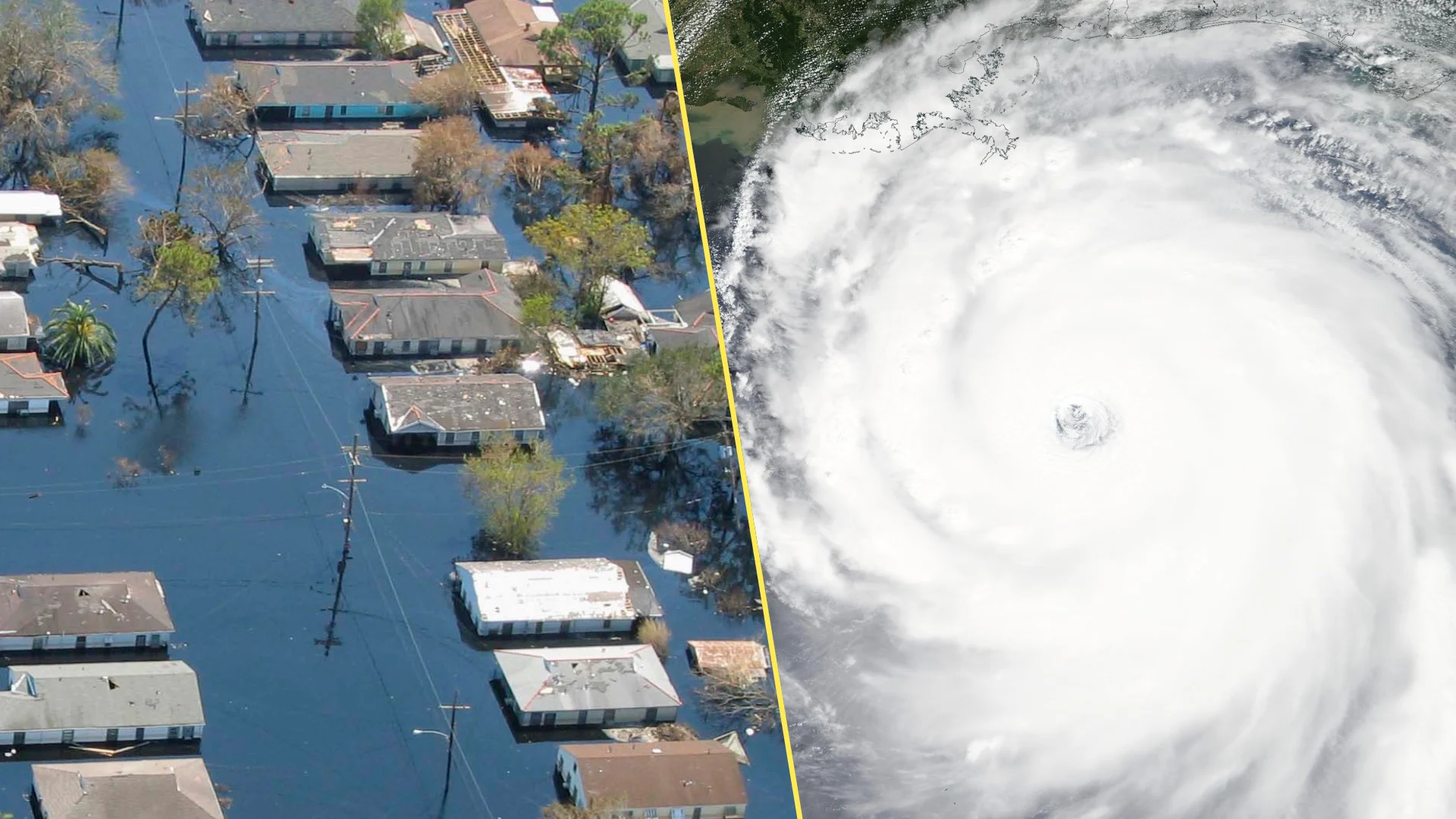
The majority of the destruction in New Orleans was not caused by the wind itself, but by the failure of the levee system. When the storm surge pushed into the city’s canals, the barriers gave way, flooding 80% of the city. This created a protracted humanitarian crisis and led to a total economic loss that, when adjusted to 2026 dollars, represents the highest financial toll of any single atmospheric event in the United States.
Economic Totals
As of 2026, the cumulative cost of Katrina—including property damage, lost economic output, and federal recovery spending—is estimated at over $190 billion. It displaced over a million people and permanently altered the demographics of the Gulf Coast region.
The Modern Challenger: Hurricane Ian (2022)
Hurricane Ian serves as a primary example of how rising property values and coastal density amplify destruction. Striking Southwest Florida as a high-end Category 4 storm, Ian produced a massive storm surge in areas like Fort Myers Beach and Sanibel Island.
Why Ian Was So Destructive
Ian’s destruction was characterized by the sheer scale of property loss. Unlike Katrina, which saw the destruction of many lower-value properties in New Orleans, Ian hit a region with some of the highest real estate values in the country. The storm caused over $115 billion in damage (unadjusted). By 2026, the long-term insurance impacts and rebuilding costs have solidified Ian as the second or third most destructive storm in U.S. history, depending on the inflation-adjustment models used.
The Deadliest in U.S. History: The Galveston Hurricane of 1900
While the 1780 storm holds the record for the entire Atlantic, the 1900 Galveston Hurricane remains the deadliest natural disaster in United States history. At the turn of the 20th century, Galveston was a booming port city, often called the "Wall Street of the South."
The Surge that Erased a City
On September 8, 1900, a Category 4 hurricane brought a storm surge of 15 feet to an island that was only 8.7 feet above sea level at its highest point. The city was virtually wiped off the map. Between 8,000 and 12,000 people were killed in a single night.
The destruction was so absolute that it prompted one of the greatest engineering feats of the era: the raising of the entire city's grade by up to 17 feet and the construction of a massive seawall that still protects Galveston today.
Comparison of the Most Destructive Hurricanes
The following table compares the top contenders for the title of "Most Destructive" based on different metrics of damage as of 2026.
| Hurricane Name | Year | Primary Region | Estimated Deaths | Adjusted Cost (2026 USD) | Primary Type of Destruction |
|---|---|---|---|---|---|
| Great Hurricane | 1780 | Lesser Antilles | 22,000+ | N/A | Total Mortality |
| Hurricane Katrina | 2005 | LA, MS, FL | 1,833 | $190B+ | Infrastructure/Flooding |
| Hurricane Ian | 2022 | Florida, SC | 150+ | $120B+ | Real Estate/Property |
| Galveston Storm | 1900 | Texas | 8,000–12,000 | $35B+ (est.) | Surge/Total Collapse |
| Hurricane Maria | 2017 | Puerto Rico | 2,975 | $110B+ | Power Grid/Long-term |
| Hurricane Harvey | 2017 | Texas | 100+ | $155B+ | Rainfall/Urban Flooding |
Factors That Increase Hurricane Destructiveness
As we look toward the future, several factors are making hurricanes more destructive, even if their frequency does not significantly increase.
1. Rapid Intensification
Modern storms are increasingly prone to rapid intensification—defined as an increase in sustained winds of at least 35 mph in a 24-hour period. Hurricanes like Ian, Ida, and Harvey underwent this process just before landfall, leaving coastal communities with very little time to prepare for a much stronger storm than initially forecast.
2. Sea Level Rise and Storm Surge
Higher baseline sea levels mean that even a minor storm surge can penetrate further inland than it would have 100 years ago. According to the Intergovernmental Panel on Climate Change (IPCC), the "destructive" potential of the storm surge is the leading cause of death and property damage in tropical cyclones.
3. Population Density
More people live on the coast in 2026 than at any other point in human history. In Florida alone, millions of residents live in "flood zones." When a major hurricane makes landfall, the sheer volume of homes, cars, and businesses in the path of the storm ensures that the "destruction" (in dollar amounts) will be staggering.
4. Slower Forward Motion
One of the most destructive aspects of modern hurricanes, such as Hurricane Harvey (2017), is their tendency to "stall" over land. When a storm moves slowly, it drops historic amounts of rainfall. Harvey dropped over 60 inches of rain in parts of Texas, proving that wind speed is not the only factor in destruction; water often does more damage.
The Global Context: Cyclones and Typhoons
It is important to note that the term "hurricane" refers specifically to tropical cyclones in the Atlantic and Northeast Pacific. In the Northwest Pacific, they are called Typhoons, and in the Indian Ocean, they are Cyclones.
If we look at the most destructive storm globally, the 1970 Bhola Cyclone in East Pakistan (now Bangladesh) is the undisputed leader in mortality. It killed an estimated 300,000 to 500,000 people. While it is technically a cyclone, its meteorological structure is identical to a hurricane. The lack of higher terrain and a massive storm surge in the Ganges Delta created a level of human destruction that the Western Hemisphere has fortunately never matched.
Frequently Asked Questions
Which hurricane had the highest wind speed ever recorded?
Hurricane Patricia (2015) holds the record for the highest reliably measured sustained winds, reaching 215 mph (345 km/h) while over the Eastern Pacific. However, it weakened significantly before making landfall in a relatively unpopulated area of Mexico, which prevented it from becoming the "most destructive" in terms of cost or lives lost.
Is Hurricane Harvey more destructive than Katrina?
In terms of pure rainfall and urban flooding, Harvey (2017) was more destructive to the Houston metropolitan area, causing approximately $155 billion in damage (adjusted). However, Katrina is generally considered more destructive because it caused a higher loss of life and led to the total societal collapse of a major American city.
How do we calculate the "adjusted" cost of a hurricane?
Economists use the Consumer Price Index (CPI) and changes in local wealth/property values to "normalize" the cost of historical storms. This allows for a fair comparison between a storm in 1992 (like Hurricane Andrew) and a storm in 2026. Without these adjustments, modern storms would always appear more destructive simply due to inflation.
Was Hurricane Maria the most destructive for a single territory?
For Puerto Rico, Hurricane Maria (2017) was the most destructive event in its history. It destroyed the island's entire power grid and caused a humanitarian crisis that lasted for months. The official death toll was eventually revised to nearly 3,000, making it one of the deadliest U.S. hurricanes in the modern era.
Can we prevent hurricanes from being this destructive?
While we cannot stop a hurricane from forming, we can mitigate destruction through stricter building codes, improved seawalls, and better evacuation planning. Florida’s post-Andrew building codes are credited with saving thousands of homes during subsequent strikes from storms like Hurricane Ian.
Next Steps for Disaster Preparedness
Understanding the history of destructive hurricanes is the first step in preparing for future ones. If you live in a coastal area, it is vital to review your insurance policies—specifically looking for "hurricane deductibles" and flood insurance, which is often a separate policy. As the costs of these storms continue to rise in 2026, being underinsured is one of the most common mistakes homeowners make.
Furthermore, always follow evacuation orders immediately. The "most destructive" storms in history were often those that caught people off guard. With modern forecasting from the National Hurricane Center, there is no reason to be surprised by a major landfall.
Image Gallery
Select an image to open it in a new tab.




Celine Dubois
Contemporary Living and Global Arts Columnist
