Student Loan Interest Tax Deduction: 2026 Income Limits, Eligibility, and How It Works

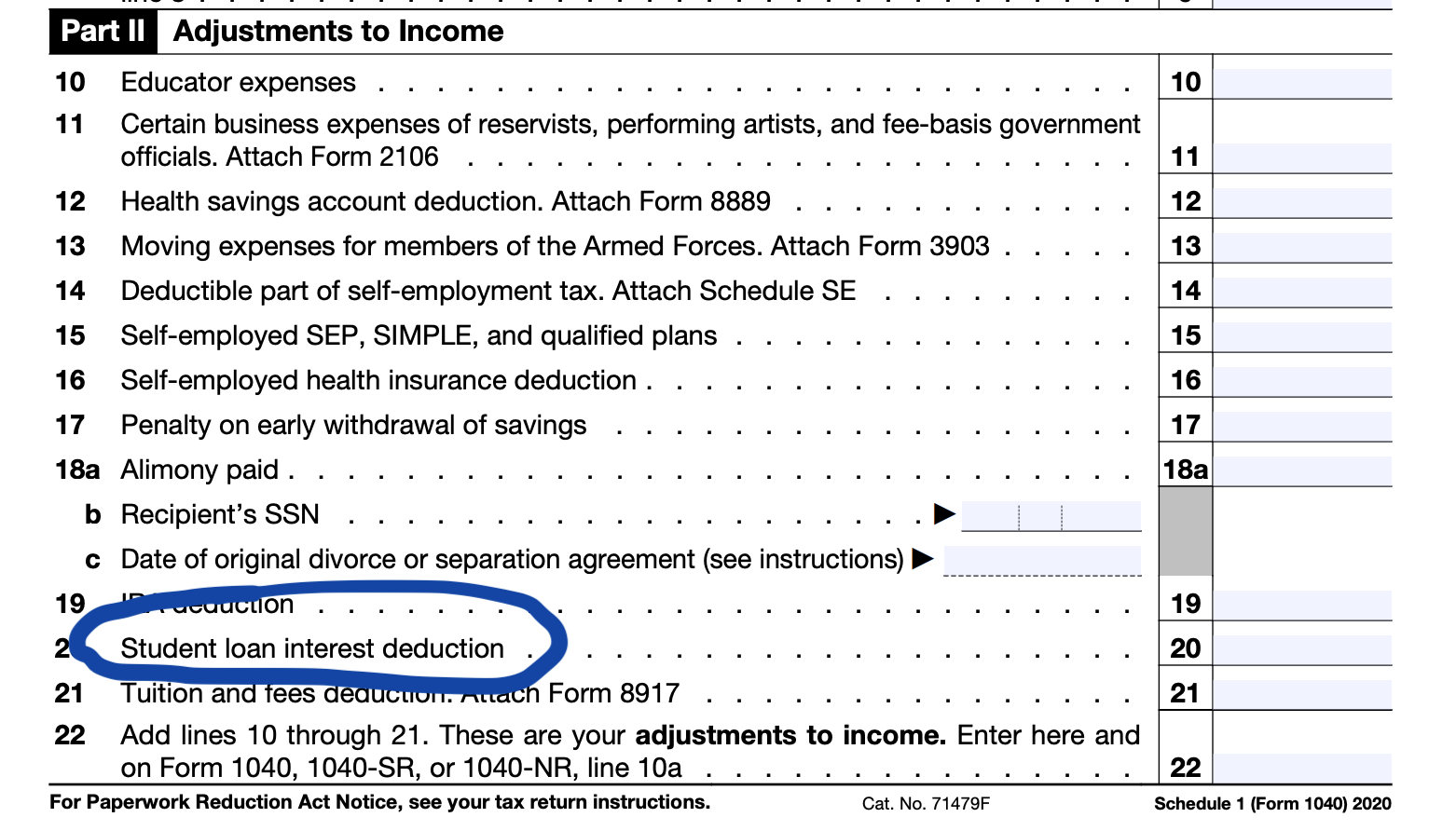
The student loan interest tax deduction allows taxpayers to reduce their taxable income by up to $2,500 for interest paid on qualified higher education loans. As an "above-the-line" deduction, it is available regardless of whether you itemize or take the standard deduction, provided your Modified Adjusted Gross Income (MAGI) falls below specific annual thresholds.
Successfully navigating this deduction requires an understanding of the current income limits for the 2026 tax year, the definition of a "qualified" loan, and the specific phase-out mechanics that dictate how much of the deduction you can actually claim. This guide provides a technical breakdown of the requirements and calculations necessary to maximize this tax benefit.
Understanding the Mechanics of an Above-the-Line Deduction
To appreciate how the student loan interest deduction works, it is important to distinguish it from a tax credit. While a tax credit (like the American Opportunity Tax Credit) reduces your tax bill dollar-for-dollar, a deduction reduces the amount of your income that is subject to tax.
Because this is an "above-the-line" deduction, it is subtracted from your gross income to determine your Adjusted Gross Income (AGI). This is significantly more advantageous than a standard "below-the-line" itemized deduction for two reasons:
- Accessibility: You do not need to forgo the standard deduction to claim it.
- Lower AGI: By lowering your AGI, you may become eligible for other tax credits and benefits that are themselves subject to income limitations.
In 2026, the Internal Revenue Service (IRS) continues to cap this deduction at $2,500 per tax return. If you paid $3,000 in interest over the year, you can still only deduct $2,500. If you paid $1,200, you deduct $1,200.
Core Eligibility Requirements for 2026
Before calculating the income limits, a taxpayer must meet four fundamental criteria established by the IRS. Failure to meet even one of these results in total disqualification from the deduction.
1. Legal Obligation to Pay
You must be the person legally obligated to pay the interest on the qualified student loan. If you are a parent paying off a loan that is solely in your child's name, you cannot claim the deduction because you are not the legal debtor. Conversely, if the loan is in your name, but someone else (like a parent) makes a payment on your behalf, the IRS treats that payment as if you received the money and paid the interest yourself, allowing you to claim the deduction.
2. Dependency Status
You cannot claim the student loan interest deduction if you are claimed as a dependent on someone else’s tax return. This is a common hurdle for recent graduates. Even if you paid thousands in interest, if your parents are still eligible to claim you as a dependent for the 2026 tax year, the deduction is unavailable to you.
3. Filing Status
The deduction is available to those filing as Single, Head of Household, or Qualifying Surviving Spouse. It is also available to those who are Married Filing Jointly. However, if your filing status is Married Filing Separately, you are strictly prohibited from claiming the student loan interest deduction.
4. Qualified Student Loan Definition
The interest must be paid on a loan taken out solely to pay for "qualified higher education expenses." This includes:
- Tuition and mandatory fees.
- Room and board (within the limits of the school's "cost of attendance" figures).
- Books, supplies, and equipment required for enrollment.
- Other necessary expenses, such as transportation to and from the institution.
The loan must have been for you, your spouse, or your dependent at the time the loan was originated. Furthermore, the student must have been enrolled at least half-time in a degree, certificate, or other program leading to a recognized educational credential at an eligible educational institution.

2026 Income Limits and the Phase-Out Range
The most complex aspect of the deduction is the income limit. The IRS uses Modified Adjusted Gross Income (MAGI) to determine eligibility. For most taxpayers, MAGI is very close to their AGI, but it adds back certain items like the foreign earned income exclusion or the housing exclusion.
The deduction is subject to a "phase-out." As your income increases within a specific range, the $2,500 maximum deduction gradually decreases until it reaches zero.
2026 MAGI Thresholds (Estimated based on inflation adjustments)
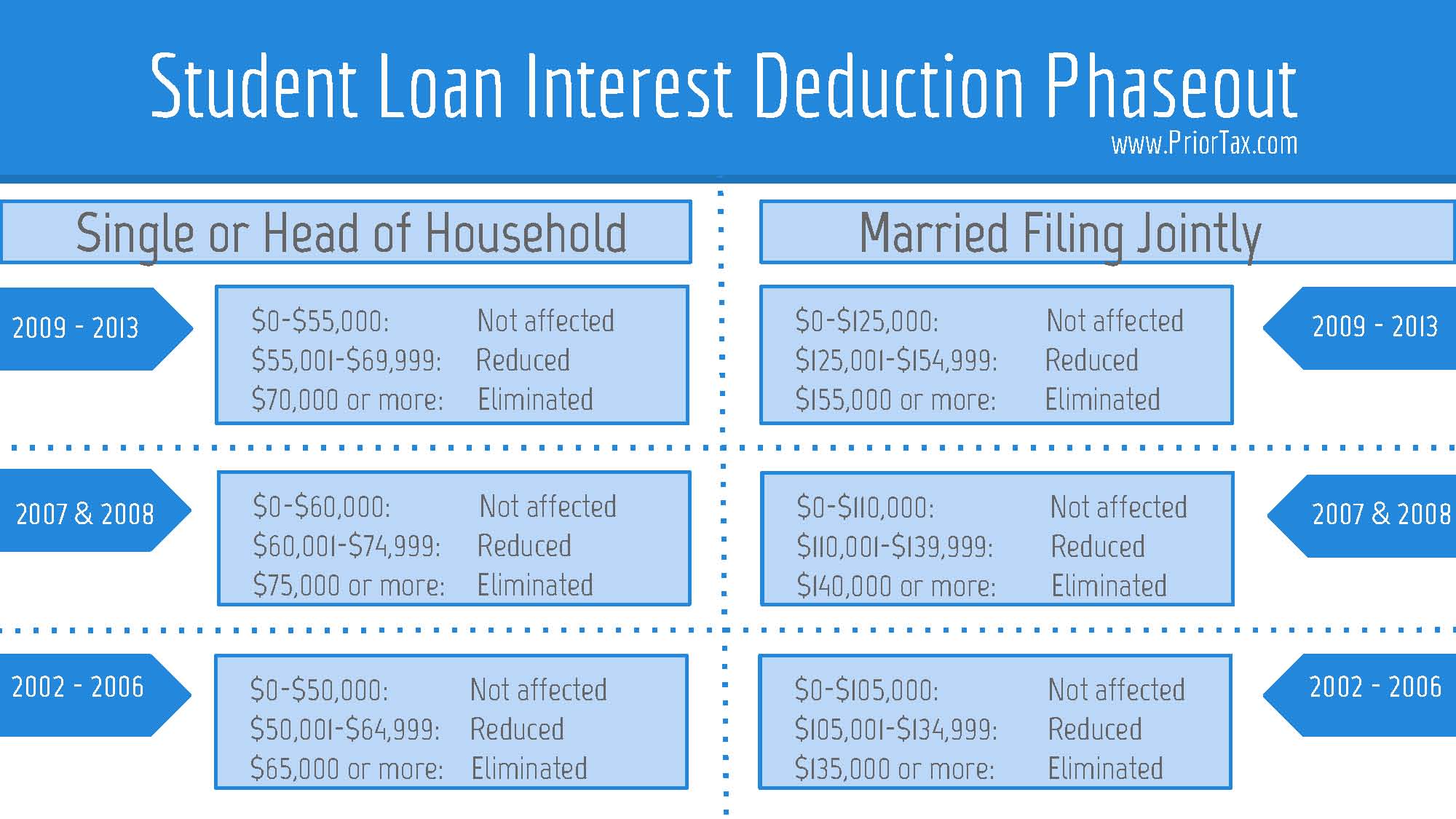
For the 2026 tax year, the income thresholds are adjusted for inflation. While taxpayers should always verify the final IRS tables released in late 2026, the following ranges represent the projected phase-out environment:
| Filing Status | Full Deduction Range (MAGI) | Partial Deduction (Phase-out) | No Deduction Allowed |
|---|---|---|---|
| Single / Head of Household | Under $80,000 | $80,000 – $95,000 | Over $95,000 |
| Married Filing Jointly | Under $165,000 | $165,000 – $195,000 | Over $195,000 |
Note: These figures are based on the progressive inflation-adjustment trends observed through 2025 and 2026. The Married Filing Jointly threshold is roughly double the Single threshold, preventing a significant "marriage penalty" for this specific deduction.
How the Phase-Out Calculation Works
If your MAGI falls within the "Partial Deduction" range, you must calculate the exact amount you are allowed to deduct. The IRS uses a specific formula to determine the reduction.
The Calculation Formula
The amount of your reduction is calculated as: [Interest Paid (up to $2,500)] × [(Your MAGI - Phase-out Floor) / Phase-out Range]
Example Scenario: Imagine you are a single filer with a MAGI of $87,500 and you paid $2,500 in interest in 2026.
- Identify the Floor: The phase-out begins at $80,000.
- Calculate the Excess: $87,500 - $80,000 = $7,500.
- Determine the Range: The phase-out range is $15,000 ($95,000 limit - $80,000 floor).
- Calculate the Fraction: $7,500 / $15,000 = 0.5 (or 50%).
- Apply the Reduction: Your $2,500 deduction is reduced by 50% ($1,250).
- Final Deduction: You can claim $1,250 on your 2026 return.
What Qualifies as a "Qualified Student Loan"?
A frequent point of confusion involves what types of debt qualify for the deduction. It is not enough for the money to be used for school; the loan itself must meet specific criteria.
Qualified Loans include:
- Federal Student Loans: Direct Subsidized, Direct Unsubsidized, and PLUS loans (both Parent and Grad).
- Private Student Loans: Loans from banks, credit unions, or specialized student lenders, provided they were used strictly for qualified education expenses.
- Refinanced Loans: If you consolidate or refinance your original student loans, the interest on the new consolidated loan remains deductible, as long as the new loan was used solely to pay off the old qualified loans.
Non-Qualified Loans include:
- Loans from Related Parties: You cannot deduct interest on a loan from a parent, grandparent, sibling, or a controlled corporation.
- Employer-Sponsored Loans: Loans from a qualified employer plan are typically ineligible.
- Mixed-Use Loans: If you took out a personal loan or a home equity line of credit (HELOC) and used part of it for tuition and part of it for a car, none of the interest is deductible as student loan interest. The loan must be for the sole purpose of education.
- Credit Card Debt: Even if you charged your tuition to a credit card, the interest charged by the credit card company does not qualify as student loan interest.
Required Documentation: Form 1098-E
Lenders are required by law to send you Form 1098-E (Student Loan Interest Statement) if you paid at least $600 in interest during the calendar year.
- Timing: These forms are usually mailed or made available online by January 31, 2027, for the 2026 tax year.
- Multiple Lenders: If you have loans with multiple servicers, you may receive several forms. You should aggregate the interest amounts from all forms, up to the $2,500 limit.
- Under $600: If you paid less than $600 in interest, your lender is not required to send a 1098-E. However, you are still legally entitled to deduct the interest you actually paid. You will need to log into your loan servicer's portal to find the total "Interest Paid" for the year.
Common Pitfalls and Troubleshooting
1. The "Double-Dipping" Rule
You cannot claim the student loan interest deduction for interest that was paid using tax-free funds. For example, if you used a distribution from a 529 Plan or a Coverdell Education Savings Account (ESA) to pay your student loan interest, you cannot also deduct that interest on your tax return. Doing so would constitute a "double tax benefit" for the same dollar spent.
2. Voluntary Interest Payments
Even if your loans are in a grace period or deferment, any voluntary interest payments you make are deductible. This is a common strategy for students still in school who want to prevent interest capitalization while also capturing a small deduction if they have earned income.
3. Capitalized Interest
When unpaid interest is added to the principal balance of your loan (capitalization), the IRS considers it "paid" only when you actually make payments that cover that portion of the balance. Your 1098-E should reflect the portion of your payments that the lender has allocated toward interest, including capitalized interest.
4. Filing Status Changes
If you got married in December 2026, you are considered married for the entire tax year. This means your income will be measured against the Married Filing Jointly limits. If your spouse also has student loans, your combined deduction is still capped at $2,500 total for the return, not $2,500 each.
Frequently Asked Questions
Can I deduct interest if I am paying off a loan for my child?
Yes, but only if you are the legal borrower (such as with a Parent PLUS loan) and you claim the child as a dependent. If the loan is in the child's name, only the child can claim the deduction, even if you are the one writing the checks.
Is there a limit on how many years I can claim the deduction?
No. Unlike the American Opportunity Tax Credit, which is limited to four years of post-secondary education, the student loan interest deduction can be claimed for as long as you are paying interest on a qualified loan and meet the income requirements.
Does the deduction apply to loans for graduate school?
Yes. The deduction applies to any "eligible educational institution," which includes colleges, universities, vocational schools, and other post-secondary institutions eligible to participate in student aid programs managed by the U.S. Department of Education. This encompasses both undergraduate and graduate programs.
What if my MAGI is exactly at the limit?
If your MAGI is exactly at or above the upper limit (e.g., $95,000 for a single filer), the deduction is completely phased out. Even a single dollar over the limit results in the loss of the remaining deduction.
Can I deduct the origination fees?
Yes. Loan origination fees are considered a form of interest. These are typically amortized over the life of the loan. Most loan servicers include the amortized portion of these fees in the "interest paid" figure on your Form 1098-E.
Final Recommendations for 2026 Tax Filing
To ensure you receive the maximum benefit from the student loan interest tax deduction:
- Verify your MAGI early: If you are near the phase-out threshold, consider contributing to a traditional IRA or a 401(k). These contributions reduce your AGI/MAGI and may move you back into the full deduction range.
- Aggregate your 1098-Es: Ensure you have forms from every servicer, especially if your loans were transferred during the year.
- Check dependency status: If you are a young professional, confirm whether your parents are planning to claim you as a dependent. If they do, you cannot claim the deduction, regardless of how much interest you paid.
- Review your filing status: If you are married, compare the benefits of "Married Filing Jointly" versus "Married Filing Separately." While the latter might occasionally lower one spouse's student loan payments (under certain Income-Driven Repayment plans), it will completely disqualify you from this tax deduction.
For more specific guidance, taxpayers should refer to IRS Publication 970, "Tax Benefits for Education," which provides the most detailed statutory explanations for the 2026 tax year.
Image Gallery
Select an image to open it in a new tab.

Simon Caldwell
Enterprise Technology and Systems Editor
