While no cat breed is 100% hypoallergenic, certain cats produce lower levels of the Fel d 1 protein—the primary allergen responsible for human cat allergies—making them significantly more manageable for sensitive owners. Breeds such as the Balinese, Siberian, and Devon Rex are frequently recommended because they either shed less fur to trap dander or possess genetic variations resulting in reduced protein production. However, individual reactions vary wildly, meaning prospective owners must spend time with a specific cat before committing.
Understanding the mechanics of cat allergies is critical for anyone considering bringing a feline into a household with sensitive individuals. Many people assume that cat hair is the primary culprit behind their sneezing, watery eyes, and congestion. In reality, cat allergies are driven by proteins secreted in the animal's saliva, sebaceous glands, and urine. When cats groom themselves, these proteins dry onto their fur and skin, creating dander—tiny flakes of dead skin that become airborne and settle into carpets, furniture, and clothing. Because all cats produce these proteins to varying degrees, finding an allergy-friendly pet requires looking past marketing myths and examining the biological realities of different breeds.
The Science Behind Cat Allergies and the Fel d 1 Protein
To understand why some cats are labeled "allergy friendly," you must first understand the Fel d 1 protein. Produced primarily in the cat's salivary and sebaceous (skin) glands, Fel d 1 is exceptionally light and sticky, allowing it to remain suspended in the air for hours and easily adhere to household surfaces.
When a cat licks its fur during grooming, the saliva containing Fel d 1 dries and flakes off as dander. Because male cats—particularly unneutered ones—produce higher levels of testosterone-driven skin secretions, they generally trigger stronger allergic reactions than spayed females. Spayed females and neutered males tend to produce lower baseline levels of these proteins.
Researchers and breeders have long studied genetic variations across different feline populations to identify why certain individuals provoke mild or nonexistent allergic responses. While no cat is completely non-allergenic, the concentration of Fel d 1 varies dramatically from one breed to another, and even from one individual cat to another within the same litter. Consequently, terms like "hypoallergenic" or "allergy friendly" are relative, denoting lower allergen production rather than an absolute guarantee of symptom-free living.
Top Allergy-Friendly Cat Breeds
Several cat breeds have earned a reputation for being more compatible with allergy sufferers, either due to lower Fel d 1 production or coat characteristics that minimize the spread of dander.
Siberian
Despite possessing a dense, lush triple coat designed to withstand harsh Russian winters, the Siberian is frequently cited as one of the best choices for allergy sufferers. Scientific testing has indicated that Siberians often produce significantly lower levels of the Fel d 1 protein compared to the average domestic cat. While they do shed their heavy coats seasonally, many people with mild-to-moderate cat allergies report experiencing minimal to no symptoms around them.
Balinese
Often described as a long-haired Siamese, the Balinese possesses a silky, single-layer coat with minimal undercoat. Because they have less hair to trap dander and shed less than double-coated breeds, they disperse fewer allergens into the environment. Furthermore, anecdotal evidence suggests that the Balinese may produce lower quantities of Fel d 1 than many other breeds, though individual testing is still recommended.
Devon Rex and Cornish Rex
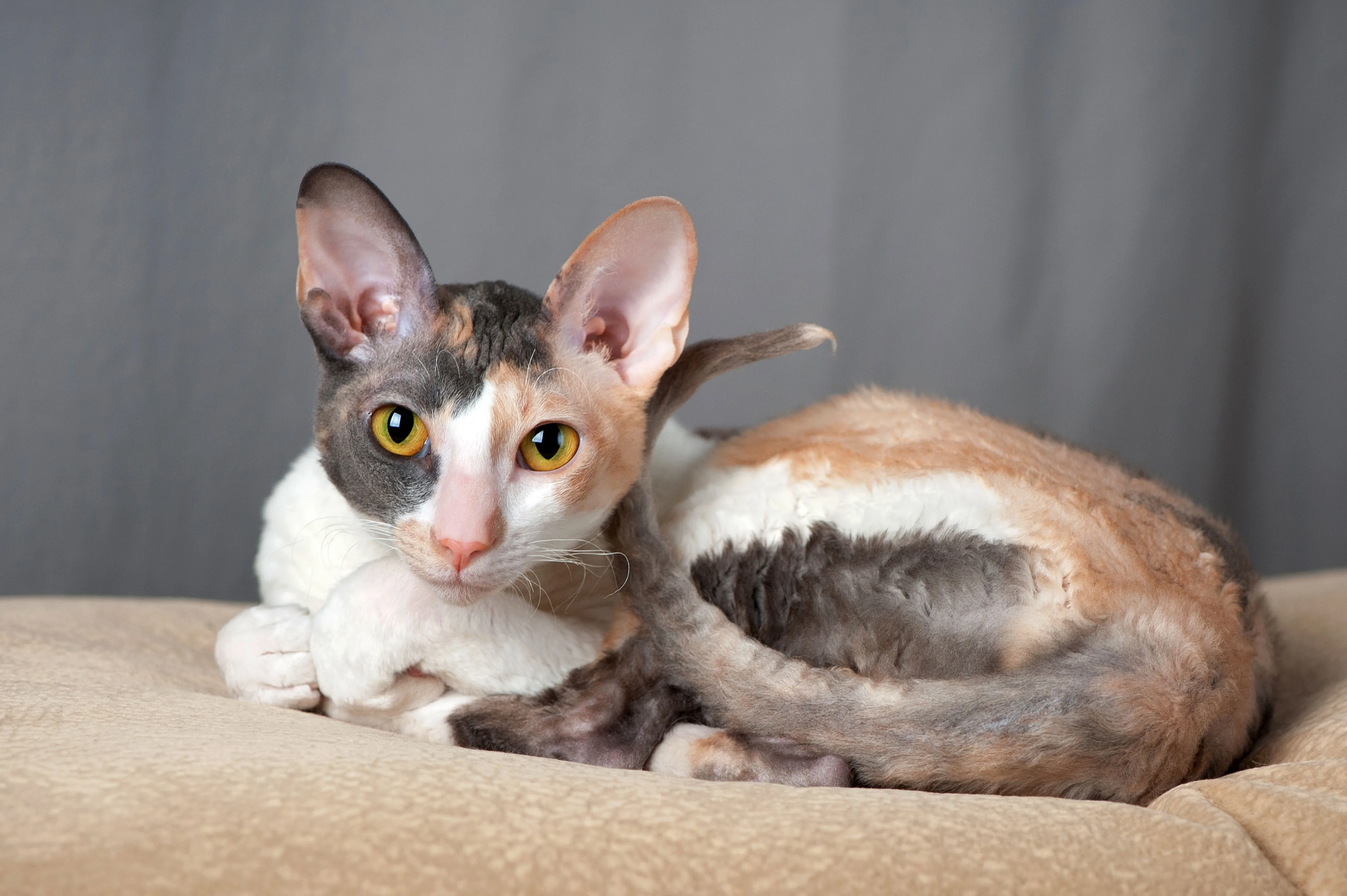
The Rex breeds are easily distinguished by their unique, short, rippled coats. The Devon Rex has very little hair, while the Cornish Rex possesses only the soft undercoat layer (the down hair). Because their coats are sparse, they trap less saliva during grooming and shed significantly less than traditional cats. However, their skin tends to produce natural oils more quickly, requiring regular bathing to prevent oil and dander buildup.
Sphynx
As a hairless breed, the Sphynx is often the first animal allergy sufferers consider. Without a coat to trap and spread shedding fur and dried saliva, airborne dander is drastically reduced. However, the Sphynx is not entirely maintenance-free regarding allergies. Their skin produces oils that cannot be absorbed by fur, requiring weekly bathing with specialized shampoos to remove allergen-laden skin secretions.
| Breed | Coat Type | Average Fel d 1 Production | Grooming & Maintenance Requirements |
|---|---|---|---|
| Siberian | Long, triple coat | Lower than average | Regular brushing to manage seasonal shedding |
| Balinese | Long, single coat | Moderate to low | Weekly combing to maintain silky texture |
| Devon Rex | Short, wavy/sparse | Low | Occasional bathing to manage skin oils |
| Cornish Rex | Short, downy undercoat | Low | Frequent gentle wiping or bathing |
| Sphynx | Hairless (peach fuzz) | Low to moderate | Weekly baths required to remove skin oils |

Evaluating Coat Types: Long-Haired vs. Short-Haired vs. Hairless
When searching for an allergy-friendly cat, the assumption that short-haired cats are automatically better for allergies than long-haired cats is a persistent misconception.
Short-haired cats often shed constantly in small amounts throughout the year, releasing microscopic hairs and trapped dander continuously into upholstery and HVAC systems. Conversely, some long-haired breeds—such as the Balinese—may shed less frequently or produce lower baseline amounts of the target protein, rendering them less offensive to the immune system despite their longer fur.
Hairless breeds eliminate the shedding factor entirely, but they shift the management burden to skin care. Because cats lack hair to absorb natural body oils, sebum accumulates rapidly on the skin surface, mixing with dander and saliva proteins. Owners must commit to a routine of regular sponge baths or full-immersion baths to keep allergen levels manageable.
Managing Indoor Allergens and Reducing Sensitivity
Even with an allergy-friendly breed, maintaining a symptom-free home requires a proactive environmental management strategy. Dander accumulates quickly in fabric-heavy environments, necessitating specific housekeeping adjustments.
- Air Filtration: Invest in High-Efficiency Particulate Air (HEPA) purifiers placed in rooms where you spend the most time, particularly the bedroom. HEPA filters capture microscopic dander particles that standard HVAC filters miss.
- Surface Management: Minimize wall-to-wall carpeting where dander easily embeds. Opt for hardwood, tile, or laminate flooring that can be easily mopped. Wash cat bedding and human linens weekly in hot water.
- Grooming Routines: Brush your cat frequently using a damp cloth or specialized mitt to capture loose hair and surface dander before it spreads into the air. Ideally, perform this grooming outdoors or delegate it to a non-allergic family member.
- Designated Zones: Keep cats out of the bedroom entirely to ensure your sleeping quarters remain a low-allergen sanctuary where your immune system can recover overnight.
Common Mistakes to Avoid When Choosing a Cat
Allergy sufferers frequently make critical errors when attempting to bring a cat into their home, often leading to heart-wrenching rehoming situations.
- Trusting the "Hypoallergenic" Label Blindly: No scientific governing body certifies any cat breed as 100% hypoallergenic. Marketing claims regarding allergy-free cats should always be verified through direct personal exposure.
- Ignoring Individual Variation: Fel d 1 levels vary wildly between individual cats. A kitten from a "low-allergen" breed may still produce high levels of the protein, while a random-breed shelter cat might happen to have low allergen levels.
- Failing to Test Before Adopting: Never commit to bringing a cat home without spending at least a few hours in an enclosed space with that specific animal. Visiting a breeder or foster home multiple times allows your immune system enough time to manifest delayed allergic reactions.
- Neglecting Personal Health Management: Relying solely on the breed of the cat without utilizing air purifiers, antihistamines, or immunotherapy (allergy shots) often results in escalating sensitivity over time.
Frequently Asked Questions
Are hairless cats completely hypoallergenic?
No hairless cat is truly hypoallergenic. While the Sphynx lacks the fur that typically traps and spreads dried saliva and dander, they still produce the Fel d 1 protein through their skin and saliva. Their bodies produce natural oils that collect allergens, meaning they require regular weekly baths to manage allergen levels effectively.
Do female cats produce fewer allergens than males?
Statistically, spayed females and neutered males produce lower baseline levels of the Fel d 1 protein than intact male cats. Hormonal fluctuations driven by testosterone increase the output of sebaceous glands, raising allergen production. Neutering male cats significantly reduces, but does not completely eliminate, this disparity.
Can you build up an immunity to your own cat?
Some allergy sufferers experience a natural desensitization to their own pet over time, noticing that their symptoms decrease after several months of continuous exposure. However, this is not guaranteed. For many individuals, constant exposure can actually worsen underlying sensitivity, leading to chronic respiratory inflammation or the development of adult-onset asthma.
How can I test my allergy levels before getting a cat?
The most reliable method is visiting a breeder, shelter, or foster home to spend uninterrupted time interacting directly with the specific cat you intend to adopt. Additionally, you can consult an allergist for skin-prick testing or specialized blood assays to identify your specific sensitivities before making a long-term commitment.
Next Steps for Prospective Owners
If you suffer from allergies but are determined to share your life with a feline companion, begin by scheduling an evaluation with an allergist to pinpoint your exact triggers. Next, research reputable breeders or rescue organizations specializing in breeds like Siberians or Balinese that allow in-person visitation trials. Spend extended time with individual cats to monitor your physiological response, and prepare your living space with proper air filtration and easy-to-clean surfaces before bringing your new pet home.
Image Gallery
Select an image to open it in a new tab.
Ingrid Bjornson
Global Cyber Policy and Regulation Analyst
