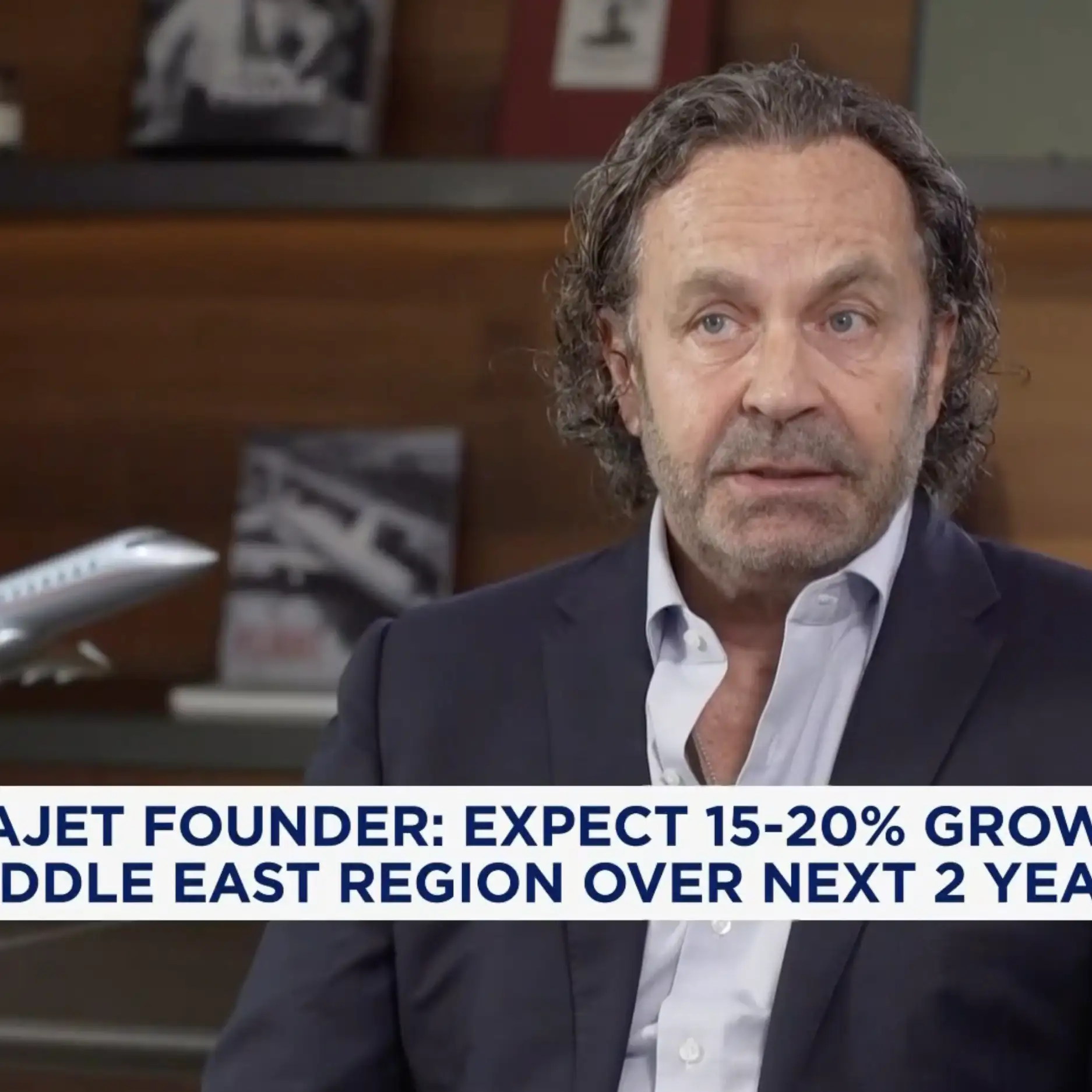
Vista Global Holdings is a Dubai-based private aviation group that provides a comprehensive suite of flight services through its flagship brands, VistaJet and XO. Founded in 2018 by Thomas Flohr, the company operates an asset-light, subscription-based model that offers global access to a fleet of over 360 aircraft without the burdens of traditional jet ownership.
The landscape of private aviation underwent a seismic shift in the early 2020s, and as of 2026, Vista Global Holdings stands as one of the two dominant forces in the industry, alongside NetJets. By consolidating various sectors of the fragmented business aviation market—including charter, brokerage, and tech-driven marketplaces—Vista has created a "one-stop shop" for high-net-worth individuals and corporate entities. To understand what Vista Global Holdings is, one must look at its corporate structure, its unique "floating fleet" philosophy, and the specific brands that constitute its ecosystem.
The Genesis and Vision of Thomas Flohr
Vista Global Holdings was not the beginning of the journey, but rather the culmination of a vision that started in 2004 with the founding of VistaJet. Thomas Flohr, a former finance executive, recognized a fundamental flaw in the private aviation market: fractional ownership. At the time, if a company wanted reliable private travel, they had to buy a share of a plane, pay monthly management fees, and deal with the complexities of residual value and depreciation.
Flohr’s "asset-light" vision was simple: provide the consistency and luxury of a private fleet with the flexibility of a pay-as-you-go or subscription model. When Vista Global Holdings was officially formed in 2018, it served as a parent company designed to scale this vision globally. By 2026, the group has successfully integrated several major acquisitions, transforming from a luxury flight provider into a vertically integrated global aviation platform.
The Core Brands of Vista Global Holdings
Vista Global operates through a multi-brand strategy that targets different segments of the market. This allows the group to capture both the ultra-luxury subscription market and the more flexible, on-demand charter market.
VistaJet: The Premium Subscription Standard
VistaJet is the "crown jewel" of the holding company. It is famous for its "silver with a red stripe" livery and its consistent, branded cabin experience. Unlike a charter broker that might send a different aircraft every time, VistaJet members fly on a fleet where every cabin—from the leather upholstery to the scent and the training of the Cabin Hosts—is identical.
The primary product is the Program, a tailored flight-hour subscription. Members pay for a specific number of hours per year at a fixed hourly rate, with guaranteed availability. This model provides corporations with predictable travel budgets and eliminates the "positioning fees" typically associated with private charters, as VistaJet operates a "floating fleet" that does not need to return to a home base after every trip.
XO: The Digital Marketplace and On-Demand Specialist
Acquired and rebranded by Vista in 2019 (following the merger of XOJET and JetSmarter), XO represents the "Uber-ification" of private aviation. XO focuses on technology and accessibility. It allows users to:
- Book Entire Private Flights: Access to both the Vista-owned fleet and a vetted network of over 2,100 third-party aircraft.
- Book Individual Seats: XO remains a leader in "shared flights," allowing users to purchase single seats on existing routes (e.g., New York to South Florida).
- Instant Mobile Booking: Unlike traditional brokers who require phone calls and manual contracts, the XO app provides instant pricing and booking.
Acquisitions: Apollo Jets, Air Hamburg, and Jet Edge
Between 2021 and 2023, Vista Global engaged in a rapid expansion strategy. These acquisitions were critical in building the infrastructure we see in 2026:
- Apollo Jets: Strengthened the group's brokerage capabilities and client base.
- Air Hamburg: Provided a dominant foothold in the European market, adding a massive fleet of mid-sized and large-cabin jets.
- Jet Edge: Expanded the North American presence significantly, particularly in the large-cabin segment, and provided a robust maintenance and management infrastructure.
The "Floating Fleet" Operational Model
One of the most technical and innovative aspects of Vista Global is its floating fleet concept. Traditional private aviation often relies on "base-and-return" operations, where an aircraft returns to its home hangar after a mission. This results in "empty legs"—flights where the plane is flying without passengers, costing the operator money.
Vista Global’s proprietary technology optimizes the movement of its 360+ aircraft in real-time. By utilizing advanced algorithms, the company ensures that when a plane drops off a passenger in London, it is already scheduled to pick up another in Paris or Dubai. This efficiency is what allows Vista to offer fixed hourly rates without charging for the "ferry time" (the flight required to get the plane to the passenger).
In 2026, this system has been further refined with AI-driven predictive modeling, which forecasts demand in specific geographic hubs, allowing the fleet to be pre-positioned ahead of peak travel periods such as the World Economic Forum or major sporting events.
Technical Specifications: The Fleet of 2026
Vista Global operates one of the youngest and most technologically advanced fleets in the world. While the group manages various types through its XO and Jet Edge arms, the core VistaJet fleet is comprised primarily of Bombardier aircraft.
Bombardier Global 7500
The Global 7500 is the flagship of the Vista fleet. It is the largest and longest-range business jet ever built. For Vista Global, this aircraft is the "game changer" for long-haul travel.
- Range: Approximately 7,700 nautical miles (14,260 km).
- Routes: Capable of non-stop flights from New York to Hong Kong or London to Singapore.
- Cabin: Four distinct living spaces, including a master suite with a permanent bed and a stand-up shower.
Bombardier Challenger Series
The Challenger 350 and the newer Challenger 3500 serve as the workhorses for "super-midsize" travel. These aircraft are optimized for transcontinental flights (e.g., Los Angeles to New York) and are praised for their low cabin altitude and high-speed internet connectivity.
| Aircraft Category | Key Model | Passenger Capacity | Typical Range | Best Use Case |
|---|---|---|---|---|
| Ultra-Long Range | Bombardier Global 7500 | 14-19 | 17 hours | Global intercontinental business |
| Large Cabin | Bombardier Global 6000 | 13-17 | 13 hours | Transoceanic travel (e.g., NY to London) |
| Super-Midsize | Challenger 350/3500 | 8-10 | 7 hours | Transcontinental (e.g., LA to NY) |
| Midsize / Light | Cessna Citation Ultra | 6-8 | 3-4 hours | Regional hops (e.g., Paris to Nice) |
Financial Structure and Membership Costs
Vista Global is a private company, though it has historically been backed by significant private equity, most notably Rhone Capital. In the 2026 fiscal landscape, the company maintains a high level of transparency regarding its debt-to-equity ratios, which is necessary to fund its multi-billion dollar aircraft orders.
The Cost of Membership
Entering the Vista Global ecosystem varies significantly depending on the brand:
- VistaJet VJP (The Program): Requires a minimum commitment (usually 50 hours per year). Hourly rates vary by aircraft type but generally range from $15,000 to $30,000 per hour. There is often a one-time initiation fee.
- VistaJet V25: A newer, smaller entry point for those needing only 25 hours a year, offering more flexibility but slightly less guaranteed availability than the flagship Program.
- XO Membership: Offers various tiers (e.g., Shared, Membership, Reserve). Members pay an annual fee (typically $500 to $1,000+) to access lower service fees, guaranteed recovery, and the ability to book individual seats.
Sustainability and the 2026 Net Zero Commitment
By 2026, Vista Global Holdings has positioned itself as a leader in aviation sustainability. The private aviation industry has faced intense scrutiny regarding its carbon footprint per passenger. In response, Vista committed to being carbon neutral by 2025, a goal it has worked to maintain through several pillars:
- Sustainable Aviation Fuel (SAF): Vista has secured long-term supply agreements for SAF, which can reduce lifecycle CO2 emissions by up to 80% compared to traditional jet fuel.
- Carbon Offsetting: For emissions that cannot yet be eliminated, the company utilizes a rigorous offsetting program in partnership with climate action firms like South Pole.
- Operational Efficiency: The "floating fleet" model inherently reduces waste by minimizing empty leg flights, which is a significant environmental advantage over traditional charter models.
Comparison: Vista Global vs. Competitors
To understand what Vista is, one must understand what it is not. It is not a fractional owner like NetJets, and it is not a traditional boutique broker.
- Vs. NetJets: NetJets requires clients to own a "piece" of a specific tail number (asset-heavy for the client). Vista provides access to the whole fleet (asset-light). In 2026, the choice between them often comes down to whether a client wants to hold a title to an aircraft or simply buy a guaranteed service.
- Vs. Traditional Brokers: A broker has no fleet; they find a plane for you. This creates variability in safety standards and cabin quality. Vista owns and operates its core fleet, ensuring a standardized product.
- Vs. Wheel Up: While Wheels Up focused heavily on the U.S. and turboprop/light jet markets, Vista is more globally oriented and focused on the mid-to-large cabin segments.
Frequently Asked Questions
Is Vista Global Holdings a public company?
No. As of 2026, Vista Global Holdings remains a private company. While there has been perennial speculation regarding an Initial Public Offering (IPO) or a SPAC merger, founder Thomas Flohr has maintained a private ownership structure, backed by institutional investors like Rhone Capital.
What is the difference between VistaJet and XO?
VistaJet is a premium, subscription-based service with a standardized fleet and high-touch service, aimed at corporate executives and HNWIs. XO is a digital-first marketplace offering on-demand charters and seat-sharing options, providing more flexibility and lower entry costs for occasional flyers.
How many aircraft does Vista Global own?
The group owns and operates over 360 aircraft globally. When including the third-party network accessible through the XO platform, the "Vista-vetted" fleet exceeds 2,100 aircraft.
Where is Vista Global Holdings headquartered?
The company is headquartered in the Dubai International Financial Centre (DIFC), United Arab Emirates. This location serves as a strategic bridge between its massive European, American, and Asian operations.
Can I book a single seat on a VistaJet flight?
Generally, no. VistaJet flights are for the entire aircraft. However, through the XO app, you can book individual seats on "crowdsourced" or scheduled shared flights, which are often operated on Vista Global-owned aircraft.
Practical Recommendations for Travelers
If you are considering engaging with Vista Global Holdings in 2026, the best path depends on your annual flight volume:
- Under 25 hours per year: Use the XO app for on-demand charters. It provides the best price-to-value ratio without requiring a massive upfront capital commitment.
- 25 to 50 hours per year: Look into the VistaJet V25 or XO Reserve programs. These provide some of the consistency of the branded fleet with lower commitment levels.
- Over 50 hours per year: The VistaJet Program is the industry standard for consistency. It is essentially "fractional ownership without the asset," making it the most efficient choice for high-frequency global travelers.
When evaluating these options, always request a "Total Cost of Ownership" comparison that includes potential membership fees, hourly rates, and any surcharges for peak days, which can vary significantly depending on the region and aircraft class.
Image Gallery
Select an image to open it in a new tab.
Zara El-Hashem
Sociocultural Dynamics and Academics Writer
