
Venture capital (VC) due diligence is the comprehensive process of investigation and audit performed by an investment firm before committing capital to a startup. It involves verifying the company’s financial health, legal standing, product viability, and team expertise to mitigate risk and ensure the investment aligns with the firm’s strategic objectives and fiduciary responsibilities.
Disclaimer: The information provided in this article is for educational purposes only and does not constitute financial, legal, or investment advice. Venture capital involves significant risk. Readers should consult with qualified professionals before making any investment decisions or entering into binding legal agreements.
The Evolution of VC Due Diligence in 2026
As of 2026, the venture capital landscape has shifted from the "growth at all costs" mentality of previous decades toward a more rigorous, evidence-based approach to capital allocation. While the core principles of due diligence—risk mitigation and value verification—remain unchanged, the methods have become more sophisticated. Investors now leverage advanced data analytics, AI-driven code audits, and deeper forensic accounting to look beyond surface-level metrics.
Due diligence is the bridge between a "handshake" agreement (the Term Sheet) and the actual transfer of funds (the Closing). For a founder, it is a period of intense scrutiny. For an investor, it is the final safeguard against catastrophic loss. Understanding the nuances of this process is essential for navigating the complex high-stakes environment of private equity.
The Primary Pillars of the Due Diligence Process
Venture capital due diligence is rarely a single monolithic task. Instead, it is organized into several distinct "pillars," each focused on a specific risk category. By breaking the investigation into these segments, VC firms can assign specialists—lawyers, accountants, and technical experts—to verify claims made during the initial pitch.
1. Business and Market Due Diligence
This pillar focuses on the "Why" and "How" of the startup’s existence. The goal is to determine if the business model is sustainable and if the market opportunity is as large as the founders claim.
- Market Sizing (TAM, SAM, SOM): Investors verify the Total Addressable Market. They look for realistic assessments rather than inflated numbers. In 2026, investors are particularly skeptical of "top-down" market sizing and prefer "bottom-up" analysis based on actual customer segments.
- Competitive Landscape: A deep dive into who else is solving this problem. This includes direct competitors, indirect substitutes, and potential "incumbent threats" from large tech conglomerates.
- Customer Reference Calls: VCs often request to speak with current or former customers. They want to understand the "stickiness" of the product, the sales cycle duration, and why the customer chose this specific solution over others.
- Unit Economics: This involves a granular look at Customer Acquisition Cost (CAC) vs. Lifetime Value (LTV). If a company is spending $2 to earn $1, the VC needs to see a clear, data-backed path to flipping that ratio.
2. Financial Due Diligence
Even for early-stage companies with limited revenue, financial due diligence is critical. It ensures that the company’s books are accurate and that there are no hidden liabilities.
- Historical Financial Statements: Review of income statements, balance sheets, and cash flow statements for at least the past two to three years (or since inception).
- The Cap Table: This is perhaps the most critical document. Investors examine the Capitalization Table to see who owns what percentage of the company. They look for "dead equity" (shares held by former founders or advisors who no longer contribute) and ensure that the founders still have enough "skin in the game" to remain motivated.
- Burn Rate and Runway: How fast is the company spending cash, and how long will the current cash last? VCs use this to determine if the proposed investment amount is sufficient to reach the next major milestone.
- Tax Compliance: Ensuring the startup has filed all necessary local, state, and federal taxes to avoid future legal entanglements with authorities like the IRS.
3. Legal Due Diligence
Legal due diligence is designed to ensure the company is "clean" from a regulatory and structural standpoint. This is usually handled by the VC’s outside counsel.
- Corporate Structure: Verification of the company’s incorporation documents (e.g., Delaware C-Corp status), bylaws, and board meeting minutes.
- Intellectual Property (IP): Investors must confirm that the startup actually owns its core technology. They check for patent filings, trademark registrations, and "Proprietary Information and Inventions Assignment" (PIIA) agreements for all employees and contractors.
- Employment Contracts: Review of agreements with key personnel to ensure there are no "golden parachutes" or clauses that could complicate a future acquisition.
- Pending Litigation: A search for any active or threatened lawsuits against the company, its founders, or its intellectual property.
4. Technical and Product Due Diligence
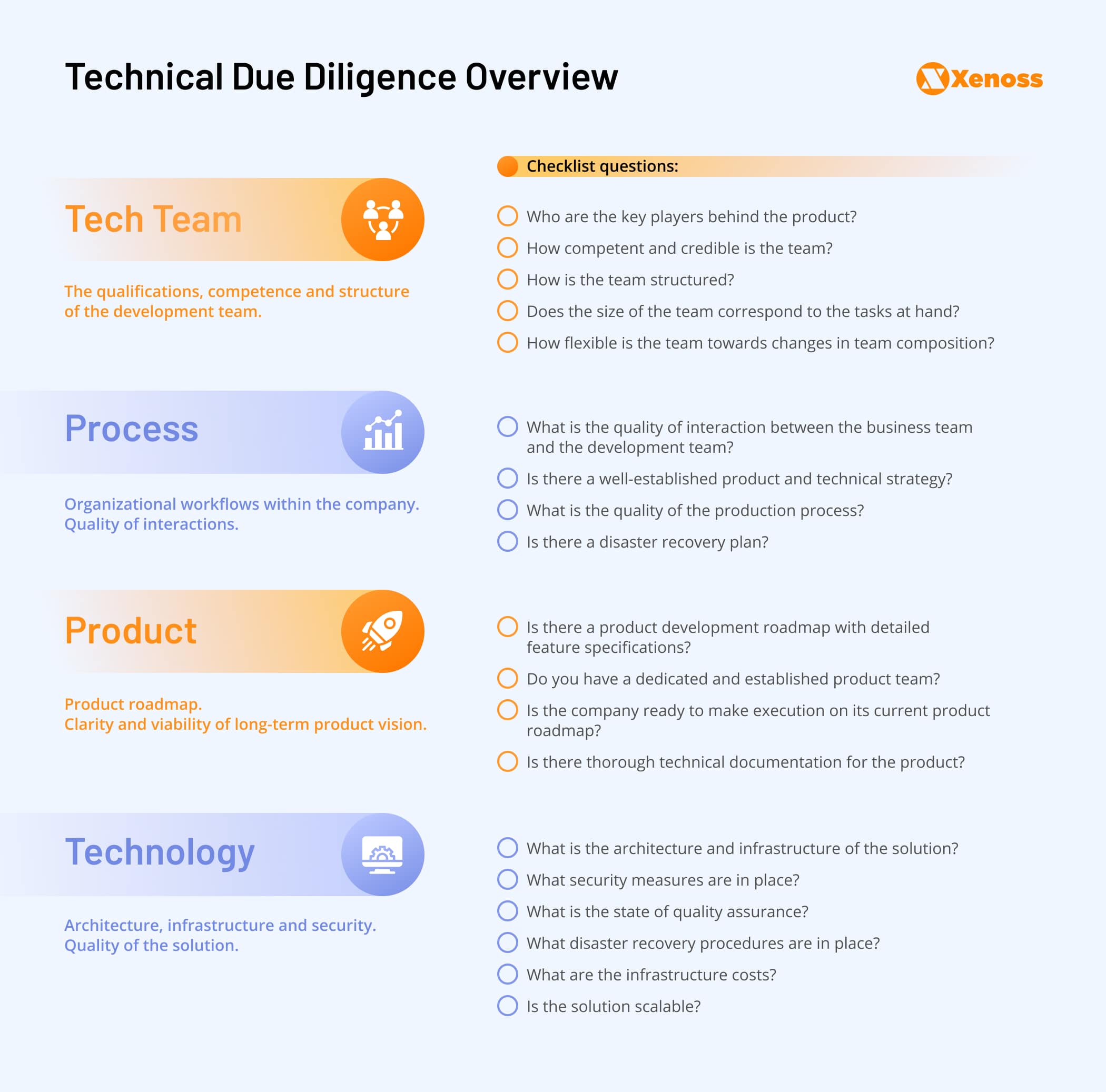
In the tech-heavy environment of 2026, technical due diligence has become increasingly rigorous. Investors no longer take "proprietary algorithms" at face value.
- Code Audit: Professional engineers may review the codebase to check for quality, scalability, and the use of open-source libraries that might have restrictive licensing.
- Security and Privacy: With the tightening of global data privacy laws (like GDPR and its successors), VCs investigate how a company collects, stores, and protects user data.
- Product Roadmap: Verification that the engineering team has the capacity to build the features promised in the pitch deck.
- Technical Debt: Assessment of how much "quick and dirty" coding was done in the early days that will eventually need to be rebuilt at a high cost.
5. Management and Team Due Diligence
Venture capital is, at its core, a bet on people. This pillar assesses whether the founders and their leadership team have the skills and integrity to execute the vision.
- Background Checks: Standard verification of educational and professional history.
- Reference Checks: Speaking with former colleagues, managers, and investors to understand the founders' leadership style and resilience under pressure.
- Founder-Market Fit: Does this specific team have a unique advantage or "unfair insight" into this specific market?
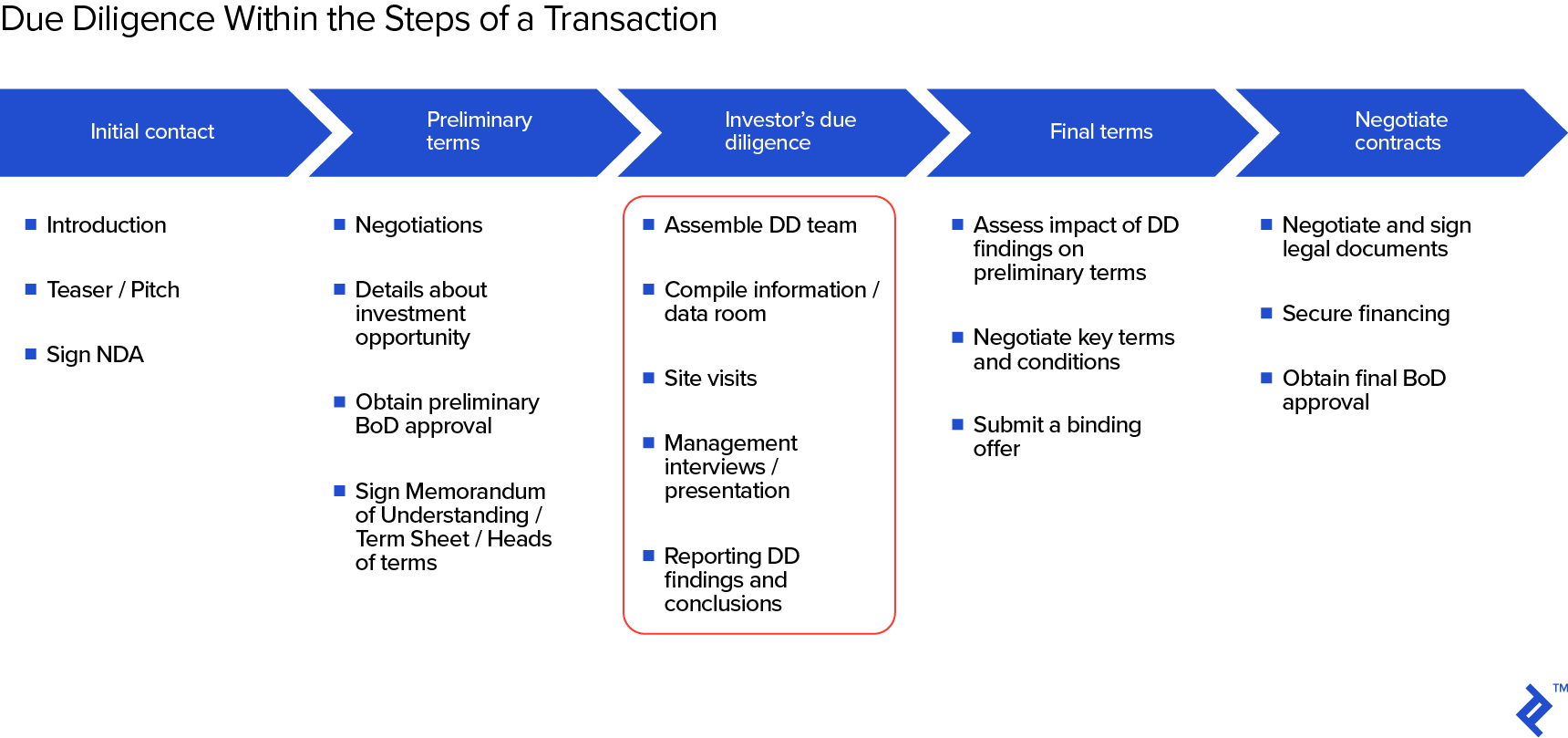
The Due Diligence Lifecycle: From Term Sheet to Close
The due diligence process does not happen overnight. In 2026, the average duration for a Series A or Series B due diligence process ranges from 30 to 90 days, depending on the complexity of the business and the organization of the founder's data.
Step 1: The Virtual Data Room (VDR)
Once a Term Sheet is signed, the founder is usually given access to a "Data Room" (an encrypted online repository). The founder must upload hundreds of documents, including contracts, financial records, and IP filings. The speed and organization of this step often signal to the VC how well the company is managed.
Step 2: Preliminary Investigation
The VC team begins a high-level review of the documents. If major red flags appear here—such as a messy cap table or a pending lawsuit that wasn't disclosed—the deal can fall apart immediately.
Step 3: Deep Dive and Expert Review
This is the most intensive phase. Third-party experts (lawyers, CPAs, and technical consultants) are brought in. They will ask the founders and department heads detailed questions. This stage often involves several "Q&A" cycles where the VC requests additional documentation or clarification.
Step 4: Investment Committee (IC) Final Approval
The deal lead (the partner at the VC firm) presents the findings of the due diligence to the firm’s Investment Committee. If the risks discovered are deemed manageable and the valuation is justified by the evidence, the IC gives the final "green light."
Step 5: Closing and Funding
Legal counsel drafts the final "Long-Form" documents (Stock Purchase Agreement, Voting Agreement, etc.). Once signed by all parties and all "conditions precedent" are met, the funds are wired to the startup’s bank account.
Comparison of Due Diligence Focus Areas by Funding Stage
The intensity and focus of due diligence change as a company matures. A Seed round looks very different from a Series C round.
| Feature | Seed Stage | Series A/B | Series C and Beyond |
|---|---|---|---|
| Primary Focus | Founder integrity and market potential. | Unit economics and product-market fit. | Financial audit and path to profitability/IPO. |
| Technical Review | High-level architectural review. | Detailed code audit and scalability test. | Security compliance and infrastructure cost-optimization. |
| Legal Scrutiny | Basic IP and incorporation check. | Extensive contract review and labor law compliance. | Global regulatory compliance and M&A readiness. |
| Duration | 2–4 weeks. | 4–8 weeks. | 8–12+ weeks. |
| External Costs | Minimal. | Moderate (Legal/Accounting fees). | High (Full forensic audits). |
Common Red Flags in VC Due Diligence
Founders often wonder what exactly causes a deal to collapse during the "home stretch." While every investor has different risk tolerances, certain "red flags" are almost universally problematic.
- Undisclosed Liabilities: Finding out about a "loan from a founder's uncle" or a pending lawsuit that wasn't mentioned in the pitch is a major trust-breaker.
- Inconsistent Metrics: If the numbers in the pitch deck don't match the raw data in the accounting software (e.g., Quickbooks or Xero), the investor will question the founder’s competence or honesty.
- Customer Concentration: If 80% of a startup’s revenue comes from a single customer, the risk of that customer leaving is often too high for a VC to stomach.
- IP Ownership Gaps: If a former contractor wrote the core code but never signed an IP assignment agreement, the startup technically might not own its product.
- Co-founder Conflict: Signs of tension between founders during the due diligence process often lead VCs to walk away, as team "implosion" is a leading cause of startup failure.
How Founders Should Prepare
Preparation is the best way to shorten the due diligence period and increase the likelihood of a successful close.
- Maintain a "Clean" House from Day One: Don't wait for a term sheet to organize your documents. Keep a running folder of all signed contracts, board minutes, and financial statements.
- Conduct a Self-Audit: Hire a lawyer or use an automated tool to review your cap table and IP filings before you even start fundraising.
- Be Transparent: If there is a problem (like a previous failed product or a minor legal dispute), disclose it early. Investors are much more forgiving of a known problem than a discovered one.
- Designate a Point Person: Due diligence is a full-time job. Usually, the CEO or CFO handles the bulk of the requests so the rest of the team can keep the business running.
Frequently Asked Questions
Does signing a term sheet mean the investment is guaranteed?
No. A term sheet is typically "non-binding" (except for clauses like confidentiality and exclusivity). It is essentially an expression of intent. The investment is only guaranteed once the final closing documents are signed and the due diligence process is completed to the investor's satisfaction.
How much does due diligence cost, and who pays for it?
The legal and administrative costs of due diligence are generally paid by the startup out of the investment proceeds. However, these fees are usually capped (e.g., $20k–$50k for a Series A) to prevent the VC’s lawyers from overcharging. If the deal fails to close due to a fault of the founder, the startup may still be responsible for certain "out-of-pocket" costs.
Can a VC back out of a deal after due diligence?
Yes. If the due diligence process reveals "material adverse changes" or significant discrepancies between the pitch and reality, the VC has every right to withdraw the offer or renegotiate the valuation.
What is "confirmatory" due diligence?
Confirmatory due diligence is the final stage where the investor verifies the last few remaining details, such as checking original physical documents or finishing a final background check. It usually happens after the bulk of the investigation is complete and the legal documents are being drafted.
Is due diligence different for "Impact" or "ESG" investing?
Yes. In 2026, for funds focused on Environmental, Social, and Governance (ESG) criteria, due diligence includes an extra pillar. Investors will audit the company’s carbon footprint, supply chain ethics, and diversity metrics to ensure they meet the specific mandates of the fund.
Practical Recommendation
If you are a founder preparing for a fundraise in 2026, start building your Virtual Data Room now. Use standardized naming conventions for your files and ensure that every agreement mentioned in your pitch is backed by a signed PDF. For investors, the goal of due diligence is not to find a "perfect" company—those don't exist—but to identify risks so they can be priced, managed, or mitigated. Success in venture capital requires a balance of optimism during the pitch and rigorous skepticism during the due diligence.
Image Gallery
Select an image to open it in a new tab.

Celine Dubois
Contemporary Living and Global Arts Columnist
