
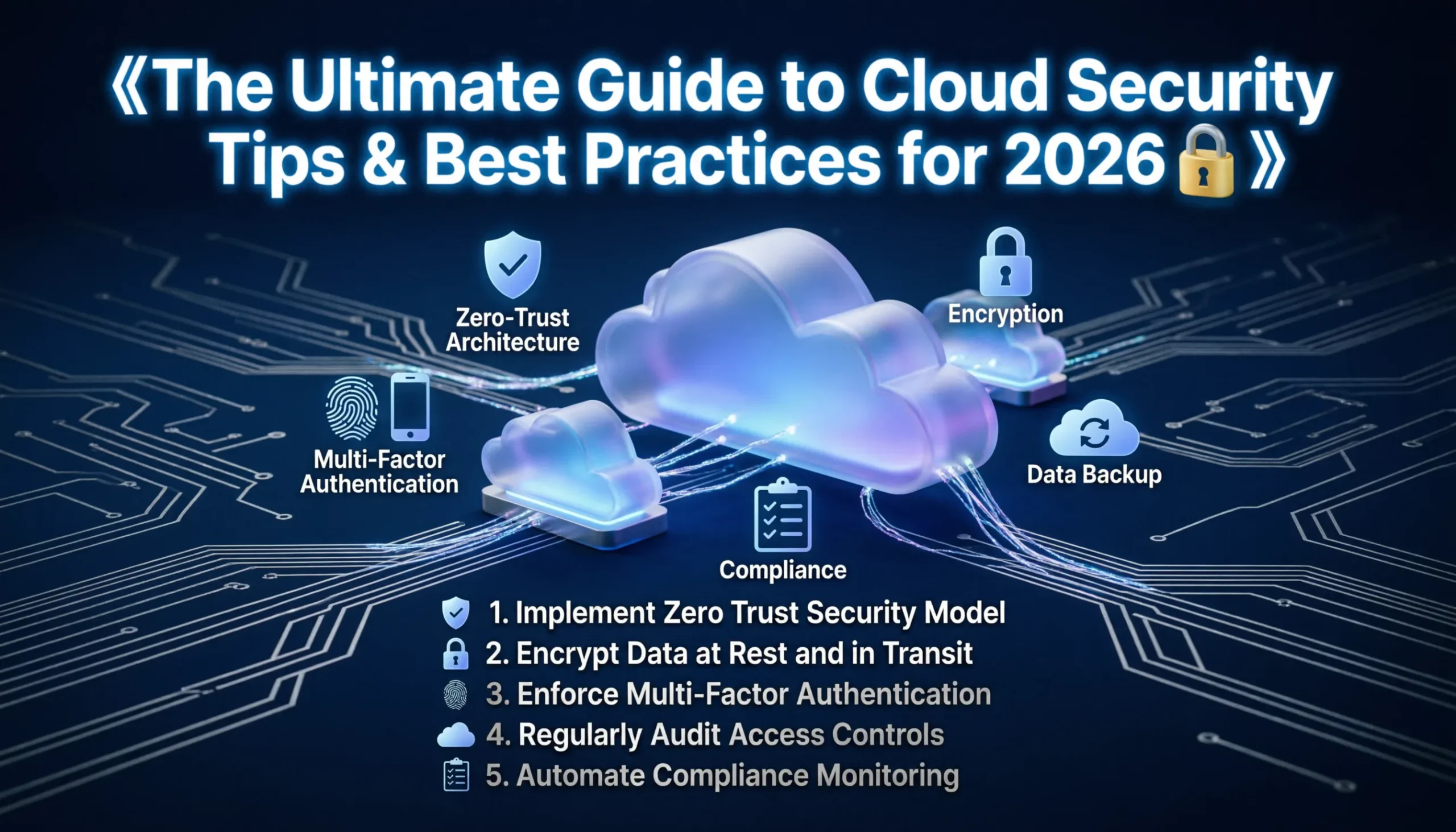
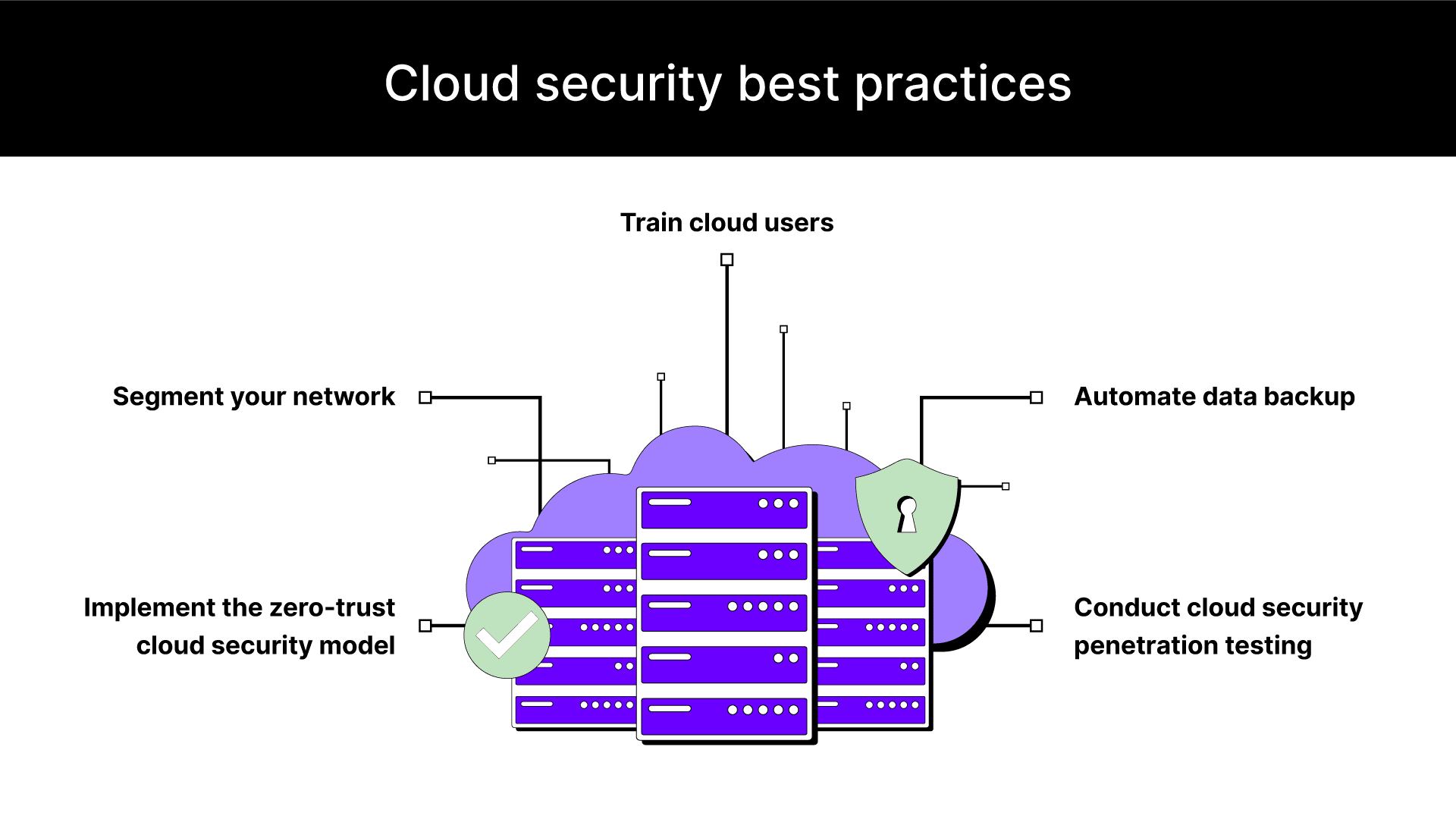
Effective cloud infrastructure security requires a multi-layered approach centered on the Zero Trust model, robust Identity and Access Management (IAM), and continuous automated monitoring. Organizations must prioritize data encryption, network micro-segmentation, and the integration of security into the DevOps pipeline to mitigate evolving AI-driven threats and maintain regulatory compliance.
The landscape of cloud computing has shifted from simple storage and compute to a complex web of serverless functions, containerized microservices, and multi-cloud ecosystems. In 2026, securing this infrastructure is no longer a peripheral IT task but a core business requirement. As cyber threats become more sophisticated, leveraging automated defenses and strict governance frameworks is essential for any resilient enterprise.
Strengthening Identity and Access Management (IAM)
Identity is the primary security perimeter in a cloud-native world. Traditional network boundaries have dissolved, making the management of human and machine identities the most critical line of defense.
The Principle of Least Privilege (PoLP)
The most fundamental rule of cloud security is the Principle of Least Privilege. This mandates that any user, program, or process must have only the minimum permissions necessary to perform its function. In 2026, organizations are moving beyond static Role-Based Access Control (RBAC) toward Attribute-Based Access Control (ABAC) and Just-in-Time (JIT) access. JIT access reduces the attack surface by granting elevated permissions only when needed and for a limited duration, effectively eliminating "standing privileges" that hackers often exploit.
Universal Multi-Factor Authentication (MFA)
MFA is no longer optional. However, the type of MFA matters. Legacy SMS-based codes are vulnerable to SIM swapping and phishing. Best practices now dictate the use of FIDO2-compliant hardware security keys or biometric authentication. For automated service-to-service communication, the use of short-lived tokens and Managed Identities (such as AWS IAM Roles or Azure Managed Identities) ensures that hard-coded credentials never exist in source code or configuration files.
Managing Machine Identities
With the explosion of microservices, machine identities (service accounts, API keys, and certificates) now outnumber human users. These identities must be rotated frequently and monitored for anomalous behavior. Automated secret management tools like HashiCorp Vault or AWS Secrets Manager are essential for injecting credentials into applications securely at runtime, ensuring that sensitive data is never stored in plain text within the infrastructure.
Implementing Zero Trust Network Architecture
The "trust but verify" model is obsolete. In 2026, cloud security is defined by Zero Trust Architecture (ZTA), which assumes that the network is already compromised and requires strict verification for every access request, regardless of its origin.
Micro-segmentation and VPC Security
Traditional "flat" networks allow an attacker who breaches one area to move laterally across the entire infrastructure. Micro-segmentation breaks the network into small, isolated zones. By using Virtual Private Clouds (VPCs) and granular Security Groups, administrators can restrict traffic between workloads to only the specific ports and protocols required for operation. This "east-west" traffic filtering is vital for containing potential breaches.
Secure Access Service Edge (SASE)
As workforces remain distributed, SASE has become a cornerstone of cloud network security. SASE combines WAN capabilities with cloud-native security functions like Secure Web Gateways (SWG) and Cloud Access Security Brokers (CASB). This ensures that security policies follow the user and the device, providing a consistent security posture whether the user is in a corporate office or a remote location.
Private Links and API Security
Exposing management consoles or databases to the public internet is a high-risk practice. Organizations should utilize private connectivity services—such as AWS PrivateLink or Azure Private Link—to ensure that traffic between the cloud provider and the on-premises data center remains on the provider's private backbone. Furthermore, APIs, which serve as the glue for cloud services, must be protected with rate limiting, encryption, and strict schema validation to prevent injection attacks and data scraping.
Data Protection and Encryption Strategies
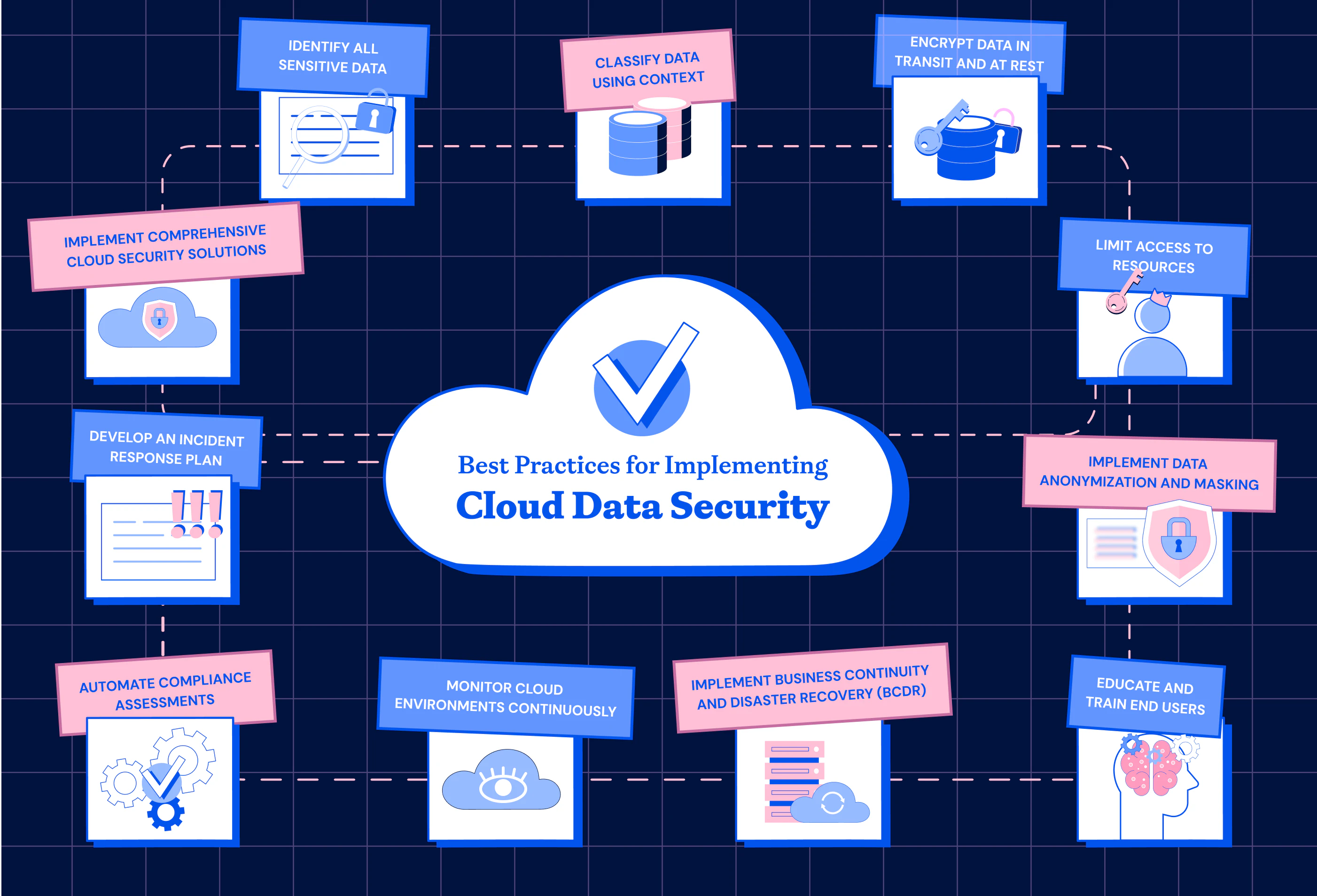
Data is the ultimate target of most cloud-based attacks. Protecting it requires a comprehensive strategy covering data at rest, in transit, and even in use.
Encryption Everywhere
Encryption is the last line of defense. Best practices require Advanced Encryption Standard (AES-256) for data at rest and Transport Layer Security (TLS 1.3) for data in transit. In 2026, the focus has shifted toward Client-Side Encryption, where data is encrypted before it even reaches the cloud provider, ensuring that even a compromised provider cannot access the raw data.
Sophisticated Key Management
The security of encrypted data is only as good as the security of the keys. Organizations should use a specialized Key Management Service (KMS) or a Cloud Hardware Security Module (HSM) for generating and storing cryptographic keys. Implementing a "Bring Your Own Key" (BYOK) or "Hold Your Own Key" (HYOK) model allows enterprises to maintain full control over their encryption keys, facilitating easier compliance with regional data sovereignty laws like GDPR or the EU's Digital Operational Resilience Act (DORA).
Data Discovery and Classification
You cannot protect what you do not know exists. Automated data discovery tools use machine learning to scan cloud storage (like Amazon S3 buckets or Google Cloud Storage) to identify sensitive information such as Personally Identifiable Information (PII) or financial records. Once discovered, data should be automatically classified and tagged, triggering specific security policies based on its sensitivity level.
Integrating Security into DevSecOps
In a cloud-native environment, infrastructure is defined by code. This shift allows security to be "shifted left," integrating it directly into the development lifecycle rather than treating it as a final audit step.
Infrastructure as Code (IaC) Scanning
Using tools like Terraform, CloudFormation, or Pulumi allows for consistent infrastructure deployment. However, misconfigured IaC templates are a leading cause of cloud breaches. Security teams must implement automated scanning of IaC files during the Pull Request (PR) phase. These scans check for common vulnerabilities, such as publicly accessible S3 buckets or overly permissive security groups, before the resources are ever provisioned.
Container and Image Security
As organizations rely more on Kubernetes and Docker, container security is paramount. Best practices include:
- Minimal Base Images: Use "distroless" or minimal images to reduce the attack surface.
- Vulnerability Scanning: Automatically scan container images in the registry for known CVEs.
- Runtime Protection: Monitor running containers for suspicious syscalls or unauthorized file access using tools like Falco.
CI/CD Pipeline Integrity
The delivery pipeline itself is a high-value target. Securing the CI/CD environment involves strictly controlling access to build servers, signing code commits, and ensuring that build artifacts are stored in immutable repositories. Automated "security gates" should be configured to fail a build if critical vulnerabilities are detected during the testing phase.
Continuous Monitoring and Threat Detection
Cloud environments are dynamic; resources are created and destroyed in seconds. Traditional periodic audits are insufficient. Continuous visibility is required to detect "configuration drift" and active threats.
Cloud Security Posture Management (CSPM)
CSPM tools provide a real-time view of the cloud environment, comparing the current configuration against industry benchmarks like those from the Center for Internet Security (CIS). These tools automatically identify and, in some cases, remediate misconfigurations. For example, if an administrator accidentally opens a database port to the world, a CSPM tool can immediately alert the security team or automatically revert the change.
AI-Enhanced Observability and Logging
In 2026, the volume of logs generated by cloud services is overwhelming for human analysts. Organizations utilize AI-driven Security Information and Event Management (SIEM) and Security Orchestration, Automation, and Response (SOAR) platforms. These systems ingest logs from VPC flows, IAM audits, and application traces to identify patterns indicative of an attack, such as credential stuffing or data exfiltration, and trigger automated incident response playbooks.
Table: Shared Responsibility Model (2026 Standards)
The Shared Responsibility Model defines which security tasks are handled by the Cloud Service Provider (CSP) and which are the responsibility of the customer.
| Component | Provider Responsibility (e.g., AWS, Azure, GCP) | Customer Responsibility (The Enterprise) |
|---|---|---|
| Physical Infrastructure | Data center security, hardware maintenance, power. | N/A |
| Network Layer | Global infrastructure, edge locations. | VPC configuration, firewalls, micro-segmentation. |
| Hypervisor/Host OS | Patching the underlying virtualization layer. | N/A |
| Guest OS / Applications | N/A | Patching, hardening, and configuration. |
| Identity & Access | Providing the IAM framework and APIs. | Defining roles, MFA enforcement, user lifecycle. |
| Data Security | Storage durability and hardware encryption. | Data classification, encryption keys (KMS), ACLs. |
| Compliance | Compliance of the cloud (ISO, SOC 2). | Compliance in the cloud (HIPAA, PCI-DSS). |
Resilience and Disaster Recovery
Security is not just about prevention; it is also about availability and recovery. A resilient cloud infrastructure must withstand both malicious attacks and accidental failures.
Immutable Backups
Ransomware attackers often target backup systems first to ensure their victims have no choice but to pay. By using immutable storage—where data cannot be changed or deleted for a set period—organizations can ensure they have a clean recovery point. These backups should be stored in a separate, isolated account or even a different cloud provider to prevent a single point of failure.
Automated Disaster Recovery (DR)
In the cloud, DR should be automated and tested regularly. Using "Infrastructure as Code," organizations can spin up an entire mirrored environment in a different geographic region within minutes. The goal is to achieve a low Recovery Time Objective (RTO) and Recovery Point Objective (RPO), ensuring business continuity even during a major regional outage.
Frequently Asked Questions
What is the most common cause of cloud security breaches?
Misconfiguration remains the leading cause of cloud breaches. This typically involves leaving storage buckets open to the public, using default passwords, or granting excessive permissions to users and applications. Automation and CSPM tools are the best defenses against these human errors.
How does the Zero Trust model apply to cloud infrastructure?
Zero Trust assumes no user or device is inherently trustworthy, even if they are already inside the network perimeter. It requires continuous verification of identity, device health, and context for every single access request to cloud resources.
Is multi-cloud more secure than using a single provider?
Multi-cloud can increase security by avoiding vendor lock-in and providing redundancy, but it also increases complexity. Managing consistent security policies across different providers (e.g., AWS and Azure) requires specialized cross-platform tools to prevent security gaps.
What role does AI play in cloud security in 2026?
AI is used for predictive threat modeling, identifying anomalous behavior in massive datasets, and automating incident response. However, it is a double-edged sword, as attackers also use AI to craft more convincing phishing attempts and find vulnerabilities in code faster.
How often should we perform cloud security audits?
In 2026, manual audits should be replaced or supplemented by continuous automated monitoring. Real-time compliance checks should run 24/7, with comprehensive third-party audits performed at least annually or whenever significant changes are made to the architecture.
Final Recommendation
To secure cloud infrastructure in 2026, enterprises must transition from a reactive security posture to a proactive, automated one. The first step is to conduct a comprehensive gap analysis against the NIST Cybersecurity Framework 2.0 or the CIS Cloud Benchmarks. Prioritize the implementation of Zero Trust IAM and automated IaC scanning. By treating security as an integral part of the software development lifecycle rather than an afterthought, organizations can innovate rapidly while maintaining a robust defense against modern cyber threats.
For further guidance, consult the official security documentation provided by your specific cloud vendor and stay updated with the Cybersecurity & Infrastructure Security Agency (CISA) cloud security advisories.
Image Gallery
Select an image to open it in a new tab.



Zara El-Hashem
Sociocultural Dynamics and Academics Writer
