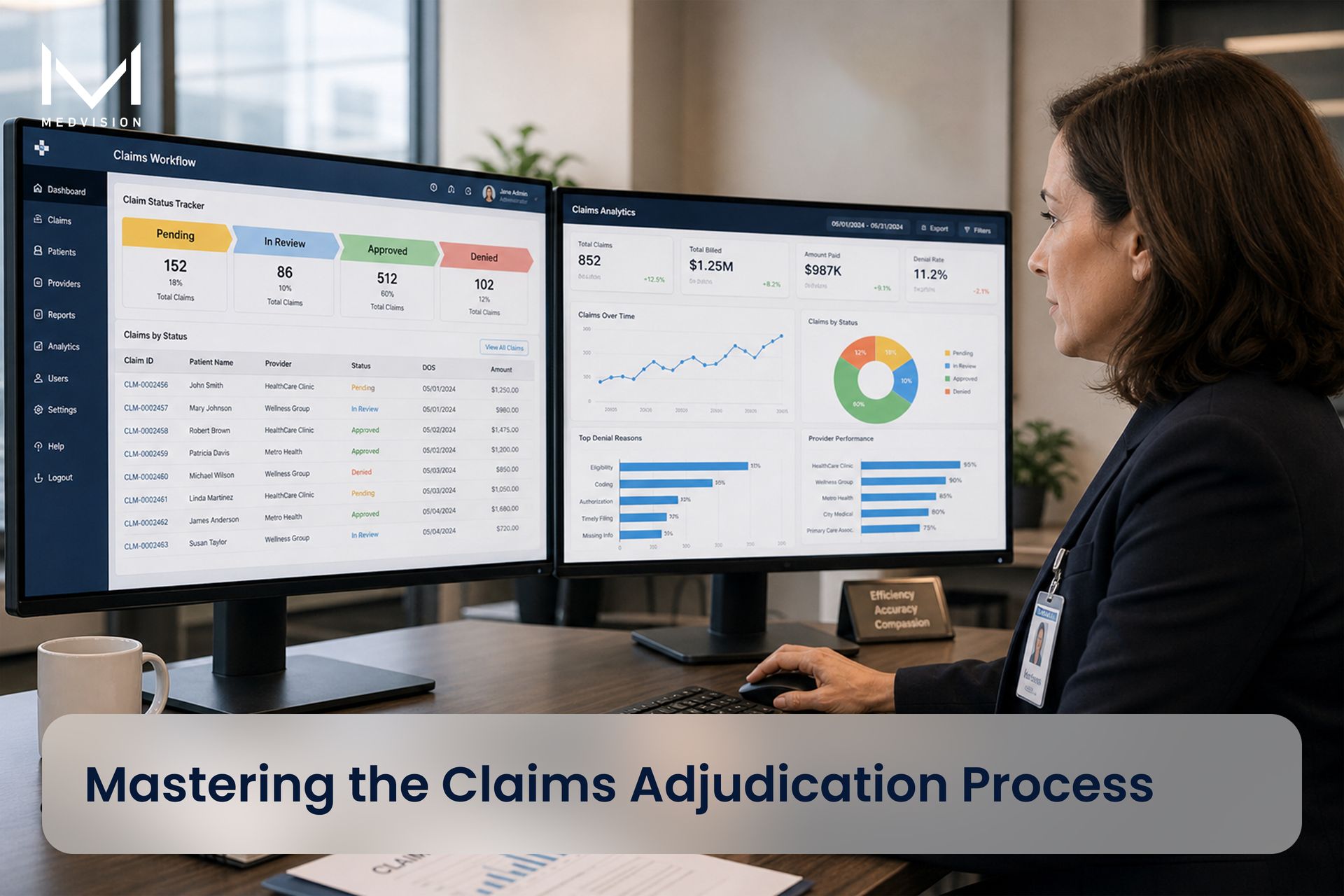
Navigating the adjudication workers compensation claim process involves a formal legal examination where an administrative law judge or board reviews disputed evidence, hears testimonies from medical and vocational experts, and issues a binding decision to determine benefit eligibility after a workplace injury claim is denied or contested.
Introduction to Workers' Compensation Adjudication
When an employee suffers a workplace injury or contracts an occupational disease, the expected path involves reporting the incident, receiving medical care, and collecting wage replacement benefits through the employer's insurance carrier. However, systemic complications frequently arise. Insurers may deny liability, dispute the severity of the medical condition, argue that the injury did not arise out of and in the course of employment, or terminate ongoing benefits prematurely.
When informal negotiations, mediation, or preliminary administrative reviews fail to resolve these disagreements, the claim enters the formal adjudication phase. Adjudication is a legal, quasi-judicial proceeding designed to resolve disputes between injured workers and insurance companies (or self-insured employers). Understanding this intricate legal landscape is critical for claimants, as procedural missteps, missed deadlines, or a lack of competent medical evidence can result in the permanent forfeiture of rightful benefits.
This guide provides a comprehensive examination of the workers' compensation adjudication process, breaking down the preliminary triggers, the mechanics of filing a formal claim petition, discovery protocols, pre-hearing conferences, administrative hearings, evidentiary standards, and potential post-decision appeals.
What Triggers the Adjudication Process?
Adjudication does not happen automatically for every workplace injury. The vast majority of workers' compensation claims are accepted, processed, and paid without formal legal intervention. Adjudication is triggered specifically by a breakdown in the administrative pipeline, usually manifested through an official denial or a contested modification of benefits.
Common Triggers for Adjudication
- Notice of Claim Denial: The insurance carrier issues a formal denial notice (often called a Notice of Compensation Denial or similar state-specific form) contesting liability for the injury entirely.
- Disputed Medical Treatment: The insurer approves initial emergency care but denies authorization for specialized diagnostic tests, surgical procedures, or long-term physical therapy prescribed by the authorized treating physician.
- Termination or Modification of Benefits: The insurance company unilaterally stops weekly wage-loss benefits, arguing that the worker has reached Maximum Medical Improvement (MMI) or is capable of returning to modified duty, while the worker disagrees.
- Disputed Average Weekly Wage (AWW): The insurer calculates the wage-loss benefit rate using an incorrect formula or omitting overtime, tips, or secondary employment, prompting a formal wage dispute.
- Unpaid Permanent Partial Disability (PPD): The insurer refuses to issue impairment ratings or scheduled loss awards after the worker concludes active medical treatment.
The Role of State Administrative Agencies
Workers' compensation is governed strictly by state law rather than federal statute (with distinct exceptions for federal employees, maritime workers, and railroad personnel). Consequently, the agency overseeing the adjudication process varies by jurisdiction—operating under names such as the Division of Workers' Compensation (DWC), Workers' Compensation Board (WCB), or Industrial Commission. These state bodies maintain administrative law judges (ALJs) or hearing officers who possess the statutory authority to subpoena witnesses, review medical records, and issue enforceable legal orders.
Step-by-Step Breakdown of the Adjudication Pipeline
While specific procedural rules vary significantly by state, the structural lifecycle of a contested workers' compensation adjudication follows a predictable legal trajectory.
- Dispute / Claim Denial
- Filing Formal Application / Claim Petition
- Pre-Hearing Conference / Mediation
- Discovery & Medical Evaluations
- Formal Administrative Hearing
- Judge's Decision & Award / Denial
- Appeals Board Review
1. Filing the Formal Claim Petition or Application
To initiate adjudication, the injured worker (or their legal counsel) must file a formal application for a hearing or a claim petition with the state workers' compensation agency. This document must clearly state:
- The date, time, and specific location of the workplace accident.
- A detailed description of how the injury occurred.
- The specific body parts injured or occupational illnesses contracted.
- The types of benefits sought (temporary total disability, permanent partial disability, medical reimbursement, or vocational rehabilitation).
- Copies of relevant medical reports supporting the causal relationship between the employment and the pathology.
2. Service and the Insurance Carrier’s Response
Once the petition is filed and accepted by the administrative agency, formal notice (service) is delivered to the employer and its insurance carrier. The insurer is legally required to file an answer within a specified statutory window (typically 20 to 30 days). In this answer, the defense counsel outlines their specific legal and factual defenses, such as intoxication at the time of the injury, horseplay, willful misconduct, failure to provide timely notice of injury, or pre-existing degenerative conditions.
3. Pre-Hearing Conferences and Mediation
Before scheduling a trial-style evidentiary hearing, many jurisdictions mandate a pre-hearing conference or informal mediation session.
- Purpose: To narrow the issues in dispute, encourage settlement, and establish scheduling orders for discovery.
- Participants: The injured worker, worker's counsel (if retained), defense attorney, insurance adjuster, and an administrative law judge or mediator.
- Outcome: If the parties reach a compromise, a settlement agreement (such as a Compromise and Release or Clincher Agreement) is drafted for judicial approval. If no agreement is reached, the case proceeds to formal litigation.
The Discovery Phase: Evidence and Medical Examinations
The discovery phase is where both the claimant and the defense build their respective cases. Because workers' compensation adjudication relies heavily on objective medical proof, this stage is dominated by expert medical evidence.
Independent Medical Examinations (IMEs)
Insurance carriers frequently exercise their statutory right to require the injured worker to undergo an Independent Medical Examination (IME)—often referred to as an employer-medical examination.
- The Examiner: A physician chosen and paid by the insurance company who examines the worker and reviews medical files.
- The Objective: The IME physician typically evaluates whether the injury is work-related, whether treatment is reasonable and necessary, whether the worker has reached MMI, and what permanent impairment rating, if any, applies.
- Evidentiary Weight: While termed "independent," IME physicians are retained by the defense, making their reports a frequent point of intense legal challenge during adjudication.
Depositions and Subpoenas
Either party may depose witnesses under oath, including the injured worker, co-workers, and treating physicians. Medical depositions are particularly vital; because doctors often have busy clinical schedules and cannot easily attend full-day administrative hearings, their deposition testimony is video-recorded or transcribed and submitted directly into the evidentiary record.
Comparison of Dispute Resolution Stages
To understand where adjudication fits within the broader spectrum of dispute resolution, the following table compares informal resolution, formal adjudication, and appellate review.
| Dispute Phase | Primary Forum | Key Decision Maker | Typical Duration | Evidentiary Standard |
|---|---|---|---|---|
| Informal Negotiation | Insurance Office / Board Intake | Adjuster & Claimant / Counsel | Weeks to Months | Medical records & incident reports |
| Formal Adjudication | State Administrative Tribunal | Administrative Law Judge (ALJ) | 3 to 12+ months | Sworn testimony, IMEs, depositions |
| Appellate Review | Workers' Compensation Appeals Board | Panel of Commissioners | 6 to 18 months | Legal briefs, transcripts, lower record |
The Formal Administrative Hearing
If discovery closes without a settlement, the case proceeds to a formal administrative hearing. While less formal than a criminal trial or civil jury trial, an administrative hearing is a structured legal proceeding governed by administrative rules of evidence and procedure.
Mechanics of the Hearing
- Opening Statements: Attorneys or representatives briefly outline what the evidence will show.
- Testimony: The injured worker takes the witness stand, swears an oath, and testifies regarding the mechanism of injury, daily pain levels, physical limitations, and work history. Cross-examination by defense counsel follows.
- Witness Testimony: Co-workers, family members, or vocational experts may testify regarding observable physical changes or employment opportunities.
- Submission of Exhibits: Medical records, diagnostic imaging reports, wage statements, and deposition transcripts are formally entered into evidence.
- Closing Arguments: Both sides summarize their legal positions and argue why the evidence supports their respective claims.
Burden of Proof
In workers' compensation adjudication, the burden of proof rests squarely on the claimant (the injured worker). The claimant must establish by a preponderance of the evidence—meaning it is more likely true than not—that:
- An employer-employee relationship existed at the time of injury.
- The injury occurred in the course of and arose out of employment.
- Timely notice of the injury was given to the employer pursuant to statutory guidelines.
- The medical treatment or disability claimed is directly causally related to the workplace accident.
The Judge's Decision and the Appeal Process
Following the conclusion of the hearing, the administrative law judge reviews the hearing transcripts and exhibits. The judge then issues a written decision, known variously as an Opinion and Award, Findings of Fact and Conclusions of Law, or an Order.
The Contents of the Decision
The judge's ruling must contain detailed findings of fact supported by substantial evidence in the record. It will explicitly state whether the claim is accepted or denied, which benefits are awarded, the precise calculation of wage-loss rates, and the apportionment of medical expenses or attorney fees.
Exercising Appellate Rights
If either party disagrees with the administrative law judge's decision, the legal process moves to the appellate level.
- Internal Board Review: The losing party typically files an appeal with the state's Workers' Compensation Appeals Board within a strict statutory timeframe (often 20 to 30 days from the date of the decision). A panel of commissioners reviews the record established below; generally, no new evidence or testimony is permitted at this stage.
- State Court Appeals: If the Appeals Board affirms the adverse ruling, the party may seek judicial review by filing an appeal with the state's intermediate appellate court or supreme court, depending on the jurisdiction. Judicial review is highly deferential to the administrative judge's factual determinations; courts will only overturn a ruling if there is a clear error of law, an abuse of discretion, or a complete lack of substantial evidence to support the finding.
Common Challenges and Strategic Pitfalls in Adjudication
Navigating the workers' compensation adjudication process presents significant hurdles for unrepresented claimants and even seasoned practitioners. Avoiding common missteps preserves the integrity of the claim.
1. Inadequate Medical Documentation
The most frequent cause of claim denial during adjudication is a lack of clear medical causation in the records. Treating physicians often document symptoms and prescribe treatments but fail to explicitly state the magic legal phrase or medical opinion that the condition is "more likely than not caused by the workplace incident of [Date]." Without this affirmative medical nexus, the judge cannot legally rule in the worker's favor.
2. Missing Statutory Deadlines (Statutes of Limitations)
Workers' compensation laws enforce strict deadlines for reporting injuries, filing formal claims, and appealing adverse decisions. Missing a deadline by even a single day can result in a complete statutory bar to benefits, regardless of how severe the injury or how clear the employer's liability.
3. Inconsistent Statements
Insurers and defense attorneys scrutinize every statement made by the claimant. Inconsistencies between what the worker told the emergency room physician, what was written on the initial accident report, what the IME doctor recorded, and what is stated under oath during the hearing can severely damage the claimant's credibility before the administrative law judge.
Frequently Asked Questions
Do I need a lawyer for the workers' compensation adjudication process?
While injured workers are legally permitted to represent themselves (pro se) in most states, the adjudication process involves complex administrative rules, formal rules of evidence, and aggressive defense counsel representing the insurance carrier. Retaining an attorney who specializes in workers' compensation law significantly improves the likelihood of properly gathering medical evidence, conducting depositions, and presenting a legally sound case.
How long does the adjudication process take from filing to final decision?
The timeline varies widely depending on state backlogs, the complexity of the medical issues, and whether depositions are required. Generally, from the date a formal hearing application is filed to the issuance of an administrative judge's decision takes anywhere from three months to over a year. If appeals are filed, the timeline extends significantly.
Can I still receive medical treatment while my claim is in adjudication?
If the insurance carrier has denied the claim entirely, they typically will not pay for medical treatment while the adjudication is pending. Injured workers often have to rely on group health insurance, Medicaid, or care rendered under a "letter of protection" by a physician willing to wait for payment until the claim is resolved or settled.
What is a Compromise and Release agreement?
A Compromise and Release (C&R)—sometimes called a Clincher or Lump Sum Settlement—is a final contract between the injured worker and the insurance carrier where the worker agrees to close their claim permanently in exchange for a one-time cash payment. Once approved by an administrative law judge, the worker typically gives up all rights to future medical care and weekly benefits for that injury.
What happens if the insurance carrier loses the adjudication hearing?
If the administrative law judge rules in favor of the injured worker, the insurance carrier is legally mandated to comply with the order. This includes paying retroactive temporary disability benefits, authorizing prescribed medical treatments, and potentially covering statutory interest or penalties for unreasonable delays, subject to the carrier's right to appeal.
Next Actions and Strategic Guidance
For claimants entering the adjudication workers compensation claim process, immediate and organized action is essential:
- Secure Your File: Obtain a complete, unredacted copy of your administrative case file, including all medical records, insurer correspondence, and filed petitions.
- Consult Qualified Counsel: Schedule a consultation with a certified workers' compensation specialist or experienced claimant attorney in your specific state jurisdiction to evaluate the strength of your medical causation evidence.
- Maintain Treatment Consistency: Continue attending all authorized medical appointments and faithfully follow your physician’s therapeutic regimens to demonstrate active cooperation and genuine medical need.
- Observe Deadlines: Track all notice periods, discovery responses, and hearing dates meticulously to prevent procedural dismissals.
Image Gallery
Select an image to open it in a new tab.
Mateo Castillo
Decentralized Finance and E-Payments Strategist
