
The turning point battles of WW2 were critical junctures where the momentum shifted from Axis expansion to Allied ascendancy. Through the strategic victories at Midway, Stalingrad, and El Alamein, the Allied powers systematically dismantled the logistical, industrial, and territorial advantages previously held by the German and Japanese empires, ultimately dictating the outcome of the global conflict.
Understanding the Concept of Turning Points in Global Conflict
In military history, a "turning point" is not merely a single successful engagement; it is a point of divergence where the strategic initiative transitions from one belligerent to another. For the Axis powers—specifically Germany, Japan, and Italy—the early years of World War II were defined by rapid, coordinated offensives that relied on speed and tactical surprise. However, the turning point battles of WW2 represented a fundamental failure of these original doctrines when faced with prolonged attrition, strained supply lines, and the industrial mobilization of the Allied nations.
These battles were characterized by a transition from mobile, offensive warfare to static, defensive, and eventually counter-offensive operations. By examining these specific events, we see that the war was not just won on the battlefield through tactical brilliance, but through the ability of the Allied command to identify, exploit, and sustain advantages in theater-specific logistics and human resources.
The Pacific Theater: The Battle of Midway (1942)
The Battle of Midway serves as the quintessential example of a naval turning point. In June 1942, the Imperial Japanese Navy sought to draw the United States Pacific Fleet into a decisive confrontation to eliminate the American aircraft carrier presence in the Pacific.
Strategic Context and Intelligence
The success of the U.S. forces at Midway was predicated on the breaking of the Japanese naval code, JN-25. Cryptanalysts at Station HYPO in Hawaii, led by Joseph Rochefort, correctly identified the target ("AF") as Midway Atoll. This intelligence allowed Admiral Chester Nimitz to position his carriers, the Enterprise, Hornet, and Yorktown, in an ambush position.
The Impact on Momentum
Before Midway, the Japanese held unchallenged control over the central Pacific. Following the loss of four fleet carriers—the Akagi, Kaga, Sōryū, and Hiryū—Japan lost the ability to conduct large-scale power projection. The battle effectively ended Japan’s offensive capabilities, forcing them into a defensive posture that would continue until the end of the war.

The Eastern Front: The Battle of Stalingrad (1942–1943)
If Midway stopped the Japanese expansion, the Battle of Stalingrad shattered the myth of the Wehrmacht's invincibility. It remains the bloodiest battle in human history and stands as the definitive turning point on the European continent.
The Failure of Operation Blue
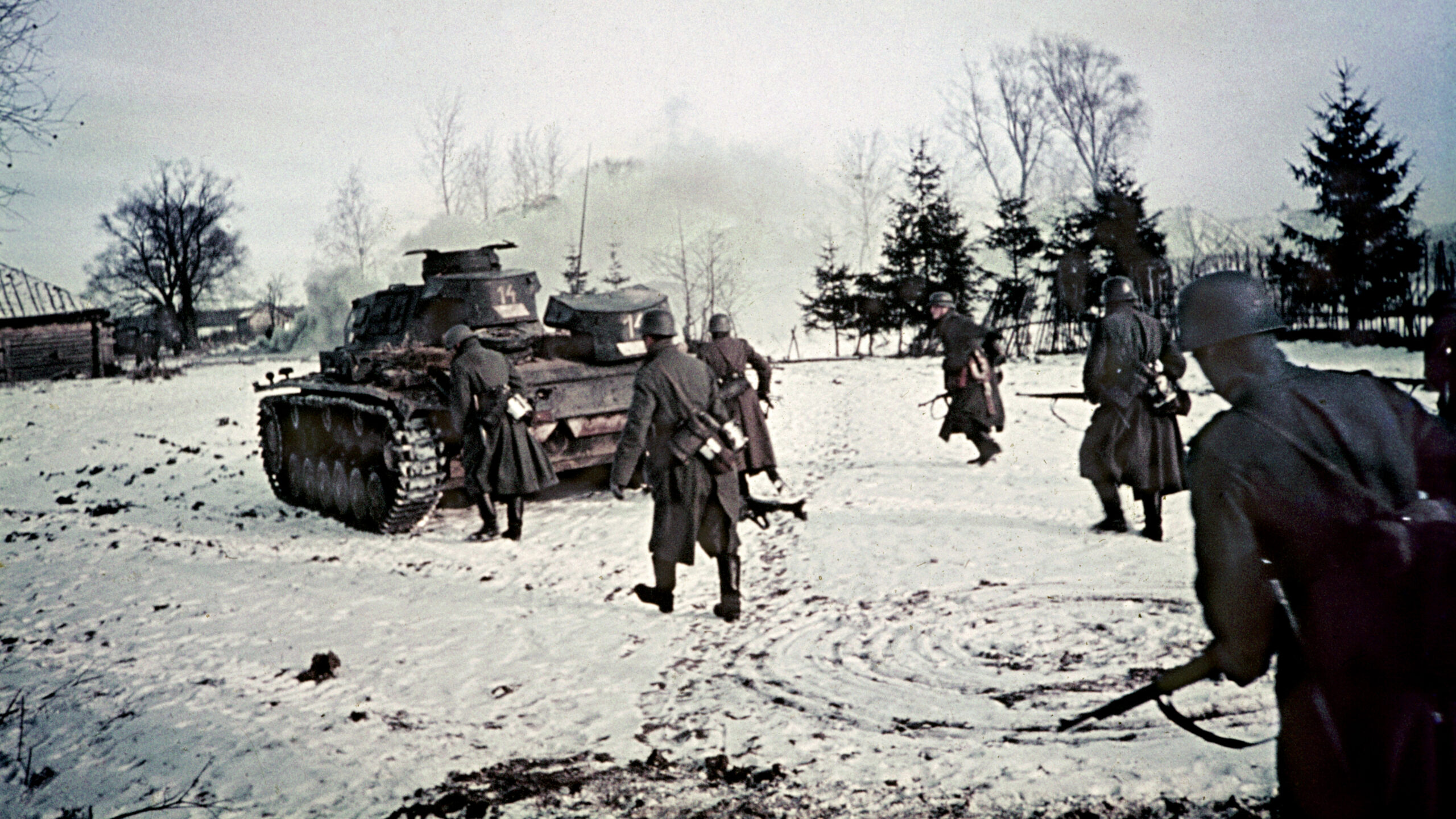
German forces launched "Case Blue" in the summer of 1942, aiming to seize the oil fields of the Caucasus and secure the Volga River. By fixating on the symbolic city of Stalingrad, Hitler redirected resources that were needed for a broader strategic reach. The German 6th Army, under Friedrich Paulus, became bogged down in Rattenkrieg (rat war)—urban attrition that negated the advantages of the Blitzkrieg armored warfare doctrine.
The Collapse of the Axis Flanks
The Soviet counter-offensive, Operation Uranus, targeted the weaker Romanian and Hungarian armies protecting the German flanks. By November 1942, the Soviets had successfully encircled the 6th Army. The subsequent failure of the Luftwaffe to provide adequate aerial supply meant that German forces were systematically neutralized by hunger, cold, and relentless Soviet artillery. The loss of an entire field army stripped Germany of the strategic reserves required to regain the initiative in the East.
The North African Campaign: The Second Battle of El Alamein (1942)
The conflict in North Africa was defined by a struggle for the Suez Canal and the oil supplies of the Middle East. While often overshadowed by the larger scale of the Eastern Front, El Alamein was a vital component in preventing the collapse of the British Mediterranean strategy.
Logistical Supremacy
The victory by General Bernard Montgomery’s Eighth Army against Erwin Rommel’s Panzer Army Africa was a triumph of logistics over tactical improvisation. By October 1942, the Allies possessed a massive advantage in tanks, artillery, and, most importantly, fuel.
Global Implications
The expulsion of Axis forces from Egypt and Libya, coupled with the concurrent Operation Torch landings in French North Africa, squeezed the Axis powers. This opened the path for the Allied invasion of Italy, forcing the German military to divert troops to the "soft underbelly of Europe" and preventing the concentration of forces in France during the pivotal years that followed.
Comparative Overview of Turning Point Battles
The following table summarizes the strategic impacts of these three pivotal engagements, illustrating how they changed the trajectory of the war.
| Battle | Date (1942) | Primary Adversaries | Strategic Result |
|---|---|---|---|
| Midway | June | USA vs. Japan | Ended Japanese naval expansion in the Pacific. |
| El Alamein | Oct–Nov | UK vs. Germany/Italy | Secured Suez; forced Axis retreat from N. Africa. |
| Stalingrad | Aug–Feb | USSR vs. Germany | Destroyed 6th Army; initiated permanent Axis retreat. |
The Broader Context: Industrial and Logistical Capacity
The success of these turning point battles was heavily dependent on the "Home Front." A critical factor that allowed the Allies to capitalize on these victories was the massive disparity in industrial output.
- The Arsenal of Democracy: By 1943, the United States was producing more aircraft, ships, and tanks than all Axis powers combined.
- Soviet Resilience: Despite the loss of major industrial hubs in the West, the Soviet Union successfully relocated factories to the Ural Mountains, maintaining a constant flow of T-34 tanks and artillery to the front lines.
- Axis Stagnation: Germany and Japan faced acute raw material shortages and were unable to replace the material losses sustained in 1942 and 1943 at a sustainable rate.
Frequently Asked Questions
Why is 1942 considered the most critical year of the war?
1942 was the year when the Axis reached their maximum geographical extent. The battles at Midway, Stalingrad, and El Alamein all occurred within months of each other, signaling the moment where the Axis reached their "overstretch" limit and the Allied industrial machine fully engaged, shifting the balance of power permanently.
Were there other turning points in the war?
While Midway, Stalingrad, and El Alamein are the primary turning points, other events played supporting roles. The Allied victory in the Battle of the Atlantic, which secured the supply lines to Britain, and the subsequent success of the D-Day landings in 1944 were essential for the ultimate defeat of Nazi Germany, though these were arguably outcomes of the shifts initiated in 1942.
What role did codebreaking play in these victories?
Codebreaking was decisive in the Pacific and the Atlantic. The ability to read Japanese naval codes and the German Enigma cipher allowed Allied commanders to anticipate enemy movements, effectively mitigating the surprise tactics that had fueled early Axis victories.
Did the Axis powers realize they were losing after these battles?
While military leadership in both Germany and Japan recognized the gravity of these defeats, the political leadership, particularly Hitler and the Japanese militarists, remained committed to "total war" for several more years. This denial of the strategic reality led to the total destruction of their military structures and, eventually, their respective regimes.
Conclusion and Strategic Takeaway
The turning point battles of WW2 were the moments when the veneer of Axis tactical superiority was stripped away, revealing that the war was a contest of systems, logistics, and resource management. By securing these victories, the Allies prevented the consolidation of Axis control over the world’s major transit routes and resource centers. The lesson remains: while tactical speed can secure early gains, victory in a sustained global conflict is determined by the ability to manage complexity, maintain logistical integrity, and outproduce the opponent in the long term.
Image Gallery
Select an image to open it in a new tab.



Ingrid Bjornson
Global Cyber Policy and Regulation Analyst
