
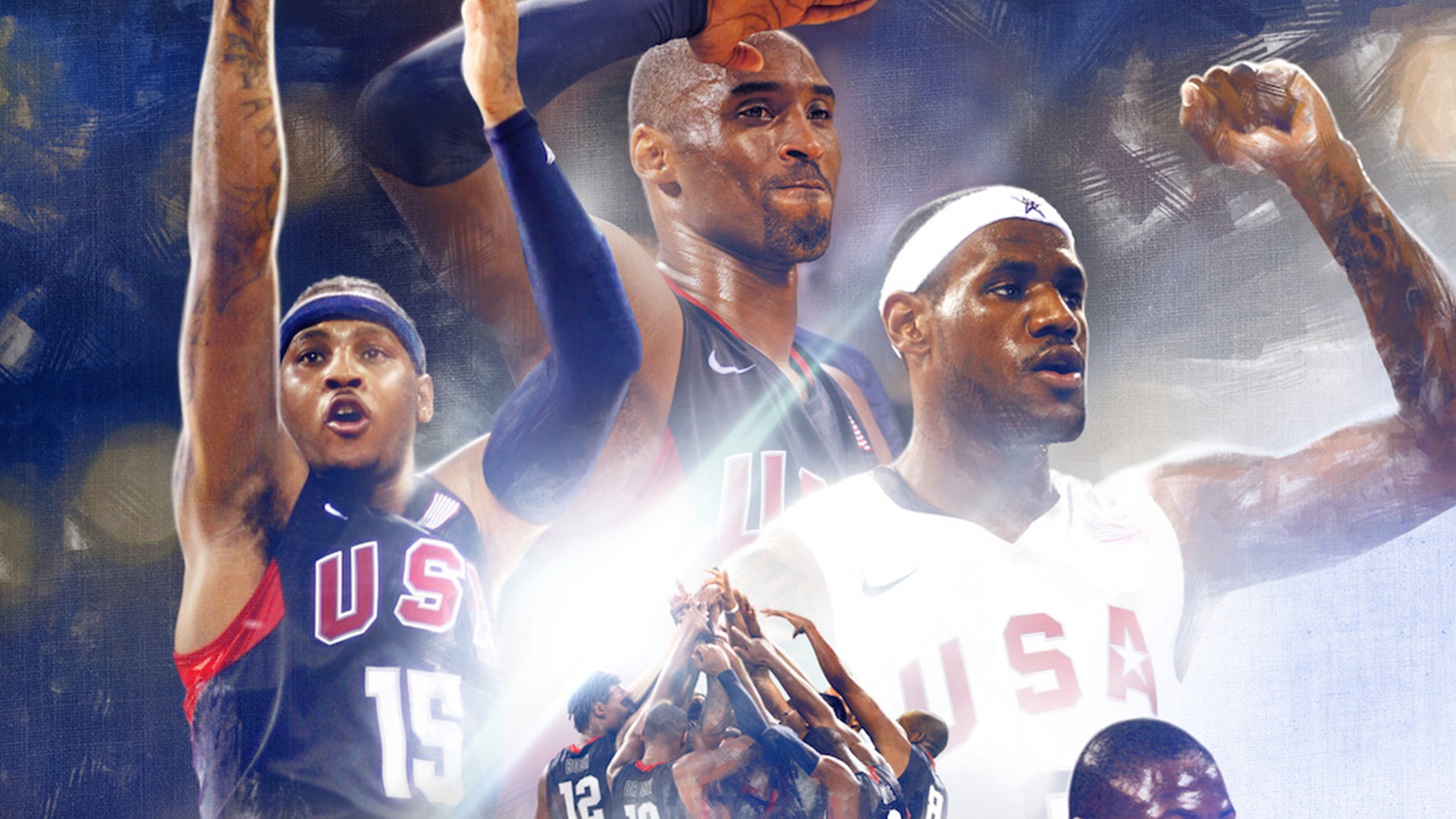
The "Redeem Team" refers to the United States men's national basketball team that won the gold medal at the 2008 Beijing Summer Olympic Games. The moniker was born out of a collective mission to restore American basketball dominance following a disappointing bronze medal finish at the 2004 Athens Olympics and a sixth-place finish at the 2006 FIBA World Championship.
The Genesis of the Redeem Team: Context and Catalyst
To understand why the 2008 squad earned the "Redeem Team" title, one must examine the state of international basketball in the early 2000s. For decades, Team USA relied primarily on collegiate players and, following the 1992 rule change allowing professionals, the legendary "Dream Team." However, by the Sydney 2000 Olympics, the rest of the world had significantly closed the talent gap. While the 2000 team still won gold, opponents played the United States much closer than in previous generations.
The true breaking point arrived at the 2004 Athens Olympic Games. Cooled by a lack of preparation, poor roster construction that emphasized individual isolation scoring over shooting and team chemistry, and a surging international game featuring elite NBA talent from other countries, Team USA suffered three shocking losses. They fell to Puerto Rico, Lithuania, and eventual gold medalist Argentina. Securing only a bronze medal was viewed by the American sports public, media, and USA Basketball leadership as a national humiliation.
The crisis deepened at the 2006 FIBA World Championship in Japan, where a roster featuring young superstars like LeBron James, Dwyane Wade, and Carmelo Anthony lost to Greece in the semifinals, capturing another bronze medal. It became glaringly obvious that simply assembling a collection of disjointed NBA All-Stars was no longer sufficient to guarantee victory on the international stage.
Restructuring USA Basketball: Leadership and Culture Shift
Following the 2004 and 2006 setbacks, USA Basketball underwent a comprehensive organizational overhaul. Jerry Colangelo, a legendary NBA executive, was brought in as the managing director of the senior men's national team. Colangelo was given unprecedented autonomy to reshape the program from top to bottom.
Colangelo’s first critical decision was hiring Mike Krzyzewski, the legendary Duke University men's basketball head coach, to lead the team. Krzyzewski brought a collegiate discipline, tactical rigor, and a unified team-first philosophy that contrasted sharply with the loose, ad-hoc management styles of previous Olympic cycles.
Key Pillars of the New Strategy
- Commitment Over Three Years: Players were asked to commit to a multi-year cycle, participating in training camps, regional showcases, and qualifying tournaments leading up to the Olympics, rather than just showing up weeks before the Games.
- Role Clarity: Instead of filling a roster with 12 primary scorers who were used to being the undisputed franchise players on their respective NBA teams, Colangelo and Krzyzewski deliberately selected players who could accept specific defensive, rebounding, and playmaking roles.
- Embracing FIBA Rules: The coaching staff heavily emphasized understanding international officiating, the lack of a defensive three-second rule (which allowed teams to pack the paint), and the nuances of the FIBA three-point line and ball characteristics.

Roster Construction of the 2008 Beijing Squad
The 2008 Olympic roster struck a vital balance between established veteran leadership and generational young talent. Kobe Bryant, participating in his first Olympic Games, provided the ultimate competitive fire and late-game execution. Meanwhile, Jason Kidd supplied veteran poise, point-guard orchestration, and locker-room leadership.
The core of the team was anchored by players who had experienced the pain of 2004 and 2006: LeBron James, Dwyane Wade, and Carmelo Anthony. These players were entering their physical primes and embraced the responsibility of carrying the nation's basketball reputation.
| Player Name | NBA Team (2007-2008 Season) | Role on the Redeem Team |
|---|---|---|
| Kobe Bryant | Los Angeles Lakers | Captain, Perimeter Defender, Closer |
| LeBron James | Cleveland Cavaliers | Playmaker, Transition Scorer, Forward |
| Dwyane Wade | Miami Heat | Sixth Man, Slash-and-Kick Spark Plug |
| Carmelo Anthony | Denver Nuggets | Scoring Forward, International Spacer |
| Jason Kidd | New Jersey Nets / Dallas Mavericks | Floor General, Point Guard |
| Chris Paul | New Orleans Hornets | Backup Point Guard, Defensive Disruptor |
| Dwight Howard | Orlando Magic | Primary Center, Shot Blocker, Rebounder |
| Deron Williams | Utah Jazz | Point Guard, Pick-and-Roll Handler |
| Chris Bosh | Toronto Raptors | Stretch Big Man, Reserve Center |
| Tayshaun Prince | Detroit Pistons | Lockdown Wing Defender |
| Michael Redd | Milwaukee Bucks | Perimeter Shooter |
| Carlos Boozer | Utah Jazz | Physical Forward, Rebounder |
The Road to Beijing and Tournament Performance
The Redeem Team dominated the exhibition tour in the summer of 2008, establishing a fierce defensive identity and high-octane transition offense. When they arrived in Beijing, the psychological pressure was immense, but their preparation insulated them from the media scrutiny.
In the group stage, Team USA rolled through opponents with an aggressive, full-court pressing defense that forced turnovers and generated easy scoring opportunities. They defeated China, Angola, Spain, Greece, and Germany by wide margins, displaying a brand of basketball that was both fundamentally sound and athletically overwhelming.
The Gold Medal Game: USA vs. Spain
The ultimate test of the Redeem Team occurred on August 24, 2008, in the gold medal game against reigning world champion Spain. Led by NBA stars Pau Gasol, Rudy Fernández, and Ricky Rubio, Spain played a brilliant, highly disciplined team game that kept them within striking distance of the United States for all four quarters.
Unlike the blowouts of the group stage, the final was a heavyweight physical battle. Spain attacked the paint and utilized precise passing to exploit defensive rotations. However, the American squad relied on the clutch play of Kobe Bryant, who scored 13 of his 20 points in the fourth quarter, alongside critical plays by Dwyane Wade (who led USA with 27 points) and LeBron James. Team USA ultimately secured a hard-fought 118–107 victory, claiming the gold medal and fulfilling their quest for redemption.
| Tournament Stage | Opponent | Result | Margin |
|---|---|---|---|
| Group Phase | China | Won (101-70) | +31 |
| Group Phase | Angola | Won (97-76) | +21 |
| Group Phase | Greece | Won (92-69) | +23 |
| Group Phase | Spain | Won (119-82) | +37 |
| Group Phase | Germany | Won (106-57) | +49 |
| Quarterfinals | Australia | Won (116-85) | +31 |
| Semifinals | Argentina | Won (101-81) | +20 |
| Gold Medal Game | Spain | Won (118-107) | +11 |
Legacy and Impact on Global Basketball
The impact of the Redeem Team extended far beyond a single gold medal. First, it revitalized the USA Basketball program, establishing a continuous pipeline of commitment that paved the way for subsequent gold medal runs in London 2012, Rio 2016, Tokyo 2020, and Paris 2024.
Second, the cultural shift instituted by Colangelo and Krzyzewski proved that NBA superstars could come together, check their egos at the door, and represent their country with professional pride. The camaraderie forged on the 2008 squad influenced player relationships across the NBA for years to come.
Finally, the Redeem Team served as a cultural touchstone documented in popular media, most notably in the 2022 Netflix documentary The Redeem Team, which captured the behind-the-scenes emotional and tactical journey of the players and coaches. It remains the definitive standard for how international basketball competitions should be approached by the United States.
Frequently Asked Questions
Why was the 2008 Olympic basketball team called the "Redeem Team"?
The team earned the nickname because they were tasked with redeeming the reputation of American men's basketball following the disappointing bronze medal finish at the 2004 Athens Olympics and the bronze medal finish at the 2006 FIBA World Championship.
Who was the head coach of the Redeem Team?
Mike Krzyzewski, the longtime men's basketball coach at Duke University, served as the head coach. Jerry Colangelo served as the managing director who built the program and selected the coaching staff.
Did the Redeem Team lose any games in Beijing?
No. The 2008 United States men's national basketball team went undefeated in Beijing, finishing with an 8-0 record, culminating in their victory over Spain in the gold medal game.
Who were the leading scorers for the Redeem Team?
Dwyane Wade led the team in scoring during the tournament off the bench, while superstars like Kobe Bryant, LeBron James, and Carmelo Anthony carried significant scoring loads throughout the group and medal rounds.
How did the Redeem Team differ from the 1992 Dream Team?
While the 1992 "Dream Team" was assembled quickly as an unprecedented collection of established legends playing together for the first time, the "Redeem Team" was built through a multi-year program designed specifically to combat the rising skill level and tactical awareness of international basketball under FIBA rules.
Conclusion
The 2008 Redeem Team stands as a watershed moment in modern sports history. By transforming national pride into disciplined, collective execution, they answered the doubts of a nation and cemented a legacy of excellence that continues to influence basketball culture worldwide.
Image Gallery
Select an image to open it in a new tab.




Simon Caldwell
Enterprise Technology and Systems Editor
