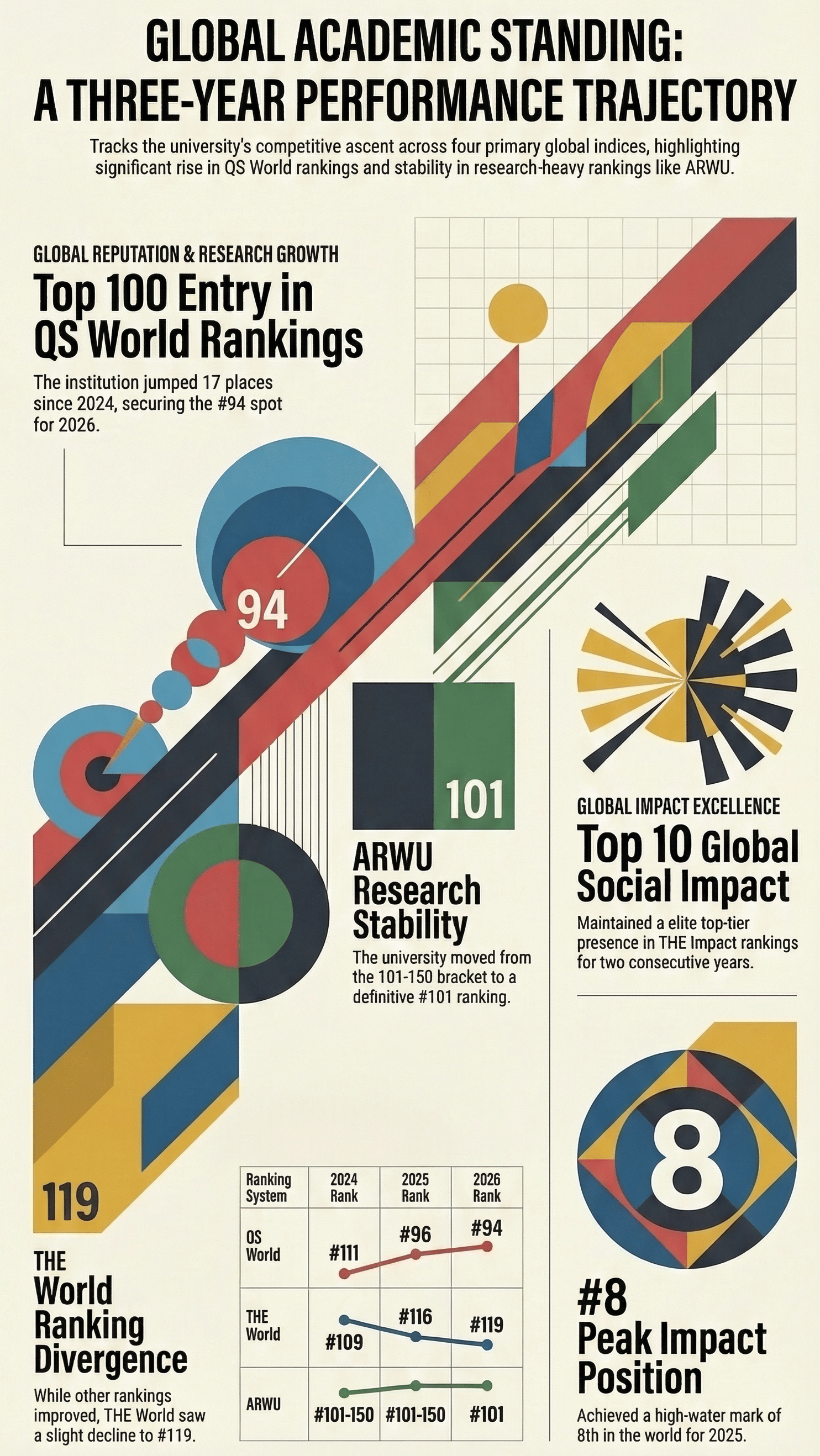
The global perception that a university's top rank equates to overall educational superiority is one of higher education's most persistent misunderstandings. While the Massachusetts Institute of Technology (MIT) consistently secures the top spot in major international tables—such as maintaining the number-one position in the QS World University Rankings for over a decade—this rank reflects specific metrics like research citations, faculty publications, and global reputation surveys rather than a universal guarantee of superior undergraduate instruction, personal institutional fit, or broad academic dominance across non-STEM disciplines.
The Origin of the Ranking Phenomenon
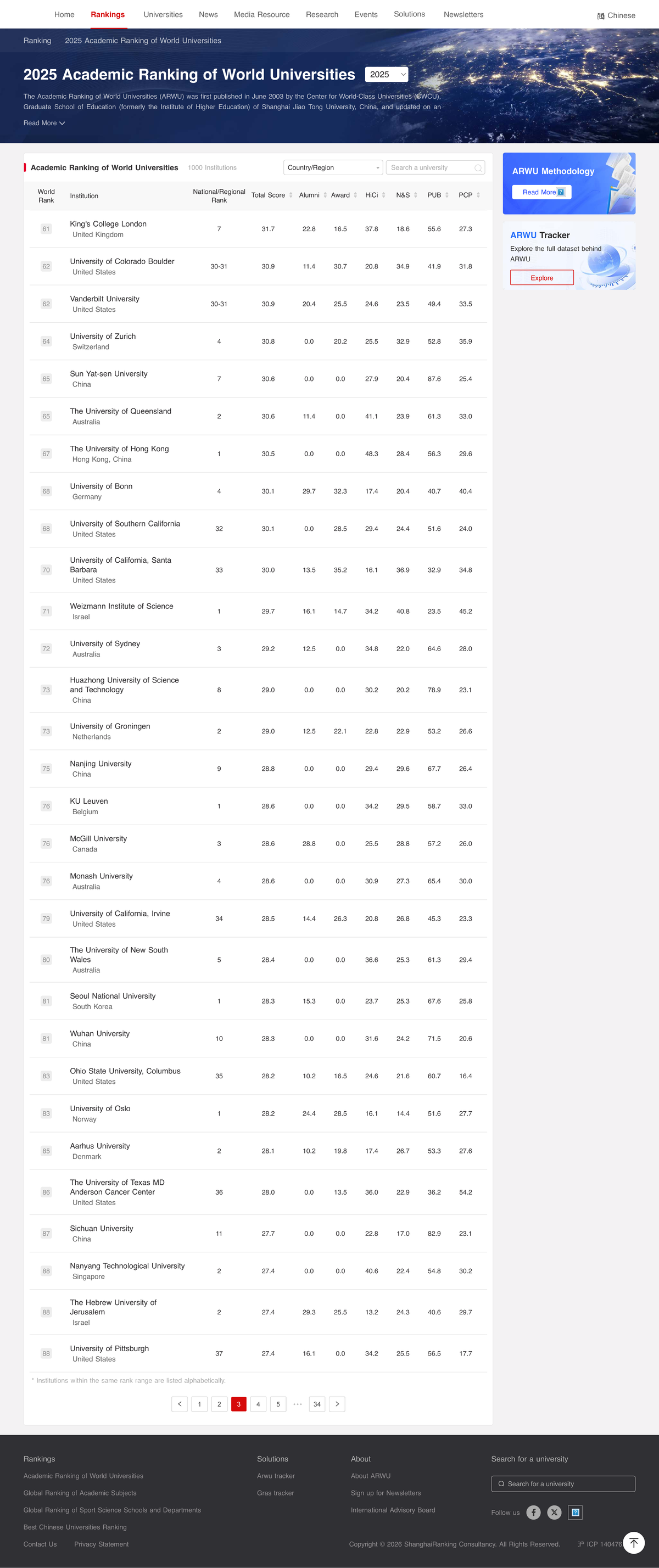
Global university rankings emerged in the early 2000s as international student mobility expanded and higher education transitioned into a globalized market. Prior to the publication of the Academic Ranking of World Universities (ARWU by Shanghai Jiao Tong University) in 2003 and the subsequent launch of the QS and Times Higher Education (THE) rankings, institutional prestige was largely regional and qualitative.
Rankings transformed complex educational ecosystems into single numerical lists. This simplification created an easily digestible shorthand for prestige, which governments, university leadership, and prospective students quickly adopted. However, compressing the multi-dimensional mission of a higher education institution into a single composite score requires mathematical assumptions that reward specific institutional profiles over others.
How Global Rankings Measure Prestige
To understand why a top global rank can distort public perception, one must examine how the dominant ranking agencies calculate their scores. The three major global platforms—QS World University Rankings, Times Higher Education World University Rankings, and the Academic Ranking of World Universities—each employ distinct formulas, yet all share structural biases toward large-scale research output and historical brand recognition.
| Metric | Weight |
|---|---|
| Research Output (Citations, Nature/Science Papers) | High Weight |
| Reputation Surveys (Peer & Employer Reviews) | High Weight |
| Institutional Resources & Doctoral Grants | Moderate Weight |
| Undergraduate Teaching Quality & Class Size | Low/Zero Weight |
1. Reputation Surveys and Circular Validity
In systems like QS, subjective survey data accounts for a significant portion of the total score. The Academic Reputation metric relies on surveys completed by academics worldwide, who are asked to identify the top institutions in their field. Employer Reputation similarly surveys recruiters.
These metrics create a feedback loop: institutions that are already famous receive high reputation scores, which preserves their high overall rank, further solidifying their public fame. This self-reinforcing dynamic makes it exceptionally difficult for newer or less-capitalized universities to climb the rankings regardless of improvements in teaching standard or student satisfaction.
2. Citations and Bibliometrics
Bibliometric indicators measure how often work published by an institution’s faculty is cited by other scholars. Databases such as Elsevier’s Scopus or Clarivate’s Web of Science track these citations. Because STEM (Science, Technology, Engineering, and Mathematics) fields publish at a much higher frequency and cite recent papers more rapidly than the humanities or social sciences, universities heavily focused on medicine, engineering, and hard sciences naturally accumulate far higher bibliometrics scores.
3. Faculty-to-Student Ratios and Resource Density
Metrics measuring institutional resources—such as spend per student or faculty-to-student ratios—serve as proxies for teaching quality. While financial investment correlates with campus facilities, it does not directly measure pedagogical efficiency, mentoring quality, or learning outcomes.
How MIT’s Institutional Profile Aligns with Ranking Metrics
MIT’s consistent position at or near the summit of international rankings is not an accident of marketing; it is the logical output of ranking algorithms designed around scientific research, technology commercialization, and bibliometric density.
- MIT Core Strengths
- Intensive STEM Research Focus
- High Citation Density
- Elite Global Industry Network
- Optimized Ranking Output (QS #1, Top ARWU/THE Scores)
STEM Focus and Citation Density
MIT operates as a premier research engine. Its emphasis on engineering, computer science, physics, and molecular biology means its faculty produce thousands of high-impact research papers annually in fields with high citation rates. Unlike comprehensive universities that maintain large, less-cited humanities departments, MIT’s academic structure is concentrated in areas that ranking formulas reward most heavily.
Industry Collaboration and Patent Output
Global ranking systems increasingly measure industry income, technology transfer, and patent generation. MIT’s ecosystem in Cambridge, Massachusetts, fosters direct ties with corporate sponsors, biotechnology firms, and venture capital. This alignment maximizes performance in categories assessing employer reputation, innovation, and external funding.
Selectivity and Per-Capita Expenditure
With an endowment exceeding $20 billion and a relatively small undergraduate student body (around 4,500 students), MIT spends more money per student than almost any other institution globally. This financial density directly inflates its performance in resource-based metrics.
Deconstructing the "Prestige Myth"
Evaluating an institution strictly by its global rank leads to several false equivalencies. Understanding these gaps helps demystify rankings for applicants, faculty, and educational analysts.
| Ranking Indicator | What It Actually Measures | What It Fails to Measure |
|---|---|---|
| Citations per Faculty | Total scientific impact | Classroom teaching quality |
| Academic Reputation | Global brand recognition | Current student experience |
| Research Income | Grants & industry deals | Affordability & accessibility |
| International Faculty | Geographic diversity | Post-grad student debt |
1. Research Excellence vs. Undergraduate Education
The primary reason a top rank can be misleading for undergraduate applicants is the fundamental distinction between research productivity and undergraduate teaching. Global rankings assess the university primarily as a research factory. Nobel laureates and highly cited scientists often focus heavily on laboratory research and graduate supervision, frequently spending minimal time teaching introductory undergraduate courses. A university ranked #1 globally may offer large lecture halls taught by teaching assistants, while a non-ranked liberal arts college might offer small, faculty-led seminar classes.
2. Field-Specific Variance
Ranking tables present a single institutional score, implying uniform excellence across all subjects. However, academic strength varies widely by discipline. While MIT leads in computer science, aerospace engineering, and economics, it does not offer programs in law, medicine, or classic fine arts, and its offerings in certain humanities disciplines are smaller than those at broad-based research universities like Oxford, Cambridge, or Harvard. Relying on an overall institution rank masks program-level strengths and weaknesses.
3. Geographical and Wealth Biases
The methodology of global rankings favors rich institutions located in Anglophone countries or systems operating on Western educational models. According to analysis by the International Ranking Expert Group (IREG) Observatory on Academic Ranking and Excellence, metrics that rely on English-language publications indexed in Western databases systematically undercount high-quality research published in non-English languages or journals focused on regional social issues.
4. Methodological Volatility
Ranking agencies frequently adjust their weightings and indicators from year to year to maintain public interest and market their products. A university's jump or drop of ten positions in a single annual cycle rarely reflects a change in educational quality; rather, it typically indicates a minor tweak in the ranking organization's underlying mathematical formula.
Methodological Comparison of Major Global Rankings
Understanding how different organizations weigh institutional characteristics highlights why rank order fluctuates across publications.
| Ranking Platform | Primary Focus | Key Metrics & Weightings | Main Strengths | Primary Criticisms |
|---|---|---|---|---|
| QS World University Rankings | Reputation and Employability | Academic Reputation (30%), Citations per Faculty (20%), Employer Reputation (15%), Faculty/Student Ratio (10%), Sustainability (5%) | Emphasizes graduate employability and employer perception globally | High reliance on subjective surveys (45% combined reputation weight) |
| Times Higher Education (THE) | Balanced Academic Profile | Research Quality (30%), Research Environment (29%), Teaching Environment (29.5%), Industry (4%), International Outlook (7.5%) | Comprehensive evaluation of the academic and research environment | Complex methodology; relies heavily on self-reported institutional data |
| Academic Ranking of World Universities (ARWU / Shanghai) | Pure Research Output & Elite Science | Staff winning Nobel/Fields Medals (20%), Highly Cited Researchers (20%), Papers in Nature & Science (20%), Indexed Citations (20%) | Completely objective metrics with zero subjective opinion surveys | Ignores teaching quality, humanities, and social sciences; heavily biased toward elite natural sciences |
| U.S. News & World Report Best Global Universities | Bibliometrics and Global Research | Global Research Reputation (12.5%), Regional Reputation (12.5%), Publications (10%), Total Citations (10%), International Collaboration (10%) | Clear focus on measurable research output and global scholarly footprint | Neglects undergraduate education, campus environment, and student outcomes |
Evaluating Higher Education Beyond Rankings
For prospective students, academic researchers, and institutional leaders, moving past the myth of global prestige requires assessing universities through criteria aligned with individual goals rather than commercial algorithms.
Holistic University Evaluation Framework
- Program-Specific Curriculum & Faculty Expertise
- Experiential Learning Opportunities (Internships, Labs, Co-ops)
- Cost of Attendance, Financial Aid & Debt Outcomes
- Geographic Location & Regional Industry Networks
- Class Size & Direct Access to Faculty Mentorship
1. Assessing Program-Level Quality
Instead of looking at global institution ranks, evaluate the specific department offering your intended degree. Look at:
- Faculty publication records in your specific subfield.
- Course offerings, lab access, and specialized software or equipment.
- Departmental grant funding dedicated to student research projects.
2. Measuring Practical Career Outcomes
Employment outcomes vary significantly based on institutional partnerships and geographic location rather than global rank. Evaluate:
- Career center placement rates within your target industry.
- On-campus recruiting presence by regional and international employers.
- Internship networks and formal cooperative education programs (such as MIT's UROP or Northeastern University's Co-op system).
3. Financial Return on Investment (ROI)
An institution's global rank provides no indication of its net cost or financial accessibility. Students should compare:
- Net price calculators rather than published tuition rates.
- Average student loan debt upon graduation.
- Mid-career salary data for specific majors via public resources like the U.S. Department of Education College Scorecard.
4. Educational Environment and Learning Format
Teaching structure profoundly affects student success. Consider:
- Average undergraduate class size and percentage of classes taught by full-time professors vs. graduate teaching assistants.
- Availability of undergraduate research opportunities versus competition from large graduate student bodies.
- Academic support infrastructure, including tutoring, advising, and mental health resources.
Frequently Asked Questions
Is MIT’s #1 ranking in the QS World University Rankings accurate?
The ranking is accurate within the specific mathematical framework used by QS, which heavily rewards academic peer reputation, employer sentiment, high citation rates per faculty, and STEM-focused research output. However, it does not mean MIT is objectively the best university in the world for every student or every academic discipline, such as liberal arts, humanities, or professional degrees like law and clinical medicine.
Why do global university rankings favor STEM-focused institutions?
Global rankings rely on publication databases (like Scopus or Web of Science) to calculate scientific impact and citations. STEM disciplines publish short papers frequently with numerous citations, creating massive bibliometric data points. Humanities and social sciences tend to publish books or longer articles with lower overall citation counts, leading to lower scores in traditional bibliometric metrics.
Should prospective students use global rankings to choose a college?
Global rankings can serve as a broad initial filter to identify major research universities, but they should not be the primary decision-making tool for applicants. Students should prioritize program-specific accreditation, faculty access, class sizes, campus culture, geographical preference, financial aid, and career placement metrics relevant to their desired field.
What is the main difference between global rankings and national rankings?
Global rankings (like QS, THE, and ARWU) focus almost exclusively on research productivity, global reputation surveys, and international metrics. National rankings (such as the traditional U.S. News & World Report Best Colleges list) typically incorporate factors specific to domestic systems, such as high school class rank, standardized test scores, graduation rates, alumni donation rates, and financial resources per student.
How do rankings impact university funding and policy?
Many university administrators and national governments allocate resources specifically to boost indicators measured by ranking platforms. This can result in policies that prioritize hiring high-citation researchers or expanding international marketing over reducing class sizes, raising adjunct faculty pay, or improving undergraduate advising.
Practical Action Plan for University Evaluation
When making academic decisions, use a multi-tiered evaluation strategy rather than relying on global rank:
- Define Your Personal Criteria: List your non-negotiable priorities—such as budget, geographic region, class size, specific sub-disciplines, and career aspirations.
- Examine Program-Level Data: Consult subject-specific rankings (e.g., QS World University Rankings by Subject) and review department faculty directories to see who actively teaches undergraduate or master's-level courses.
- Analyze Financial Feasibility: Calculate net cost using official university financial aid calculators and compare total expected debt against typical starting salaries for your major.
- Inspect Outcomes: Review institutional accountability reports, alumni networks, and local industry partnerships to verify actual career trajectories for graduates of your specific program.
Image Gallery
Select an image to open it in a new tab.
Celine Dubois
Contemporary Living and Global Arts Columnist
