How Glasnost and Perestroika Changed the Soviet Union: A Comprehensive Historical Analysis
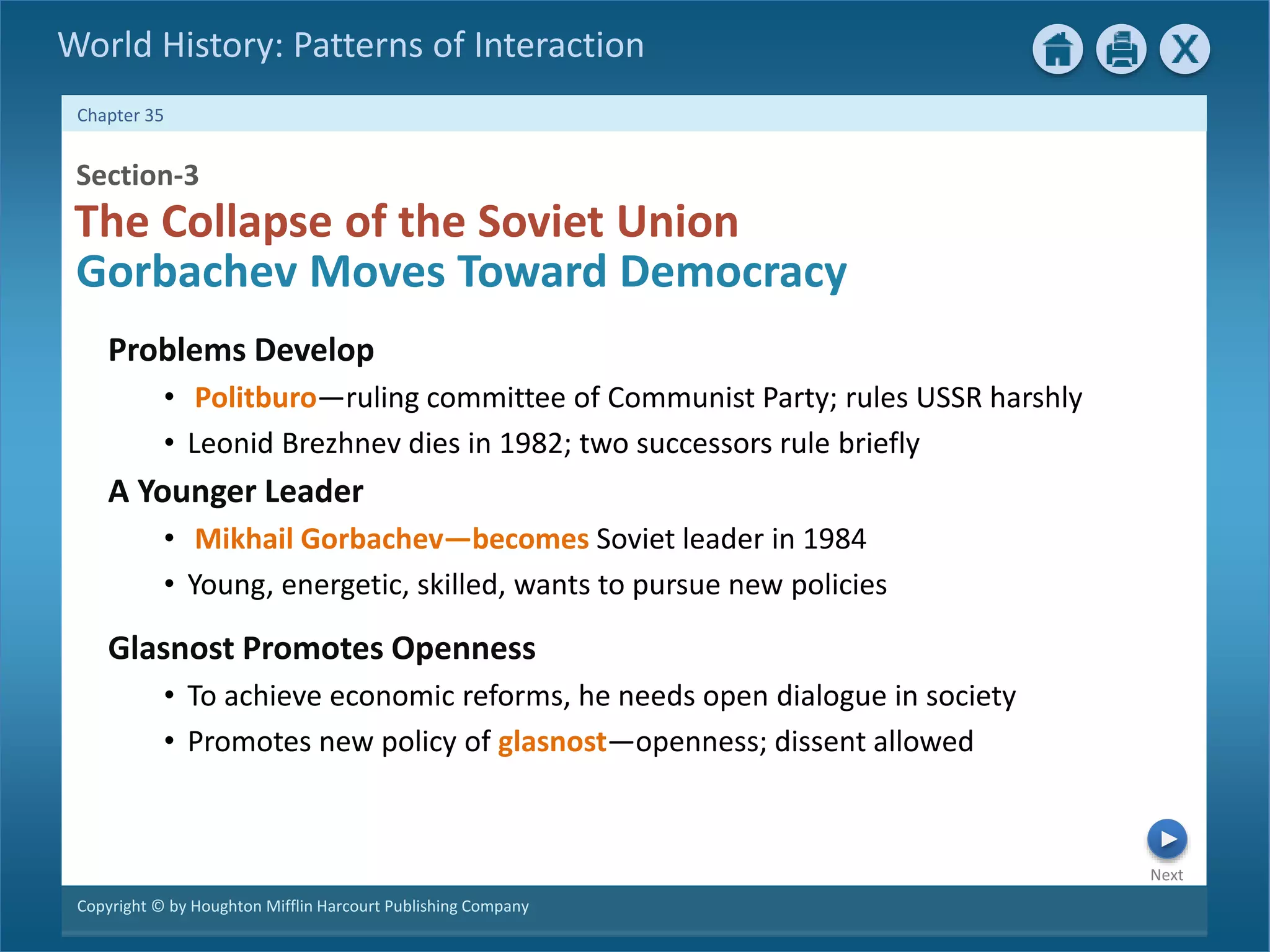
Mikhail Gorbachev’s dual policies of Glasnost and Perestroika fundamentally transformed the Soviet Union by dismantling the state’s monopoly on information and decentralizing its command economy. These reforms, intended to modernize socialism, inadvertently catalyzed the rise of nationalism, exposed deep-seated systemic failures, and ultimately led to the dissolution of the USSR in 1991.
The Catalysts for Reform: The Era of Stagnation
To understand how Glasnost and Perestroika changed the Soviet Union, one must first examine the state of the nation upon Mikhail Gorbachev’s ascension to General Secretary in 1985. The USSR was mired in what historians call the "Era of Stagnation," a period characterized by a slowing economy, a bloated bureaucracy, and a demoralized citizenry. The centralized command economy, which had once industrialized the nation rapidly, was failing to keep pace with the technological and digital revolutions occurring in the West.
Military spending was consuming nearly 15-20% of the Soviet GDP, largely due to the ongoing arms race and the draining war in Afghanistan. By 1985, the Kremlin realized that without radical change, the Soviet Union could no longer maintain its status as a global superpower. Gorbachev introduced Perestroika (restructuring) and Glasnost (openness) not to destroy the communist system, but to save it through modernization and transparency.
Perestroika: The Restructuring of the Soviet Economy
Perestroika was the economic pillar of Gorbachev’s reform program. It aimed to transition the Soviet Union from a rigidly centralized command economy to a "market socialist" model. This involved several legislative shifts that allowed for limited private enterprise and gave state-owned factories more autonomy.
The Law on State Enterprises (1987)
One of the most significant changes under Perestroika was the 1987 Law on State Enterprises. Prior to this, the central planning agency, Gosplan, dictated exactly what every factory produced, where it sourced materials, and who it sold to. The new law allowed enterprises to determine their own production levels based on demand from consumers and other companies. While this was intended to increase efficiency, it created chaos because the infrastructure for a market-based supply chain did not yet exist.
The Law on Cooperatives (1988)
In 1988, the Soviet leadership took the unprecedented step of permitting private cooperatives. This was the first legal recognition of private property since Lenin’s New Economic Policy in the 1920s. Small businesses—restaurants, repair shops, and manufacturing collectives—began to emerge. However, these businesses faced immense backlash from the public, who were accustomed to subsidized prices and viewed the new "cooperative" prices as price-gouging.
Economic Destabilization
Instead of revitalizing the economy, Perestroika initially worsened the quality of life for many Soviet citizens. The dismantling of central planning led to supply chain breakdowns. Shortages of basic goods like bread, sugar, and soap became chronic. By 1990, the rationing of essential items was widespread, leading to public disillusionment with the reform process.
Glasnost: Breaking the Silence of the State
While Perestroika targeted the economy, Glasnost targeted the soul of the Soviet state. Glasnost, or "openness," was designed to involve the public in the reform process by encouraging criticism of government officials and fostering a more transparent political environment.
Media Freedom and the End of Censorship
Gorbachev believed that the Soviet people would support his economic reforms if they were allowed to see the corruption and incompetence of the "Old Guard" bureaucrats. Under Glasnost, state-controlled media began to report on previously taboo subjects: the reality of poverty, the prevalence of crime, and the environmental disasters plaguing the country. The Chernobyl disaster in 1986 served as a brutal turning point; the initial attempt to cover up the catastrophe failed, forcing the government to embrace a level of transparency that was previously unthinkable.
Historical Revisionism and the Return of Truth
Glasnost allowed for the rehabilitation of victims of Stalinist purges. Works by formerly banned authors, such as Aleksandr Solzhenitsyn’s The Gulag Archipelago, were published and widely read. For the first time in decades, the Soviet people could openly discuss the dark chapters of their history, including the Great Terror and the forced collectivization of the 1930s. This honesty weakened the ideological foundations of the Communist Party, as the state’s historical narrative was shown to be built on myths and suppression.
The Shift in Political Power and Democratization
Gorbachev realized that economic and social reforms would be blocked by the entrenched bureaucracy unless the political system itself was changed. This led to a policy of democratization (demokratizatsiya), which introduced multi-candidate elections for the first time in Soviet history.
In 1989, the Soviet Union held elections for the newly created Congress of People's Deputies. Unlike previous "elections" where voters simply approved a single Party-approved candidate, these elections allowed for independent voices and even anti-communist reformers. High-profile figures like Andrei Sakharov and Boris Yeltsin won seats, transforming the Soviet legislature into a forum for genuine political debate. This shift effectively ended the Communist Party’s absolute monopoly on power, a change that was codified in 1990 when Article 6 of the Soviet Constitution—which guaranteed the Party's "leading role"—was revoked.
International Impact: The End of the Cold War
The internal changes within the USSR had immediate and profound effects on global politics. Gorbachev’s "New Thinking" in foreign policy suggested that the security of one nation was inseparable from the security of others.
- The Sinatra Doctrine: Gorbachev abandoned the "Brezhnev Doctrine," which had asserted the USSR’s right to intervene militarily in the affairs of other socialist states. This new policy, nicknamed the "Sinatra Doctrine" (after the song "My Way"), allowed Eastern European nations like Poland, Hungary, and East Germany to determine their own futures. This led directly to the fall of the Berlin Wall in 1989.
- Arms Control: To fund domestic reforms, Gorbachev sought to de-escalate the arms race. He signed the Intermediate-Range Nuclear Forces (INF) Treaty with U.S. President Ronald Reagan in 1987, marking the first time the two superpowers agreed to reduce their nuclear arsenals rather than just limit their growth.
- Withdrawal from Afghanistan: Recognizing the war as a "bleeding wound," Soviet forces completed their withdrawal from Afghanistan in 1989, ending a decade of conflict that had drained the nation's resources and morale.
Comparison: Glasnost vs. Perestroika
The following table summarizes the primary differences and goals of these two interconnected policies.
| Feature | Glasnost (Openness) | Perestroika (Restructuring) |
|---|---|---|
| Primary Focus | Social, political, and cultural transparency. | Economic and structural reorganization. |
| Key Mechanism | Removal of censorship and state secrets. | Decentralization and market-oriented reforms. |
| Target Audience | Intellectuals, journalists, and the general public. | Industrial managers, bureaucrats, and laborers. |
| Successes | Revitalized civil society; ended the Cold War. | Introduced concepts of private enterprise and competition. |
| Failures | Enabled the rise of uncontrollable nationalism. | Led to inflation, shortages, and economic instability. |
| Final Result | Exposed the failures of the Soviet system. | Unintentionally broke the command economy's structure. |
The Unintended Consequence: The Rise of Nationalism
Perhaps the most significant way Glasnost and Perestroika changed the Soviet Union was by inadvertently providing the tools for its own disintegration. By allowing free speech and political organization, Gorbachev opened the floodgates for long-suppressed nationalist movements.
In the Baltic states (Estonia, Latvia, and Lithuania), the "Singing Revolution" began as a movement for cultural preservation and evolved into a demand for total independence. In the Caucasus, ethnic tensions erupted into violence in Nagorno-Karabakh between Armenia and Azerbaijan. By 1990, the "Parade of Sovereignties" was in full swing, as various Soviet republics declared the supremacy of their own laws over those of the central government in Moscow.
Gorbachev had hoped that a reformed, democratic Soviet Union would be a voluntary union that republics would want to stay in. Instead, the newly found freedoms were used to leave the union entirely.
Frequently Asked Questions
Did Glasnost and Perestroika cause the collapse of the Soviet Union?
While these policies were the immediate triggers, they did not act in a vacuum. Historians generally agree that Glasnost and Perestroika exposed and accelerated the collapse of a system that was already structurally unsound due to decades of economic mismanagement and political repression. By removing the fear that held the union together, the reforms allowed the centrifugal forces of nationalism to tear it apart.
Why did Perestroika fail to improve the economy?
Perestroika failed because it was a "half-measure." It destroyed the efficiency of the old command system without fully implementing a functional market system. There were no established laws for contracts, no banking system to support private investment, and a significant portion of the population remained ideologically opposed to the profit motive.
How did the Soviet military react to these changes?
The military was deeply divided. Hardliners viewed the loss of Eastern Europe and the reduction of the nuclear arsenal as a betrayal of Soviet interests. This resentment eventually culminated in the August Coup of 1991, where a group of conservative officials attempted to overthrow Gorbachev to restore order. The coup failed, but it fatally weakened Gorbachev’s authority and accelerated the USSR’s end.
What was the "New Thinking" in foreign policy?
"New Thinking" was the diplomatic extension of Glasnost and Perestroika. It prioritized "universal human values" over class struggle and Marxist-Leninist ideology. This shift allowed for the peaceful end of the Cold War, as the Soviet Union stopped viewing the West as an existential enemy that must be outcompeted at all costs.
Who benefited most from these reforms?
In the short term, intellectuals and political activists benefited from the new freedoms of speech. However, in the long term, the primary beneficiaries were the "Oligarchs"—former Party officials and factory managers who used their positions to privatize state assets during the chaotic transition of the early 1990s.
Moving Forward: Lessons from the Reform Era
As of 2026, the legacy of Glasnost and Perestroika remains a central topic for scholars of international relations and political science. The transition serves as a cautionary tale regarding the "reform dilemma": the difficulty of reforming a totalitarian system without causing it to collapse entirely. For those studying modern governance, the Soviet experience highlights the critical importance of pairing political liberalization with robust, well-regulated economic institutions.
If you are researching this period for academic purposes, it is recommended to consult primary source documents from the Wilson Center's Digital Archive or the National Security Archive to see the declassified communications between Soviet and Western leaders during this transformative era. Understanding the nuances of these reforms provides essential context for the current geopolitical landscape of Eurasia.
Image Gallery
Select an image to open it in a new tab.
Zara El-Hashem
Sociocultural Dynamics and Academics Writer
