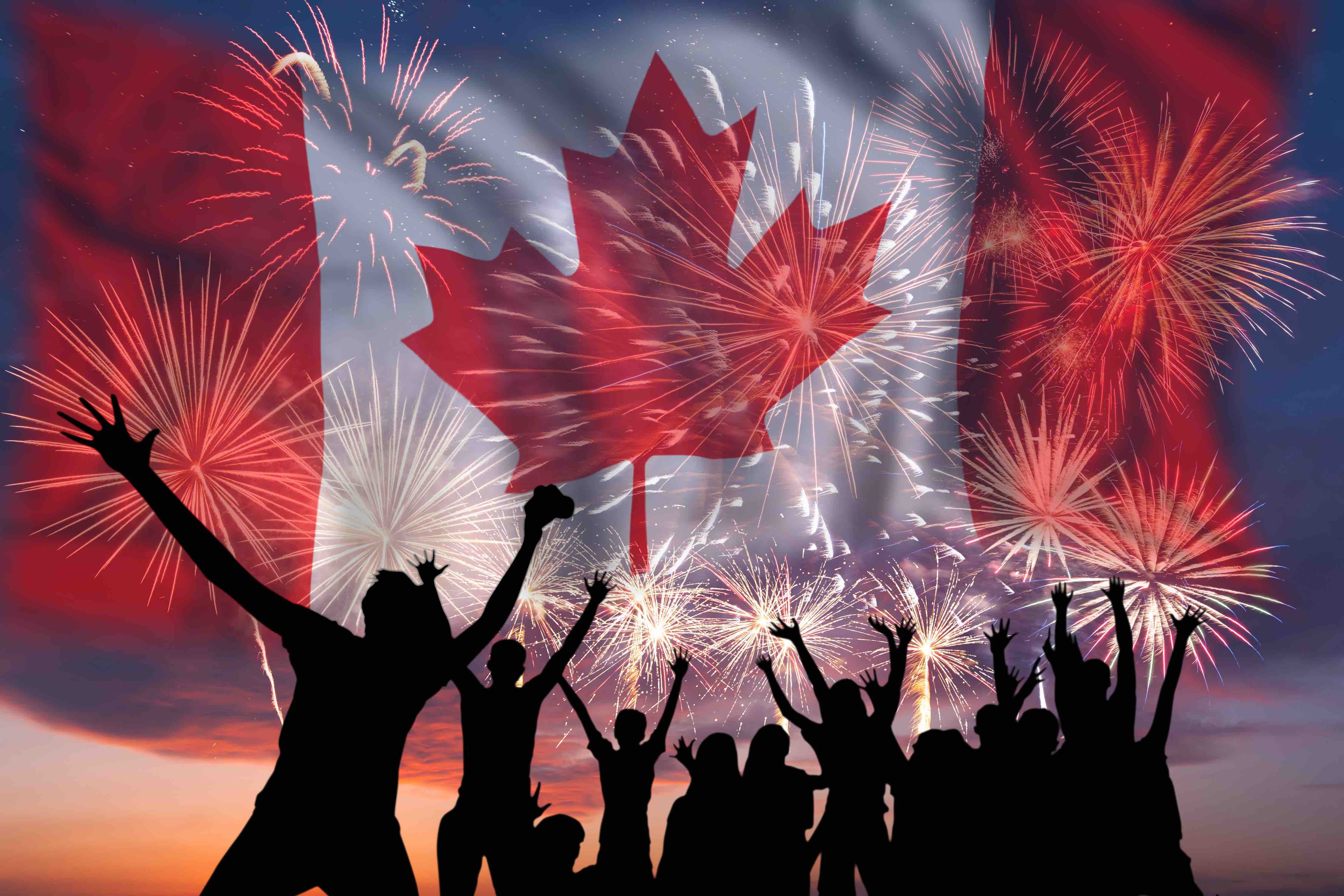
Canada officially became a nation on July 1, 1867, with the passage of the British North America Act. This historic event, known as Confederation, united the British colonies of Canada, New Brunswick, and Nova Scotia into a single federal dominion. However, Canada’s journey to full legal independence and absolute sovereignty continued until the patriation of the Constitution in 1982.
The Origins of Canadian Confederation
The path to 1867 was not a sudden revolution but a calculated political response to internal and external pressures. In the mid-19th century, British North America consisted of several distinct colonies, each with its own government and relationship with the British Crown. The movement toward a unified nation was driven by three primary factors: political deadlock in the Province of Canada, economic necessity following the end of British trade preferences, and growing fears of American expansionism following the American Civil War.
By the 1860s, the political system in the Province of Canada (comprising modern-day Ontario and Quebec) was paralyzed by ethnic and regional divisions. Leaders like John A. Macdonald, George-Étienne Cartier, and George Brown realized that a broader federal union could resolve these stalemates by creating a central government for national concerns while allowing provinces to manage local affairs.
Simultaneously, the threat from the south was palpable. The United States had a massive, battle-hardened army following the Civil War, and the philosophy of "Manifest Destiny" suggested that the U.S. was destined to control the entire continent. A unified British North American state was seen as the best way to defend the territory and secure a future independent of American influence.
The Constitutional Conferences: 1864–1867
The legal framework for Canada was hammered out during three critical conferences. Unlike the American experience, which involved a war for independence, Canada’s formation was a series of diplomatic negotiations and legislative acts.
The Charlottetown Conference (September 1864)
Originally intended as a meeting for the Maritime colonies (Nova Scotia, New Brunswick, and Prince Edward Island) to discuss a regional union, representatives from the Province of Canada asked to attend. The "Fathers of Confederation" met in Charlottetown and successfully shifted the focus to a larger union of all British North American colonies. The atmosphere was one of cautious optimism, famously fueled by social galas and champagne, which helped bridge the gaps between disparate regional interests.
The Quebec Conference (October 1864)
Following the momentum of Charlottetown, delegates met in Quebec City to draft the specific details of the new government. This meeting resulted in the 72 Resolutions, which laid the groundwork for the Canadian constitution. Key debates centered on the balance of power between the federal and provincial governments. Quebec, in particular, sought guarantees for its language, civil law, and religious institutions, leading to the creation of a federal system rather than a legislative union.
The London Conference (December 1866)
The final stage took place in the United Kingdom. Delegates from the Province of Canada, New Brunswick, and Nova Scotia traveled to London to finalize the text of the British North America Act with British officials. This period was crucial for ensuring that the new nation remained a constitutional monarchy, maintaining a formal link to the British Crown while gaining significant internal autonomy.
July 1, 1867: The Birth of the Dominion
On July 1, 1867, the British North America Act (now called the Constitution Act, 1867) came into effect. This act established the Dominion of Canada. At its inception, Canada was a much smaller country than it is today, consisting of only four provinces: Ontario, Quebec, New Brunswick, and Nova Scotia.
The term "Dominion" was chosen carefully. While some delegates suggested "Kingdom of Canada," the British government feared this might offend the United States. "Dominion" was taken from Psalm 72:8: "He shall have dominion also from sea to sea, and from the river unto the ends of the earth." This title reflected Canada’s status as a self-governing entity that remained part of the British Empire.
It is important to note that while 1867 marked the birth of the nation, Canada was not yet fully independent. Great Britain still controlled Canada’s foreign policy, and the highest court of appeal for Canadian legal cases remained the Judicial Committee of the Privy Council in London.
The Expansion of the Nation (1870–1949)
After 1867, the new nation began a rapid period of territorial expansion. The acquisition of Rupert’s Land and the North-Western Territory from the Hudson’s Bay Company in 1870 paved the way for the creation of Manitoba and the Northwest Territories. British Columbia joined in 1871 on the promise of a transcontinental railway, followed by Prince Edward Island in 1873.
The map of Canada continued to evolve into the 20th century:
- 1905: Alberta and Saskatchewan were carved out of the Northwest Territories.
- 1949: Newfoundland (now Newfoundland and Labrador) became the tenth province after a narrow referendum vote, completing the country’s modern provincial structure.
This expansion was not without conflict. The "nation-building" process often ignored the inherent rights and sovereignty of Indigenous Peoples, who had lived on the land for millennia. The negotiation of the Numbered Treaties and the subsequent implementation of the Indian Act represented a darker side of Canada’s growth, as the federal government sought to assimilate Indigenous populations into the new Canadian state.
The Statute of Westminster (1931): Legislative Independence
The next major milestone in Canada’s journey to nationhood occurred following World War I. Canada’s significant contribution to the war effort—highlighted by the victory at Vimy Ridge—fostered a growing sense of national identity and a desire for greater autonomy on the world stage.
In 1926, the Balfour Declaration recognized that the United Kingdom and its Dominions were "autonomous Communities within the British Empire, equal in status." This principle was codified in the Statute of Westminster 1931. This British law granted Canada and other Dominions full legal freedom in nearly all areas. From this point on, the British Parliament could no longer pass laws for Canada without its consent, and Canada gained the authority to manage its own foreign affairs.
The Statute of Westminster is often cited by historians as the moment Canada became a truly sovereign state in terms of international law, even if certain constitutional ties remained.
The Constitution Act of 1982: Final Sovereignty
Despite the gains made in 1931, Canada’s constitution remained a British statute. This meant that any major changes to the Canadian constitution still technically required the approval of the British Parliament. For decades, Canadian leaders struggled to agree on an "amending formula"—a way to change the constitution within Canada.
In the early 1980s, Prime Minister Pierre Elliott Trudeau made the "patriation" of the constitution a central goal. This culminated in the Canada Act 1982, passed by the UK Parliament, and the Constitution Act, 1982, proclaimed by Queen Elizabeth II in Ottawa on April 17, 1982.
The 1982 Act did two revolutionary things:
- It ended the British Parliament’s power to legislate for Canada, making Canada fully sovereign.
- It introduced the Canadian Charter of Rights and Freedoms, which codified the civil liberties of all Canadians and fundamentally changed the relationship between the citizen and the state.
With the patriation of the constitution, Canada finally held all the keys to its own house. The legal umbilical cord to Great Britain was severed, although Canada remains a member of the Commonwealth and a constitutional monarchy.
Summary of Key Milestones in Canadian Sovereignty
| Year | Milestone | Legal Significance |
|---|---|---|
| 1867 | British North America Act | Creation of the Dominion of Canada; internal self-government established. |
| 1919 | Treaty of Versailles | Canada signs the peace treaty independently of Britain, signaling international recognition. |
| 1931 | Statute of Westminster | Full legislative independence from the UK; control over foreign policy. |
| 1947 | Canadian Citizenship Act | Canadians become "Canadian citizens" rather than just "British subjects." |
| 1949 | Supreme Court of Canada | Becomes the final court of appeal, replacing the UK's Privy Council. |
| 1982 | Constitution Act | Patriation of the constitution; full legal sovereignty; addition of the Charter of Rights. |
Indigenous Perspectives on Canadian Nationhood
When discussing when Canada became a nation, it is essential to acknowledge that the lands now called Canada have been home to First Nations, Inuit, and Métis peoples for at least 15,000 years. From an Indigenous perspective, "nationhood" did not begin in 1867. Indigenous nations had their own complex systems of governance, trade, and diplomacy long before European arrival.
The Royal Proclamation of 1763 recognized Indigenous title to the land, yet the 1867 Confederation process largely excluded Indigenous leaders. Throughout the 20th and 21st centuries, the Canadian legal system has gradually begun to recognize "Aboriginal and treaty rights," specifically through Section 35 of the Constitution Act, 1982. For many, the true realization of Canada as a "nation" is an ongoing process of reconciliation and the recognition of parallel Indigenous sovereignty.
Frequently Asked Questions
Is Canada still under British rule?
No, Canada is a fully independent and sovereign nation. While Canada remains a constitutional monarchy and recognizes the British monarch as the King of Canada, this role is purely ceremonial. The King acts only on the advice of Canadian ministers, and the British government has no authority over Canadian laws or policies.
Why do we celebrate July 1st?
July 1st, originally called Dominion Day and now known as Canada Day, marks the anniversary of the British North America Act coming into effect in 1867. It is the primary national holiday celebrating the unification of the provinces into a single country.
Did Canada have to fight for its independence?
Unlike the United States, Canada did not fight a war for independence. Instead, its sovereignty was achieved through a process of constitutional evolution, political negotiation, and legal reform. This "peaceful" transition is often cited as a core part of the Canadian national character.
What was the last province to join Canada?
Newfoundland and Labrador was the last province to join Confederation on March 31, 1949. Before this, it was a separate British Dominion. The territory of Nunavut was later created in 1999, carved out of the Northwest Territories, representing the most recent major change to Canada's internal map.
What is the Difference Between the BNA Act and the Constitution Act?
The British North America Act (1867) was the original document that created Canada. In 1982, as part of the patriation process, the BNA Act was renamed the Constitution Act, 1867. It remains part of Canada’s constitution today, alongside the Constitution Act, 1982.
Practical Recommendations for Learning More
To fully understand the complexity of Canadian nationhood, it is highly recommended to visit official historical repositories. Researching the primary documents from the 1860s provides a clearer picture of the compromises made during the nation's birth.
- Visit Library and Archives Canada: This institution holds the original records of the Confederation conferences and the personal papers of the Fathers of Confederation.
- Explore the Canadian Encyclopedia: This is a comprehensive, peer-reviewed resource for detailed biographies of key figures like Sir John A. Macdonald and Louis Riel.
- Review Constitutional Documents: The Department of Justice Canada provides the full text of the Constitution Acts of 1867 and 1982, allowing readers to see the legal foundation of the country firsthand.
- Engage with Indigenous Histories: Consult the National Centre for Truth and Reconciliation to understand how the formation of the Canadian nation impacted Indigenous governance and what "nationhood" means in a colonial context.
Understanding when Canada became a nation requires looking beyond a single date. While 1867 provided the structure, 1931 provided the voice, and 1982 provided the final authority. Canada remains a "work in progress," continuously redefining its identity and its commitment to the diverse peoples who call it home.
Image Gallery
Select an image to open it in a new tab.

Simon Caldwell
Enterprise Technology and Systems Editor
