
Building codes for solar panel installation represent the mandatory safety and structural standards that ensure a photovoltaic (PV) system is safe for occupants, first responders, and the electrical grid. These regulations, which encompass electrical, structural, and fire safety requirements, must be met to secure permits and pass final inspections from local authorities.
Compliance with building codes is not merely a legal formality; it is a fundamental aspect of engineering a system that can withstand decades of environmental stress. As of 2026, the landscape of solar regulation has evolved to address higher-density battery storage, advanced grid-interaction technologies, and more frequent extreme weather events. Whether you are a homeowner, a developer, or a contractor, understanding the intersection of the National Electrical Code (NEC), International Building Code (IBC), and local amendments is critical for a successful installation.
The Hierarchy of Authority: Who Sets the Rules?
The regulatory framework for solar installations is layered. At the top are model codes developed by international organizations, which are then adopted and often modified by state and local governments.
The Authority Having Jurisdiction (AHJ)
The most important entity in any solar project is the Authority Having Jurisdiction (AHJ). This is typically the local building department or fire marshal's office. The AHJ has the final say on which version of the code is enforced in your specific area. In 2026, while many states have moved to the most recent versions of the International Residential Code (IRC) or NEC, some rural or smaller jurisdictions may still operate under older cycles. It is a common mistake to assume that a "national" code applies identically everywhere; always verify the local adoption status before finalizing designs.
Primary Model Codes
Most solar-related regulations are derived from four primary sources:
- National Electrical Code (NEC/NFPA 70): Governs the wiring, grounding, and electrical components of the PV system.
- International Residential Code (IRC): Provides the structural and fire safety standards for one- and two-family dwellings.
- International Building Code (IBC): Applies to commercial structures and larger multi-family buildings.
- International Fire Code (IFC): Dictates access pathways, setbacks, and safety labeling to protect emergency personnel.
Structural Requirements and Load Analysis
Before a single rail is bolted to a roof, the structure must be evaluated to ensure it can support the added weight and the environmental forces acting upon the array.
Dead Loads and Live Loads
The "dead load" refers to the weight of the solar panels, racking, and hardware itself. Most modern residential solar systems add approximately 2.5 to 4 pounds per square foot. While this may seem minimal, building codes require that the existing roof structure have the "reserve capacity" to handle this weight without exceeding allowable deflection limits.
"Live loads" include temporary forces such as snow and wind. In 2026, structural codes have become more stringent regarding wind uplift. Because solar panels act like sails, the attachment points (flashings and mounts) must be engineered to resist being pulled out of the rafters during high-wind events. Inspectors will look for specific lag bolt embedment depths and spacing that match the engineering site plan.
Roof Integrity and Point Loads
Codes often require that if a roof is nearing the end of its functional life, it must be replaced prior to solar installation. Furthermore, the distribution of weight is critical. If an array creates significant "point loads"—concentrated weight on a small area—the code may require additional blocking or structural reinforcement under the roof deck to prevent sagging or structural failure.
Electrical Standards: NEC Article 690 and Beyond
The National Electrical Code (NEC) is the "bible" for solar electrical safety. Article 690 specifically addresses solar photovoltaic systems, while Article 706 covers energy storage systems (ESS).
Rapid Shutdown Requirements
One of the most significant safety requirements in modern solar codes is Rapid Shutdown. This regulation is designed to protect firefighters who may need to vent a roof or work near the array during a fire. The code requires that the DC voltage within the "array boundary" (usually 1 foot from the panels) be reduced to a safe level (typically 30 volts or less) within 30 seconds of the shutdown being initiated. This is usually achieved through the use of microinverters or DC power optimizers with integrated shutdown capabilities.
Grounding and Bonding
Proper grounding is essential to prevent electrical shock and protect the system from lightning surges. Building codes require that all metallic components of the racking system and the module frames be "bonded" together to create a continuous path to the earth. In 2026, the use of "integrated grounding" hardware—where the mounting clips themselves pierce the anodized coating of the panel frame to create an electrical bond—has become the industry standard sanctioned by the NEC.
Circuit Sizing and Overcurrent Protection
Solar installers must calculate the maximum possible current the system can produce, adjusted for factors like "bifacial gain" (energy reflected onto the back of panels) and temperature. Inverters and wiring must be sized to handle 125% of this maximum current to prevent overheating. Furthermore, the "Busbar Rule" (often referred to as the 120% rule) limits how much solar power can be back-fed into a home’s electrical panel relative to the main breaker’s rating.
Fire Safety and Access Pathways
The International Fire Code (IFC) and IRC Section R324 outline specific layout requirements to ensure that if a fire occurs, firefighters can still access the roof to perform ventilation or rescue operations.
Setbacks and Ridges
For most residential roofs, the code requires a 3-foot setback from the ridge (the peak of the roof). This provides a walkway for emergency personnel. Additionally, pathways of at least 3 feet in width are usually required along the eaves and hips of the roof. If a roof has panels on both sides of a hip or valley, the setbacks must ensure that firefighters can navigate the transitions safely.
Marking and Labeling
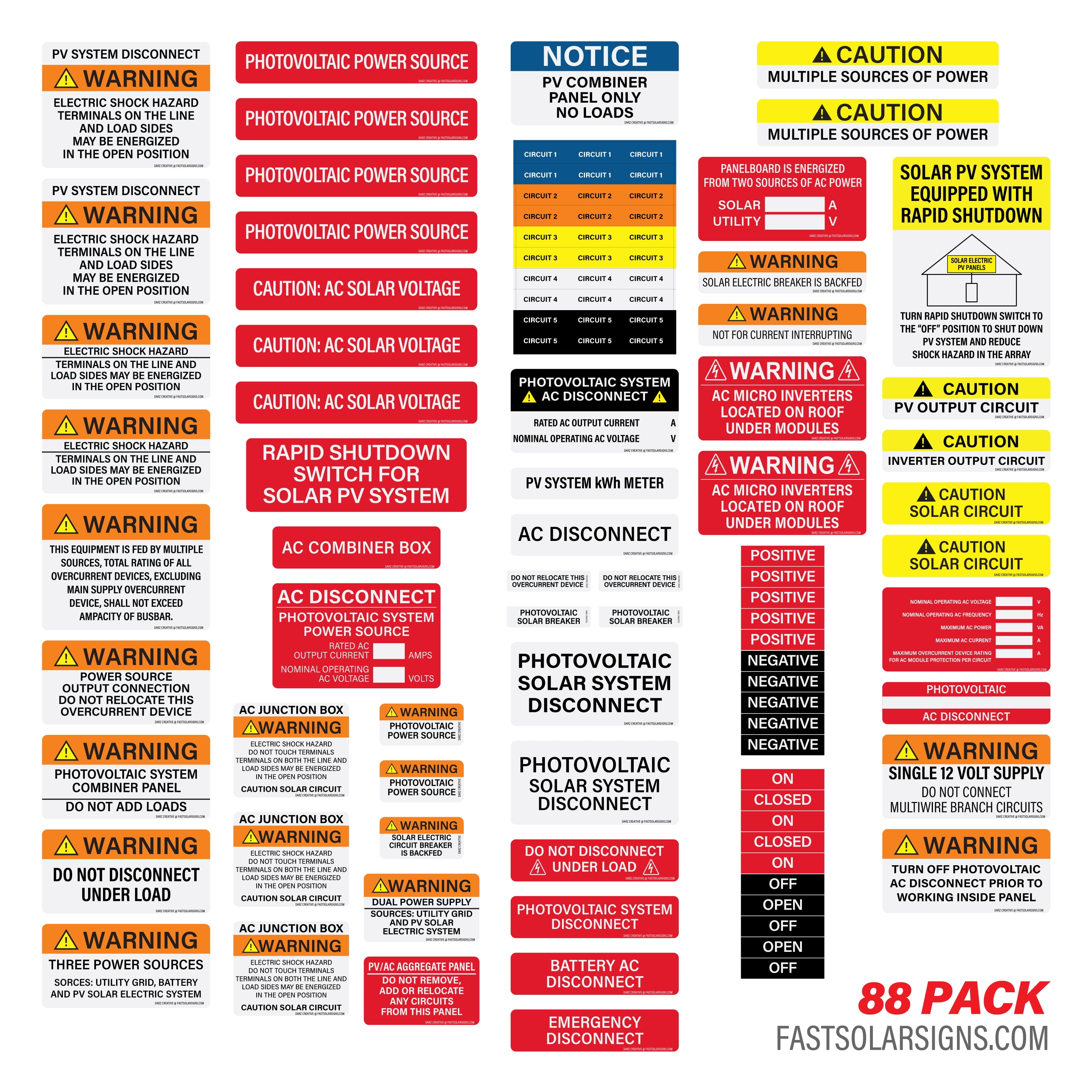
Every solar installation must be clearly labeled with weather-resistant, UV-stabilized signage. These labels inform first responders about the locations of disconnects, the presence of multiple power sources (grid vs. battery), and the type of rapid shutdown system installed. The color, font size, and wording of these labels are strictly dictated by the NEC and local fire codes.
Energy Storage Systems (ESS) and Battery Codes
As battery backups have become standard in 2026, building codes have expanded to address the unique risks of lithium-ion technology, such as thermal runaway.
NFPA 855 Compliance
NFPA 855 is the standard for the Installation of Stationary Energy Storage Systems. Key requirements include:
- Location Restrictions: Batteries often cannot be installed in living areas, sleeping rooms, or under certain types of stairways. Garages and exterior walls are the preferred locations.
- Fire Separation: If a battery system exceeds a certain kilowatt-hour (kWh) capacity, it may require a fire-rated barrier (like 5/8" Type X drywall) between the unit and the rest of the dwelling.
- Impact Protection: In garages, batteries must be protected from vehicle impact, often requiring the installation of steel bollards.
Code Comparison Table: Key Regulatory Pillars
The following table summarizes the primary areas of concern for solar installations and the specific code bodies that govern them.
| Regulatory Area | Primary Code | Key Focus in 2026 |
|---|---|---|
| Electrical Safety | NEC (Article 690) | Rapid Shutdown, Arc-Fault Protection, Grounding. |
| Structural Integrity | IBC / IRC | Wind uplift, snow loads, and rafter reinforcement. |
| Fire Access | IFC / IRC | Roof setbacks (3ft pathways) and marking. |
| Energy Storage | NFPA 855 / NEC 706 | Battery placement, ventilation, and fire barriers. |
| Grid Interaction | IEEE 1547 | Inverter "ride-through" during grid instability. |
| Materials/Quality | UL 1703 / UL 61730 | Testing standards for module durability and safety. |
The Permitting and Inspection Process
Securing a permit is the mechanism by which the AHJ ensures your plan meets all the aforementioned codes. The process generally follows four distinct stages.
1. Plan Submittal
A complete "plan set" must be submitted, usually by a licensed contractor or engineer. This includes a site plan showing the location of all equipment, a structural letter or calculation, and an electrical "one-line diagram" showing how the system is wired. In 2026, many jurisdictions use "SolarAPP+" or similar automated platforms to provide instant permitting for standard residential systems.
2. Plan Review
The AHJ reviews the documents to ensure compliance with local zoning and building codes. They may issue "corrections," requiring the designer to move panels away from a fire pathway or upgrade a wire gauge.
3. Construction and Rough Inspection
During the installation, inspectors may visit the site to verify that the roof attachments are properly flashed (to prevent leaks) and that the wiring inside the walls or conduits meets code before it is covered up.
4. Final Inspection and Commissioning
Once the system is complete, a final inspection is conducted. The inspector will verify that all labels are in place, the rapid shutdown functions correctly, and the installation matches the approved plans. Only after this "passed" inspection will the local utility grant Permission to Operate (PTO).
Common Code Compliance Mistakes
Even experienced installers can run into issues during the inspection phase. Avoiding these common pitfalls can prevent costly delays:
- Incorrect Labeling: Using adhesive labels on a textured surface or labels that do not meet the 2026 UV-resistance standards.
- Working Space Violations: The NEC requires specific "working clearances" (typically 30 inches wide and 36 inches deep) in front of electrical equipment like inverters and disconnects.
- Improper Conduit Support: Conduits must be supported at specific intervals (usually every 10 feet and within 3 feet of every box) to prevent sagging and physical damage.
- Missing Critical Flashings: Every roof penetration must be sealed with an approved flashing system. Using only caulk or sealant is a code violation in almost all jurisdictions.
Frequently Asked Questions
Can I install solar panels myself if I follow the code? While many jurisdictions allow "owner-builder" permits, solar installation involves high-voltage electricity and structural work. Most codes require the electrical portions to be completed or at least supervised by a licensed electrician. Furthermore, some utility companies will only grant PTO if the system was installed by a certified professional.
Do building codes for solar apply to off-grid systems? Yes. Even if you are not connected to the utility grid, the structural and fire safety codes still apply. The NEC also has specific sections for stand-alone systems to ensure that the battery banks and DC circuits do not pose a fire or shock hazard to the occupants.
How often do these codes change? The model codes (NEC, IBC, IRC) are typically updated every three years. However, a state or city might stay on an older version for several years before adopting the new cycle. In 2026, ensure you are referencing the specific version adopted by your local municipality, not just the "latest" national version.
What happens if I install solar without a permit? Installing without a permit is a violation of local law and can result in fines, a "stop work" order, and the requirement to remove the system. Perhaps more importantly, insurance companies may deny claims for fire or structural damage if the system was not permitted and inspected.
Are there specific codes for ground-mounted solar? Yes. Ground-mounts are treated more like accessory structures. They must meet specific "setback" requirements from property lines and often require deeper footings (concreting) to account for frost lines and wind uplift, which are different from roof-mount standards.
Final Recommendations for Compliance
To ensure your solar project meets all building codes in 2026, begin by contacting your local building department to confirm which versions of the NEC and IRC are currently in effect. Engaging a professional engineer or a NABCEP-certified (North American Board of Certified Energy Practitioners) installer is the most reliable way to navigate the complexities of load calculations and electrical sizing. Always prioritize the "safety-first" intent of the code—especially regarding fire setbacks and rapid shutdown—as these measures are designed to protect your home and community in the event of an emergency.
Image Gallery
Select an image to open it in a new tab.
Vivian Cho
Executive IT and Emerging Technologies Reporter
