An auto insurance quote engine is a sophisticated software system that calculates estimated policy premiums in real-time by processing consumer data through complex actuarial algorithms. By integrating with external databases via APIs, these engines evaluate risk factors—such as driving history, vehicle safety, and credit-based insurance scores—to deliver a personalized price in seconds, bridging the gap between raw consumer data and an enforceable insurance contract.
The Architecture of a Modern Quote Engine
To understand how an auto insurance quote engine functions, one must look past the simple web form seen by the consumer. In 2026, these systems are modular, cloud-native environments designed for high-speed data retrieval and massive computational throughput. The architecture generally consists of three distinct layers: the User Interface (UI), the Integration Layer (APIs), and the Core Rating Engine.
The User Interface and Data Collection
The frontend of the engine is the digital storefront. Its primary role is to gather "declarative data"—information the user provides directly. This includes the driver’s address, the Year, Make, and Model (YMM) of the vehicle, and the desired coverage limits. Modern engines use "smart forms" that utilize conditional logic; for example, if a user indicates they use their vehicle for ridesharing, the engine opens a new set of questions regarding commercial usage that a standard commuter would never see.
The Integration Layer: Data Enrichment
The true power of a quote engine lies in what happens after the user clicks "Continue." The Integration Layer connects to dozens of third-party data providers. Instead of asking a user for their VIN (Vehicle Identification Number) or their entire claims history, the engine uses the user’s name and address to query providers like LexisNexis or Verisk.
Within milliseconds, the engine pulls:
- Motor Vehicle Records (MVR): Official government data regarding tickets, accidents, and license status.
- CLUE Reports: The Comprehensive Loss Underwriting Exchange, which lists previous insurance claims filed by the individual.
- Credit-Based Insurance Scores: In jurisdictions where permitted, a specialized version of a credit report that correlates financial responsibility with insurance risk.
- Vehicle Specifications: Precise details about the car's safety features, such as Autonomous Emergency Braking (AEB) or lane-departure warnings, which influence the premium.
The Core Rating Engine
The "brain" of the operation is the Core Rating Engine. This is where the carrier’s filed "rating manual"—a massive document approved by state regulators—is converted into code. The engine applies thousands of "if/then" statements to the data gathered. If a driver is under 25, a specific multiplier is applied. If the car is garaged in a high-theft ZIP code, another factor is added. The engine synthesizes these variables to produce the "indicated premium."
Types of Auto Insurance Quote Engines
Not all quote engines serve the same purpose. Depending on who is using the software and what their goal is, the engine’s logic and output will vary significantly.
1. Direct-to-Consumer (DTC) Engines
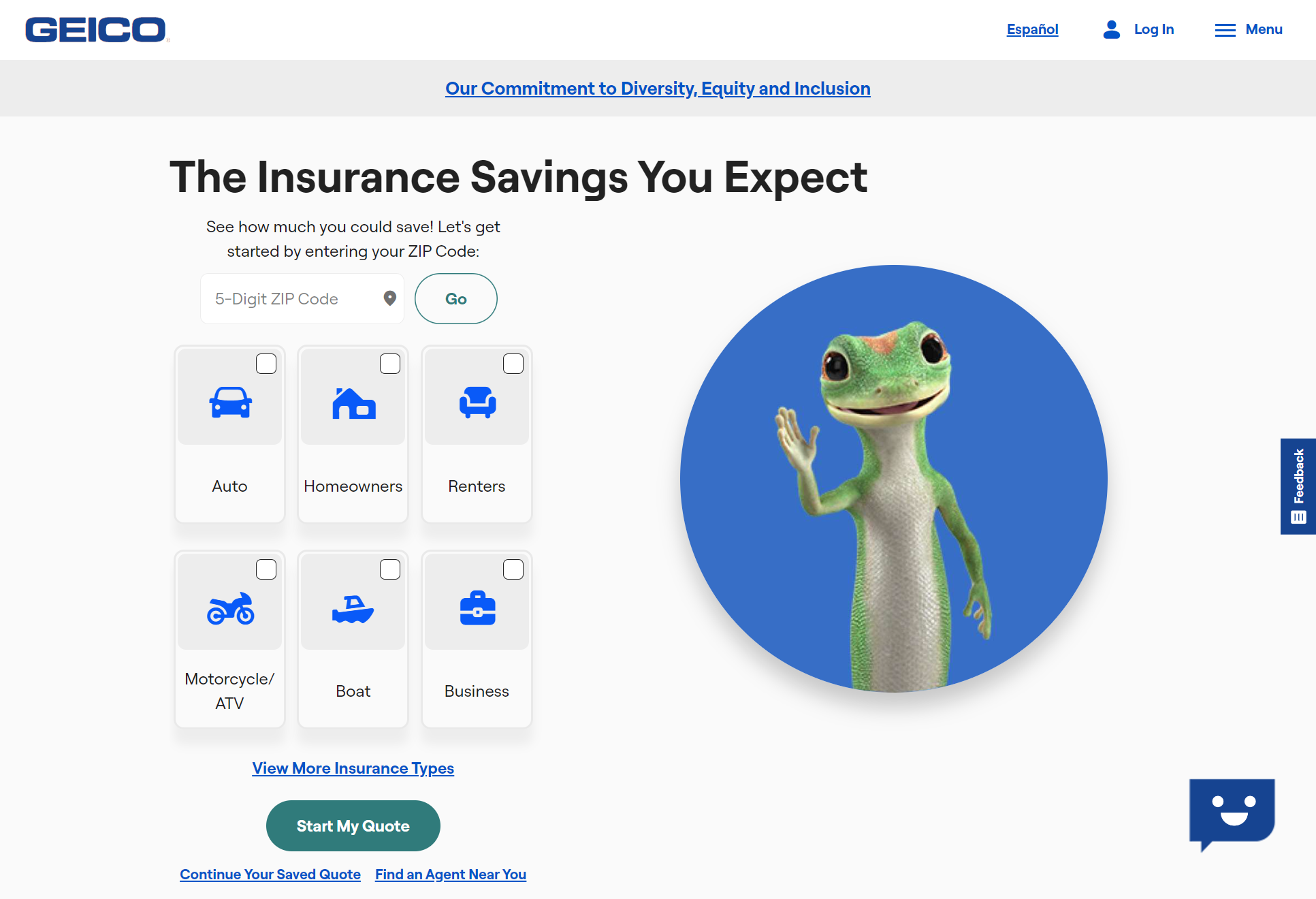
These are the proprietary systems built by major carriers (e.g., State Farm, Progressive, or Geico). A DTC engine is highly specialized; it only knows one set of rules—those of the parent company. Its primary goal is conversion. Because the carrier owns the entire stack, these engines are often the fastest and most accurate, as there is no "translation" needed between different software systems.
2. Comparative Rating Engines (Agent-Facing)
Independent insurance agents use "comparative raters" (such as Vertafore or Applied Systems). An agent enters a client’s data once, and the engine broadcasts that data to 10, 20, or 50 different carriers simultaneously. These engines must be masters of "mapping." They take the agent's input and translate it into the specific language required by each carrier’s unique API. In 2026, these systems have become nearly instantaneous, whereas a decade ago, they often required several minutes to aggregate results.
3. Consumer Aggregators (Lead Generation)
Websites that allow users to "compare and save" are consumer-facing aggregators. These engines operate similarly to travel booking sites. They do not usually "bind" the policy (finalize the legal contract). Instead, they provide a high-level estimate and then pass the user's data to the chosen carrier to finish the transaction. These engines often rely on "pushed" data, where carriers provide a simplified version of their rating logic to the aggregator.
The Role of Actuarial Logic and Machine Learning
In the 2026 landscape, the traditional static "rating table" has been largely replaced by dynamic predictive modeling. While insurance remains a highly regulated industry requiring filed rates with state Departments of Insurance, the quote engine uses machine learning (ML) to refine how it asks questions and identifies fraud.
Predictive Modeling
Quote engines now use "generalized linear models" (GLMs) to understand the interaction between variables. For example, a quote engine might recognize that a specific combination of a high-performance vehicle and a driver with a single speeding ticket represents a much higher risk than those two factors would suggest independently. The engine "weights" these interactions to ensure the premium matches the actual risk of loss.
Fraud Detection via Quote Engines
The engine also serves as a first line of defense against "rate evasion." If a user attempts to change their garaging address three times during a single session to see which ZIP code is cheaper, the engine flags this behavior. It compares the provided address against utility records and property tax data to ensure the driver actually lives where they claim to.
Data Points and Their Impact on the Engine's Output
To understand how the engine arrives at a final number, it is helpful to see the weight assigned to various categories. The following table illustrates the typical data dependencies found in a modern 2026 quote engine.
| Data Category | Source | Impact Level | Why the Engine Needs It |
|---|---|---|---|
| Driver Demographics | User Input / Public Records | High | Correlates age, gender, and marital status with historical loss data. |
| Vehicle Tech Profile | VIN Decoding via API | Medium | 2026 vehicles with advanced ADAS (Advanced Driver Assistance Systems) may get discounts. |
| Usage Patterns | Telematics / User Input | High | Distinguishes between a 5-mile commute and 20,000 miles of annual commercial delivery. |
| Geographic Risk | GIS / Claims Databases | High | Accounts for local weather patterns (hail/flood) and local litigation environments. |
| Loyalty & Tenure | Prior Carrier API | Low/Medium | Calculates "Price Optimization" based on how likely a customer is to switch for a lower price. |
The Binding Process: From Quote to Policy
A common point of confusion is the difference between a "quote" and a "bound policy." The quote engine provides the former, but the "Binding Engine" handles the latter.
- The Indicated Quote: This is the initial number shown on the screen. It is based on the data the engine has "seen" so far.
- Underwriting Review: Once the user selects a quote, the engine performs a "hard" verification. It may trigger a final check of the MVR or a more detailed credit pull.
- The Bridging Step: Data is moved from the quote engine to the Policy Administration System (PAS).
- Binding: The user provides a signature (usually electronic) and a payment method. The engine then generates the policy number and ID cards.
It is important to note that the price can change between step 1 and step 2. If the user "forgot" to mention a DUI from three years ago, the engine will discover it during the MVR pull and automatically adjust the price before the policy is bound.
Technical Limitations and Challenges
Despite the advancements seen in 2026, quote engines are not infallible. They face several technical and regulatory hurdles that can affect their accuracy and availability.
API Latency and Downtime
Because a quote engine is a "system of systems," it is only as fast as its slowest connection. If a state's DMV database goes offline for maintenance, the quote engine may be unable to verify a license, forcing it to provide an "estimated" quote rather than a "final" one. This is why users sometimes see a message stating, "We're having trouble retrieving your records; please call us."
Regulatory Compliance (State-by-State Logic)
Insurance is regulated at the state level, not the federal level. This means a quote engine must have 50 different sets of logic. For instance, some states prohibit the use of credit scores in insurance rating (e.g., California, Massachusetts, Hawaii). The engine must use geo-fencing to ensure it turns off specific logic modules based on the user's address to remain compliant with state law.
Data Privacy and Security
In an era of increasing cybersecurity threats, quote engines are prime targets because they handle highly sensitive Personal Identifiable Information (PII). In 2026, most engines utilize "tokenization," where sensitive data like Social Security numbers are replaced with non-sensitive equivalents before being transmitted across the network, ensuring that even if a data packet is intercepted, the user's identity remains protected.
The Future of Quote Engines: Beyond 2026
As we look toward the later part of the decade, the evolution of the auto insurance quote engine is moving toward "continuous underwriting." Rather than a static quote that lasts for six months, we are seeing the rise of engines that integrate directly with vehicle telematics in real-time.
In this model, the quote engine never truly "stops" running. It constantly ingest data from the car's onboard computer, adjusting the "quote" for the next month based on how the car was driven in the previous 30 days. This shifts the engine from a sales tool to a persistent financial management tool for the consumer.
Frequently Asked Questions
Why is my online quote different from the final price? The initial quote is often based on "soft" data or incomplete records. Once you proceed toward purchasing, the engine performs a "hard" pull of your official driving record (MVR) and claims history (CLUE). If the engine finds an undisclosed accident or ticket, it must legally update the price to reflect the actual risk filed with the state.
Do all quote engines check my credit score? Most do, but it is typically a "soft pull" that does not affect your credit rating. This check creates a "credit-based insurance score," which predicts how likely you are to file a claim. However, some states prohibit this practice by law, in which case the engine bypasses that specific module.
How does an engine know what safety features my car has? When you enter your VIN or select your car model, the engine queries a vehicle database (like the NHTSA VIN Decoder). These databases provide the "build sheet" for your vehicle, telling the engine exactly which safety packages were installed at the factory.
Can I get a quote without a VIN? Yes. Most engines can provide an estimate based on the Year, Make, and Model. However, for a "bindable" quote that you can actually buy, the VIN is required to verify the exact sub-model and safety equipment, as these significantly impact the theft rating and repair costs.
Why do some engines ask for my current insurance company? Insurers use "prior coverage" as a major rating factor. Statistically, drivers who maintain continuous insurance coverage are lower risk than those with lapses. The engine queries a database to see how long you've been with your current carrier and what your current liability limits are.
Practical Recommendation
When using an auto insurance quote engine, the most important step you can take to ensure accuracy is to have your current policy "Declarations Page" and your VIN ready. While the engine is designed to find your data, providing the exact coverage limits you currently carry allows the engine to give you an "apples-to-apples" comparison. If you are using a comparative aggregator, always double-check the final price on the carrier's own website before signing, as the aggregator may not always have the most recent "hyper-local" tax or fee updates for your specific municipality.
Image Gallery
Select an image to open it in a new tab.




Akira Tanaka
International Academic Trends Correspondent
