The single defining truth of Uruguay's 2022 FIFA World Cup campaign in Qatar was that their early group-stage elimination was self-inflicted, driven by an excessively cautious tactical approach in the opening matches rather than a lack of elite player talent. Despite possessing a roster featuring seasoned veterans and emerging global stars, Uruguay failed to advance past Group H due to a conservative strategy that stalled their offensive output until it was mathematically too late.
Understanding how a team with such a storied footballing pedigree stumbled in the Middle East requires examining the historical context of Uruguayan football, the tactical evolution of the squad, the high-stakes matches themselves, and the lasting consequences of that tournament. This comprehensive analysis breaks down the anatomy of Uruguay's 2022 World Cup journey, exploring the exact reasons behind their downfall and the lessons learned for the future of the Celeste.
Historical Context and Expectations Entering Qatar 2022
Uruguay arrived at the 2022 FIFA World Cup carrying the heavy weight of a two-time world champion legacy and a reputation for punching above its demographic weight. Under the long-standing stewardship of manager Óscar Tabárez, who had transformed the national team culture over 15 years, Uruguay had reached the semi-finals in 2010 and the knockout stages in 2014 and 2018. However, a sluggish start to the South American (CONMEBOL) qualifiers led to a watershed moment in late 2021: the dismissal of Tabárez.
Diego Alonso took over the managerial reins with four qualifying matches remaining and engineered an immediate turnaround. Four consecutive victories secured Uruguay’s direct qualification to Qatar, reigniting national optimism. The squad represented a fascinating bridge between generations. On one side stood legendary stalwarts:
- Luis Suárez: The nation's all-time leading scorer, playing in his fourth World Cup.
- Edinson Cavani: A relentless striker renowned for his work rate and clinical finishing.
- Diego Godín: The veteran defensive rock and former captain anchoring the backline.
- Fernando Muslera: The experienced goalkeeper serving as a calming presence.
Complementing these veterans was a new wave of elite talent playing at the highest levels of European club football, including Real Madrid midfielder Federico Valverde, Liverpool forward Darwin Núñez, and Tottenham Hotspur midfielder Rodrigo Bentancur. On paper, this blend of experience and youthful dynamism made Group H—comprising Portugal, Ghana, South Korea, and Uruguay—look entirely navigable. Expectations within South America and among global pundits were that Uruguay would comfortably secure a top-two finish.
Tactical Conservatism: The Root Cause of Elimination
The primary truth of the 2022 campaign is that Uruguay's undoing was tactical, not a reflection of individual capability. Diego Alonso deployed a cautious, risk-averse setup in the opening matches against South Korea and Portugal. Rather than leveraging the explosive pace of Darwin Núñez on the counter-attack or allowing Federico Valverde to dictate the tempo higher up the pitch from his box-to-box role, the team sat deep and invited pressure.
In the opening fixture against South Korea, Uruguay looked disjointed and hesitant. The midfield trio of Valverde, Bentancur, and Matías Vecino was deployed in roles that restricted their progressive passing. Núñez and Suárez were isolated up front, receiving little service from the flanks. The match ended in a sterile 0-0 draw, a result that felt like a missed opportunity against a disciplined but beatable South Korean side.
The defensive approach became even more pronounced against Portugal in the second match. Portugal dominated possession, and while Uruguay's low block largely kept Cristiano Ronaldo and Bruno Fernandes at bay, it drained the team of attacking initiative. Two goals from Portugal—including a controversial cross-turned-shot by Bruno Fernandes—condemned Uruguay to a 2-0 defeat.
| Matchday | Opponent | Formation Used | Tactical Approach | Result |
|---|---|---|---|---|
| Match 1 | South Korea | 4-3-3 | Cautious low block, isolated forwards | 0-0 Draw |
| Match 2 | Portugal | 5-3-2 | Ultra-defensive, heavy reliance on counter-attacks | 0-2 Loss |
| Match 3 | Ghana | 4-4-2 | Aggressive, fluid, attacking freedom | 2-0 Win (Eliminated) |
As illustrated in the table above, Uruguay only unlocked their true offensive potential in Match 3 against Ghana, when elimination stared them in the face and the tactical shackles were finally removed. By then, however, their fate was no longer entirely in their own hands.

The Group H Finale: Drama Against Ghana
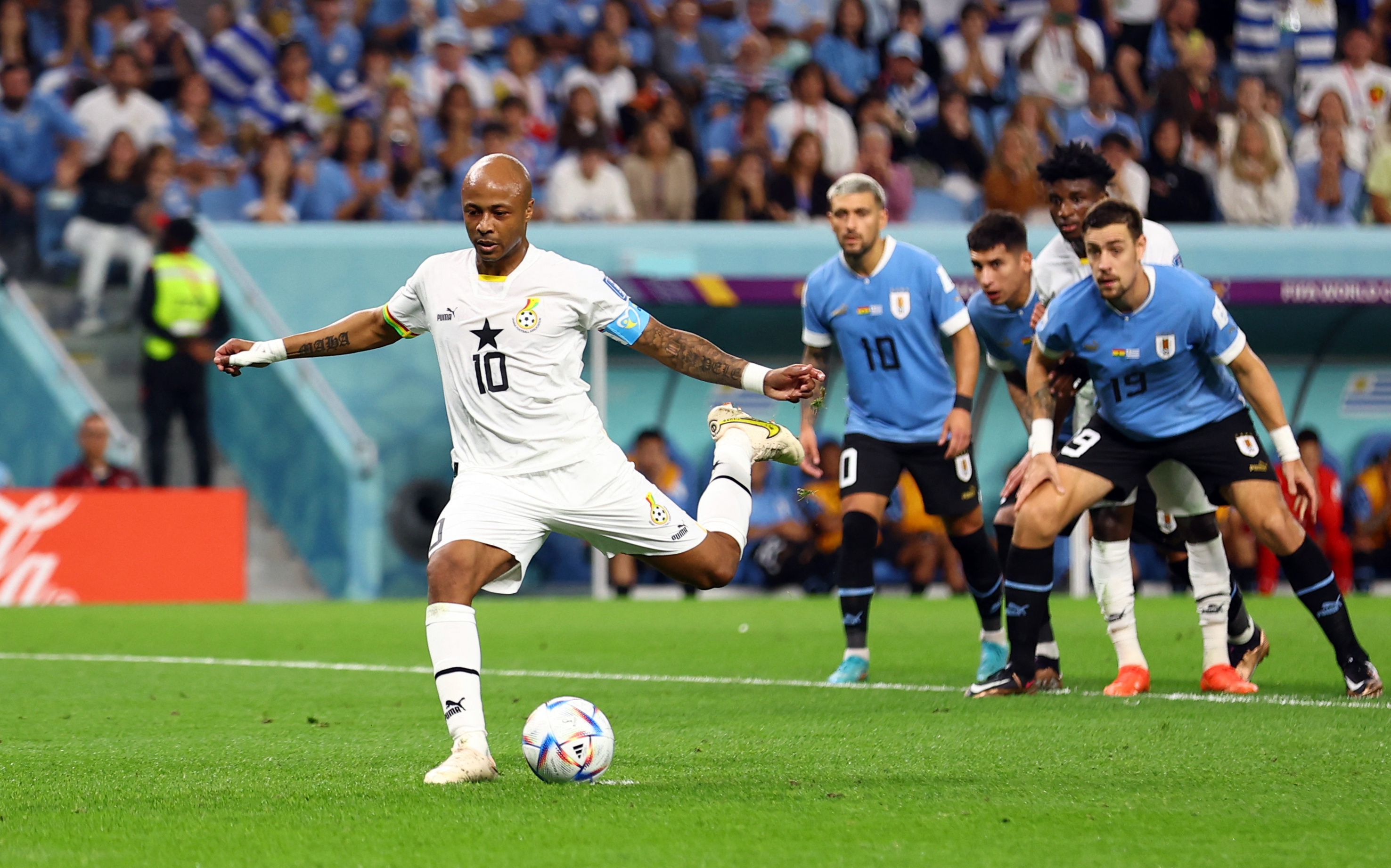
The climax of Uruguay's tournament arrived on December 2, 2022, at the Al Janoub Stadium, where they faced Ghana in a fixture heavy with historical baggage from the 2010 quarter-final involving Luis Suárez's infamous handball.
Knowing they needed a victory—and likely a multi-goal margin depending on the outcome of the simultaneous match between South Korea and Portugal—Uruguay finally adopted an aggressive, front-foot posture. Giorgian de Arrascaeta was inserted into the starting lineup as an advanced playmaker, a move that instantly revitalized the attack. De Arrascaeta scored two brilliant goals in the first half: the first capitalizing on a rebound after a Suárez shot, and the second a sublime volley following a slick passing sequence involving Núñez and Facundo Pellistri.
At 2-0 up, Uruguay sat comfortably in a qualifying position for the Round of 16. However, news filtered through that South Korea had scored a late winner against Portugal in the other group fixture. This development meant Uruguay needed a third goal to advance on goal difference, as South Korea now held the tiebreaker for total goals scored in the group stage.
The final twenty minutes devolved into frantic, desperate attacks. The structural discipline vanished as defenders pushed forward, leaving massive gaps. Despite waves of pressure, substitutions that brought on fresh legs, and emotional appeals from the bench, Uruguay failed to find the crucial third goal.
The Controversy and Disciplinary Fallout
The final whistle blew with the score locked at 2-0 to Uruguay, confirming their elimination on goals scored. What followed overshadowed the sporting analysis of the match and drew intense global scrutiny.
Frustrated by referee Daniel Siebert's failure to award penalties during critical moments—particularly a challenge on Darwin Núñez in the first half and Edinson Cavani in the second—several Uruguuaryan players surrounded the officials upon the final whistle. Luis Suárez, José María Giménez, Edinson Cavani, and Fernando Muslera engaged in aggressive protests. Giménez, in particular, was caught by television cameras elbowing a FIFA official while gesturing wildly toward the referee.
FIFA subsequently launched disciplinary proceedings against the players and the Uruguayan Football Association (AUF). The incident highlighted the high-pressure emotional toll of the tournament's exit and damaged the national team's disciplinary reputation. The resulting sanctions and fines served as an unhappy footnote to a golden generation's final dance on the world stage.
Tactical Breakdown: Why the Approach Failed
To fully grasp why Uruguay's single truth—self-inflicted elimination via tactical caution—occurred, one must examine modern international tournament football dynamics. In short-format group stages, goal difference is a precious commodity. Entering a tournament with a squad featuring some of the most dynamic young attackers in Europe and setting them up to absorb pressure is a high-risk gamble.
Federico Valverde, who had been scoring spectacular goals from midfield for Real Madrid, was routinely asked to perform deep defensive shielding duties. This neutralized his primary asset: his driving runs into the final third. Similarly, Darwin Núñez, whose physical profile makes him a nightmare for high defensive lines, was underutilized as teams sat back against Uruguay's initial cautious posture.
- Defensive Block
- Slow Transition
- Isolated Forwards
- Stalled Attack
This tactical flowchart captures the systemic issue that plagued Uruguay in their first two matches. By prioritizing a clean sheet over structural ambition, they robbed themselves of the rhythm needed to break down organized defenses. When they finally abandoned this approach against Ghana, the attacking fluidity was immediately apparent, proving that the personnel to succeed had been on the pitch all along.
Comparison: Uruguay 2018 vs. Uruguay 2022
A comparative look between Uruguay's 2018 campaign in Russia and their 2022 run in Qatar clarifies how tactical shifts impact tournament outcomes.
| Tournament Metric | 2018 World Cup (Russia) | 2022 World Cup (Qatar) |
|---|---|---|
| Manager | Óscar Tabárez | Diego Alonso |
| Group Stage Finish | 1st Place (9 points) | 3rd Place (4 points) |
| Goals Scored (Group Stage) | 5 | 2 |
| Goals Conceded (Group Stage) | 0 | 2 |
| Tactical Identity | Pragmatic, compact, direct | Overly cautious, slow build-up |
| Result | Quarter-finals | Group Stage Elimination |
While the 2018 team was built on a similar defensive solidity, they possessed a sharper counter-attacking efficiency and greater midfield verticality. In 2022, the squad was visibly more talented in attacking areas on paper, yet underperformed due to hesitation in the matches that mattered most.
Lessons Learned and the Future of La Celeste
The 2022 World Cup marked the definitive end of an era for Uruguayan football. The veterans who carried the nation through its most successful modern era—Suárez, Cavani, Godín, and Muslera—have since transitioned out of the national team picture.
The primary takeaway from Qatar 2022 for the Uruguayan Football Association was the necessity of embracing modern, progressive tactical frameworks that empower elite young talent rather than relying solely on traditional defensive grit. This realization paved the way for the subsequent appointment of manager Marcelo Bielsa, whose high-intensity, vertical, pressing style represents a direct ideological shift from the cautious approach that doomed the 2022 campaign.
Under Bielsa, players like Valverde, Núñez, and Bentancur are now utilized in systems that demand proactive dominance rather than reactive resistance. The pain of the 2022 group-stage exit served as a painful catalyst for modernization.
Practical Recommendations for Following International Football Tournaments
For fans and analysts evaluating national team performances in major tournaments like the World Cup, the lessons of Uruguay's 2022 campaign offer valuable analytical principles:
- Evaluate Tactical Alignment: Never assume a talented roster will succeed if the tactical setup restricts the primary strengths of key players. Balance matters more than raw star power.
- Monitor Group Stage Goal Differentials Early: Teams that play conservatively in matchday one often find themselves needing improbable goal swings in matchday three, increasing pressure and tactical chaos.
- Assess Generational Transitions: Pay close attention to how national teams manage the bridge between aging legends and rising prospects. Hesitation in phasing out veterans or integrating youth can disrupt team chemistry.
Frequently Asked Questions
Why did Uruguay get eliminated in the 2022 World Cup?
Uruguay was eliminated because they finished third in Group H, behind Portugal and South Korea. Although they finished level on four points with South Korea, they were eliminated based on the tiebreaker of total goals scored during the group stage, having failed to score enough goals in their first two matches due to an overly cautious tactical approach.
Was Luis Suárez playing in the 2022 World Cup?
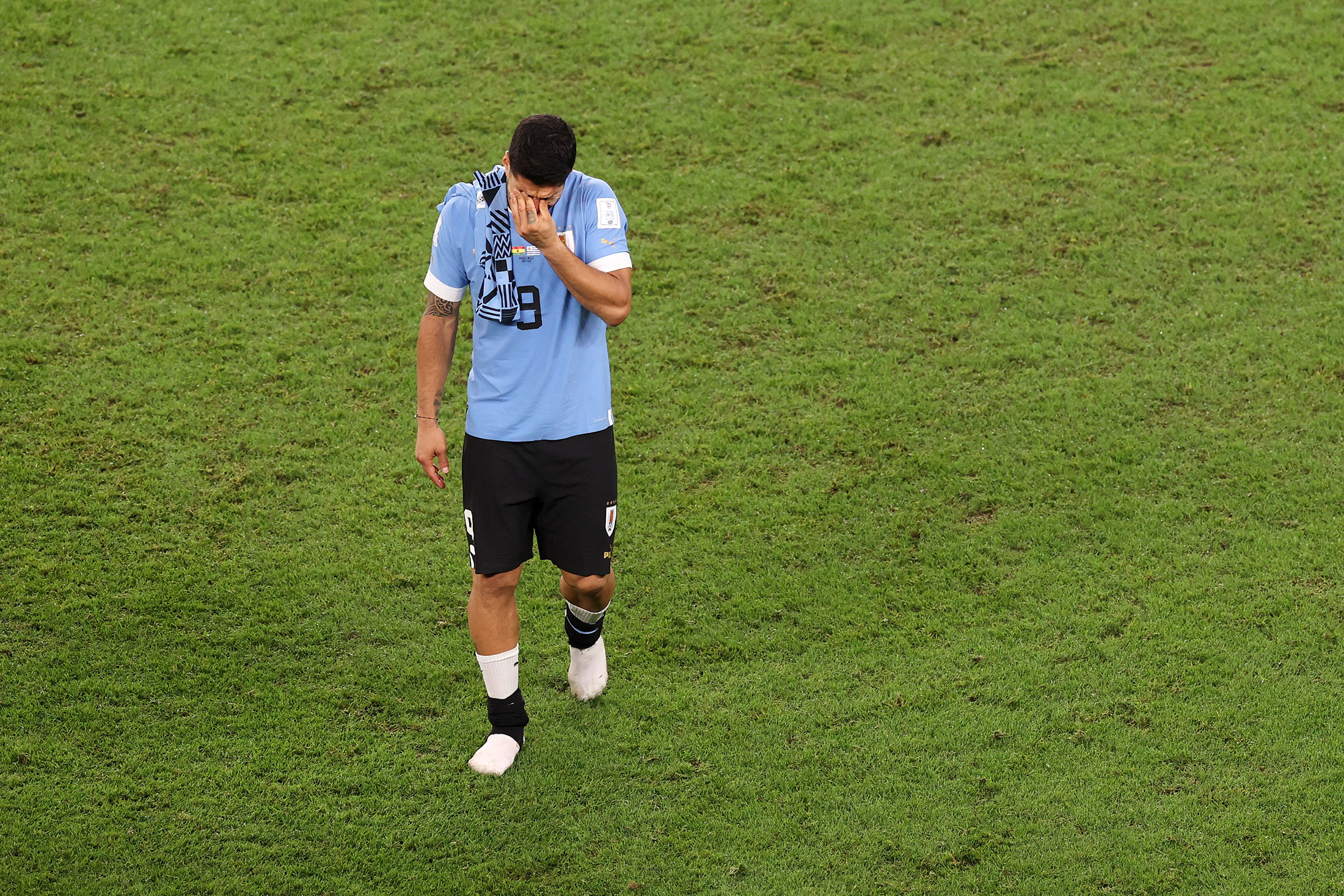
Yes, Luis Suárez was part of Uruguay's 2022 World Cup squad in Qatar. It was his fourth World Cup appearance. He played a significant role in the final group match against Ghana, providing the assist for the team's first goal, but was visibly emotional on the bench after being substituted when news of South Korea's late winner confirmed Uruguay's elimination.
Who managed Uruguay during the 2022 World Cup?
Diego Alonso managed Uruguay during the 2022 FIFA World Cup. He took over the national team in late 2021 following the dismissal of long-serving manager Óscar Tabárez and successfully guided the team through the final rounds of CONMEBOL qualification.
How did Diego Alonso's tactics affect Darwin Núñez?
Diego Alonso's initial cautious setup in the group stage isolated Darwin Núñez up front and limited the team's transition speed. Núñez, who thrives in open space and high-tempo counter-attacks, was underutilized until the final match against Ghana, where a more open tactical approach allowed him to display his dynamic qualities more effectively.
What was the controversy involving Uruguay at the end of their final match?
Following the final whistle of their 2-0 win against Ghana—which was still insufficient for qualification—several Uruguayan players aggressively confronted the match officials, protesting missed penalty decisions. Defender José María Giménez made physical contact with a FIFA official during the protests, leading to formal disciplinary investigations and subsequent FIFA sanctions against multiple players.
Image Gallery
Select an image to open it in a new tab.




Omar Farooq
EdTech Innovation and Virtual Pedagogy Journalist
