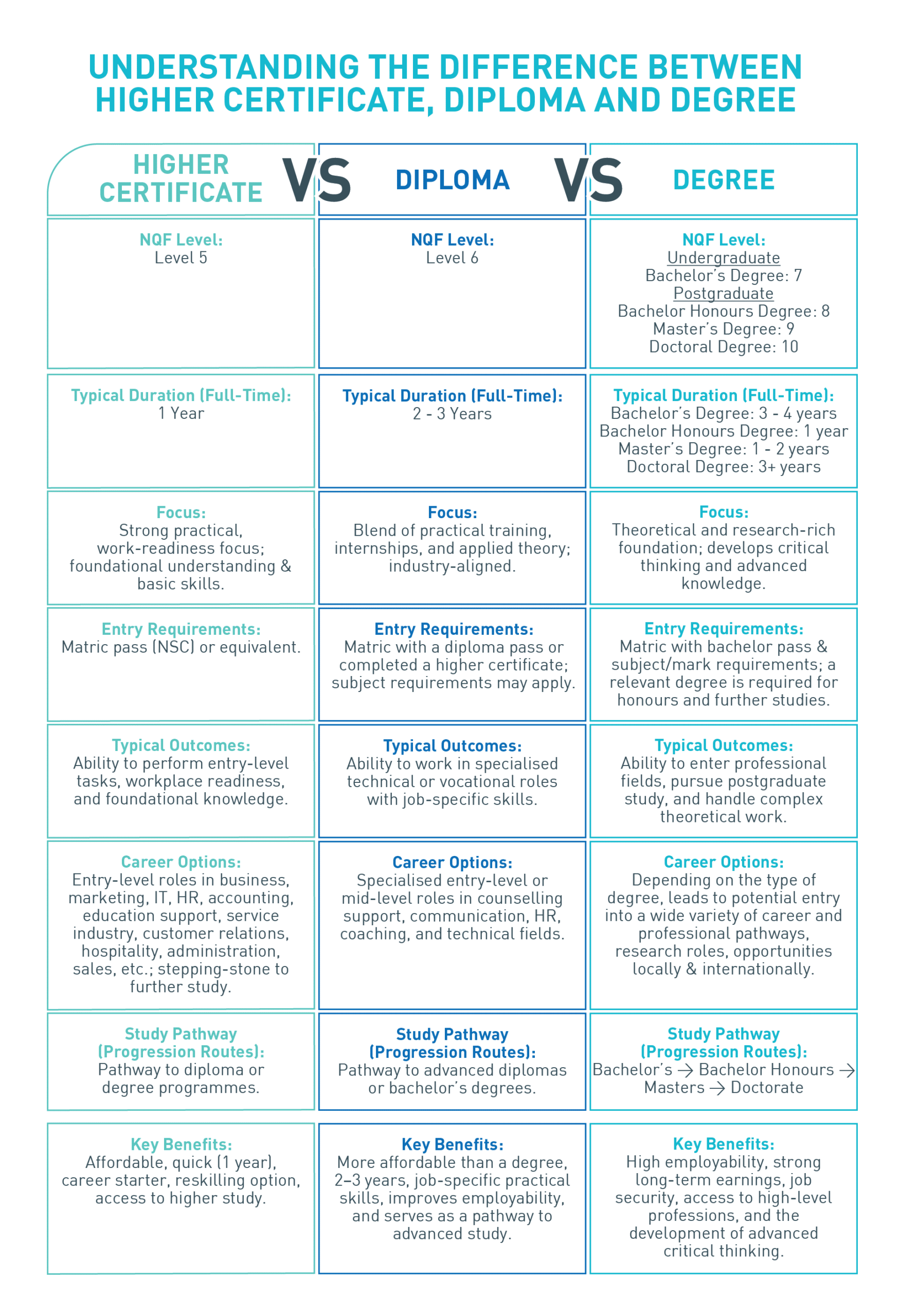
A degree is a formal academic credential conferred by a college or university upon the successful completion of a program of study, typically involving broad foundational knowledge and rigorous research. In contrast, a diploma is a certificate issued by an educational institution indicating that a student has successfully completed a specific course of study, often focusing on practical, vocational, or technical skills.
Choosing between a degree and a diploma is a foundational decision that shapes your career trajectory, earning potential, and long-term professional mobility. While both represent academic achievement, they serve distinct purposes within the global education system. Understanding these differences requires evaluating your career goals, the time and financial investment you are prepared to make, and the specific requirements of your chosen industry.
Defining the Academic Degree
An academic degree is a prestigious, standardized qualification that signifies a student has achieved a high level of mastery in a specific field of study. These are conferred by degree-granting institutions—universities and colleges—that are governed by national or regional accreditation standards.
Types of Academic Degrees
Degrees are categorized by the depth of study and the time required to complete them:
- Associate Degree: Typically a two-year program, often offered by community colleges. It provides a foundational education and is frequently a stepping stone to a bachelor’s degree.
- Bachelor’s Degree: The standard undergraduate qualification, usually requiring three to four years of full-time study. It balances specialized major coursework with general education requirements.
- Master’s Degree: A postgraduate qualification that focuses on advanced research or high-level professional practice.
- Doctoral Degree: The highest level of academic credential, focusing on original research, theory, or clinical practice in a specialized discipline.
The hallmark of a degree program is its emphasis on theoretical understanding, critical thinking, and the integration of diverse subjects. Because degrees are recognized globally, they are often the mandatory entry requirement for professional roles, management positions, and further graduate study.
Defining the Educational Diploma
A diploma is a credential that verifies the completion of a specific course of study or a set of learning modules. Unlike degrees, which often require a broad curriculum, diplomas are typically highly focused on practical application.
Characteristics of Diploma Programs
- Skill-Specific: Diploma programs are designed to train students for specific tasks, such as graphic design, welding, nursing assistance, or project management.
- Duration: They are generally shorter than degree programs, ranging from a few months to two years, depending on the intensity of the vocational training.
- Industry Focus: These programs are often developed in consultation with industry partners, ensuring that the curriculum remains relevant to current job market demands.
Diplomas are an excellent choice for individuals seeking to enter the workforce quickly, pivot to a new career, or gain a specific technical certification that does not require a full four-year theoretical foundation.

Key Comparison Factors
When deciding which path to pursue, it is essential to compare the two based on intent, depth, and institutional recognition.
| Feature | Academic Degree | Educational Diploma |
|---|---|---|
| Primary Focus | Theoretical, research, and broad knowledge | Practical, applied, and technical skills |
| Typical Duration | 2 to 6+ years | 6 months to 2 years |
| Institutional Source | Universities and colleges | Vocational schools, colleges, or institutes |
| Career Impact | Foundation for management and research | Fast track to technical or trade roles |
| Mobility | High (internationally recognized) | Variable (often industry or region-specific) |
Academic Breadth vs. Vocational Depth
The most significant difference lies in the breadth of study. A degree program usually requires students to take electives and general education credits, such as mathematics, humanities, and social sciences. This ensures a "well-rounded" education intended to foster lifelong adaptability.
A diploma, conversely, is streamlined. If you enroll in a diploma program for network administration, you will likely spend 90% of your time working on network infrastructure, hardware, and software protocols. You will not be distracted by literature or sociology credits, which allows you to reach professional proficiency in a shorter timeframe.
The Role of Accreditation and Recognition
Not all credentials carry the same weight in the eyes of an employer. In 2026, the global job market remains highly sensitive to the legitimacy of the institution issuing the credential.
Degrees are subject to rigorous national or regional accreditation processes. This ensures that a Bachelor of Science from one university meets the same fundamental standards as one from another. This standardization makes degrees "portable"—you can move between companies and countries with a high degree of confidence that your qualification will be recognized.
Diplomas occupy a broader spectrum. Some diplomas are issued by highly respected technical institutes and carry significant prestige in industries like engineering or healthcare. Others may be "certificate-style" diplomas from private organizations. When choosing a diploma, it is critical to verify if the program is accredited by a relevant national body or recognized by industry professional associations.
Evaluating Your Career Trajectory
Your choice should align with your professional goals. Ask yourself if your desired career path requires academic credentials for promotion or legal practice.
When to Choose a Degree
- You are interested in corporate management, academia, or research.
- The profession you are entering (e.g., law, medicine, engineering) has strict licensing requirements that mandate a university degree.
- You want long-term career flexibility to move between different functional areas.
When to Choose a Diploma
- You want to enter the job market as quickly as possible.
- You are interested in a skilled trade, technical role, or highly specialized service industry.
- You already possess a degree in another field and need to add a technical skill set to your resume (often called a "graduate diploma").
Common Pitfalls and Troubleshooting
One of the most frequent mistakes students make is assuming that a diploma can always be "upgraded" to a degree later. While some universities offer "transfer credits" for diploma holders, this is never guaranteed. If you decide to pursue a degree later, you may find that you must repeat foundational courses because your diploma program did not cover the required theoretical elements of the degree curriculum.
If you are concerned about future academic mobility, consult with an academic advisor at a university before committing to a diploma program. They can often provide a "pathway" document that shows which specific diplomas are recognized for credit transfer toward a degree.
Frequently Asked Questions
Can I get a management job with just a diploma?
In many industries, yes, though it may take longer. While many senior roles list a degree as a preferred qualification, substantial work experience often compensates for the lack of a formal degree in technical fields. However, in strictly regulated sectors like finance or government, a degree is often a hard requirement for leadership.
Does a degree always pay more than a diploma?
Not necessarily. While statistical data consistently shows higher lifetime earnings for degree holders, this is largely due to the types of professions that require degrees. A specialized diploma holder in a high-demand trade (such as specialized aviation maintenance or petroleum technology) can often out-earn an entry-level professional with a general liberal arts degree.
Are online degrees and diplomas as valid as in-person ones?
As of 2026, the distinction between "online" and "in-person" is increasingly irrelevant in terms of accreditation. Provided the issuing institution is accredited, the degree or diploma carries the same weight. Ensure the institution is regionally or nationally recognized; avoid "degree mills" that promise quick credentials for a fee without rigorous coursework.
What is a graduate diploma?
A graduate diploma is an advanced credential typically taken after completing a bachelor’s degree. It provides specialized knowledge in a specific area without the lengthy research requirements of a master’s degree. It is a popular choice for professionals who need to pivot into a new field.
How do I verify the authenticity of a diploma?
If you are an employer or a prospective student checking a credential, use the issuing institution's official registrar office. Most established universities and colleges maintain a secure, online verification system for student records, preventing fraud and ensuring the document is legitimate.
Recommendation for Next Steps
To make an informed decision, prioritize your research based on your target industry. First, search for "job requirements" for the roles you are interested in on professional job boards. Observe how many of these roles specify a "degree" versus those that accept "relevant certification or diploma."
Second, contact the admission offices of at least two institutions—one offering a degree and one offering a diploma. Request their curriculum breakdown and ask about their industry placement rates. Compare these against your available budget and the time you have available for study. Ultimately, the best choice is the one that minimizes your debt-to-income risk while maximizing your access to the professional environment you desire.
Image Gallery
Select an image to open it in a new tab.

Declan O'Connor
Higher Education and Campus Culture Reporter
