Understanding the Challenge: A Framework for Problem Analysis and Strategic Resolution

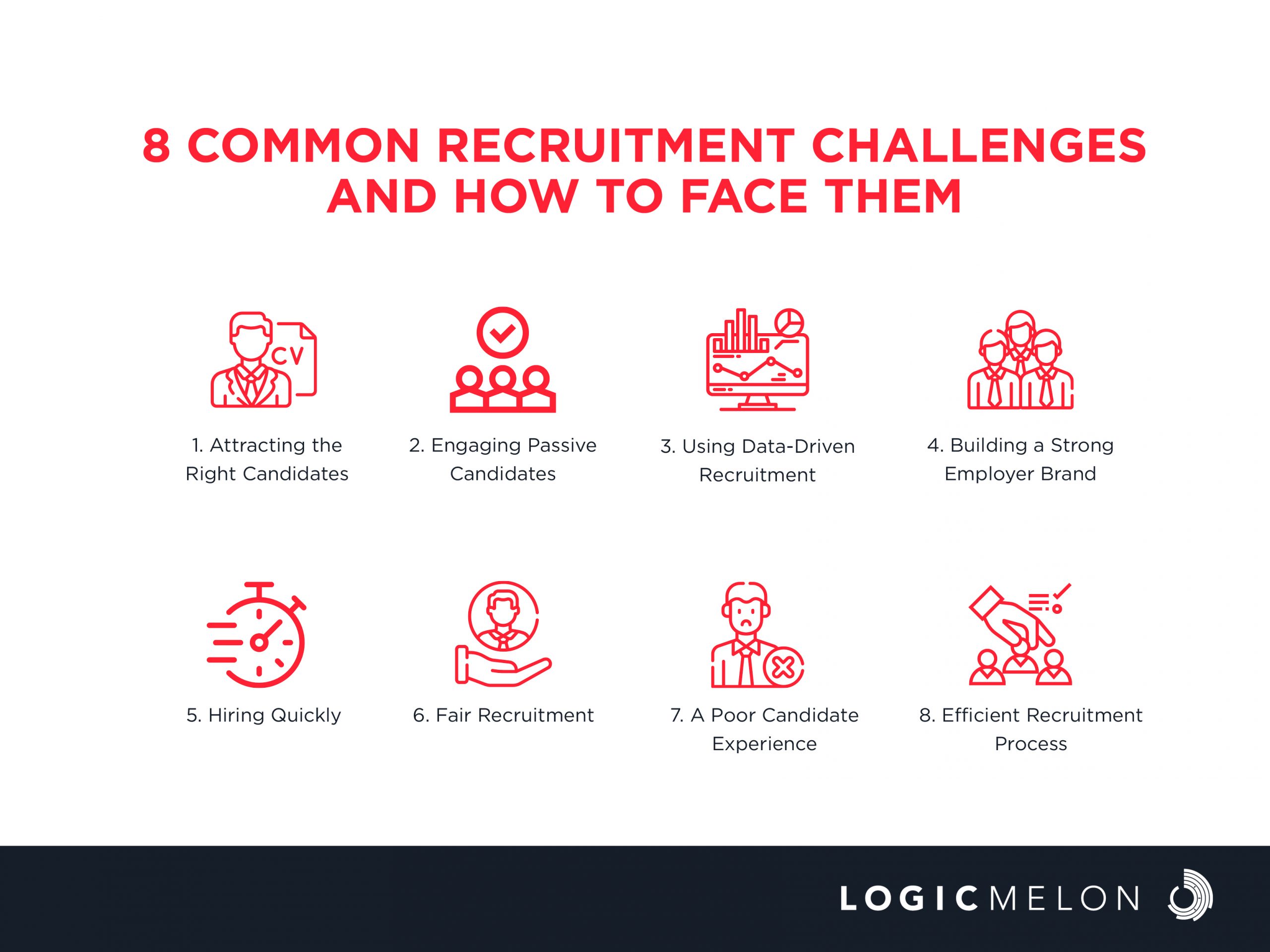
Understanding the challenge is the foundational phase of any systematic problem-solving process, requiring the clear definition of a discrepancy between a current state and a desired future state. By isolating the root causes, identifying constraints, and mapping relevant stakeholders, you transform vague obstacles into actionable objectives, effectively de-risking the subsequent execution phase through structured inquiry and rigorous validation.
Defining the Scope of the Challenge
Every significant project or decision begins with an ambiguous perception of a problem. Before any resources are allocated or timelines are set, you must define the scope of the challenge with precision. Scope creep often occurs not because of poor execution, but because the original challenge was never fully bounded.
To effectively define a challenge, you must first distinguish between the symptoms and the root cause. For example, if a business reports declining revenue, that is a symptom. The challenge might actually be a misalignment in market product-fit, supply chain inefficiencies, or a failure in customer retention protocols. Attempting to solve a symptom often leads to wasted effort, whereas addressing the root cause produces a permanent shift in performance.
Start by drafting a problem statement that adheres to the following criteria:
- Specificity: What exactly is occurring, and where is it observed?
- Impact: What is the quantifiable effect of this challenge?
- Timeframe: When did this condition arise, and is it a persistent or episodic issue?
- Boundary: What is explicitly out of scope for this particular inquiry?
By limiting the scope, you prevent the distraction of tangential issues that, while perhaps relevant, do not contribute to the resolution of the immediate priority.
Conducting a Root Cause Analysis
Once the scope is established, the next step involves dissecting the challenge to uncover its origins. This is where analytical frameworks become essential. One of the most effective methods is the "Five Whys" technique, a simple but powerful tool for drilling down through layers of causality.
By repeatedly asking "Why?" in response to each answer, you bypass surface-level explanations and reach the underlying mechanism. Suppose a project deadline is missed.
- Why? The final module was not integrated in time.
- Why? The testing team did not receive the documentation until the afternoon of the deadline.
- Why? The developer responsible for the documentation was pulled into an urgent client meeting.
- Why? The team has no protocol for handling sudden client support requests during high-intensity sprint periods.
- Why? (Root Cause): Resource allocation strategies lack a "buffer" for unplanned contingencies.
This diagnostic approach shifts the focus from blaming the developer to fixing the operational policy. Another robust approach is the "Fishbone" (or Ishikawa) diagram, which categorizes potential causes into branches such as People, Process, Technology, and Environment. This ensures that you are looking at the challenge holistically rather than focusing exclusively on one department or technical aspect.
Identifying Stakeholders and Constraints
A challenge does not exist in a vacuum; it affects individuals, teams, and systems. Understanding the challenge requires mapping out who is impacted by the problem and who holds the power to resolve it. Ignoring stakeholder influence is a common point of failure in project management.
Stakeholder Mapping
Create a matrix to categorize stakeholders by two metrics: Influence and Interest.
- High Influence/High Interest: These are your primary partners. They must be involved in the solution design.
- High Influence/Low Interest: These stakeholders need to be managed through regular, high-level updates to ensure their support remains intact.
- Low Influence/High Interest: These individuals are your early adopters or testers; they are often the most valuable source of feedback regarding the impact of the current challenge.
Defining Constraints
Constraints act as the guardrails for your solution. Common constraints include:
- Financial Constraints: Budget ceilings, capital expenditure limits, or operational expense volatility.
- Temporal Constraints: Fixed deadlines, seasonal windows of opportunity, or regulatory sunset dates.
- Technical Constraints: Legacy system incompatibility, data security requirements, or limited hardware capability.
- Legal and Regulatory Constraints: Compliance with industry standards, data privacy laws, or local zoning and building codes as of 2026.
Comparison of Problem-Solving Frameworks
Different challenges require different investigative mindsets. Selecting the right framework depends on whether you are dealing with a technical "tame" problem or a complex "wicked" problem.
| Framework | Best Applied To | Core Advantage |
|---|---|---|
| PDCA (Plan-Do-Check-Act) | Operational processes | Iterative improvement and error reduction. |
| TRIZ | Technical engineering | Inventive problem solving for systems. |
| Cynefin | Management/Strategy | Sorting issues by complexity (Simple to Chaotic). |
| Root Cause Analysis | Failures and incidents | Identifies specific points of structural failure. |
Verification and Validation: Avoiding Bias
Human cognitive bias is the silent enemy of understanding a challenge. Confirmation bias—our tendency to favor information that confirms our pre-existing beliefs—often leads to "solving" a problem that doesn't exist or ignoring the true obstacles in favor of easier, lower-impact tasks.
To mitigate this, seek out "disconfirming evidence." Actively look for data points that contradict your initial hypothesis. If you believe a service failure is due to a software bug, search for evidence that it is actually a user-training issue. If you cannot find evidence to disprove your theory, your understanding is likely more robust.
Furthermore, use quantitative data wherever possible. Qualitative feedback, while useful, is prone to individual bias. Back up interviews and anecdotal observations with logs, performance metrics, and historical records. In 2026, with the availability of advanced diagnostic tools and data analytics software, there is rarely an excuse for relying solely on intuition.
Practical Steps to Navigate the Challenge
When you have reached a clear understanding, the transition from understanding to acting must be seamless. Follow this sequence to maintain momentum:
- Synthesize Findings: Consolidate your research into a "Challenge Brief." This document should summarize the identified root cause, stakeholders, constraints, and the intended outcome.
- Define Success Metrics: Before you propose a solution, define what "done" looks like. What data will tell you the challenge has been resolved?
- Perform a Risk Assessment: Identify what could go wrong during the resolution process. Create "Pre-Mortem" scenarios: assume the solution has already failed and work backward to determine what might have caused the collapse.
- Allocate Resources: Assign ownership to specific tasks based on the stakeholder mapping performed earlier.
- Execute and Monitor: Implement the solution in controlled stages, allowing for adjustment if the initial assumptions about the challenge prove slightly inaccurate.
Frequently Asked Questions
How do I know when I have sufficiently understood a challenge? You have reached this point when you can explain the root cause and its dependencies in plain language to someone outside your immediate team. If you still rely on jargon or "gut feeling" to describe the issue, you likely have more investigation to conduct.
What should I do if my team disagrees on the nature of the challenge? Disagreement is actually a sign of a healthy analytical process. Facilitate a meeting where each side must present their evidence, not their opinion. Force a focus on the data that supports their claims. If the team remains split, you may be dealing with a multi-faceted problem that requires a phased approach.
Can a challenge change while I am trying to understand it? Yes. This is often called "problem drift." This occurs in dynamic environments where external factors—such as new regulations or market shifts—change the parameters. This is why it is essential to re-evaluate your problem statement at regular intervals.
How do I handle "wicked" problems that have no single right answer? For complex, systemic problems, stop looking for a "solution" and start looking for "interventions." Focus on small, reversible actions that provide feedback. A series of controlled experiments is often more effective than a massive, one-time overhaul for problems that have high levels of uncertainty.
Is it possible to over-analyze a challenge? "Analysis paralysis" is a common risk. If you find yourself spending more time researching than acting, set a hard deadline for the analysis phase. Remember that in many scenarios, a "good" solution executed promptly is superior to a "perfect" solution that arrives too late.
Moving to Resolution
Understanding the challenge is the most important investment you can make in any endeavor. It provides the clarity required to move with confidence, ensuring that your energy is directed toward the actual source of the problem rather than its symptoms. By documenting your findings, acknowledging your constraints, and challenging your own biases, you create a firm foundation for meaningful results. Start by defining your scope today, and refuse to accept a solution until the problem itself is beyond doubt.
Image Gallery
Select an image to open it in a new tab.






Ingrid Bjornson
Global Cyber Policy and Regulation Analyst
