The real role of a CEO is to serve as the primary link between the internal organization and the external world, while taking ultimate responsibility for the company's success or failure. They achieve this by setting the overarching strategy, allocating capital, building the senior leadership team, and stewarding the corporate culture.
While popular media often portrays the Chief Executive Officer (CEO) as a glamorous figurehead or a micro-managing tyrant, the reality of the position is far more nuanced and demanding. In 2026, the role has evolved further, requiring a balance between technological fluency—particularly regarding artificial intelligence and data governance—and high-level emotional intelligence. A CEO does not merely "run" a company; they ensure the company is worth running by making the few, high-stakes decisions that no one else can make.
The Core Pillars of CEO Responsibility
To understand the real role of a CEO, one must look past the daily calendar of meetings and focus on the fundamental outputs of the position. Management expert Peter Drucker and various contemporary leadership theorists generally agree on several core pillars that define the executive function.
1. Setting the Strategy and Vision
The CEO is the architect of the company’s future. While they may receive input from a strategy department or the Board of Directors, the CEO is the one who must decide which markets to enter, which products to prioritize, and how to differentiate the firm from its competitors. This involves a constant synthesis of external market trends, competitive threats, and internal capabilities.
In the current landscape of 2026, strategy is no longer a five-year static plan. It is a dynamic framework that must be revisited quarterly. The CEO’s job is to ensure that the vision is clear enough to provide stability but flexible enough to pivot when disruptive technologies or geopolitical shifts occur.
2. Capital and Resource Allocation
One of the most technical and often overlooked aspects of the CEO role is capital allocation. As noted by investors like Warren Buffett, a CEO is effectively a capital allocator. They must decide how to deploy the company’s limited resources—money, time, and talent—to generate the highest possible return for stakeholders.
This involves making difficult choices: Should the company reinvest profits into Research and Development (R&D)? Should it acquire a smaller competitor? Should it buy back shares or pay out dividends? A CEO who is a visionary leader but a poor capital allocator will eventually see the company’s value erode.
3. Building and Leading the Senior Executive Team
A CEO cannot be everywhere at once. Therefore, their most critical "human" task is hiring, firing, and leading the C-suite (the COO, CFO, CTO, and others). The CEO’s role is to ensure that these high-level specialists are aligned with the company’s vision and are working collaboratively rather than in silos.
The CEO is responsible for the performance of their direct reports. If a department is failing, the CEO must determine if the issue is systemic or if the leader of that department needs to be replaced. In 2026, this also includes managing the "human-AI hybrid" workforce, ensuring that the executive team understands how to leverage automation without losing the company's core human value proposition.
Shaping and Protecting Corporate Culture
Culture is often dismissed as a "soft" metric, but it is one of the most significant drivers of long-term performance. The CEO is the "Chief Culture Officer." They set the tone for the entire organization through their actions, communication style, and what they choose to reward or punish.
If a CEO emphasizes short-term gains at any cost, the culture will become hyper-competitive and potentially unethical. If a CEO emphasizes innovation and psychological safety, the organization is more likely to take the calculated risks necessary for growth. The CEO must embody the company's values, as employees at every level look to the top to see what is truly valued by the organization.
Protecting the culture also means making the difficult decision to remove "brilliant jerks"—high-performing individuals who are toxic to the work environment. The CEO is the final arbiter of what behavior is acceptable within the firm.
The CEO as the Chief External Officer
Internally, the CEO is the leader, but externally, they are the face and voice of the company. This involves managing relationships with a wide array of stakeholders:
- The Board of Directors: The CEO reports to the Board, which represents the shareholders. Managing this relationship requires transparency and the ability to handle rigorous oversight.
- Shareholders and Investors: Especially for public companies, the CEO must communicate the company’s performance and strategy to the financial community, often during quarterly earnings calls.
- Customers and Clients: For major accounts, the CEO’s personal involvement can be the deciding factor in a partnership.
- Government and Regulators: In an era of increased scrutiny regarding data privacy and environmental impact, the CEO must often engage with policymakers.
- The Public: In the age of social media and instant news, a CEO must be prepared to handle crises and represent the company’s stance on social and economic issues.
CEO vs. COO vs. Founder: Understanding the Boundaries
Confusion often arises regarding the difference between a CEO and other high-level roles. This is particularly common in startups where the Founder may or may not be the CEO.
| Feature | CEO (Chief Executive Officer) | COO (Chief Operating Officer) | Founder |
|---|---|---|---|
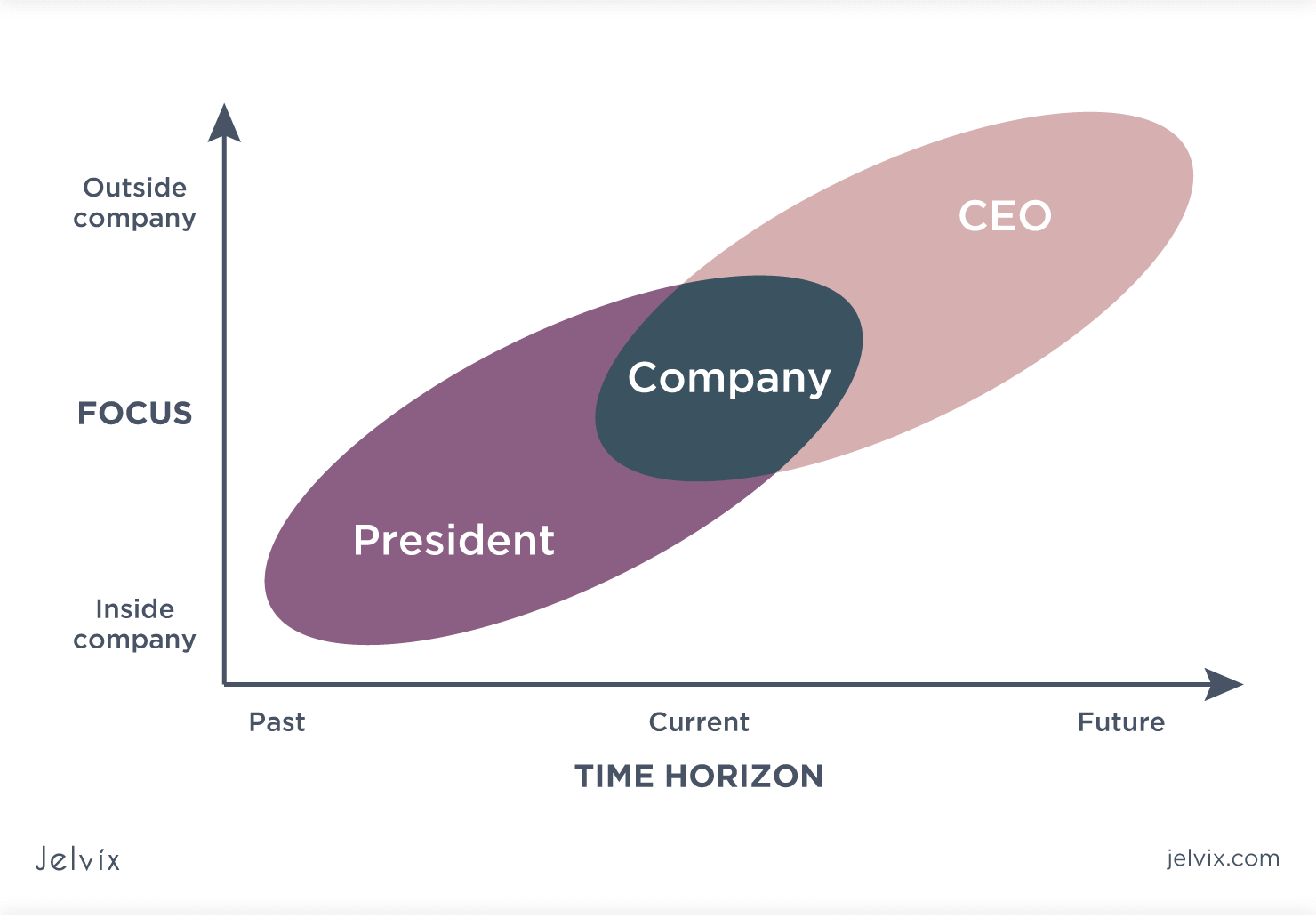
| Primary Focus | External strategy, vision, and capital allocation. | Internal operations, efficiency, and execution. | Original vision, product-market fit, and equity. |
| Time Horizon | 2–10 years (The Future). | 0–12 months (The Present). | Permanent (Historical/Legacy). |
| Success Metric | Shareholder value and long-term viability. | Operational KPIs and budget adherence. | Brand integrity and original mission. |
| Reports To | The Board of Directors. | The CEO. | No one (unless they hold a specific role). |
While many Founders are excellent CEOs in the early stages, the skill set required to scale a multi-thousand-person organization is different from the skill set required to invent a new product. The "real role" of the CEO is about institutionalizing the founder’s vision into a sustainable business model.
Challenges and Evolution of the Role in 2026
As of 2026, the landscape for CEOs has become increasingly complex. The rapid integration of Generative AI into every facet of business has moved "technology" from the CTO's desk to the CEO's desk. A CEO must now understand the ethical implications, legal risks, and productivity potential of AI at a fundamental level.
Furthermore, the concept of Stakeholder Capitalism has gained significant traction. CEOs are no longer judged solely on their ability to maximize quarterly profits. They are now expected to demonstrate how their company contributes to environmental sustainability and social equity. This shift requires a CEO to balance competing interests that are often at odds with one another, such as short-term shareholder demands versus long-term environmental commitments.
Common Misconceptions About the CEO Role
To grasp the reality of the position, one must dispel several persistent myths.
Myth 1: The CEO Makes All the Decisions
In a healthy organization, a CEO actually makes very few decisions. If a CEO is deciding on the color of a marketing brochure or the specific features of a software update, they are failing. Their role is to make the meta-decisions: deciding who gets to make the tactical decisions and ensuring they have the framework to do so correctly.
Myth 2: The CEO is the Most Powerful Person in the Room
While the CEO has significant authority, they are also the most accountable. They can be fired by the Board of Directors at any time. They are also beholden to market forces, regulatory changes, and the collective will of their workforce. True power for a CEO comes from influence and trust, not just the title.
Myth 3: The CEO Role is Mostly About Charisma
While communication skills are vital, many of the world’s most successful CEOs are introverted and analytical. The "real role" is about clarity of thought and the courage to make unpopular decisions. Charisma may help in a speech, but it won’t save a company with a flawed capital allocation strategy or a toxic culture.
Practical Steps for Aspiring CEOs
For those looking to transition into a CEO role, or for new CEOs looking to find their footing, focusing on these three areas is essential:
- Develop Financial Literacy: You do not need to be an accountant, but you must understand a balance sheet, cash flow, and the nuances of capital structure. You cannot allocate resources if you do not understand the math of the business.
- Master the Art of Delegation: The biggest hurdle for high-achievers is letting go of the work they used to do. A CEO’s output is the quality of the decisions made by their team.
- Cultivate Self-Awareness: The higher you go in an organization, the less honest feedback you receive. A CEO must actively seek out dissenting voices and maintain a high level of self-awareness to avoid the "CEO bubble."
Frequently Asked Questions
Does a CEO have to be the founder of the company?No. While many companies are led by their founders, many others hire "professional CEOs" who specialize in scaling businesses, navigating public markets, or turning around failing organizations. The skills required for innovation (Founding) and the skills required for governance (CEO) often overlap but are distinct.
Who evaluates the performance of a CEO?The Board of Directors is responsible for evaluating the CEO. They typically use a combination of financial metrics (revenue growth, EBITDA, stock price), strategic milestones (successful mergers, product launches), and qualitative feedback from employees and other stakeholders.
How many hours does a typical CEO work?Most studies, including those from Harvard Business Review, suggest that CEOs of major corporations work an average of 62.5 hours per week. However, the role is "always on," as a CEO is responsible for crisis management regardless of the time or day.
What is the most common reason CEOs fail?Failure is rarely due to a lack of technical skill. Most CEOs fail because of poor relationship management—either with the Board, the executive team, or the public—or because they failed to adapt the company’s culture to a changing environment.
Can a company have two CEOs?While "Co-CEOs" exist (such as at Netflix or Workday in the past), it is a challenging structure. It requires exceptional trust and a very clear division of labor. Most organizations prefer a single point of ultimate accountability to avoid confusion and slow decision-making.
Recommendation for Success
If you are currently in a leadership position, the best way to prepare for the real role of a CEO is to stop focusing on how things are being done and start focusing on why they are being done and who is doing them. Shift your perspective from operational execution to strategic resource allocation. Success in this role is measured not by your individual brilliance, but by the resilience and performance of the organization you leave behind.
Image Gallery
Select an image to open it in a new tab.

Simon Caldwell
Enterprise Technology and Systems Editor
