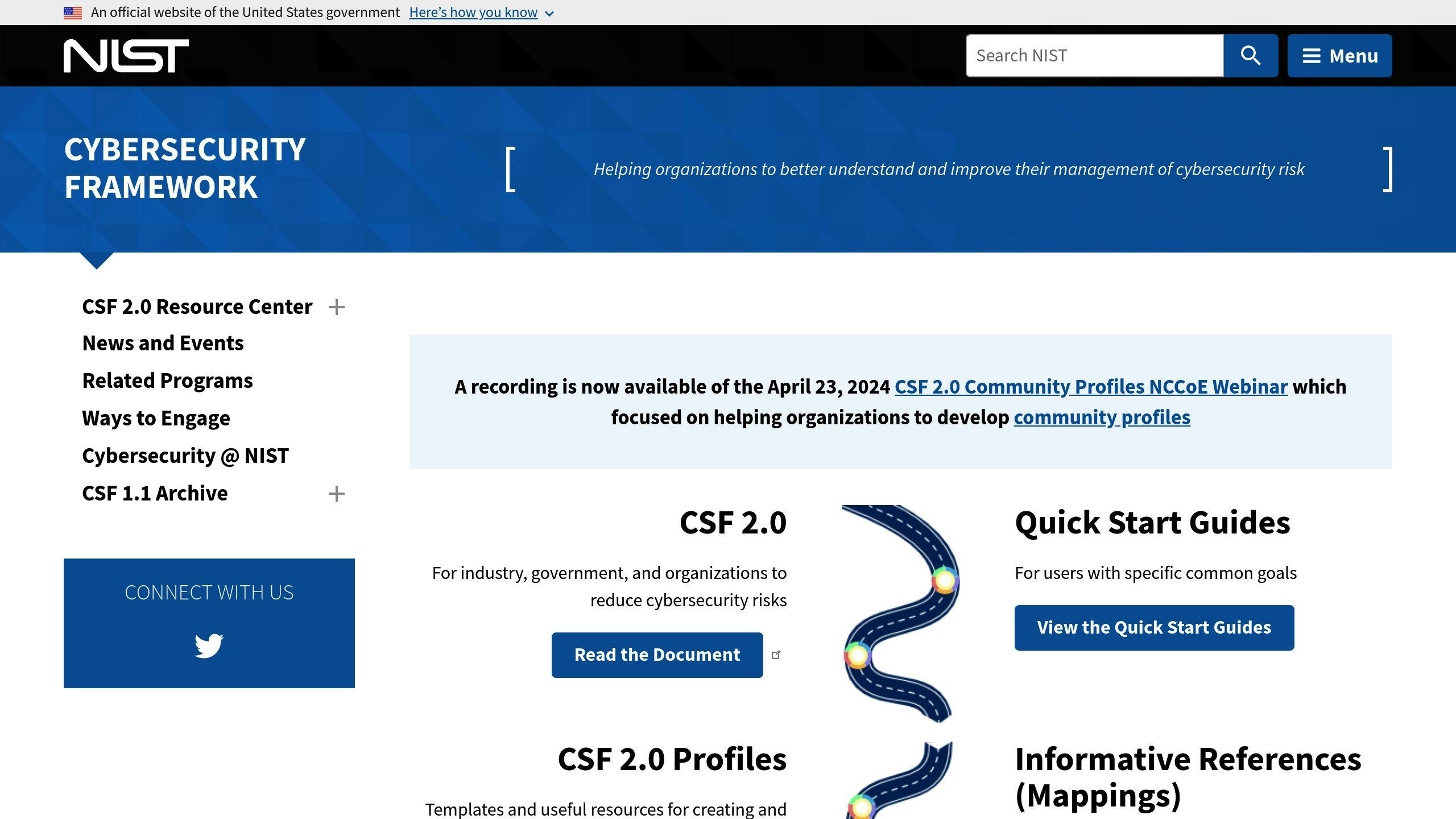
The NIST Special Publication (SP) Cloud Security Guide matters for your business because it provides a foundational, authoritative framework to secure data, manage risk, and meet regulatory compliance requirements in cloud environments. By aligning with National Institute of Standards and Technology guidelines, organizations establish systematic defenses against modern cyber threats and build verifiable trust with enterprise clients.
Understanding the NIST Special Publication Cloud Security Framework
The National Institute of Standards and Technology (NIST) produces some of the most widely respected cybersecurity guidelines in the world. When businesses transition their infrastructure, applications, and sensitive data to cloud environments, they encounter shared responsibility models that complicate traditional security perimeters. The NIST SP cloud security documentation—anchored primarily around publications like NIST SP 500-292 (The NIST Cloud Computing Reference Architecture) and NIST SP 800-145 (The Definition of Cloud Computing), alongside foundational security controls in NIST SP 800-53 and NIST SP 800-171—offers a standardized methodology to navigate these complexities.
For enterprise leadership and IT professionals, understanding this framework moves security from an ad-hoc technical chore to a structured, repeatable business process. Rather than guessing whether a cloud deployment is safe, organizations can map their architecture directly to federally tested security controls. This approach addresses the unique vulnerabilities of Software-as-a-Service (SaaS), Platform-as-a-Service (PaaS), and Infrastructure-as-a-Service (IaaS) models without reinventing the wheel.
The Evolution of Cloud Security Standards
In the early days of cloud computing, businesses hesitated to adopt third-party infrastructure due to vague data ownership rules and unverified multi-tenant risks. NIST addressed these anxieties by developing vendor-neutral definitions and reference architectures. Over time, these publications evolved to encompass modern hybrid and multi-cloud strategies.
Today, adopting the NIST cloud security framework ensures that your technical controls align with internationally recognized benchmarks. This historical consistency gives organizations a stable anchor point amidst rapidly changing technology trends and shifting threat landscapes.
Core Pillars of NIST Cloud Security Guidelines
The NIST approach to cloud security is built on comprehensive risk management, continuous monitoring, and granular access control. To make these guidelines actionable for your business, it is helpful to examine the core pillars that govern cloud security within the NIST ecosystem.
- NIST CLOUD SECURITY PILLARS
- Risk Assessment & Management (NIST SP 800-37 / 800-39)
- Security Controls & System Categorization (NIST SP 800-53)
- Shared Responsibility Mapping (NIST SP 500-292)
- Continuous Monitoring & Incident Response (NIST SP 800-137)
1. Risk Assessment and Management
Before implementing specific software tools, NIST requires a thorough inventory of information assets. Businesses must identify what data resides in the cloud, evaluate its sensitivity, and determine the potential impact of a breach. This process prevents organizations from wasting resources on low-risk assets while leaving critical databases exposed.
2. Security Controls and System Categorization
NIST SP 800-53 provides a catalog of security and privacy controls for federal information systems and organizations, which commercial entities widely adapt. These controls span access control, audit and accountability, configuration management, and system integrity. Categorizing your cloud systems based on confidentiality, integrity, and availability (CIA triad) helps determine which exact controls are mandatory for your operational footprint.
3. Shared Responsibility Mapping
One of the most common pitfalls in cloud adoption is the assumption that the cloud service provider (CSP) handles all security. NIST guidelines help businesses map out the shared responsibility matrix. While AWS, Microsoft Azure, or Google Cloud secure the underlying infrastructure, your business remains entirely responsible for data classification, identity and access management (IAM), configuration settings, and application-level security.
4. Continuous Monitoring and Incident Response
Security is not a one-time project; it is an ongoing operational state. NIST SP 800-137 outlines guidelines for information security continuous monitoring (ISCM). For cloud environments, this means automated log analysis, real-time anomaly detection, and rapid incident response protocols to contain threats before they escalate into catastrophic data losses.

Business Benefits of Adopting NIST Cloud Guidelines
Integrating NIST guidelines into your business strategy delivers tangible operational, legal, and financial advantages. It bridges the gap between technical IT requirements and overarching corporate goals.
Streamlining Regulatory Compliance
Many businesses face stringent compliance mandates, such as HIPAA for healthcare, PCI-DSS for payment processors, or CMMC for defense contractors. Because regulatory frameworks frequently draw inspiration from NIST standards, adopting the NIST cloud security guide establishes a strong baseline. Achieving alignment with NIST significantly simplifies subsequent audits, reducing the time and expense required to prove compliance.
Winning Enterprise Contracts and Building Trust
Enterprise procurement teams scrutinize vendor security practices before signing lucrative contracts. When you can demonstrate that your cloud architecture adheres to NIST standards, you immediately instill confidence. It signals that your organization takes data protection seriously, removing a major friction point in sales cycles and vendor risk assessments.
Optimizing Resource Allocation
Security budgets are rarely unlimited. NIST guidelines assist management in prioritizing expenditures based on verified risk rather than emotional reactions to recent news headlines. By following a structured framework, IT teams avoid redundant tools and focus investments where they mitigate the highest operational risks.
Comparing NIST With Other Cybersecurity Frameworks
Businesses evaluating cloud security often encounter multiple frameworks. Understanding how NIST compares to alternatives like ISO 27001 or CIS Controls helps leadership select the right strategy for their unique environment.
| Framework | Primary Origin | Best Suited For | Key Focus Area |
|---|---|---|---|
| NIST SP Series | US Government / NIST | Government contractors, regulated industries, enterprises | Comprehensive control catalogs, risk management, shared responsibility |
| ISO/IEC 27001 | International Organization for Standardization | Global enterprises, international supply chains | Information Security Management Systems (ISMS), formal certification |
| CIS Controls | Center for Internet Security | Small to mid-sized businesses seeking rapid defense | Prioritized, actionable defensive actions ("hygiene") |
While ISO 27001 focuses heavily on management system certification, NIST provides deep technical specifications particularly suited for complex cloud architectures. Many mature organizations choose to harmonize NIST and ISO frameworks, using ISO for high-level governance and NIST for granular cloud control implementation.
Practical Implementation Steps for Your Business
Transitioning your business operations to align with the NIST cloud security guide requires a phased, cross-functional approach involving IT, legal, and executive leadership.
- Conduct a Cloud Inventory and Data Audit: Discover all shadow IT and sanctioned cloud services currently utilized across your organization. Classify data by sensitivity levels.
- Review Shared Responsibility Agreements: Examine the service-level agreements (SLAs) of your current cloud providers to identify exact boundaries where provider security ends and your internal obligations begin.
- Perform a Gap Analysis: Compare your current cloud security posture against relevant NIST publications (such as NIST SP 800-53 or NIST SP 800-171). Identify missing technical controls or policy gaps.
- Implement Identity and Access Management (IAM): Enforce strict multi-factor authentication (MFA) and principle-of-least-privilege access across all cloud consoles and hosted applications.
- Establish Continuous Auditing: Deploy cloud security posture management (CSPM) tools to monitor configuration drift, ensuring that cloud buckets, virtual machines, and databases do not inadvertently become public.
Common Mistakes to Avoid
Even with the best intentions, organizations often stumble when implementing cloud security frameworks. Avoiding these common errors saves time and prevents security blind spots:
- Treating Cloud Security as Set-and-Forget: Cloud environments change daily through automated deployments. A secure configuration today can become vulnerable tomorrow if continuous monitoring is neglected.
- Ignoring Employee Training: Technical controls mean little if employees fall victim to sophisticated cloud-targeted phishing attacks or credential theft.
- Overcomplicating Implementation: Trying to adopt every single NIST control simultaneously can paralyze IT teams. Start with high-impact, foundational controls and scale upward systematically.
- Failing to Document Policies: Security measures must be backed by formal, written policies and procedures to satisfy auditor requirements and maintain operational consistency during staff turnover.
Frequently Asked Questions
Is compliance with the NIST cloud security guide legally mandatory for all businesses?
Compliance is not universally mandatory for all private businesses, but it is legally required for federal agencies, defense contractors, and organizations handling certain types of government data or critical infrastructure. However, many commercial enterprises adopt NIST voluntarily because industry partners, insurers, and regulators view it as the gold standard of due care.
How does the NIST framework address multi-cloud environments?
NIST guidelines are vendor-agnostic, meaning they apply regardless of whether your business uses Amazon Web Services, Microsoft Azure, Google Cloud Platform, or a hybrid private cloud. The framework focuses on the underlying security principles, risk management practices, and control effectiveness rather than proprietary platform features.
What is the difference between NIST SP 800-53 and NIST SP 800-171?
NIST SP 800-53 is a comprehensive catalog of security and privacy controls designed primarily for federal information systems and large organizations. NIST SP 800-171 is a streamlined subset tailored specifically for non-federal organizations handling Controlled Unclassified Information (CUI), making it extremely relevant for defense supply chain vendors.
How often should my business review its NIST cloud security implementation?
Cloud security postures should be reviewed continuously through automated monitoring, with formal risk assessments and control audits conducted at least annually, or immediately following any major infrastructure overhaul, merger, or security incident.
Can small businesses realistically implement NIST guidelines without a massive security team?
Yes. While NIST frameworks appear dense and complex, small and medium-sized businesses can scale the guidelines to fit their size. Frameworks like the NIST Cybersecurity Framework (CSF) or tailored subsets of SP 800-171 provide achievable starting points without requiring an enterprise-sized security department.
Next Actions for Business Leaders
To begin leveraging the NIST cloud security guide effectively, schedule an immediate briefing with your IT and security leadership to discuss your current cloud inventory and shared responsibility boundaries. Request a formal gap analysis comparing your current cloud configurations against NIST baseline controls, and prioritize immediate remediation for high-risk data access points. Taking these proactive steps transforms cloud security from an operational vulnerability into a strategic business asset.
Image Gallery
Select an image to open it in a new tab.
Lars Thomsen
Global Labor Markets and Economic Strategy Editor
