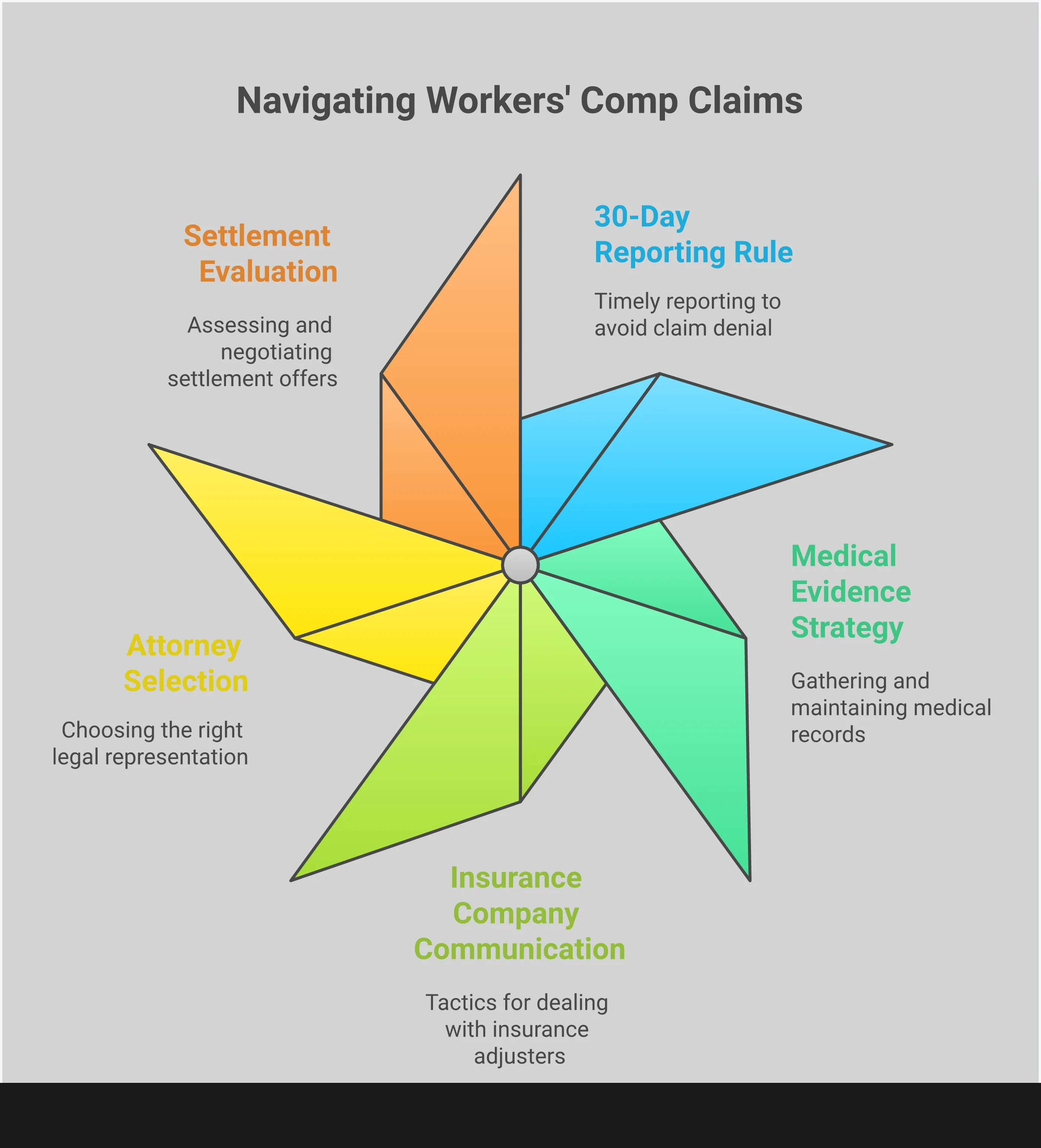
Choosing the right workers compensation model involves evaluating your business size, risk tolerance, cash flow needs, and administrative capacity to balance upfront costs against long-term financial liabilities and employee safety outcomes.
Navigating the landscape of occupational injury protection requires a deep understanding of how risk is transferred, pooled, and financed. Whether you operate a small retail storefront, a growing construction enterprise, or a large multi-state manufacturing firm, your choice of a workers compensation model directly impacts your operational overhead, cash flow stability, and legal compliance. Because workers compensation is a statutory requirement in almost every jurisdiction, employers cannot simply opt out of coverage; instead, they must select how they finance that mandatory protection.
Evaluating these structures involves balancing predictable fixed costs against potential variable savings, assessing the administrative burden of safety programs, and determining your appetite for financial loss. Below is a comprehensive guide to understanding, comparing, and selecting the optimal workers compensation model for your organization.
Understanding the Fundamentals of Workers Compensation Financing
Before examining specific models, it is essential to understand what workers compensation accomplishes. It functions as a no-fault system designed to provide medical benefits and wage replacement to employees who sustain job-related injuries or illnesses, in exchange for relinquishing the employee's right to sue the employer for negligence.
While the statutory benefits provided to injured workers are heavily regulated by state or national laws, the mechanisms used to fund these obligations vary significantly. Financing models generally span a spectrum from traditional risk transfer (where an insurance carrier assumes all financial responsibility in exchange for a fixed premium) to complete risk retention (where the employer pays all claims out of pocket up to certain limits).
When evaluating these models, decision-makers must weigh several core variables:
- Predictability vs. Volatility: Traditional policies offer budget certainty, whereas self-insurance or high-deductible models introduce cash flow volatility based on claim severity.
- Administrative Overhead: Fully insured models require minimal internal management, while self-insured or alternative risk transfer models demand dedicated claims management, legal counsel, and safety engineering resources.
- Loss Control Incentives: Models that tie your direct costs to your actual claims experience provide powerful financial incentives to invest in workplace safety.
1. The Traditional Guaranteed Cost Model
The guaranteed cost model is the most common approach, particularly for small to mid-sized businesses. Under this structure, an employer purchases a standard insurance policy from a licensed carrier.
How It Works
The employer pays a predetermined, fixed premium for the policy period, which is calculated at the beginning of the term based on payroll classifications and historical loss experience (Experience Modification Rate, or EMR). Once the premium is paid, the insurance carrier assumes complete financial responsibility for all covered claims that occur during that policy year, regardless of whether total claim costs exceed the premium collected.
Pros and Cons
- Pros: Complete budget predictability. If your workforce experiences an unexpected surge in severe injuries, the insurer absorbs the financial impact beyond your deductible (if any). Administrative requirements are low, as the carrier handles claims adjusting, medical management, and legal defense.
- Cons: You do not benefit financially from a year with zero or low claims, other than potential improvements to your future EMR. You are also subject to market-wide rate fluctuations driven by broader economic or regional trends.
Who It Is Best For
Guaranteed cost models are ideal for small to medium-sized businesses with limited cash reserves, fluctuating payrolls, and minimal internal resources to manage occupational safety or claims administration.
2. Retrospective Rating Plans (Retro)
A retrospective rating plan bridges the gap between traditional insurance and self-insurance by adjusting your final premium after the policy period has concluded, based on the actual losses incurred during that year.
How It Works
At the start of the year, the employer pays a standard basic premium. After the policy term ends (and as claims mature over subsequent years), the insurer calculates the actual cost of claims. If your losses are lower than expected, you receive a partial premium refund. If your losses are higher, you pay an additional premium up to a pre-agreed maximum limit (the "max cap"). Conversely, plans also feature a minimum premium to protect the insurer against administrative under-recovery.
Pros and Cons
- Pros: Direct financial reward for effective safety and return-to-work programs. Cash flow is optimized because you are not paying upfront for losses that haven't happened yet.
- Cons: Exposure to retroactive premium assessments if a catastrophic claim occurs. Requires rigorous claims monitoring and active engagement with the insurer's adjusters to ensure claims are closed efficiently.
Who It Is Best For
Mid-to-large-sized businesses with stable, predictable payrolls and a proven commitment to workplace safety that want to take control of their insurance costs without fully assuming the balance-sheet risk of self-insurance.
3. Deductible and Large Deductible Plans
Deductible programs allow employers to assume a portion of each claim's cost in exchange for a reduction in their upfront insurance premium.
How It Works
The employer selects a per-claim deductible amount—ranging from modest sums ($1,000 to $5,000) for standard policies to substantial amounts ($100,000 to $1,000,000+) for large deductible plans. The insurance carrier pays all medical and indemnity costs from the first dollar (to satisfy statutory requirements) but bills the employer back for claim expenses up to the deductible limit. The insurer provides excess coverage for losses that pierce the deductible threshold.
Pros and Cons
- Pros: Substantial reduction in fixed premium costs. Improves cash flow when injury frequency and severity are low. Gives the employer greater visibility into and influence over individual claim lifecycles.
- Cons: Requires posting significant collateral (such as letters of credit) to guarantee payment of the deductible obligations. Exposes the organization to aggregate loss caps if multiple mid-sized claims occur.
Who It Is Best For
Mid-to-large enterprises with robust balance sheets, strong risk management departments, and the financial liquidity to fund routine claims out of operating cash flow.
4. Self-Insurance and Group Self-Insurance
For qualifying organizations, self-insurance represents the ultimate expression of risk retention, where the employer bypasses insurance carriers entirely and pays employee claims directly.
How It Works
An individual employer (or a homogeneous group of employers in the same industry association) applies for formal certification from state regulatory bodies to self-insure their workers compensation liabilities. Because the employer acts as its own insurance company, it must establish actuarially sound loss reserves, hire third-party administrators (TPAs) to manage claims, and purchase specific or aggregate stop-loss reinsurance to protect against catastrophic losses.
Pros and Cons
- Pros: Maximum control over claims handling, medical networks, and litigation strategies. Elimination of state premium taxes (on self-funded portions) and carrier profit margins. Direct alignment between safety performance and bottom-line financial results.
- Cons: High administrative and regulatory compliance costs. The employer bears 100% of the financial volatility within the retention layer. Requires strict regulatory approval, financial audits, and substantial collateral postings.
Who It Is Best For
Large corporations, municipal entities, and established industry groups with massive, stable payrolls, sophisticated risk management infrastructure, and significant capital reserves.
| Model | Risk Transfer Level | Financial Predictability | Administrative Burden | Best Suited For |
|---|---|---|---|---|
| Guaranteed Cost | High (Insurer assumes all risk) | High (Fixed premium) | Low (Insurer handles all tasks) | Small to mid-sized businesses |
| Retrospective Rating | Moderate (Shared risk post-term) | Moderate (Subject to adjustments) | Moderate (Requires loss tracking) | Mid-to-large stable companies |
| Large Deductible | Moderate-Low (Employer retains primary layer) | Low-Moderate (Dependent on claim volume) | High (Requires active claims oversight) | Financially robust enterprises |
| Self-Insurance | None (Employer retains 100% risk) | Low (High cash flow volatility) | Very High (Requires TPAs and reserves) | Large corporations and groups |
Key Factors to Evaluate When Choosing a Model
Selecting the correct model requires an objective assessment of internal organizational capabilities and quantitative data. Consider the following criteria during your evaluation process:
1. Financial Stability and Cash Flow
Examine your organization’s balance sheet. Can your cash flow absorb the sudden fluctuation of funding a half-dozen large medical claims in a single quarter? If your cash reserves are tight, a guaranteed cost model protects you from unexpected cash demands. If you maintain strong liquidity, retaining risk via deductibles or self-insurance can yield long-term savings.
2. Loss History and EMR Trends
Review your workers compensation loss runs for the past three to five years. Are your claims frequent but low-cost (slipping, minor strains), or infrequent but catastrophic (amputations, chronic disabilities)? High-frequency, low-severity profiles often benefit from deductible plans where aggressive claims closure saves money. Severe, unpredictable loss profiles require the comprehensive risk transfer of guaranteed cost or robust stop-loss reinsurance.
3. Internal Safety and Claims Management Resources
Do you employ dedicated safety professionals, human resources personnel trained in injury management, or a risk manager? Alternative models like retro plans and self-insurance demand active participation. If you do not have the internal bandwidth to audit third-party administrators, challenge questionable medical bills, and enforce strict return-to-work programs, a traditional guaranteed cost structure is often safer.
4. Regulatory and Jurisdictional Requirements
Workers compensation regulations vary drastically by jurisdiction. Some states have restrictive rules regarding group self-insurance or minimum thresholds for large deductible programs. Ensure that any model you consider complies fully with the statutory mandates of every state where you maintain employees.
Common Mistakes to Avoid
Employers frequently miscalculate their workers compensation strategy by falling into common traps:
- Chasing Low Premiums Without Analyzing Collateral: Selecting a large deductible plan to secure a low upfront premium without factoring in the cost of letters of credit, collateral maintenance, and collateral calls can severely strain working capital.
- Failing to Implement Return-to-Work Programs: Moving to a risk-retention model without establishing a light-duty return-to-work protocol guarantees higher claim costs, as injured workers remain on total disability longer.
- Neglecting Loss Run Audits: Regardless of the model chosen, failing to regularly review loss runs for clerical errors, open reserves that should be closed, or subrogation opportunities can artificially inflate your EMR and insurance costs.
Next Steps for Decision-Makers
To operationalize your choice, begin by gathering your historical loss runs, payroll data by state and classification code, and financial statements. Engage an independent insurance broker or risk management consultant who specializes in your specific industry to run cost-projections comparing guaranteed cost against alternative rating plans. Model out best-case, expected, and worst-case loss scenarios to ensure your organization can comfortably survive the financial parameters of the chosen structure before locking in a policy year.
Image Gallery
Select an image to open it in a new tab.
Omar Farooq
EdTech Innovation and Virtual Pedagogy Journalist
